
Intoducion
A sprinkler system usually loses pressure because of a partly closed valve, a clogged filter or nozzle, a leak, a failing pressure regulator, or a zone that asks for more water than your supply can deliver. Less often, the cause is on the supply side, such as a municipal water issue or a well pump problem. The fastest way to find it is to measure pressure and flow first, then work through the system from the water source to the last sprinkler head.
This guide covers in-ground residential sprinkler systems connected to a home water supply. It does not cover fire sprinkler systems or drip-only setups. Follow the steps in order, because each one rules out a different part of the system.
Table of Contents
Why Is My Sprinkler System Losing Pressure?
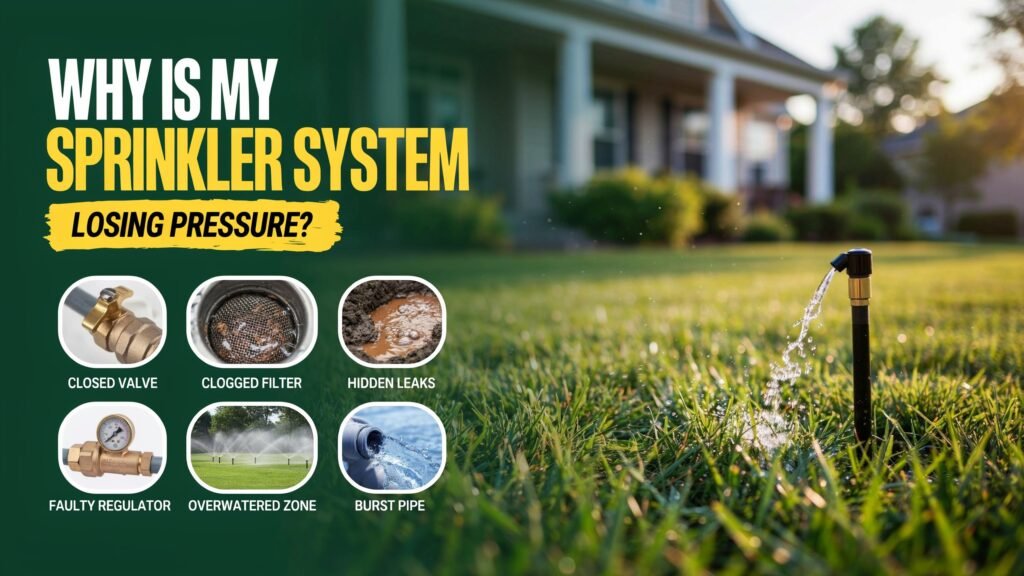
Water pressure in a sprinkler system can drop for a handful of reasons, and most of them are fixable without replacing anything:
- A shutoff or backflow isolation valve is not fully open.
- A filter, strainer, or backflow preventer is clogged with debris.
- A broken pipe, cracked head, or leaking valve is letting water escape.
- A pressure regulator is failing or set too low.
- A zone has too many heads for the flow your supply can provide.
- Old or corroded pipe is restricting flow.
- The supply itself (street pressure or a well pump) has changed.
Here is the short version:
- Measure pressure and flow so you know what is actually wrong.
- Make sure every shutoff valve is fully open.
- Clean filters, strainers, and nozzles.
- Look for leaks and broken parts.
- Check the pressure regulator and the zone valves.
- Check whether a zone is asking for more water than you have.
Pressure vs. Flow: What Is Actually Dropping?
People use “pressure” for everything, but sprinkler problems come in two forms:
- Pressure is the force pushing water through the pipes, measured in psi.
- Flow is the volume of water moving, measured in gallons per minute (GPM).
You can have good pressure and low flow (a clogged pipe), or decent flow and low pressure at the far end of the system (long runs and leaks). Heads need both to throw water the right distance. Many spray heads are designed for a certain pressure at the head, and rotors usually need more, but the numbers depend on your model, so check the manufacturer’s specifications.
Symptom Finder: How Is Your System Behaving?
Find your symptom, then jump to the matching step.
Pressure dropped suddenly, across the whole system. Suspect a closed valve, a broken pipe, or a supply problem. Go to Steps 1, 2, and 4.
Pressure has been fading slowly over weeks or seasons. This points to clogging, mineral buildup, or a wearing regulator. Go to Steps 3 and 5.
Heads spray weakly, but only in one zone. Suspect a zone valve, a leak in that zone, or too many heads. Go to Steps 4, 5, and 6.
Weak spray after winterizing or dewinterizing. Go to Step 2 first.
Mist or fog instead of a clear spray. This is often too much pressure, not too little. Go to Step 5.
Weak flow everywhere, even at a hose faucet. The problem may be on the supply side. Go to Step 1, then read the section on your water supply.
Step 1: Measure Pressure and Flow
You need actual numbers before you start replacing parts.
Pressure test:
- Buy a hose-thread water pressure gauge (inexpensive at hardware stores).
- Screw it onto an outdoor hose faucet, ideally the one closest to where the irrigation line connects.
- Turn the faucet on fully with nothing else running, and write down the reading. That is your static pressure.
- Run a sprinkler zone, read the gauge again if you can, and note the working pressure.
A large gap between static and working pressure suggests a restriction or a supply that cannot keep up. Your local water utility can tell you the normal pressure in your area.
Flow test (bucket test):
- Open the hose faucet fully and fill a 5-gallon bucket while you time it.
- Divide 5 gallons by the seconds it took, then multiply by 60 to get GPM. For example, 5 gallons in 30 seconds is 10 GPM.
Compare that number with what your zones need. If a zone’s heads add up to more GPM than your supply can deliver, the problem is demand, not a defect. See how many sprinkler heads per zone for how zones are sized.
Step 2: Make Sure Every Shutoff Valve Is Fully Open
A partly closed valve is one of the most common causes of low pressure, especially after winter work or a repair.
- Find the main irrigation shutoff, usually near where the line leaves the house or meter.
- Check the isolation valves on the backflow preventer. On a ball valve, the handle should run in line with the pipe when open. A gate valve should be turned fully counterclockwise.
- Check any zone valve flow control handles and make sure none were turned down by accident.
- Open each valve slowly and fully, then test again.
If low pressure began right after you turned the system back on for spring, see our guide to how to dewinterize a sprinkler system to check for the usual restart mistakes.
Step 3: Clean Filters, Strainers, and the Backflow Preventer
Sand, sediment, and debris can clog small openings and slowly choke the flow.
- Backflow preventer: Debris can restrict internal parts. Backflow preventers are safety devices, and many cities require testing by a certified tester, so check local rules before opening one. See our guides on the backflow preventer for sprinkler systems and backflow device irrigation systems.
- Inline filters or strainers: If your system has one, shut off the water, remove the screen, and rinse it.
- Nozzles and head screens: Small filters inside the heads clog easily, especially with well water. Our step-by-step guide on how to clean sprinkler heads walks through the process.
Step 4: Look for Leaks and Broken Parts
A leak is a hole that lets pressure escape before it reaches the heads.
- Walk the yard while a zone runs. Look for geysers, soggy spots, sunken soil, or a head spraying wildly.
- Check each valve box for standing water or a hissing sound.
- Run the water meter test: note the meter reading when no water is being used inside or outside, wait two hours, and check again. The EPA’s WaterSense program uses this method, and says that if the reading changes during a two-hour no-use period, you probably have a leak. To isolate the irrigation system, close the irrigation shutoff and repeat the test.
For leak causes, read our guide on why a sprinkler system leaks water. If a zone seems dead, our article on how to tell if a sprinkler zone is broken can help.
Before you dig, call 811. The 811 national call-before-you-dig service marks underground lines for free, and you should contact it a few days before you dig.
Step 5: Check the Pressure Regulator and Zone Valves
If your system has a pressure regulator, it controls how much pressure reaches the pipes. A failing or incorrectly set regulator can drop pressure below what the heads need, or let pressure rise too high and cause misting.
- Compare your gauge reading with your heads’ recommended pressure.
- Look for signs of a worn regulator: unstable readings, large swings, or pressure that has fallen over time.
- Read our pressure regulator guide for how they work and when they need replacing.
Zone valves can also cause low pressure when they only partly open. Debris under the diaphragm, a damaged diaphragm, or a stuck solenoid are common causes. See our guides on valves for sprinkler systems and sprinkler system valve repair.
Step 6: Check Whether a Zone Is Asking for Too Much Water
Sometimes nothing is broken. The system is just demanding more than your supply can deliver.
- Add up the flow of every head in a zone, using the manufacturer’s GPM figures.
- Compare it with your measured flow from Step 1.
- If the zone needs more than you have, split it into two zones or reduce the number of heads on it.
- Remember that adding heads to an existing zone later can quietly overload it.
Old, undersized, or corroded pipe can also restrict flow. Mineral buildup inside old galvanized pipe is a known problem, and it can narrow the pipe over time. If your system uses very old pipe and flow is poor, a professional can tell you whether sections need replacing.
Sprinkler Pressure Cheat Sheet
| What you notice | Likely cause | What to do |
|---|---|---|
| Sudden drop, whole system | Closed valve or broken pipe | Check shutoff and isolation valves, look for leaks |
| Slow fade over weeks | Clogged filters or heads, mineral buildup | Clean screens and nozzles |
| One zone weak | Zone valve, leak, or too many heads | Check valve, inspect zone, count heads |
| Weak after winter work | Valve left partly closed | Reopen all valves slowly |
| Misting instead of spray | Pressure too high | Check regulator and gauge |
| Static pressure fine, working pressure drops | Restriction or supply limit | Run flow test, check pipe and filters |
| Weak everywhere, even at hose faucet | Supply-side issue | Call utility or check well system |
| Meter moves with water off | Leak | Close irrigation shutoff and retest |
These are typical patterns, not exact diagnoses. Pipe size, valve brand, soil, and local water supply all change what you see, so check your equipment’s instructions.
Is It Your System or Your Water Supply?
Compare pressure at an outdoor hose faucet with pressure at the irrigation line.
- If pressure is low at the hose faucet too, the problem is probably upstream of your sprinkler system: your home’s supply, the street main, or a well.
- If pressure is fine at the faucet but poor at the heads, the problem is in the irrigation system.
Municipal supply can change because of main repairs, high demand at certain times of day, or utility adjustments. If you suspect a supply issue, call your water utility and ask about recent work or known pressure changes in your area.
If You Use a Well
Well systems add more things that can cause low pressure:
- A pressure tank that has lost its air charge or has failed
- A pressure switch that is set or working incorrectly
- A pump that is worn or not sized for the irrigation load
- Sediment or iron clogging filters and screens
These parts are under high pressure and involve electricity, so have a licensed well professional diagnose and repair them. Well water also clogs nozzles faster, so plan to clean heads more often.
How to Keep Pressure From Dropping Again
- Check shutoff and isolation valves after every winterizing or repair.
- Clean filters, screens, and nozzles each spring and again in midsummer if you use well water.
- Check valve boxes and heads for leaks at the start of every season.
- Size new zones for your measured flow before you add heads.
- Install a pressure regulator if your static pressure is high, and check it periodically.
- Keep a record of your static and working pressure readings so you notice changes.
If your pressure drops again after you finish this checklist, see our companion guide on how to increase sprinkler water pressure for ways to improve what the system delivers. To understand how the parts connect, see our guide to the parts of a sprinkler irrigation system.
When to Call a Professional
Call a licensed irrigation technician or plumber if:
- You find a mainline leak you cannot locate or repair.
- The backflow preventer needs testing or repair.
- Pressure is low at the hose faucet and your utility says nothing is wrong on its end.
- You have a well and suspect the pump, tank, or pressure switch.
- Old pipe seems to be restricting flow.
- You are not comfortable working on pressurized lines.
The Irrigation Association is a good place to look for qualified irrigation professionals.
Frequently Asked Questions
Why did my sprinkler pressure suddenly drop?
The usual causes are a closed or partly closed valve, a broken pipe or head, or a change in your water supply. Check valves and look for leaks first.
Why is my sprinkler pressure low after winterizing?
A valve may have been left partly closed, a filter may be clogged with debris, or a pipe may have cracked during freezing. Reopen all valves slowly and check for leaks.
How do I check sprinkler water pressure?
Screw a hose-thread pressure gauge onto an outdoor faucet and read it with nothing else running. Read it again while a zone runs to see the working pressure.
What is a normal pressure for a sprinkler system?
It depends on your heads and your area. Check the manufacturer’s specifications for your heads and ask your water utility about typical pressure in your neighborhood.
Can too many sprinkler heads cause low pressure?
They can cause low flow. If the heads in a zone need more water than your supply provides, the spray weakens. Splitting the zone usually fixes it.
Can a clogged backflow preventer cause low pressure?
Debris inside can restrict flow. Because it is a safety device, check your local rules and use a certified tester for service.
Does a leak cause low pressure in sprinklers?
Yes. A broken pipe, cracked head, or leaking valve lets water escape before it reaches the heads, which lowers pressure and flow.
Will a pressure regulator increase my water pressure?
No. A regulator only lowers or limits pressure. If pressure is too low, look for restrictions, leaks, or demand problems instead.
What to Read Next
Once your pressure is back, you may want to fine-tune the system. Browse our guides on how long sprinklers should run in each zone, how much water a sprinkler system uses, and the best programmable sprinkler timers.