

Introduction
If you’re wondering how much water does a sprinkler system use, you’re not alone. Many homeowners want a lush, green lawn without wasting water or driving up their utility bills. In this guide, we’ll break down how much water a sprinkler system uses by type, lawn size, and run time, and show you practical tips to calculate, manage, and reduce water consumption effectively types of sprinkler irrigation systems.
For maintaining clean and efficient tools after irrigation, check out Vacuum and Mops for quality cleaning solutions
How Much Water Does a Sprinkler System Use? (Complete 2026 Guide)
If you’re wondering how much water a sprinkler system uses, you’re not alone. Many homeowners want to keep their lawns green without wasting water or increasing their utility bills. The truth is, sprinkler water usage depends on the type of system, lawn size, water pressure, and how long you run it.
In this complete 2026 guide, we’ll break down exactly how much water a sprinkler system uses per hour, per week, and per season — plus how you can calculate your usage and reduce water waste.
How Much Water Does a Sprinkler System Use Per Hour?
On average, a sprinkler system uses:
- 1.5 to 4 gallons per minute (GPM) per sprinkler head
- That equals 90 to 240 gallons per hour per head.
If your system has 6 sprinkler heads running at the same time:
- 6 heads × 180 gallons per hour (average)
= 1,080 gallons per hour
So when asking how much water a sprinkler system uses per hour, the answer depends on how many heads are running and their flow rate.
Average Water Usage Based on Lawn Size
Here’s a general estimate:
- Small lawn (1,000 sq. ft.) → 300–600 gallons per watering session
- Medium lawn (2,500 sq. ft.) → 800–1,200 gallons
- Large lawn (5,000+ sq. ft.) → 1,500–3,000+ gallons
Most lawns need about 1 inch of water per week, which equals approximately:
- 623 gallons per 1,000 square feet
So if your lawn is 2,000 sq. ft., you may use around 1,200 gallons per week.
Water Usage by Type of Sprinkler System
Spray Sprinklers
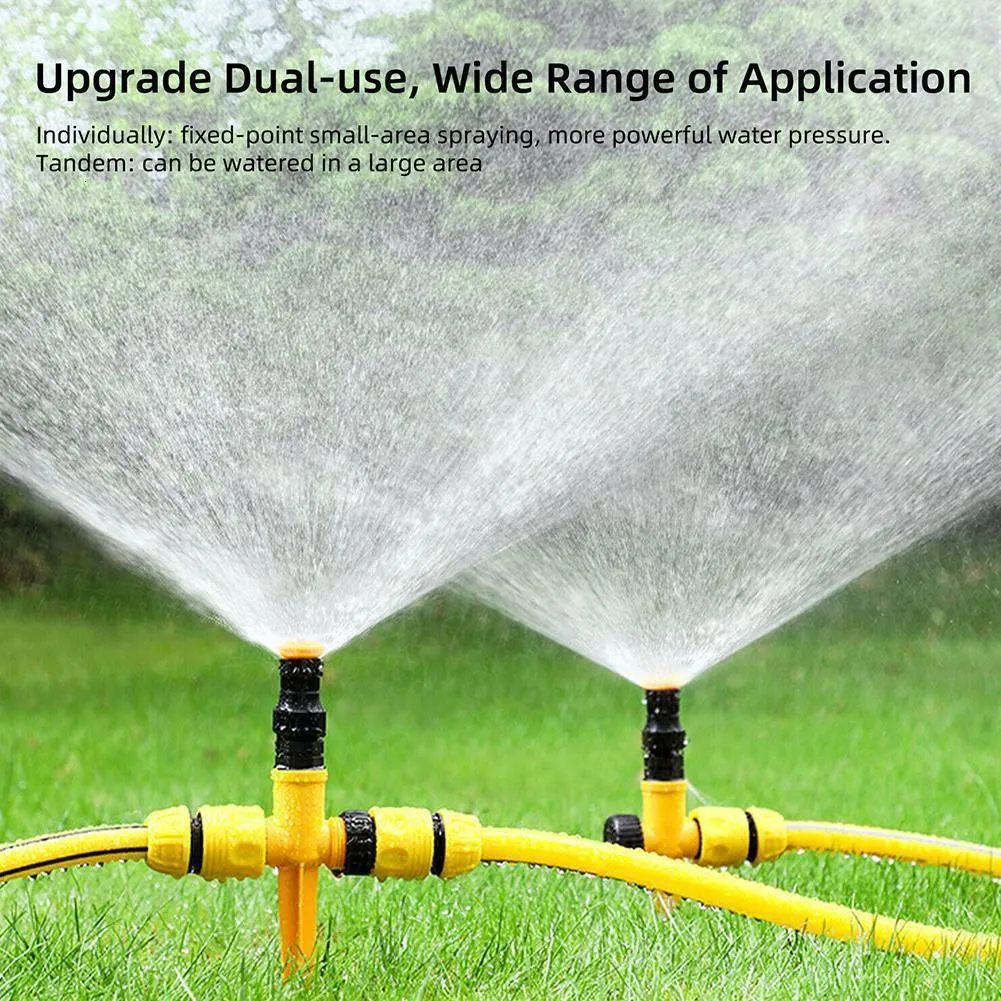
- High water output
- Covers small areas quickly
- Uses more water in less time
- Average: 1.5–3 GPM per head
Best for: Small residential lawns
Rotary (Rotor) Sprinklers
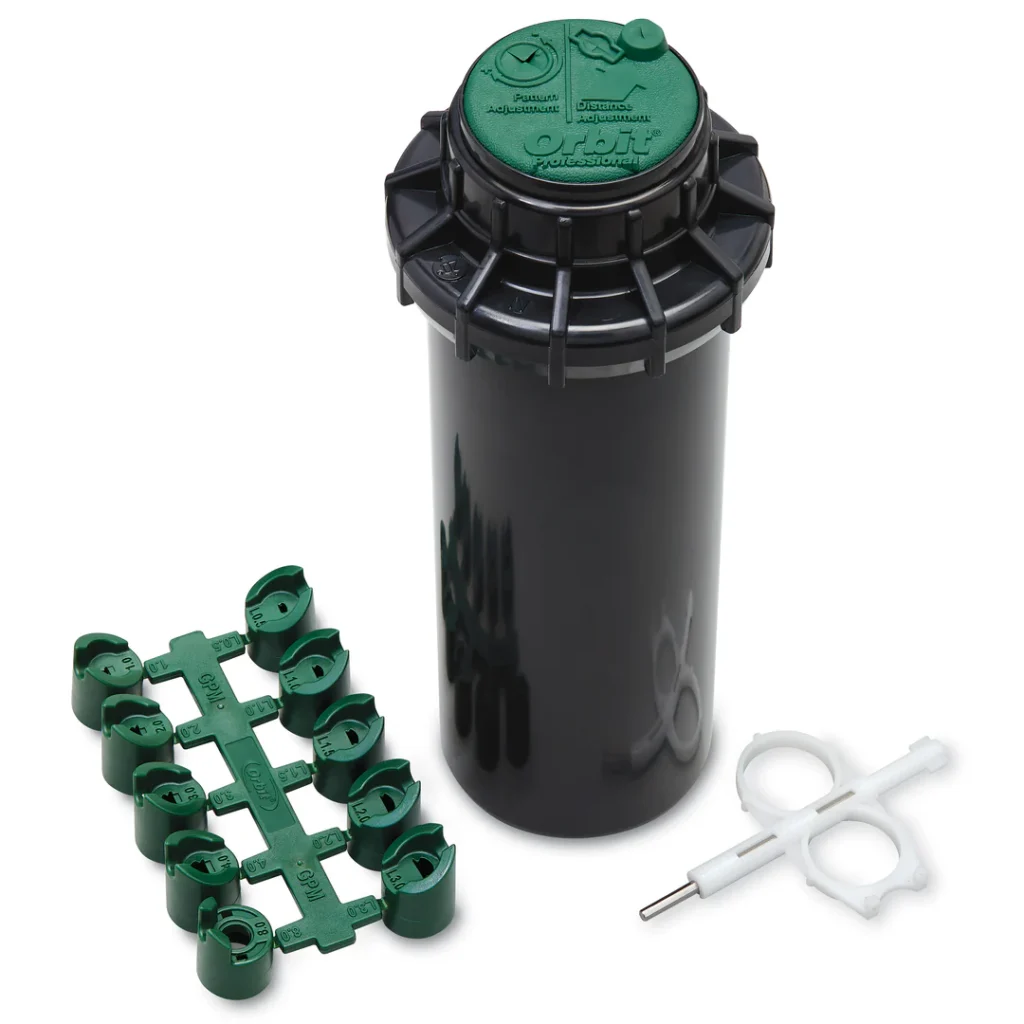
- Slower water application
- More efficient distribution
- Average: 2–4 GPM
Best for: Medium to large lawns
Oscillating Sprinklers
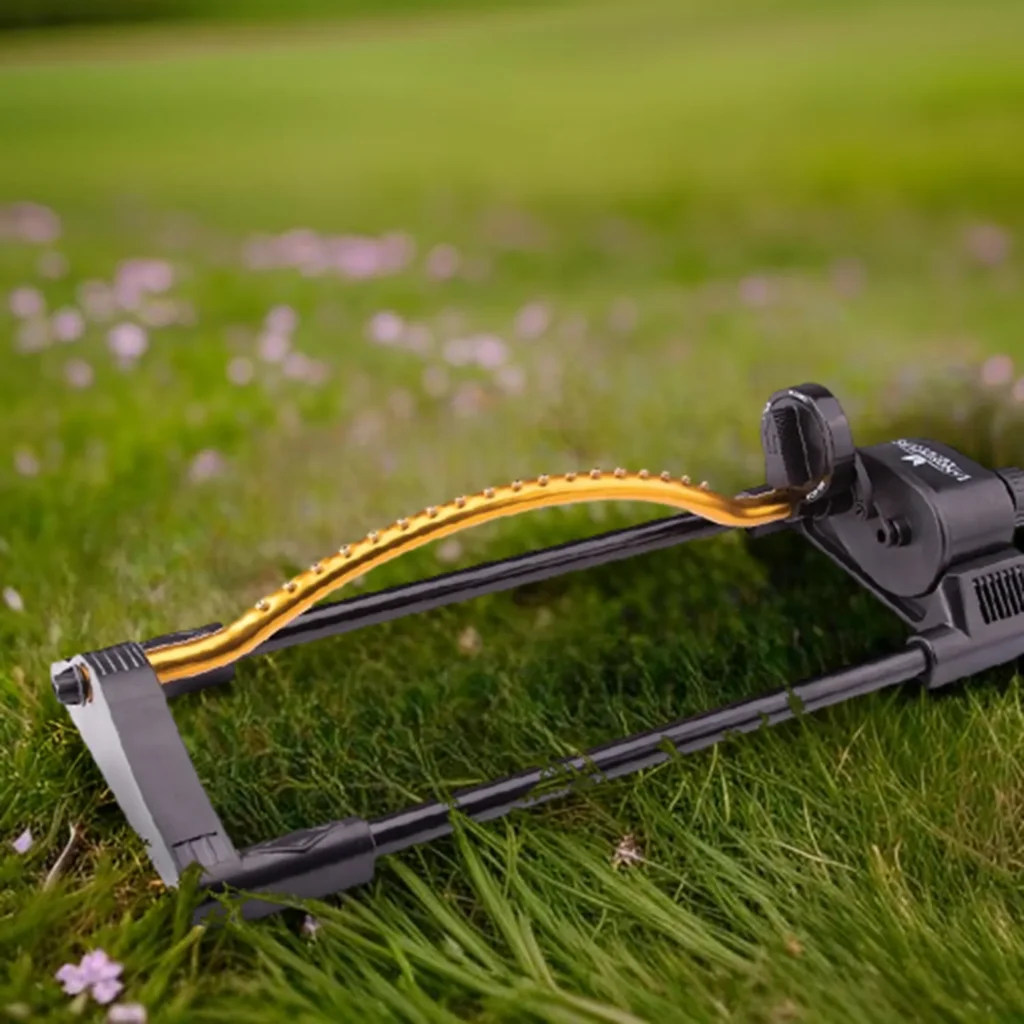
- Connected to garden hose
- Uses 12–17 gallons per minute
- Can use 720–1,020 gallons per hour
Best for: Portable home use
Drip Irrigation Systems
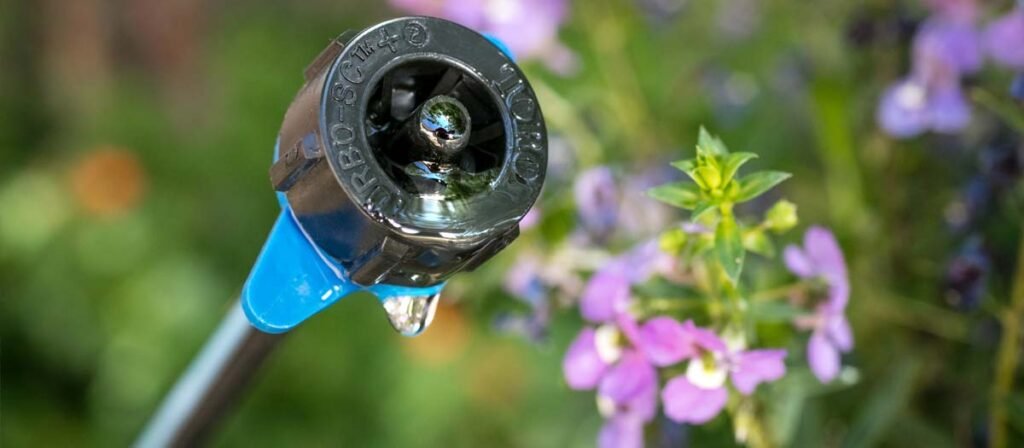
- Very low water usage
- Delivers water directly to roots
- Uses 0.5–2 gallons per hour per emitter
Best for: Gardens and water conservation
Compared to traditional sprinklers, drip irrigation uses 30–50% less water.
Factors That Affect How Much Water a Sprinkler System Uses
Several factors influence how much water your system consumes:
✔ Lawn Size
Larger lawns naturally require more water.
✔ Water Pressure (PSI)
Higher pressure increases gallons per minute.
✔ Nozzle Size
Larger nozzles release more water.
✔ Run Time
Running sprinklers longer significantly increases usage.
✔ Soil Type
Sandy soil drains quickly and may require more watering.
✔ Climate
Hot, dry climates increase evaporation and watering needs.
How to Calculate How Much Water Your Sprinkler System Uses
Here’s a simple formula:
Gallons Per Minute (GPM) × 60 = Gallons Per Hour
Then:
Gallons Per Hour × Number of Sprinkler Heads = Total Usage
Example:
- 3 GPM × 60 = 180 gallons per hour
- 180 × 5 heads = 900 gallons per hour
You can also check your water meter before and after a watering session for an exact measurement.
How Much Water Does a Sprinkler System Use Per Week?
Most lawns need 1 inch of water weekly.
For 1,000 square feet:
- 623 gallons per week
If you water twice per week:
- Divide total gallons by 2 sessions
So if your lawn is 3,000 sq. ft.:
- 1,869 gallons per week
Understanding how much water a sprinkler system uses per week helps prevent overwatering and reduces water bills.
Does a Sprinkler System Increase Your Water Bill?
Yes — but it depends on usage.
If you run a system using 1,000 gallons per session, twice per week:
- 8,000 gallons per month (approx.)
Multiply by your local water rate to estimate cost.
Smart watering practices can reduce water bills by 20–40%.
How to Reduce Sprinkler Water Usage
- When comparing sprinklers to drip irrigation:
Compared to traditional sprinklers, drip irrigation uses 30–50% less water Sprinkler vs Drip Irrigation).
If you’re concerned about how much water a sprinkler system uses, here are simple ways to reduce consumption:
- Water early in the morning (less evaporation)
- Install rain sensors
- Upgrade to high-efficiency nozzles
- Fix leaks immediately.
- Avoid watering on windy days.
- Consider drip irrigation for garden beds.
How Much Water Does a Sprinkler System Use Per Hour?
To determine how much water does a sprinkler system use per hour, you need to consider the type of sprinkler and the number of heads
Average Water Usage Per Hour
On average:
- A single sprinkler head uses 1.5 to 4 gallons per minute (GPM).
- That equals 90 to 240 gallons per hour per sprinkler head.
So, if you have multiple sprinkler heads running at the same time, the total adds up quickly.
Example Calculation
Let’s say:
- Each sprinkler head uses 3 GPM.
- You run the system for 1 hour.
Step 1:
3 GPM × 60 minutes = 180 gallons per hour per head
Step 2:
180 gallons × 6 sprinkler heads = 1,080 gallons per hour
In this example, your sprinkler system uses 1,080 gallons in just one hour.
Water Usage by Sprinkler Type (Per Hour)
To determine how much water does a sprinkler system use per hour, you need to consider the type of sprinkler and the number of heads
- Spray sprinklers: 120–240 gallons per hour per head
- Rotor (rotary) sprinklers: 90–200 gallons per hour per head
- Oscillating sprinklers: 720–1,020 gallons per hour (hose-connected)
- Drip irrigation: 1–4 gallons per hour per emitter
This shows that the answer to how much water a sprinkler system uses per hour depends heavily on the type of sprinkler you are using.
What Affects Hourly Water Usage?
Several factors influence how much water your sprinkler system uses per hour:
- Number of sprinkler heads running
- Water pressure (higher pressure = more flow)
- Nozzle size
- System design
- Irrigation zone layout
Even small adjustments in pressure or nozzle size can significantly change hourly water use.
Why Knowing Hourly Usage Matters
Understanding hourly water consumption helps you:
- Avoid overwatering
- Reduce water bills
- Set proper irrigation schedules
- Improve water efficiency
Water Usage by Type of Sprinkler System
Different types of sprinklers use different amounts of water, which affects how much water does a sprinkler system use overall
Below is a clear breakdown of water usage by sprinkler type.
1️⃣ Spray Sprinkler Systems
Average usage:
- 1.5 to 3 gallons per minute (GPM)
- 90 to 180 gallons per hour per head
Spray sprinklers release a continuous fan of water in a fixed pattern. They apply water quickly, which can sometimes lead to runoff if the soil cannot absorb water fast enough.
Best for:
- Small lawns
- Narrow areas
- Residential yards
Because they apply water quickly, they can increase total usage if not properly timed.
2️⃣ Rotary (Rotor) Sprinkler Systems
Average usage:
- 2 to 4 GPM
- 90 to 240 gallons per hour per head
Rotor sprinklers rotate slowly, distributing water more evenly and at a slower rate. This improves absorption and reduces water waste.
Best for:
- Medium to large lawns
- Open landscapes
If you’re wondering how much water a sprinkler system with rotors uses, it may be similar per hour to spray heads, but rotors are often more efficient overall.
3️⃣ Oscillating Sprinklers
Average usage:
- 12 to 17 GPM
- 720 to 1,020 gallons per hour
These hose-connected sprinklers move back and forth to cover rectangular areas. They use significantly more water per hour compared to in-ground systems.
Best for:
- Temporary watering
- Small home lawns
Because of their high flow rate, they can quickly increase water bills if left running too long.
4️⃣ Drip Irrigation Systems
Average usage:
- 0.5 to 2 gallons per hour per emitter
Drip irrigation delivers water directly to plant roots through small emitters. It is one of the most water-efficient systems available.
Best for:
- Gardens
- Flower beds
- Vegetable plants
- Water conservation
Compared to traditional sprinklers, drip systems can reduce water use by 30–50%.
Which Sprinkler System Uses the Most Water?
If your goal is to determine how much water a sprinkler system uses, here is a simple ranking from highest to lowest usage:
- Oscillating sprinklers (highest)
- Spray sprinklers
- Rotary sprinklers
- Drip irrigation (lowest)
Factors That Affect How Much Water a Sprinkler System Uses
If you’re trying to understand how much water a sprinkler system uses, it’s important to know that water consumption is not the same for every lawn. Several key factors directly impact how much water your system uses per hour, per week, and per season.
Here are the most important ones:
1️⃣ Lawn Size
The larger your lawn, the more water your sprinkler system will use.
- 1,000 sq. ft. needs about 623 gallons for 1 inch of water
- 3,000 sq. ft. needs about 1,869 gallons per week
Bigger areas require more sprinkler heads and longer run times, increasing total water usage.
2️⃣ Number of Sprinkler Heads
Each sprinkler head uses water individually. The more heads running at the same time, the higher the total consumption.
For example:
- 1 head = 180 gallons per hour
- 6 heads = 1,080 gallons per hour
So when calculating how much water a sprinkler system uses, always consider how many heads operate in one zone.
3️⃣ Water Pressure (PSI)
Water pressure affects how fast water flows through your system.
- Higher PSI = More gallons per minute
- Lower PSI = Reduced flow rate
Too much pressure can cause misting, leading to evaporation and wasted water.
4️⃣ Nozzle Size and Type
Different nozzles release different amounts of water.
- Larger nozzles = Higher flow rate
- High-efficiency nozzles = Lower water usage
- Spray heads apply water faster than rotor heads.
Upgrading to efficient nozzles can significantly reduce water use.
5️⃣ Run Time
This is one of the biggest factors.
If your sprinkler runs:
- 20 minutes = Lower usage
- 60 minutes = Triple the usage
Even efficient systems can waste water if they run too long.
6️⃣ Soil Type
Soil affects how quickly water is absorbed.
- Sandy soil drains quickly and may need more frequent watering.
- Clay soil absorbs water slowly and may cause runoff.
If water runs off instead of soaking in, your sprinkler system is using more water than necessary.
7️⃣ Climate and Weather
Hot and dry climates increase evaporation, meaning more watering may be required.
- Summer = Higher water usage
- Rainy seasons = Lower water usage
Using rain sensors can automatically reduce unnecessary watering.
8️⃣ System Maintenance
Leaks, broken sprinkler heads, and clogged nozzles can increase water usage.
Even a small leak can waste hundreds of gallons per month. Regular maintenance keeps your system efficient.
Why These Factors Matter
When asking how much water a sprinkler system uses, the answer depends on a combination of lawn size, equipment, water pressure, and watering habits. Two homes with the same lawn size can have very different water usage based on these factors.
Understanding what affects water consumption allows you to:
- Reduce waste
- Lower your water bill
- Improve lawn health
- Use water more efficiently
How to Calculate How Much Water Your Sprinkler System Uses
If you want an exact answer to how much water a sprinkler system uses, the best method is to calculate it yourself. The process is simple and only requires knowing your sprinkler’s flow rate and run time.
Below is a step-by-step guide.
Step 1: Find the Gallons Per Minute (GPM)
Most sprinkler heads have a GPM rating. You can find it:
- In the manufacturer’s specifications
- On the product packaging
- On the company’s website
If you don’t know the GPM, you can estimate:
- Spray heads: 1.5–3 GPM
- Rotor heads: 2–4 GPM
Step 2: Convert GPM to Gallons Per Hour
Use this simple formula:
Gallons Per Minute (GPM) × 60 = Gallons Per Hour
Example:
3 GPM × 60 = 180 gallons per hour (for one sprinkler head)
Step 3: Multiply by Number of Sprinkler Heads
If you run multiple heads in one zone, multiply:
Gallons Per Hour × Number of Heads = Total Water Used Per Hour
Example:
- 180 gallons per hour
- 5 sprinkler heads
180 × 5 = 900 gallons per hour
So in this example, your system uses 900 gallons in one hour.
Step 4: Calculate Based on Run Time
If your system runs for less than one hour, adjust the numbers.
Example:
- 900 gallons per hour
- The system runs for 30 minutes (0.5 hours).
900 × 0.5 = 450 gallons per session
This gives you a clear answer to how much water a sprinkler system uses each time you water.
Step 5: Calculate Weekly Usage
If you water twice per week:
450 gallons × 2 = 900 gallons per week
If you water three times per week:
450 × 3 = 1,350 gallons per week
Now you know your monthly and seasonal water use as well.
Alternative Method: Use Your Water Meter
You can also measure water usage directly:
- Turn off all water inside your home.
- Record your water meter reading.
- Run your sprinkler system for 30 minutes.
- Check the meter again.
How Much Water Does a Sprinkler System Use Per Week?
If you’re trying to understand how much water a sprinkler system uses, looking at weekly usage gives you a clearer picture than hourly numbers alone. Most lawn watering schedules are based on weekly needs, not daily ones.
The 1-Inch-Per-Week Rule
Most lawns require about 1 inch of water per week, including rainfall.
To put that into gallons:
- 1 inch of water = 623 gallons per 1,000 square feet
So weekly water usage depends mainly on your lawn size.
Weekly Water Usage by Lawn Size
Here’s a simple estimate:
- 1,000 sq. ft. lawn → 623 gallons per week
- 2,000 sq. ft. lawn → 1,246 gallons per week
- 3,000 sq. ft. lawn → 1,869 gallons per week
- 5,000 sq. ft. lawn → 3,115 gallons per week
If you’re wondering how much water a sprinkler system uses per week, these numbers give you a reliable starting point.
Example Weekly Calculation
Let’s say:
- Your system uses 900 gallons per hour.
- You water for 30 minutes per session.
- You water twice per week.
Step 1:
900 gallons × 0.5 hour = 450 gallons per session
Step 2:
450 gallons × 2 sessions = 900 gallons per week
In this case, your sprinkler system uses 900 gallons weekly.
How Frequency Affects Weekly Usage
The more often you water, the higher your total consumption.
For example:
- 450 gallons × 3 times per week = 1,350 gallons
- 450 gallons × 4 times per week = 1,800 gallons
Even small increases in watering frequency can significantly raise total usage.
Seasonal Differences
Weekly water use changes with the season:
- Spring: Lower water needs
- Summer: Highest water usage
- Fall: Reduced watering
- Rainy periods: May not need irrigation
Adjusting your schedule seasonally helps reduce unnecessary water use.
Why Weekly Tracking Is Important
Tracking weekly usage helps you:
- Prevent overwatering
- Keep your lawn healthy.
- Reduce water bills
- Improve irrigation efficiency
Is a Sprinkler System Wasteful?
A sprinkler system is not inherently wasteful. Misalignment, overwatering, leaks, or incorrect timing can cause waste. Proper setup ensures how much water a sprinkler system uses is efficient
When a Sprinkler System Becomes Wasteful
Here are the most common reasons water gets wasted:
1️⃣ Overwatering
Most lawns need only about 1 inch of water per week. Running sprinklers too often or too long can:
- Flood the soil
- Cause runoff
- Promote shallow roots
- Waste hundreds of gallons
Understanding how much water a sprinkler system uses per hour helps prevent overwatering.
2️⃣ Watering at the Wrong Time
Watering during the middle of the day increases evaporation. In hot weather, a large portion of water can evaporate before reaching the roots.
Best time to water:
- Early morning (before 10 AM)
3️⃣ Poor System Design
If sprinkler heads overlap sidewalks, driveways, or streets, water is being wasted. Misaligned or damaged heads can spray water in the wrong direction.
Proper zoning and spacing reduce unnecessary usage.
4️⃣ High Water Pressure
Excess pressure causes misting. Instead of soaking into the soil, water turns into fine droplets that evaporate quickly.
Pressure regulation improves efficiency and lowers total consumption.
5️⃣ Leaks and Maintenance Issues
Even a small underground leak can waste thousands of gallons per month. Broken heads and clogged nozzles also increase water usage.
Regular system checks prevent hidden waste.
Are Sprinkler Systems Less Efficient Than Manual Watering?
Not necessarily.
A properly installed and maintained sprinkler system can actually be more efficient than hand watering because it provides:
- Even coverage
- Consistent scheduling
- Controlled flow rates
The key is understanding how much water a sprinkler system uses and adjusting settings accordingly.
How to Avoid Water Waste
To keep your system efficient:
- Adjust run times based on season
- Install rain or soil moisture sensors
- Upgrade to high-efficiency nozzles
- Fix leaks immediately.
- Avoid watering during windy conditions.
These simple steps can reduce water use by 20–40%.
How to Reduce Sprinkler Water Usage (Save Money & Water)
If you’ve been asking how much water a sprinkler system uses, the next logical question is how to reduce that number. The good news is you don’t have to sacrifice a healthy, green lawn to save water. With a few smart adjustments, you can lower water usage and reduce your monthly bill.
Here are practical ways to make your sprinkler system more efficient.
1️⃣ Water Early in the Morning
Watering between 4 AM and 9 AM reduces evaporation.
Midday watering can lose a significant amount of water to heat and wind before it even reaches the roots. Watering early ensures more water soaks into the soil.
2️⃣ Adjust Run Time
Many lawns are overwatered simply because the sprinkler runs too long.
- Reduce each session by 5–10 minutes
- Check soil moisture before watering
- Avoid watering if rain is expected.
Understanding how much water a sprinkler system uses per hour helps you set accurate run times.
3️⃣ Use Smart Irrigation Controllers
Smart controllers adjust watering schedules based on:
- Weather conditions
- Rainfall
- Soil moisture
- Temperature
These systems can reduce water usage by 20–30% automatically.
4️⃣ Install Rain or Soil Moisture Sensors
Rain sensors prevent your system from running during or after rainfall. Soil moisture sensors detect when the ground already has enough water.
This prevents unnecessary watering and lowers overall consumption.
5️⃣ Upgrade to High-Efficiency Nozzles
Modern sprinkler nozzles are designed to:
- Reduce misting
- Improve water distribution
- Lower gallons per minute (GPM)
High-efficiency nozzles can significantly reduce how much water a sprinkler system uses without affecting lawn health.
6️⃣ Fix Leaks Immediately
Broken sprinkler heads, cracked pipes, or loose fittings waste water quickly.
Even a small leak can waste hundreds of gallons per week. Regular inspections keep your system running efficiently.
7️⃣ Adjust Water Pressure
Excess pressure causes water to turn into mist, which evaporates quickly. Installing a pressure regulator ensures water is delivered at the correct rate.
Proper pressure improves coverage and reduces waste.
8️⃣ Divide Lawn into Zones
Different areas of your yard may have different watering needs.
- Shaded areas require less water.
- Sunny areas may need more
- Sloped areas need shorter cycles
Zoning allows precise watering and prevents overuse.
9️⃣ Consider Drip Irrigation for Garden Beds
Drip systems deliver water directly to plant roots, reducing evaporation and runoff. They use significantly less water than traditional spray systems.
For gardens and flower beds, drip irrigation is often the most efficient option.
Conclusion
Understanding how much water does a sprinkler system use is key to maintaining a healthy lawn efficiently. Proper calculation, smart watering, efficient nozzles, and system maintenance can save thousands of gallons annually while keeping your yard green
FAQs
1️⃣ How many gallons of water does a sprinkler system use per hour?
The amount depends on the type of sprinkler and the number of heads. On average:
- Spray sprinklers: 90–180 gallons per hour per head
- Rotor sprinklers: 90–240 gallons per hour per head
- Oscillating sprinklers: 720–1,020 gallons per hour
- Drip irrigation: 1–4 gallons per hour per emitter
Knowing the GPM of your system helps calculate exact usage.
2️⃣ How much water does a sprinkler system use per week?
Weekly usage depends on lawn size and watering frequency. For a lawn requiring 1 inch of water per week:
- 1,000 sq. ft. → 623 gallons/week
- 2,000 sq. ft. → 1,246 gallons/week
- 3,000 sq. ft. → 1,869 gallons/week
Adjusting for run time and number of watering sessions gives your actual weekly consumption.
3️⃣ Does a sprinkler system increase water bills?
Yes, sprinkler systems add to your water bill if used frequently or inefficiently. Running multiple heads for long periods can use thousands of gallons per month. Using timers, smart controllers, and proper maintenance can reduce extra costs.
4️⃣ Can I reduce how much water my sprinkler system uses?
Absolutely. You can save water by:
- Watering early in the morning
- Reducing run times
- Installing high-efficiency nozzles
- Using smart irrigation controllers or rain sensors
- Fixing leaks and maintaining the system regularly
Even small changes can save hundreds of gallons per month.
5️⃣ Is a sprinkler system wasteful?
A sprinkler system isn’t inherently wasteful. Misaligned heads, overwatering, leaks, or watering at the wrong time can lead to waste. Proper design, scheduling, and maintenance make sprinklers efficient and cost-effective.
6️⃣ How do I calculate how much water my sprinkler system uses?
To calculate:
- Find the GPM of your sprinkler head
- Multiply by 60 to get gallons per hour
- Multiply by the number of heads running
- Adjust for run time to get total usage per session
This calculation gives a clear picture of your system’s water consumption.
7️⃣ Should I consider switching to drip irrigation?
Drip irrigation uses 30–50% less water than traditional sprinklers and delivers water directly to plant roots. It’s ideal for gardens, flower beds, and vegetables while maintaining efficiency.