
Introduction
If you want a lush, green lawn, knowing how long should sprinklers run in each zone is one of the most important things to understand. Many homeowners either overwater or underwater their lawns without realising it. This not only wastes water but can also damage your grass and plants.
The truth is, there is no single watering time that works for everyone. The ideal sprinkler run time depends on several factors like soil type, sprinkler type, climate, and plant needs. When you get it right, your lawn stays healthy, your water bill stays low, and your irrigation system works efficiently.
o get the best results, you should understand how to use sprinkler irrigation system and the Benefits of Sprinkler Irrigation Systems before setting your watering time.
Most lawns need about 1 inch of water weekly, as recommended by the Environmental Protection Agency.
Table of Contents
Complete Guide to How Long Should Sprinklers Run in Each Zone
Understanding sprinkler timing is not complicated when you break it down. Each zone in your irrigation system is designed to water a specific area. These zones may have different needs depending on sun exposure, soil, and plant types.
The key is to water deeply but not too often. This helps roots grow stronger and healthier. If you’re new, start by learning how to turn on a hydro sprinkler system to ensure proper setup.
What is How Long Should Sprinklers Run in Each Zone?
‘How long should sprinklers run in each zone?’ refers to the amount of time each irrigation zone operates during a watering cycle.
Each zone includes:
- A group of sprinklers
- A specific area of your lawn or garden
- A set watering schedule
Instead of watering the entire lawn at once, zones allow better control. For example:
- Front yard may need 20 minutes
- Backyard may need 30 minutes
- Garden beds may need 15 minutes
This targeted watering improves efficiency and reduces waste.
How Long Should Sprinklers Run in Each Zone? Works
Your sprinkler system distributes water evenly across zones. The timing depends on how fast water is absorbed into the soil.
Here’s how it works:
- Sprinklers release water at a specific rate (inches per hour).
- Soil absorbs water at different speeds.
- Run time is adjusted to avoid runoff or pooling.
General Rule:
Most lawns need about 1 to 1.5 inches of water per week.
To achieve this:
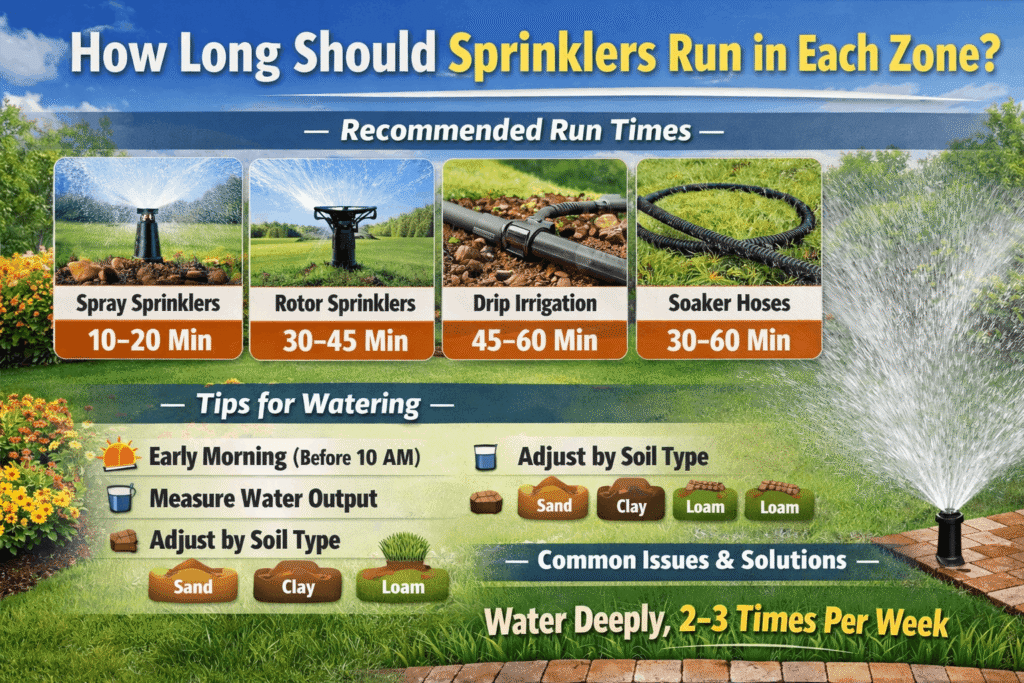
- Spray heads: 10–20 minutes per zone
- Rotor heads: 30–45 minutes per zone
- Drip irrigation: 45–60 minutes
Benefits of How Long Should Sprinklers Run in Each Zone
Setting the correct watering time offers many advantages:
✅ Healthier Lawn
Proper watering encourages deep root growth and greener grass.
✅ Water Conservation
You avoid wasting water by giving only what plants need.
✅ Lower Bills
Efficient watering reduces your monthly water costs.
✅ Prevents Disease
Overwatering can cause fungus and root rot.
✅ Even Coverage
Each zone gets the right amount of water.
Types of How Long Should Sprinklers Run in Each Zone
Different sprinkler systems require different run times.
1. Spray Sprinklers
- Deliver water quickly
- Ideal for small areas
- Run time: 10–20 minutes
2. Rotor Sprinklers
- Rotate and cover large areas
- Slower water delivery
- Run time: 30–45 minutes
3. Drip Irrigation
- Direct water to roots
- Very efficient
- Run time: 45–60 minutes
4. Soaker Hoses
- Slow and steady watering
- Best for garden beds
- Run time: 30–60 minutes
Step-by-Step Guide to Install or Use How Long Should Sprinklers Run in Each Zone?
Follow these steps to set the perfect sprinkler timing:
Step 1: Identify Your Sprinkler Type
Check whether you have spray heads, rotors, or drip systems.
Step 2: Measure Water Output
Place a small container (like a can) in your yard and run sprinklers:
- Measure how much water collects in 15 minutes
- Calculate how long it takes to reach 1 inch
Step 3: Check Soil Type
- Sandy soil: absorbs fast → shorter, more frequent watering
- Clay soil: absorbs slowly → longer, less frequent watering
- Loam soil: balanced → moderate watering
Step 4: Adjust Run Time Per Zone
Set each zone differently based on:
- Sun exposure
- Plant type
- Soil condition
Step 5: Schedule Watering
Best time to water:
- Early morning (before 10 AM)
Avoid:
- Midday (evaporation loss)
- Night (fungus risk)
Experts recommend watering early morning, as advised by University of California Agriculture and Natural Resources.
Common Problems and Solutions
Even with a good system, problems can occur.
❌ Overwatering
Problem: Soggy soil, yellow grass
Solution: Reduce run time and frequency
❌ Underwatering
Problem: Dry patches, brown grass
Solution: Increase watering duration
❌ Uneven Coverage
Problem: Some areas are too wet, others dry.
Solution: Adjust sprinkler heads or add zones.
❌ Runoff
Problem: Water flowing away
Solution: Use the cycle-and-soak method.
❌ Broken Sprinklers
Problem: Leaks or weak spray
Solution: Replace or repair heads.
Expert Tips to Improve Performance
Here are pro tips to maximise efficiency:
- Water deeply but less frequently
- Use a smart irrigation controller
- Adjust watering seasonally
- Aerate your lawn for better absorption
- Group plants with similar water needs
Cycle and Soak Method:
Instead of watering for 30 minutes at once:
- Water for 15 minutes
- Wait 30 minutes
- Water another 15 minutes
This prevents runoff and improves absorption.
Comparison with Alternative Methods
Let’s compare sprinkler watering with other methods:
Sprinklers vs. Hand Watering
- Sprinklers: consistent and automated
- Hand watering: time-consuming and uneven
Sprinklers vs Drip Irrigation
- Sprinklers: best for lawns
- Drip: best for plants and gardens
Sprinklers vs. Rainfall
- Natural rain is ideal.
- Sprinklers help during dry periods.
Conclusion
Understanding how long sprinklers should run in each zone is the key to a healthy, beautiful lawn. The right watering time depends on your sprinkler type, soil, and climate.
As a simple guideline:
- Spray heads: 10–20 minutes
- Rotors: 30–45 minutes
- Drip systems: 45–60 minutes
Always monitor your lawn and adjust as needed. A well-timed sprinkler system saves water, reduces costs, and keeps your grass green all year.
Start optimising your irrigation today and see the difference in just a few weeks.
FAQs
1. How long should sprinklers run in each zone?
Typically 10–45 minutes depending on sprinkler type and soil conditions.
2. How many times a week should I water my lawn?
2–3 times per week is ideal for most lawns.
3. Is it better to water longer or more often?
Water longer but less often to promote deep root growth.
4. What time is best to run sprinklers?
Early morning before 10 AM is the best time.
5. Can I run all sprinkler zones at once?
No, zones should run separately for proper water pressure.
6. How do I know if I am overwatering?
Signs include soggy soil, yellow grass, and fungus growth.
7. Does soil type affect sprinkler run time?
Yes, sandy soil needs shorter watering, while clay needs longer sessiodo not have have not enough Humanizer words left. Upgrade your Surfer plan.