
Introduction
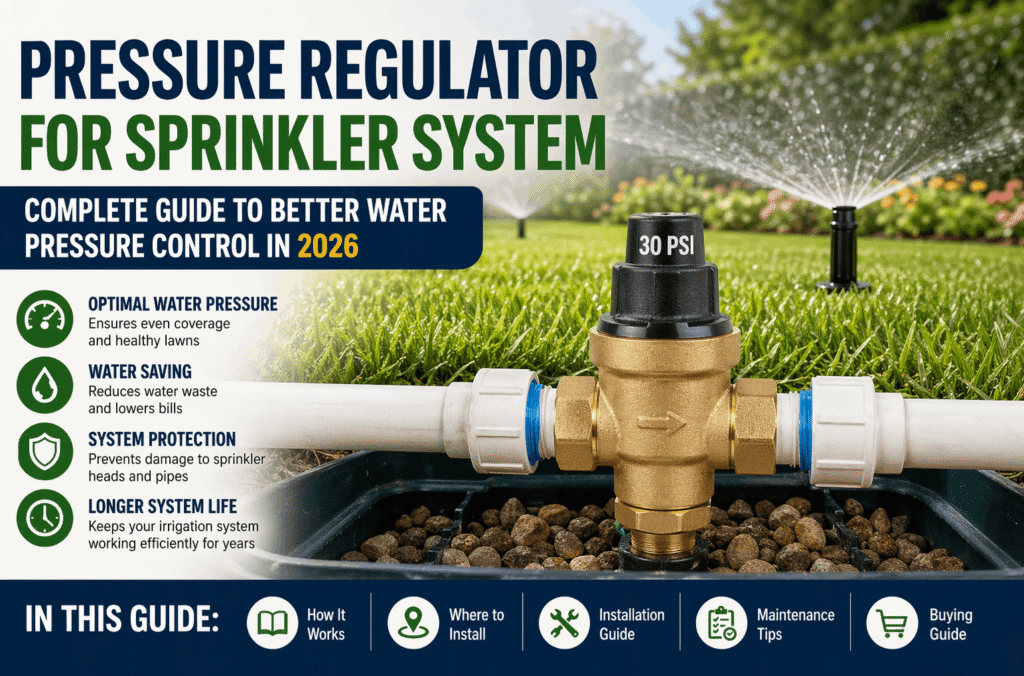
Pressure regulator for sprinkler system is an essential device used to control and stabilize water pressure in irrigation systems. It ensures that your sprinklers work efficiently, deliver even water coverage, and avoid damage caused by high or low pressure.
If your water pressure is too high, your sprinklers can mist, waste water, and even get damaged. If it is too low, your lawn will not get even watering, leaving dry patches everywhere.
If you are new to irrigation systems, you should first understand the basics in our sprinkler system installation guide.
According to the US Geological Survey, water pressure plays a major role in how efficiently irrigation systems distribute water across different landscapes: water science school
Table of Contents
What Is a Pressure Regulator for a Sprinkler System?
A pressure regulator for a sprinkler system is a device that controls and reduces incoming water pressure to a safe and stable level for irrigation use.
Most residential water supply lines have pressure that is too high for sprinklers. Without regulation, this can lead to system damage and inefficient watering.
It also works closely with other components like a backflow preventer in sprinkler system to keep your water safe and system efficient.
The regulator ensures that:
- Water flows at a consistent pressure
- Sprinkler heads operate correctly
- Water is distributed evenly across your lawn.
In simple words, it acts like a “speed control” for water flow.
Why Pressure Regulation Is Important in Sprinkler Systems
Using a pressure regulator for a sprinkler system is not optional if you want a healthy irrigation system. It directly affects performance, efficiency, and durability.
Here’s why it matters:
1. Prevents Water Waste
High pressure creates mist instead of droplets. This means water evaporates before reaching the soil.
2. Protects Sprinkler Heads
Too much pressure can break sprinkler heads or cause leaks in fittings.
3. Improves Water Coverage
Proper pressure ensures all areas of your lawn get equal watering.
4. Saves Money
Efficient water use reduces your monthly water bill.
5. Extends System Life
All irrigation parts last longer when pressure is controlled.
Without a pressure regulator for a sprinkler system, your irrigation setup will always work against itself. Water conservation is also a major reason to use proper irrigation tools. The US EPA WaterSense program highlights how efficient water systems reduce waste and save money: watersense
How a Pressure Regulator for Sprinkler System Works
The working principle of a pressure regulator for a sprinkler system is simple.
- Water enters the regulator from your main supply line.
- Inside the device, a spring-loaded diaphragm controls flow.
- If pressure is too high, the valve restricts flow.
- If pressure drops, it allows normal flow again.
- The output is steady, controlled pressure.
Think of it like a smart gate that adjusts itself automatically based on water force.
Most regulators are pre-set to a specific PSI (pounds per square inch), such as 30 PSI or 40 PSI, depending on your system needs.
For low-pressure irrigation setups like drip lines, a pressure regulator for sprinkler system must be adjusted carefully. You can learn more about low-pressure systems in our drip irrigation system guide. US Geological Survey – water pressure and systems
Ideal Water Pressure for Sprinkler Systems
The correct pressure is crucial for performance.
Here are general recommendations:
- Spray sprinklers: 30–40 PSI
- Drip irrigation: 20–30 PSI
- Rotor sprinklers: 40–50 PSI
If your pressure goes above these levels:
- Water misting increases
- Coverage becomes uneven
- System wear increases
If pressure is too low:
- Sprinklers may not pop up
- Water distribution becomes weak
That’s why installing a pressure regulator for a sprinkler system is essential for balance.
Types of Pressure Regulators for Sprinkler Systems
There are several types of pressure regulator for sprinkler system devices available in the market.
1. Inline Pressure Regulators
Installed directly in the main irrigation line.
Best for full system control.
2. Adjustable Pressure Regulators
Allow you to change pressure manually.
Good for customised setups.
3. Fixed Pressure Regulators
Pre-set to a specific PSI.
Simple and reliable for beginners.
4. Sprinkler Head Built-in Regulators
Built inside sprinkler heads themselves.
Used in modern irrigation systems.
5. Backflow Preventer Integrated Regulators
Combine two functions in one unit for efficiency.
Each type of pressure regulator for a sprinkler system serves different needs depending on system size and design.
Where to Install a Pressure Regulator in Your Irrigation System
Proper placement is very important for performance.
You can install a pressure regulator for a sprinkler system at:
- After the main water supply line
- Before sprinkler zone valves
- Near backflow preventer devices
- Before drip irrigation lines
For best results, install it as close as possible to the start of your irrigation system.
Step-by-Step Installation Guide (Basic Overview)
Installing a pressure regulator for a sprinkler system is not very difficult if you follow basic steps.
Step 1: Turn Off Water Supply
Always shut off water before starting.
Step 2: Locate Installation Point
Find the main irrigation line or valve box.
Step 3: Cut Pipe if Needed
Use proper tools to prepare space for installation.
Step 4: Attach the Regulator
Connect it securely using fittings and seal tape.
Step 5: Check Direction
Make sure water flow direction matches arrows on the device.
Step 6: Turn Water On and Test
Check for leaks and measure pressure output.
If installed correctly, your pressure regulator for the sprinkler system will immediately stabilise water flow.
Common Problems Caused by Incorrect Water Pressure
Without a pressure regulator for a sprinkler system, several problems can occur:
High Pressure Issues:
- Foggy sprinkler spray
- Broken sprinkler heads
- Water waste
- Uneven irrigation
Low Pressure Issues:
- Weak spray distance
- Dry patches in lawn
- System not activating properly
These issues reduce lawn health and waste water over time.
Maintenance Tips for Pressure Regulators
To keep your pressure regulator for a sprinkler system working efficiently, follow these tips:
- Check pressure levels every season
- Clean filter screens if present
- Inspect for leaks or cracks
- Replace damaged seals
- Test system after long dry seasons
A well-maintained regulator can last many years without issues.
Best Pressure Regulator for Sprinkler System (Buying Guide)
When choosing a pressure regulator for a sprinkler system, consider these factors:
1. PSI Rating
Choose based on your sprinkler type (30–50 PSI common).
2. Flow Rate (GPM)
Ensure it matches your system’s water demand.
3. Material Quality
- Brass: durable and long-lasting
- Plastic: budget-friendly but less durable
4. System Compatibility
Make sure it fits your pipe size and irrigation setup.
5. Brand Reliability
Choose trusted irrigation brands for better performance.
A good pressure regulator for a sprinkler system is an investment that improves your entire lawn irrigation system.
Conclusion
A pressure regulator for a sprinkler system is a small device that makes a huge difference in irrigation performance. It protects your system, saves water, and ensures your lawn gets even and healthy watering.
If you want a long-lasting sprinkler system, installing the right pressure regulator is not optional—it is essential.
Whether you are building a new irrigation setup or improving an old one, always choose a quality pressure regulator for your sprinkler system and install it correctly. It will save you money, time, and maintenance problems in the long run.
(FAQs)
1. What does a pressure regulator for a sprinkler system do?
It controls water pressure and keeps it stable for efficient irrigation.
2. Do I really need a pressure regulator for sprinklers?
Yes, especially if your water pressure is above 40 PSI.
3. Where should I install it?
It is usually installed near the main irrigation line or after the backflow preventer.
4. What happens if I don’t use one?
You may face sprinkler damage, water waste, and uneven watering.
5. Can I install it myself?
Yes, basic installation can be done with simple tools and instructions.
6. What PSI is best for sprinkler systems?
Most systems work best between 30 and 50 PSI depending on type.
7. How long does a pressure regulator last?
A good quality regulator can last 5–10 years with proper maintenance.