
Introduction
If you’re trying to figure out how to tell if sprinkler zone is broken, the first clues are usually easy to spot once you know where to look: a patch of lawn that stays dry, a valve box that won’t stop humming, or a controller that just skips a station. These are the earliest hints that one of your sprinkler zones has failed. Catching the problem early can save you from a much bigger repair bill and a dead section of lawn by mid-summer.
This guide walks through the exact signs of a broken sprinkler zone, what’s causing each one, and how to confirm the diagnosis yourself before you call in a contractor.
Table of Contents
What Counts as a “Zone” and Why It Matters
Every sprinkler system is split into zones (also called stations)—each one controlled by its own valve and covering a specific area of the yard. When people ask how to tell if a sprinkler zone is broken, they’re usually dealing with one of three root problems:
- Electrical failure — the valve isn’t getting a signal from the controller
- Mechanical failure — the valve itself is stuck open, stuck closed, or leaking internally
- Hydraulic failure — a broken pipe, cracked head, or clogged line inside that specific zone
Because a single zone failing doesn’t always affect the rest of the system, it’s easy to miss for weeks. Below are the clearest indicators to watch for.
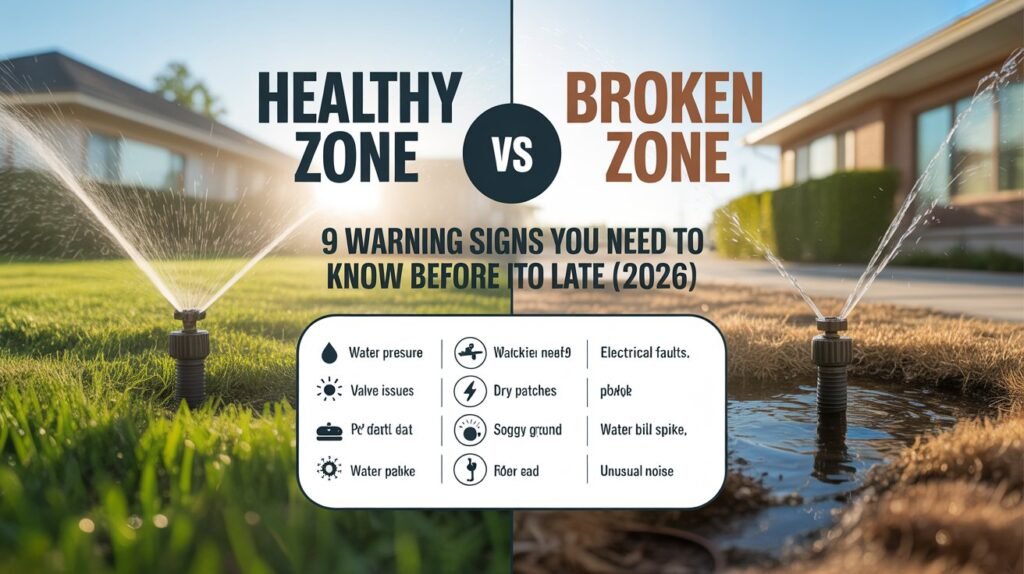
9 Signs a Sprinkler Zone Is Broken
1. One Area of the Lawn Is Drier Than the Rest
If every zone runs fine except one section stays brown or crunchy while the surrounding grass is healthy, that zone likely isn’t getting water at all — usually a valve that won’t open or a snapped supply line. If yellowing shows up even in areas that are getting watered, it’s worth ruling out other causes too — see our guide on why your lawn turns yellow after watering.
2. A Zone Won’t Turn Off
Water still trickling or gushing from heads long after the cycle ends almost always points to a valve diaphragm that’s stuck open or debris lodged in the valve seat, preventing it from closing fully.
3. A Zone Never Turns On
If you run a manual test from the controller and nothing happens on that station — no water, no sound, no movement in heads — check the solenoid wiring first. A cut, corroded, or disconnected wire is the most common reason a single zone goes silent.
4. Low or Uneven Water Pressure on One Zone Only
When every other zone sprays a full, even pattern but one zone sputters or barely reaches half its normal radius, you’re likely dealing with a partial clog, a cracked lateral pipe, or too many heads pulling from a line that’s lost pressure. For a deeper breakdown of causes and fixes.
5. Water Pooling or a Soggy Patch Near a Valve Box
A consistently wet or sunken area of grass around a valve box is a strong sign of an underground leak — either a cracked fitting or a valve that’s leaking internally into the surrounding soil. If the sogginess is spreading rather than staying localized to the valve box, check our 11 warning signs of overwatering your lawn to rule out a broader watering-schedule issue.
6. Heads That Don’t Pop Up (or Won’t Retract)
A head that stays sunken during a cycle usually means low pressure or debris blocking the riser in that zone. A head that stays popped up after the cycle ends points back to the valve not closing properly. Worn-out heads are also a common culprit — see our picks for the best rotary sprinkler heads for large lawns if yours are due for a replacement.
7. Controller Shows an Error or Skips the Station
Smart controllers and many modern timers will flag a zone with a “no flow”, “high current”, or “shorted” alert. This is one of the fastest ways to confirm the issue is electrical rather than mechanical — the controller is detecting a wiring fault on that specific circuit.
8. Water Bill Spikes Without a Visible Reason
A jump in your water bill with no obvious surface leak often means an underground pipe break within one zone, silently running or leaking below the surface where you can’t see it. Our complete 2026 guide to water-saving sprinkler systems also covers upgrades that help catch this kind of waste earlier.
9. Hissing, Humming, or Buzzing From the Valve Box
An audible hum or buzzing sound coming from the valve box during a cycle usually indicates the solenoid is receiving power but the valve mechanism itself is failing to actuate — a worn diaphragm or a solenoid on its way out.
Why Zones Fail: The Root Causes Explained
Understanding why a zone breaks makes it much easier to spot the pattern next time. Here’s a closer look at what’s actually happening behind each type of failure.
Electrical Failures
Most controllers send a 24-volt AC signal down a dedicated wire to the solenoid on each valve. Over time, that wire can corrode inside the valve box (especially if the box fills with water), get nicked during yard work, or chewed through by rodents. When the signal never reaches the solenoid, the valve has no reason to open — so the zone simply does nothing when it’s supposed to run. This is also the most common reason a zone will test fine with a multimeter at the controller but still fail to open at the valve itself, since the break can be anywhere along the wire run underground.
Mechanical (Valve) Failures
Every automatic valve relies on a rubber diaphragm that lifts to let water through and seals back down to shut it off. Grit, sand, or small debris from municipal water lines can get trapped under that diaphragm, holding it slightly open — which is why a zone might drip or trickle continuously even when it’s “closed.” On the other end, an old or warped diaphragm can lose its seal entirely, or the small bleed screw on the valve can be misadjusted, both of which stop the valve from opening even when it’s getting full power.
Hydraulic (Pipe and Head) Failures
Even with a perfectly working valve, a zone can still look “broken” because of what happens downstream. Freeze damage is the single biggest culprit here — water left in the lines over winter expands as it freezes and cracks PVC pipe or fittings at their weakest joint. Tree roots can also crush or intrude into buried lines over several seasons, and lawn equipment or aerators occasionally puncture shallow-buried pipe without anyone noticing until the next cycle runs.
Tools You’ll Need for a DIY Diagnosis
Before you start testing, it helps to have a few basics on hand so you’re not making multiple trips back to the garage:
- A flathead and Phillips screwdriver for the valve box lid and wire terminals
- A multimeter capable of reading ohms (resistance) for solenoid testing
- Waterproof wire connectors (the gel-filled kind) in case you find a bad splice
- A small wire brush or sandpaper to clean corroded connections
- A shovel or turf spade if you suspect a pipe break and need to expose the line
- Replacement nozzles or a spare diaphragm kit if the valve brand is known
Quick Diagnostic Checklist
| Symptom | Most Likely Cause | Where to Check |
|---|---|---|
| Zone won’t turn on | Bad wire, dead solenoid, tripped breaker | Valve box wiring, controller station output |
| Zone won’t turn off | Debris in valve seat, stuck diaphragm | Inside the valve, diaphragm assembly |
| Low pressure, one zone only | Clogged filter, cracked lateral pipe | Valve filter screen, pipe run to heads |
| Dry patch, otherwise normal lawn | Broken supply line, closed valve | Trace pipe path, inspect valve |
| Soggy ground near valve box | Underground leak | Valve box fittings, surrounding soil |
| Controller shows fault code | Short circuit or bad solenoid | Zone wiring, solenoid resistance test |
How to Confirm the Diagnosis Yourself
- Run a manual zone test. Activate the suspected zone directly from the controller and watch it for a full cycle.
- Check the valve box. Open it up and look for standing water, corrosion on wire connections, or a valve that’s visibly cracked.
- Test the solenoid. A multimeter reading of roughly 20-60 ohms across the solenoid wires is normal; no reading or a very high reading usually means it needs replacing.
- Inspect the heads in that zone. Pull up nearby heads to check for clogged nozzles, cracked bodies, or missing filters.
- Look at water pressure at the first head. If pressure is fine at the valve but drops off toward the end of the line, suspect a break somewhere in between.
When to Repair It Yourself vs. Call a Professional
Wiring issues, clogged nozzles, and simple valve diaphragm swaps are usually manageable as DIY fixes with basic tools and a trip to the hardware store. Broken mainline pipes, multiple zones failing at once, or persistent electrical shorts are better left to a licensed irrigation contractor — chasing an underground leak without the right equipment can turn a small repair into a much bigger one. If your whole system is aging or failing zone by zone, it may also be worth comparing options in our best sprinkler systems guide for 2026 rather than repairing the same valve repeatedly.
Preventing Zone Failures Going Forward
- Winterize the system properly before the first frost to avoid pipe cracks from freezing water
- Inspect valve boxes each spring for debris, insects, or root intrusion
- Avoid running zones with visibly damaged heads, since backed-up pressure stresses the valve
- Keep an eye on your water bill month to month as an early leak indicator
- Stick to a consistent watering schedule — see how often you should water your lawn so you can quickly notice when a zone is behaving differently than usual
- Have the system professionally audited every couple of seasons, especially on older installs
Routine seasonal care like this is also recommended by the Irrigation Association as part of standard system maintenance, and the EPA WaterSense program offers additional guidance on cutting water waste from leaks and inefficient irrigation systems.
Frequently Asked Questions
How do I know which zone is broken on my sprinkler system? Run each zone manually from the controller one at a time and watch for the specific symptoms above — no water, water that won’t stop, low pressure, or heads that won’t pop up. The zone showing the problem is the one that needs attention.
Can a broken sprinkler zone fix itself? No. A stuck valve, cut wire, or cracked pipe won’t resolve on its own and typically gets worse the longer it runs unaddressed, especially if water is pooling underground.
How much does it cost to fix a broken sprinkler zone? Simple fixes like a solenoid or a clogged nozzle often run under $50 in parts if done yourself. Valve replacements or buried pipe repairs done by a professional typically range higher depending on depth and accessibility.
Why does only one zone on my sprinkler system have low pressure? This usually points to a localized clog, a partially closed valve, or a crack somewhere along that specific zone’s pipe run — not a whole-system pressure issue, since the other zones are working normally.
Can freezing weather break a sprinkler zone even if I don’t use it in winter? Yes. If a zone wasn’t properly blown out or drained before winter, any water left trapped in the pipes can freeze, expand, and crack a fitting or pipe joint — a failure you often won’t notice until you turn the system back on in spring.
Is it normal for a sprinkler valve to make noise when it opens or closes? A brief, soft click as the solenoid engages is normal. A loud hum, buzzing, or hissing that continues through the cycle is not, and usually signals a worn diaphragm, a failing solenoid, or a pressure issue that’s worth investigating before it leads to a full valve failure.
Have a specific symptom that isn’t listed here? Compare notes with our related guides on best impact sprinklers for large lawns and signs of overwatering your lawn for more zone-specific fixes.