
Table of Contents
Introduction
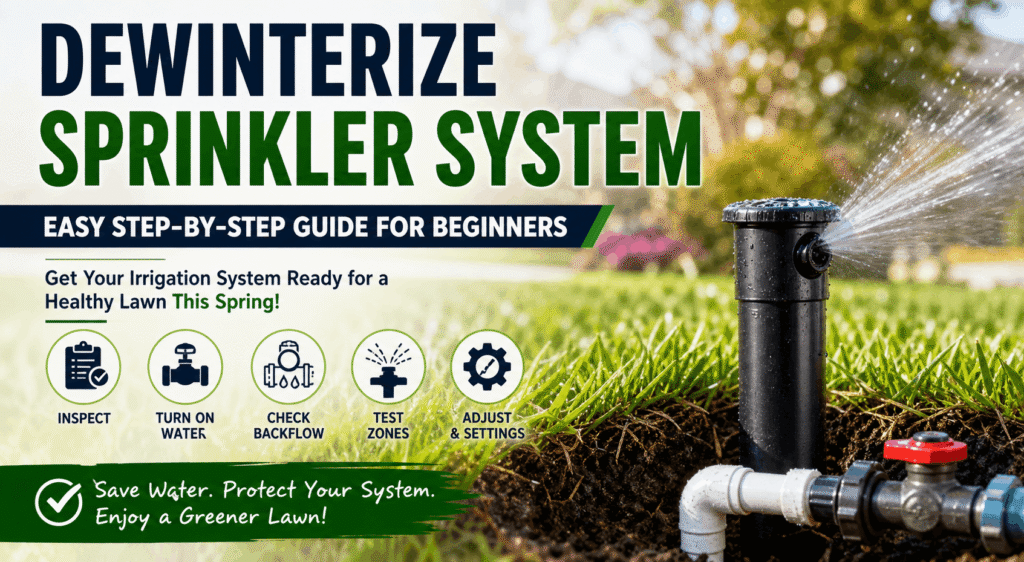
Dewinterize sprinkler system properly to protect your irrigation system and keep your lawn healthy after winter. Many homeowners make mistakes during spring startup that can lead to leaks, pipe damage, or poor water flow.
Many homeowners feel confused about where to start. The good news? You don’t need to be an expert. With the right steps, tools, and a little patience, you can safely bring your irrigation system back to life.
If you’re new, you can also learn how to turn on a hydro sprinkler system and understand how to use sprinkler irrigation system for better results. According to water-saving guidelines from water-efficient irrigation practices, proper sprinkler management can reduce water waste significantly.
What Does It Mean to Dewinterize a Sprinkler System?
To de-winterise a sprinkler system means preparing your irrigation system for use after it has been shut down for winter.
During winter, systems are usually drained or blown out to prevent freezing damage. Dewinterising reverses that process by:
- Turning the water supply back on
- Checking all pipes and valves
- Testing sprinkler zones
- Adjusting system settings
In simple words, it’s about getting your sprinkler system ready for spring and summer watering.
When Should You De-winterise Your Sprinkler System?
Timing is very important when you dewinterise sprinkler system setups.
If you do it too early, freezing temperatures can still damage your pipes. If you wait too long, your lawn may suffer.
Best Time to De-winterise:
- When temperatures stay above freezing (0°C / 32°F) consistently
- Early to mid-spring in most regions
- When there’s no risk of overnight frost
Signs It’s Safe:
- Soil is no longer frozen.
- Trees and grass are starting to grow.
- Weather forecasts show stable, warm temperatures.
Tools & Materials You’ll Need
Make sure your Backflow Preventer in Sprinkler System is working properly to avoid contamination issues.
Before you start, gather everything you need. This makes the process faster and easier.
Basic Tools:
- Flathead screwdriver
- Adjustable wrench
- Pliers
- Sprinkler key (if required)
Optional Supplies:
- Replacement sprinkler heads
- Teflon tape
- Cleaning brush
Having these tools ready will help you de-winterise sprinkler system parts without delays.
Step-by-Step Guide to Dewinterize a Sprinkler System
This is the most important part. Follow each step carefully to avoid damage.
Step 1: Inspect the System
Start by checking your entire sprinkler system.
Look for:
- Cracked pipes
- Broken sprinkler heads
- Loose fittings
Fix any visible issues before turning on the water.
Step 2: Turn On the Main Water Supply Slowly
This step is critical when you dewinterise sprinkler system components.
- Open the main valve very slowly.
- Allow pipes to fill gradually
- Avoid sudden pressure build-up
Turning water on too fast can cause pipe bursts, also known as water hammer.
Step 3: Check the Backflow Preventer
The backflow preventer protects your water supply.
- Open valves slowly
- Watch for leaks
- Tighten connections if needed
If you notice major leaks, repair them before moving forward.
Step 4: Activate Each Zone One by One
Now test your system zone by zone.
- Turn on one zone at a time
- Observe water pressure
- Check spray coverage
This helps identify problems in specific areas.
Step 5: Adjust Sprinkler Heads
Sprinkler heads often shift during winter.
- Adjust direction for proper coverage
- Clean clogged nozzles
- Replace damaged heads
Proper alignment ensures even watering.
Step 6: Check the Controller Settings
Finally, set your watering schedule.
- Reset timer if needed
- Adjust watering times for spring
- Avoid overwatering
Your system is now ready after you dewinterise the sprinkler system successfully.
Common Problems When Dewinterising (And Fixes)
Even if you follow all steps, some issues may appear.
1. Low Water Pressure
Cause: Leaks or partially closed valves
Fix: Check connections and fully open valves.
2. Sprinkler Heads Not Popping Up
Cause: Dirt or damage
Fix: Clean or replace heads
3. Leaking Pipes
Cause: Winter damage
Fix: Repair or replace damaged sections
4. Uneven Watering
Cause: Misaligned heads
Fix: Adjust spray direction
Mistakes to Avoid When De-winterising a Sprinkler System
Avoid these common mistakes to protect your system:
- Turning water on too quickly
- Skipping system inspection
- Ignoring small leaks
- Not testing all zones
- Overwatering early in the season
Making these mistakes can cost you time and money.
Professional vs DIY De-winterising
You can either do it yourself or hire a professional.
DIY Benefits:
- Saves money
- Easy with basic knowledge
- Gives you control
Professional Benefits:
- Expert inspection
- Faster service
- Less risk of mistakes
When to Hire a Pro:
- Large or complex systems
- Frequent past issues
- No experience with irrigation
How Much Does It Cost to Dewinterize a Sprinkler System?
Proper irrigation setup also supports efficient water use in landscaping U.S. Department of Agriculture which helps reduce long-term costs.
The cost depends on whether you do it yourself or hire a professional.
DIY Cost:
- Usually $0–$50 (basic tools only)
Professional Cost:
- Typically $75–$200 depending on system size
Factors Affecting Cost:
- Number of zones
- System complexity
- Repairs needed
Doing it yourself is cheaper, but professionals offer convenience.
Maintenance Tips After De-winterising
Regular care is important, so follow this guide on how to maintain a sprinkler system to keep everything running smoothly.
After you dewinterise the sprinkler system, regular maintenance is important.
Follow These Tips:
- Check system monthly
- Clean sprinkler heads regularly
- Adjust watering based on weather
- Fix leaks immediately
- Monitor water pressure
Proper care keeps your system efficient and long-lasting.
To keep your system running smoothly, follow a proper routine on how to maintain a sprinkler system and understand the Benefits of Sprinkler Irrigation Systems for long-term efficiency. Experts from irrigation system maintenance standards Irrigation Association recommend regular seasonal inspections.
Conclusion
To de-winterise a sprinkler system correctly is essential for maintaining a healthy lawn and avoiding expensive repairs. By following the step-by-step process, you can safely restart your irrigation system and ensure it runs efficiently throughout the season.
Start with a careful inspection, turn on water slowly, and test each zone properly. Don’t forget to fix small issues early and maintain your system regularly.
With the right approach, you’ll save money, protect your investment, and enjoy a lush green lawn all season long.
(FAQs)
1. How long does it take to dewinterise a sprinkler system?
It usually takes 1–2 hours, depending on system size and condition.
2. Can I dewinterise the sprinkler system myself?
Yes, most homeowners can do it easily by following proper steps.
3. What happens if I turn it on too early?
Freezing temperatures can damage pipes and cause leaks.
4. Do I need a professional every year?
No, but hiring one is helpful if your system is complex.
5. Why is my sprinkler system leaking after winter?
Leaks are usually caused by frozen and cracked pipes.
6. How often should I check my sprinkler system?
Check it at least once a month during the watering season.
7. What is the difference between winterising and dewinterising?
Winterising prepares the system for cold weather, while dewinterising gets it ready for use again.