
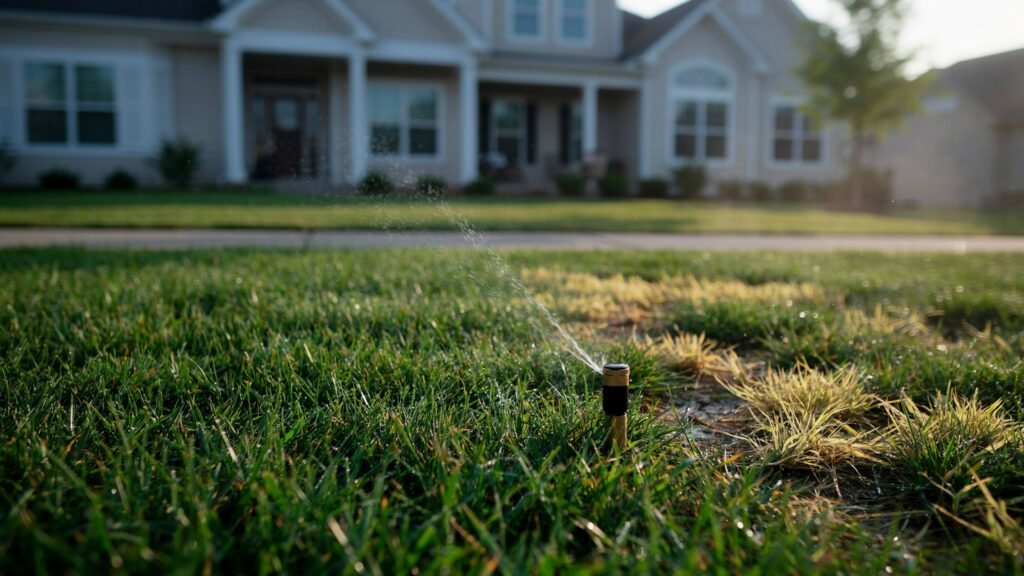
If your sprinkler system leaks water when turned off, the cause is usually a valve that does not close fully, water draining out of the lowest sprinkler heads, a worn head seal, a faulty backflow preventer, or a leak in the pressurized mainline. Start with a water meter test to confirm the leak, then check the valve boxes, the heads, and the backflow preventer in that order.
This guide covers in-ground residential sprinkler systems with a controller, valves in the yard, and a connection to your home’s water supply. It does not cover fire sprinkler systems or hose-end sprinklers. Follow the steps in order, because each one rules out a part of the system.
Table of Contents
Why Is My Sprinkler System Leaking Water When Turned Off?
A sprinkler system is only “off” when every zone valve is closed. The pipes between your home’s supply and those valves (the mainline) stay under pressure all the time. So when water appears while no zone is running, one of these things is happening:
- A zone valve is not sealing, so water slowly passes into the zone pipes and out of the heads.
- Water is draining out of the lowest sprinkler heads after a normal shutoff.
- A sprinkler head seal is worn, so the head weeps.
- The backflow preventer is discharging water.
- The pressurized mainline has a crack, a loose fitting, or a failed connection.
Here is the short version:
- Decide whether the water is normal drainage or a continuous leak.
- Run a water meter test to confirm that water is moving while everything is off.
- Check the valve boxes for standing water, hissing, or a valve that feels stuck open.
- Look at the lowest heads and any heads that weep.
- Inspect the backflow preventer and your water pressure.
- Look for a mainline leak, then fix the cause or call a professional.
Is the Water Normal or a Real Leak?
What normal drainage looks like
When a zone shuts off, water left in the pipes and heads can drain out of the lowest sprinkler head in the zone. This is called low-head drainage. It happens because water follows gravity down to the lowest point. It usually lasts a few minutes after the zone stops, then it fades. It often shows up as a wet patch or a puddle around one or two heads at the bottom of a slope.
Signs of a real leak
- Water keeps flowing or seeping long after the system has been off.
- Heads at the bottom of the slope are always wet, hours later.
- A valve box is full of water or you can hear hissing.
- A section of lawn is soggy or sunken with no zone running.
- Your water bill rises while your schedule has not changed.
Low-head drainage wastes water and can drown the grass in that area, so it is worth fixing even when it is not an emergency.
Symptom Finder: Where Is the Water Showing Up?
Find your symptom, then jump to the matching step.
One or two heads at the bottom of a slope are wet after every cycle. This is probably low-head drainage. Go to Step 3.
Heads weep or dribble all day, in several spots in one zone. Suspect a valve that is not sealing. Go to Steps 2 and 3.
A valve box is full of water. Go to Step 2.
Water pours or spits from the backflow preventer. Go to Step 4.
A wet, soggy strip between the house and the valve boxes. Suspect a mainline leak. Go to Step 5.
The water meter keeps moving when no one is using water. Go to Step 1.
Pressure drops across the whole system. Go to Steps 4 and 5.
Step 1: Run a Water Meter Test
This test tells you whether water is actually moving while the system is off.
- Make sure no faucets, toilets, or appliances are using water.
- Find your water meter and note the reading, or look at the small leak indicator on it.
- Wait two hours without using water.
- Check the meter again.
The EPA’s WaterSense program uses this same method: check your meter before and after a two-hour period when no water is being used. If the reading changes at all, you probably have a leak somewhere.
To narrow it down, close the shutoff valve that feeds your irrigation system (it is usually near the backflow preventer or the main line) and repeat the test. If the meter now stays still, the leak is in the irrigation system. If it keeps moving, the leak is somewhere else in your plumbing.
Step 2: Check the Valve Boxes
Valves are the most common source of water that appears while the system is off.
- Open each valve box carefully and look for standing water, hissing, or wet soil around the valve.
- Check whether the solenoid (the small cylinder on top of the valve) is wet or dripping.
- Check the bleed screw and flow control handle. A bleed screw that is slightly open, or a flow control stem that is not fully down, can let water pass.
- Listen for a hiss from the valve while all zones are off.
If one zone’s heads weep all day, that zone’s valve is the first suspect. A valve that does not close fully usually has debris under the diaphragm, a worn or torn diaphragm, or a solenoid plunger that is stuck. Most residential valves can be opened for cleaning or repair, but you should shut off the water supply to the system first.
Step 3: Look at the Sprinkler Heads
If a valve is fine, check the heads.
- Lowest heads in a zone: If the wet spot is at the bottom of a slope and fades after a few minutes, you have low-head drainage.
- Heads that weep constantly: Worn seals, debris under the seal, or a cracked riser can let water seep past the head even when the pressure is only line pressure.
- Heads in several places in one zone: Think of the valve first. A single bad head is more likely to be one wet spot.
Cleaning a stuck head can solve a weeping head. See our guide on how to clean sprinkler heads for a step-by-step method.
Step 4: Inspect the Backflow Preventer and Water Pressure
Your backflow preventer protects your drinking water from irrigation water, and it can sometimes release water when the system is off.
- Spitting or dribbling from the top or vent: Some vacuum breaker types can discharge when internal parts are worn or fouled with debris, or when pressure changes.
- A device that is constantly wet below: This can point to a failed seal or a crack.
Backflow preventers are safety devices. Many US cities require them to be tested by a certified tester, and repairs may need a licensed professional, so check your local rules before opening one up. To learn how they work, see our guides on the backflow preventer for sprinkler systems and the types of backflow preventers.
High water pressure can also make valves and head seals leak. Many heads and valves are designed for a specific pressure range, and the right figures depend on your model, so check the manufacturer’s specifications. If your pressure is high, a regulator may help. Our pressure regulator guide explains how they work and what to look for.
Step 5: Look for a Mainline Leak
The mainline runs from your water supply to the valves, and it is under pressure 24 hours a day. A crack or failed fitting here leaks even when every zone is off.
Signs of a mainline leak:
- Soggy ground, sunken soil, or a damp strip along the pipe route, with no zone running
- A meter that keeps moving when the irrigation shutoff is open and slows or stops when it is closed
- Lower water pressure than usual
- Bubbling or a hissing sound near the pipe route
Before you dig, call 811. Contact 811, the national call-before-you-dig service, a few days ahead so underground lines can be marked. Hitting a gas, electric, or water line is dangerous and expensive.
Old pipe, freeze damage, tree roots, and loose fittings are the usual causes. If the pipe is cracked, it usually needs a repair coupling or a section replaced. Our guide on the parts of a sprinkler irrigation system shows where the mainline, valves, and laterals sit.
Sprinkler Leak Cheat Sheet
| What you notice | Likely cause | First thing to check |
|---|---|---|
| Wet spot at the bottom of a slope that fades in minutes | Low-head drainage | Add a check valve in the lowest head or line |
| Several heads in one zone weep all day | Valve not sealing | Valve box, diaphragm, bleed screw |
| One head weeps, others are fine | Worn seal or debris | Clean or replace that head |
| Valve box full of water | Leaking valve or solenoid seal | Look for the source, shut off the water |
| Water spits from the backflow device | Fouled or worn parts, or pressure changes | Check local rules, call a certified tester |
| Soggy line from house to valves | Mainline leak | Meter test, 811, repair or call a pro |
| Meter moves with everything off | Leak somewhere on the property | Close the irrigation shutoff and retest |
These are typical patterns, not exact diagnoses. Valve brand, soil, pressure, and installation all change what you see, so check your manufacturer’s instructions for your exact model.
How to Fix the Most Common Causes
A valve that does not close fully
- Turn off the water supply to the irrigation system and relieve the pressure.
- Open the valve bonnet (the top cover) and remove the diaphragm.
- Rinse out any grit, sand, or debris from the valve body and the diaphragm.
- Check the diaphragm for tears, cracks, or hardening. Replace it if it is damaged.
- Reassemble the valve, then turn the water back on slowly and watch for leaks.
If the valve body is cracked or the problem returns, replacing the valve is usually the right fix. Match the new valve’s size and type to the old one.
Low-head drainage
The standard fix is a check valve. Many sprinkler heads can be fitted with a built-in check valve, and you can also install an in-line check valve in the pipe feeding the lowest heads. A check valve holds water in the pipe after shutoff so it cannot drain out of the low head. Match the check valve to your head or pipe size, and look for the pressure rating on the packaging.
Worn or weeping heads
Clean the head first. If it still weeps, replace the head or the seal. Replacement heads are cheap compared with the water lost through a leak. If you are choosing new ones, see our roundup of the best sprinkler heads for small lawns or our guide on how to adjust Rain Bird sprinkler heads after you replace one.
Pressure that is too high
Confirm the pressure with a gauge at a hose bib. If it is above what your heads and valves are rated for, a pressure regulator can protect them. Check the rating of each component and follow the manufacturer’s guidance.
A mainline leak
Turn off the irrigation supply, call 811, expose the pipe, and repair it with the right coupling or replace the section. If you cannot find the break, a leak detection service can pinpoint it.
Is It the Controller Instead?
Sometimes the “leak” is really your system running when you think it is off. If the zones start on their own, check the schedule, the manual-run setting, and any wiring faults that keep a valve energized. Our guide to sprinkler system electrical troubleshooting shows how to test the controller, transformer, and solenoids. If you suspect a zone is failing, read how to tell if a sprinkler zone is broken.
If the controller is old or unreliable, our guide to the best programmable sprinkler timers compares options by zones, mounting, and ease of setup.
Why You Should Not Ignore a Leak That Runs While the System Is Off
- It wastes water and money. A leak that runs all day adds up on your bill.
- It can harm your lawn. Constant moisture can lead to yellow patches, fungus, and root problems. See why in our guide on why a lawn turns yellow after watering.
- It can damage your property. A mainline leak near a foundation can soften the soil and cause erosion.
- It can be a health risk. A failing backflow device may fail to protect your drinking water.
How to Prevent Leaks After Shutoff
- Check valve boxes and heads at the start of each season.
- Clean or replace worn diaphragms and seals before they fail.
- Add check valves to heads at the bottom of slopes.
- Use a pressure regulator if your pressure is high.
- Winterize correctly. Freeze damage is a common cause of cracked fittings and mainline leaks. See our guides on how to blow out a lawn sprinkler system and how to dewinterize a sprinkler system.
- Check your water meter now and then when no one is using water.
For other causes of a leaking system, see our general guide on why a sprinkler system leaks water.
When to Call a Professional
Call a licensed irrigation technician or plumber if:
- The meter keeps moving after you close the irrigation shutoff.
- The backflow preventer leaks or needs testing.
- You find a mainline leak you cannot locate or repair.
- The valve is cracked or keeps leaking after you replace the diaphragm.
- You are not comfortable working on pressurized lines.
The Irrigation Association is a good place to look for qualified irrigation professionals.
Frequently Asked Questions
Why is my sprinkler head leaking water when the system is off?
Most often the cause is low-head drainage, a worn seal, or debris under the seal. If several heads in one zone weep all day, the zone valve is probably not sealing.
Is it normal for sprinkler heads to leak after the system shuts off?
A little water draining from the lowest head for a few minutes can be normal. Water that keeps flowing or leaves a permanent wet spot is not.
Why is my sprinkler valve leaking when it is off?
Common causes are debris under the diaphragm, a torn diaphragm, a stuck solenoid plunger, or a bleed screw that is not fully closed.
Why is water coming out of my backflow preventer?
Some devices release water when internal parts are fouled or worn, or when pressure changes. Because it is a safety device, check your local rules and call a certified tester.
How do I know if I have a leak in the mainline?
Look for soggy soil along the pipe route and a meter that keeps moving when the irrigation shutoff is open. Closing the irrigation shutoff and watching the meter helps confirm it.
Does high water pressure cause sprinkler leaks?
It can. Many heads and valves are designed for a specific pressure range, so check the manufacturer’s specs and consider a regulator if yours is high.
What does a check valve do for a sprinkler head?
It keeps water from draining out of low heads after shutoff.
Should I turn off the water if my sprinkler system is leaking?
Yes. Close the irrigation shutoff valve until you find the cause. If water keeps flowing, close the main shutoff and call a professional.
What to Read Next
Once the leak is fixed, you may want to protect the system from future problems. Browse our guides to the pressure regulator for sprinkler systems, the parts of a sprinkler irrigation system, and the best programmable sprinkler timers.