
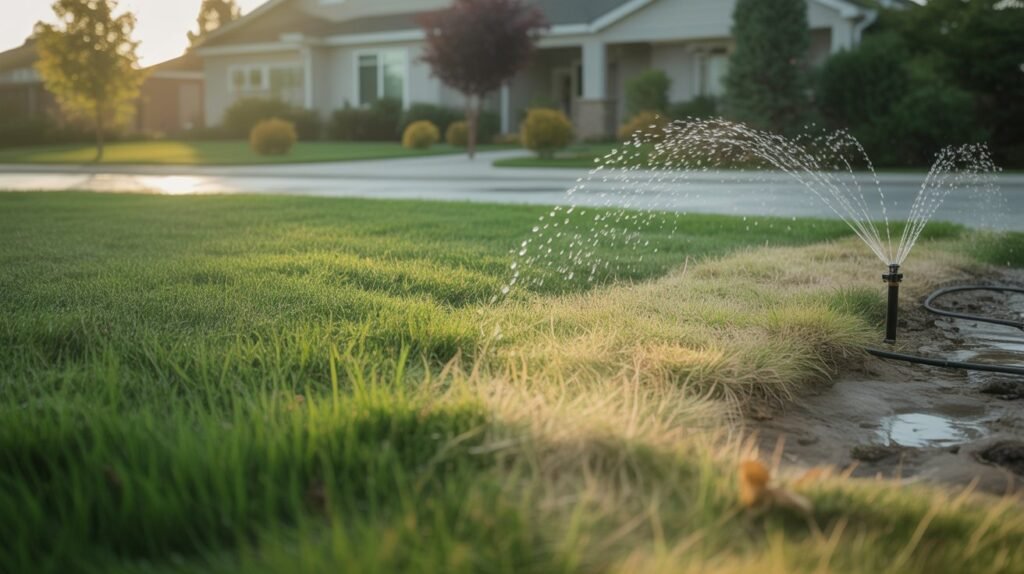
Why Is My Lawn Turning Yellow After Watering?
If you just watered your lawn expecting it to look greener the next morning, and instead you’re staring at yellow patches, you’re not imagining things—and you’re definitely not alone. It’s one of the most common complaints homeowners bring up in lawn care forums every summer.
In summary, water alone does not cause grass to turn yellow. What turns grass yellow is how the water is applied, when it’sapplied, when it’s being applied, or what’s happening underneath the soil that the water is exposing or making worse. In most cases it comes down to one of seven things—and once you know which one you’re dealing with, the fix is usually simple.
This guide walks through each cause, how to tell them apart, and what to actually do about it.
Table of Contents
Quick Answer
Lawns typically turn yellow after watering because of overwatering and root suffocation, underwatering or uneven sprinkler coverage, fungal disease triggered by excess moisture, fertilizer or chemical runoff, compacted soil that traps water, watering at the wrong time of day, or a malfunctioning sprinkler system delivering water unevenly. Checking soil moisture at root depth is the fastest way to narrow down which one applies to your yard.
7 Reasons Your Lawn Turns Yellow After Watering
1. Overwatering and Root Suffocation
Grass roots need oxygen just as much as they need water. When soil stays saturated for too long, air pockets in the soil get pushed out, and roots essentially start to suffocate. The grass responds by yellowing, and in bad cases, the blades take on a slightly mushy or wilted look even though the ground is soaked.
A simple test: push a screwdriver into the soil a day after watering. If it slides in with almost no resistance and the soil feels waterlogged rather than moist, you’re likely overwatering.
2. Underwatering or Uneven Coverage
This sounds contradictory, but it’s extremely common—you water the lawn, yet parts of it still turn yellow because those specific patches never actually received enough water. This usually happens when sprinkler heads are misaligned, clogged, or spaced too far apart, leaving dry zones between wet ones.
If the yellow patches follow a pattern (stripes, circles, or areas near the edge of your lawn), it’s almost always a coverage problem rather than a watering-too-much problem. Weak or uneven pressure across zones is often the real culprit—our breakdown of underground-sprinkler-system-cost explains how zone spacing affects coverage.
3. Fungal Disease Triggered by Excess Moisture
Fungal lawn diseases like brown patch, dollar spot, and rust thrive in warm, consistently damp conditions. Watering in the evening, especially when grass blades stay wet overnight, creates the exact environment these fungi need. The yellowing often starts as small circular or irregular patches before spreading.
If you notice a thin, cobweb-like coating on the grass in the early morning, or the yellow patches have a slightly orange or brownish ring around them, disease is a strong possibility. The Clemson Home & Garden Information has a detailed breakdown of common lawn diseases and how moisture levels trigger them.
4. Fertilizer or Chemical Burn Washed to the Surface
If you fertilized recently and then watered heavily (or it rained hard), granular fertilizer can dissolve unevenly and pool in low spots, effectively burning the grass in those areas. The same happens with herbicide or pesticide overlap. Watering doesn’t cause the burn directly—it activates or spreads a chemical that was already sitting on the lawn.
Yellow or brown streaks that match your fertilizer spreader’s path, or patches near where a bag was set down, usually point to this.
5. Compacted Soil That Traps Water at the Surface
In compacted soil—common in yards with heavy foot traffic or clay-heavy ground—water can’t penetrate down to the root zone. Instead, it pools on top or drains off, leaving roots dry even right after a full watering cycle. The grass yellows not from too much water, but from water never reaching where it’s needed.
If water visibly puddles on the surface for several minutes after you water, compaction is likely part of the problem, and aerating the lawn will help far more than adjusting your watering schedule. Poor drainage is often tied to backflow or valve issues too—see our guide on anti syphon valves if water is pooling near your valve boxes specifically.
6. Watering at the Wrong Time of Day
Watering during peak afternoon heat causes water droplets on grass blades to act almost like tiny magnifying glasses under direct sun, leading to localized scorch. It also means a large percentage of the water evaporates before it ever reaches the roots, so the lawn ends up both stressed by heat and under-hydrated at the root level.
Early morning (roughly 6–10 a.m.) is the window most turf specialists recommend, since it gives grass time to dry before evening while avoiding peak evaporation.
7. Sprinkler System Malfunction
Broken, clogged, or poorly adjusted sprinkler heads are one of the most overlooked causes. A head that’s stuck, tilted, or partially blocked can either flood one area while starving another or mist so finely that water never reaches the root zone at all. Pressure problems across the system can cause the same uneven result.
This is worth ruling out early, because no amount of adjusting your watering schedule will fix a lawn that’s being watered unevenly by faulty equipment. Our guide on rain-bird-sprinkler-head-adjustment Rain Bird sprinkler heads</a> walks through how to spot and correct this.
How to Diagnose Which Cause Fits Your Lawn
Before changing anything, spend five minutes checking these:
- Pattern check—Are the yellow spots random, or do they follow a stripe/circle pattern that matches sprinkler spacing?
- Soil check—Push a screwdriver or soil probe 3–4 inches down. Waterlogged and mushy points to overwatering; dry and hard points to underwatering or compaction.
- Timing check—What time of day are you watering, and how long does the grass stay wet afterward?
- Recent activity check—Did you fertilize, treat for weeds, or apply any lawn chemical in the last 1–2 weeks?
- Equipment check—Walk the yard while the system runs and look for heads that are clogged, tilted, or not popping up fully.
Whichever check turns up something abnormal is usually your root cause. If the equipment side seems off, it’s worth confirming with a professional—see what a lawn sprinkler system contractor cost sprinkler contractor visit typically costs</a> before deciding whether to DIY or call someone in.
How to Fix a Yellow Lawn After Watering
- Adjust your watering depth, not just frequency. Most lawns do better with 1–1.5 inches of water per week, delivered in 2–3 deep sessions rather than daily light watering. Deep, infrequent watering encourages roots to grow downward instead of staying shallow.
- Fix uneven coverage first. Walk your sprinkler zones and check for clogged or misaligned heads. Even a well-planned watering schedule fails if the equipment isn’t distributing water evenly. If your system delivers weak or inconsistent pressure across zones, it’s worth reading through ways to how to improve sprinkler water pressure before making any other changes.
- Move watering to early morning. This single change resolves a surprising number of yellowing issues tied to evaporation and fungal risk.
- Aerate compacted soil. A core aerator (rented or hired) opens up the soil so water and oxygen actually reach the root zone instead of pooling on the surface.
- Hold off on fertilizer for 1–2 weeks if you suspect chemical burn, and water lightly to help flush residue without oversaturating the soil.
- Treat visible fungal patches with a lawn-appropriate fungicide if the pattern and appearance match disease rather than a watering issue, and reduce evening watering going forward.
How to Prevent It From Happening Again
Once the lawn recovers, the same seven causes are what you’re guarding against long-term:
- Water deeply 2–3 times a week instead of daily
- Water between 6 and 10 a.m.
- Check sprinkler heads for clogs or misalignment every season.
- Aerate compacted soil once or twice a year
- Apply fertilizer in smaller, even amounts and water lightly afterward
- Watch for early fungal signs after humid stretches
If your current setup makes any of this hard to manage manually, upgrading to a system with better zone control is worth considering. Our comparison of <a href=”https://hydrosprinkler.com/best-impact-sprinkler-for-large-lawns/”>impact sprinklers for larger lawns</a> covers options that help with more even, consistent coverage.
For general watering guidelines backed by research rather than guesswork, the EPA WaterSense program and the Irrigation Association’s consumer resources irrigation .org are reliable, unbiased references for how much and how often to water based on your climate zone.
FAQ
Will yellow grass turn green again after overwatering? In most cases, yes—if the cause is addressed early. Grass that’s yellow from overwatering or root stress usually recovers within 1–2 weeks once watering is corrected and the soil is allowed to dry out between sessions. Grass that’s fully dead (brown, brittle, and pulls out easily by the roots) will need reseeding rather than recovery.
Should I stop watering a yellow lawn completely? Not entirely—but you should reduce frequency and let the top few inches of soil dry out before watering again. Completely stopping can stress the lawn further, especially in hot weather.
How long does it take grass to recover from overwatering? Typically 7–14 days once proper watering habits are restored, though full color can take up to 3 weeks depending on grass type and season.
Can too much water cause fungus in grass? Yes. Prolonged moisture on grass blades, especially overnight, is one of the leading conditions that trigger fungal outbreaks like brown patch and dollar spot.
Final Thoughts
A lawn turning yellow right after watering feels counterintuitive, but it’s almost always explainable once you separate “how much water” from “how, when, and where” it’s being applied. Start with the diagnosis checklist above, fix the sprinkler equipment issues first since they undercut everything else, and adjust your schedule to early mornings with deep, infrequent watering. Most lawns bounce back within two to three weeks once the actual cause is corrected.