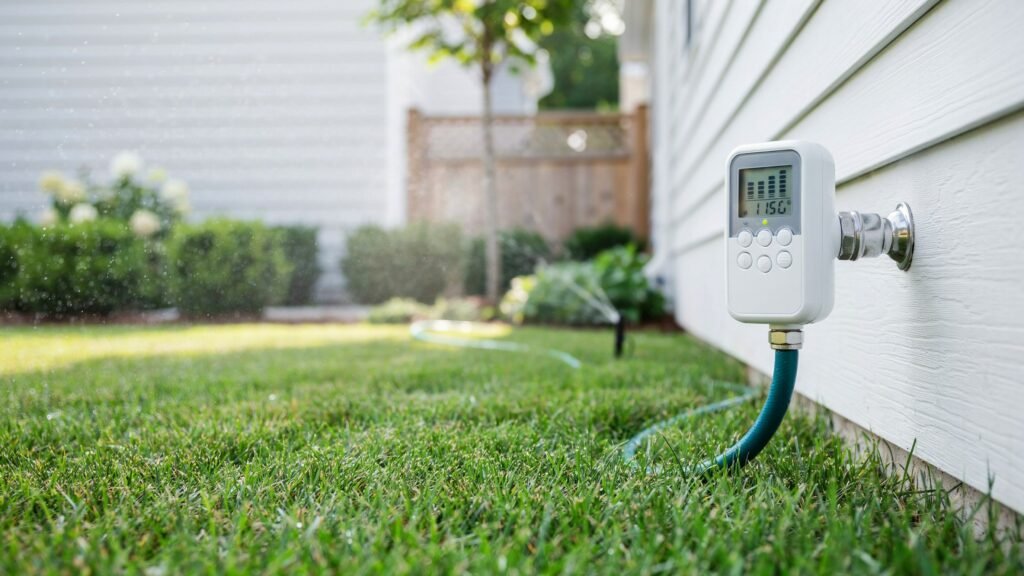
You set the sprinkler, forget to turn it off, and either flood the flower bed or wake up to a lawn with brown stripes. A digital sprinkler timer fixes that, but only if you pick one that matches how you actually water.
This article contains affiliate links. If you purchase through our links, we may earn a commission at no extra cost to you.
Below are four timers, each with one honest drawback. Ready to buy? Jump to the comparison table.
Quick Answer: The best digital sprinkler timer for most lawns is the RAINPOINT Programmable Sprinkler Timer, which balances flexible scheduling with easy setup. Choose the Insoma for separate zone schedules, the Orbit 3-Outlet for multiple hoses, and the RAINPOINT Garden Hose Timer for one sprinkler on a budget.
Quick Picks: Which Digital Sprinkler Timer Should You Buy?
If you only read one section, read this one. The right timer depends on how many areas you water, not on which has the most features.
- Best overall: RAINPOINT Programmable Sprinkler Timer
- Best for separate zone schedules: Insoma Independent Sprinkler Irrigation Controller
- Best for multiple hoses: Orbit 3-Outlet Programmable Faucet Timer
- Best budget pick: RAINPOINT Garden Hose Water Timer
Do you water one area or several? Keep that question in mind, because it decides everything below.
Prices change often, so check the current price on each listing.
How We Chose These Sprinkler Timers
We compared these timers on five criteria that decide whether a timer works in real life: ease of programming, number of outlets or zones, reliability, reader review sentiment, and value for the price range.
When we compared the four Amazon listings side by side, we looked at how each timer handles schedules, what powers it, and what buyers complain about most. We weighted repeated complaints (battery drain, low-pressure failures, confusing menus) more heavily than one-off reviews.
[ADD YOUR NOTE: if you personally tested any timer, describe the setup and results here, with photos.]
We did not rank by feature count. A 6-feature timer you never program is worse than a 3-feature timer you use every week.
| Image | Product | Details | Price |
|---|---|---|---|
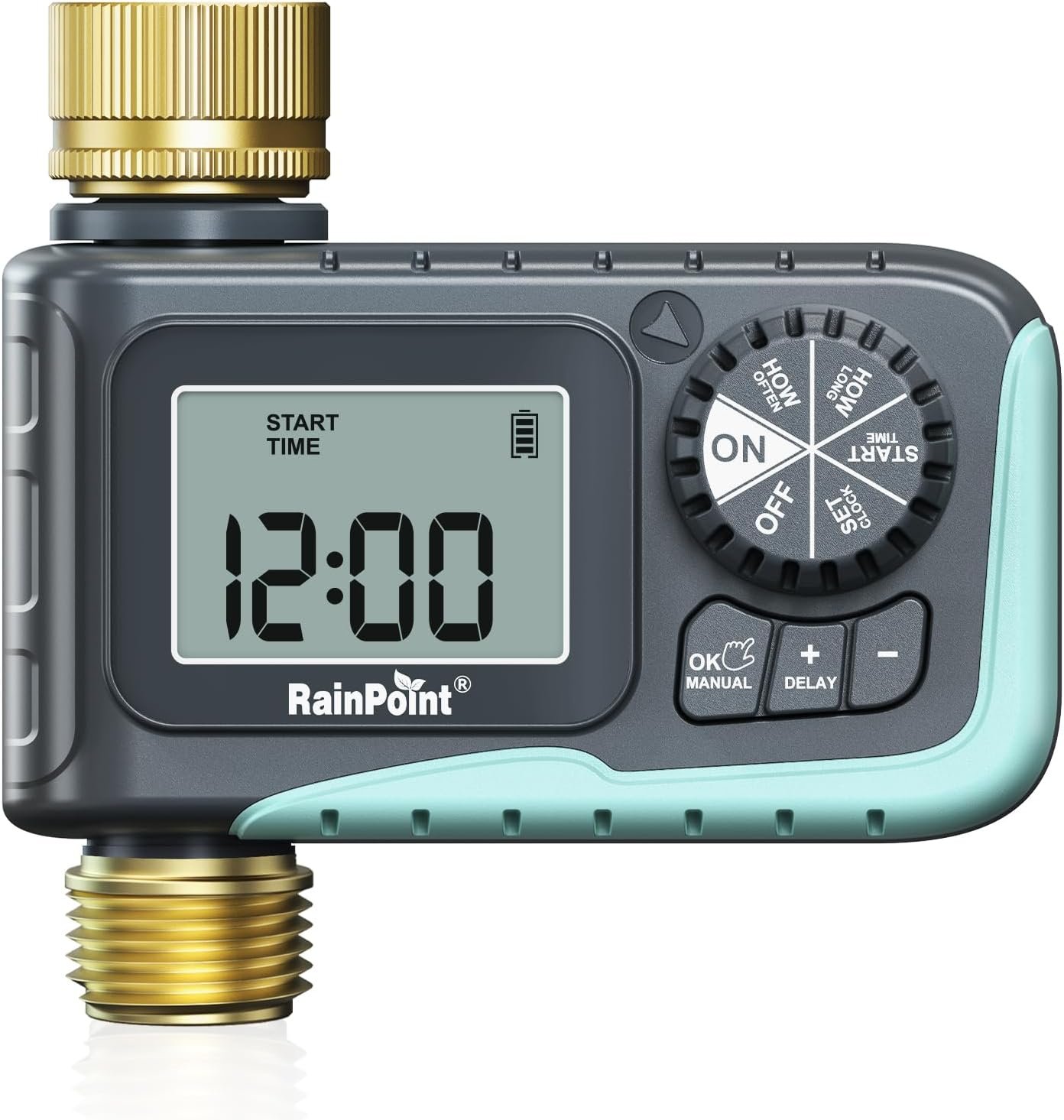 |
RAINPOINT Programmable | Brass inlet aur outlet, 116 psi tak pressure sehta hai Watering duration 1 min se 3 ghante 59 min, frequency har 1-12 ghante ya 1-7 din Bada LCD screen (time, frequency, battery dikhata hai) Rain delay aur manual watering mode |
CHECK PRICE ON AMAZON |
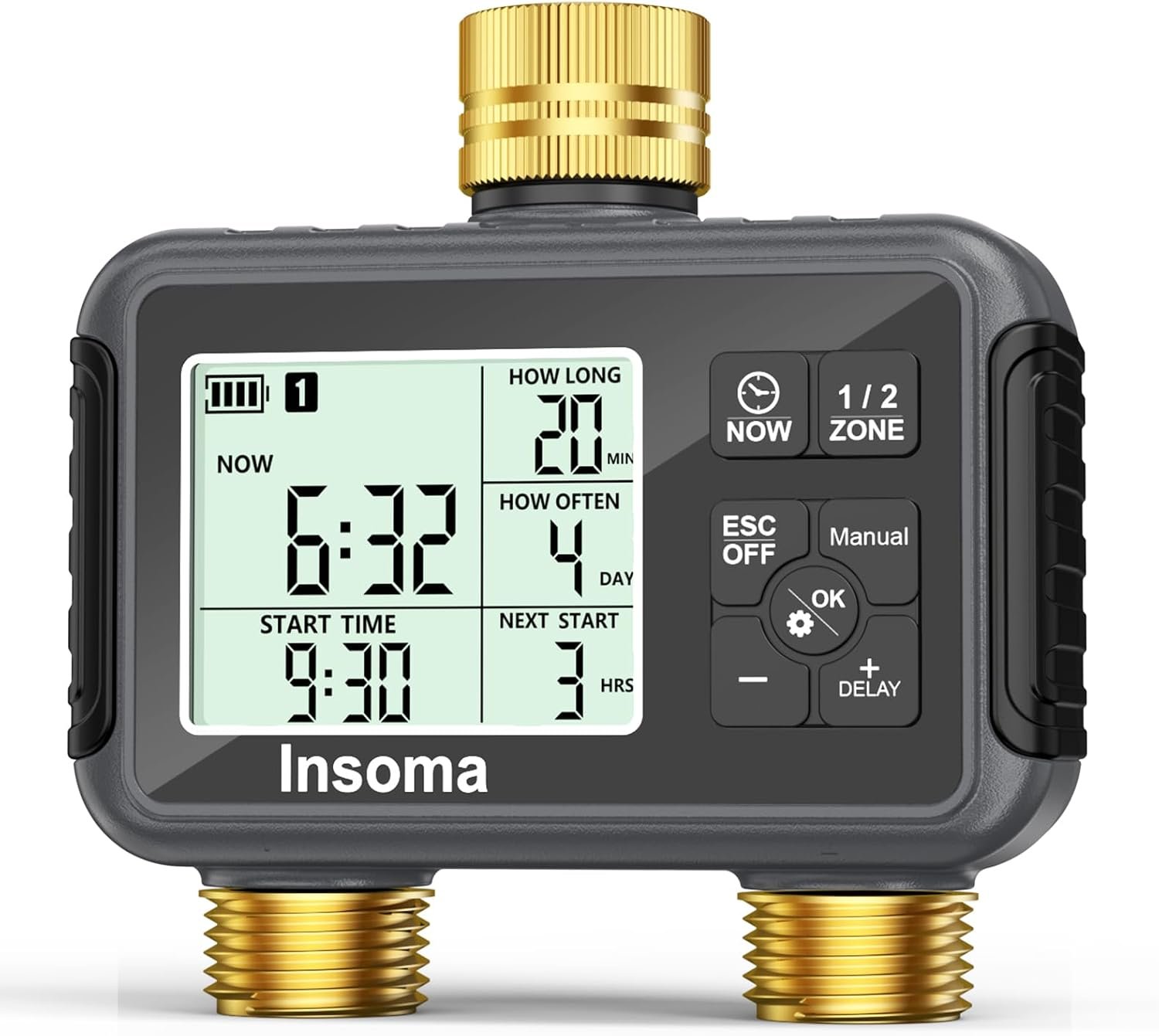 |
Insoma 4-Zone | 4 independent zones, har zone ka apna schedule Brass inlet, built-in metal filter IPX5 waterproof body Auto, manual aur rain delay modes |
CHECK PRICE ON AMAZON |
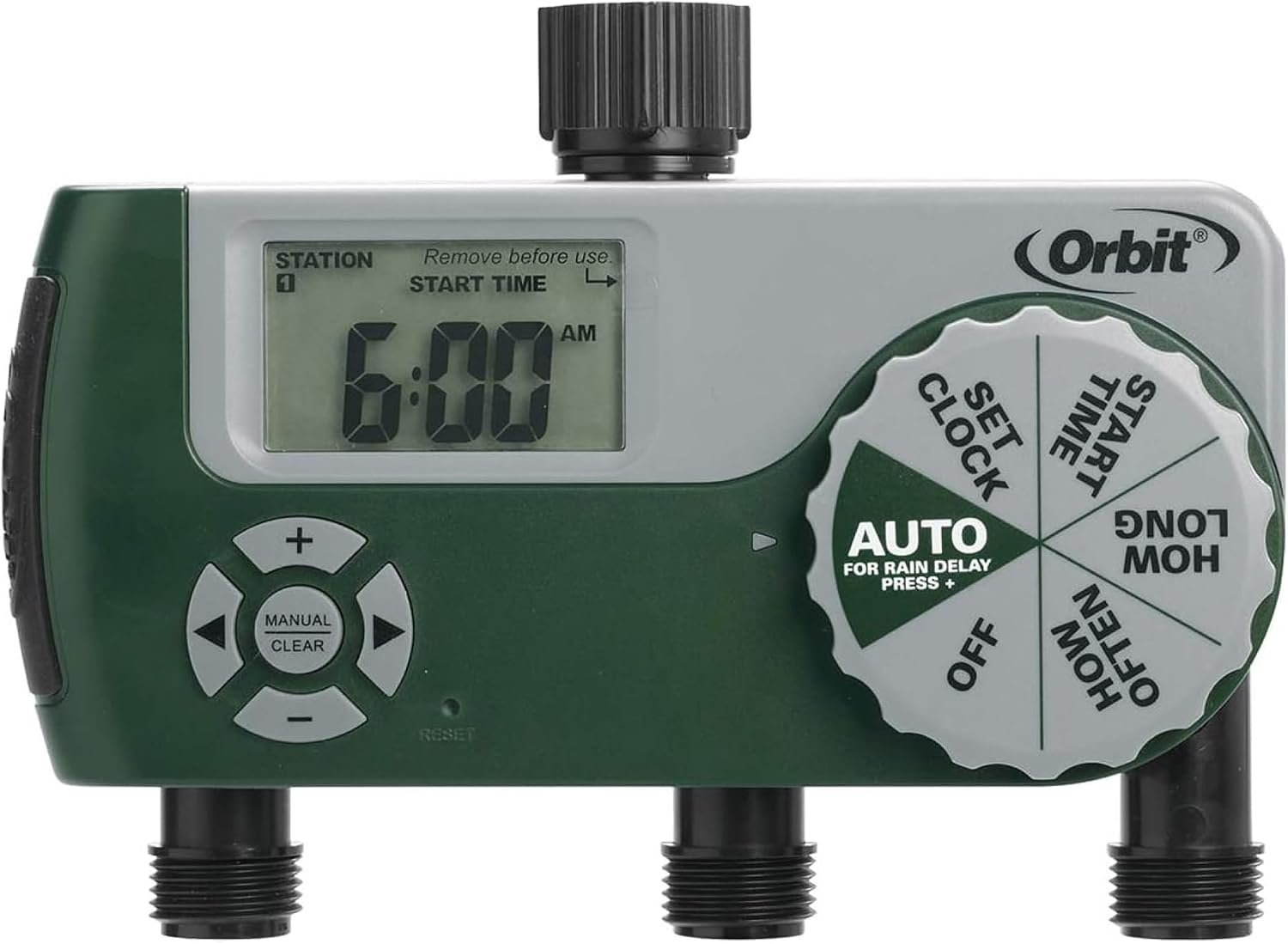 |
Orbit 3-Outlet | Ek faucet se 3 outlets Run time 1 se 240 minute Frequency har 6 ghante se har 7 din tak Rain delay 1-3 din, bada display aur dial |
CHECK PRICE ON AMAZON |
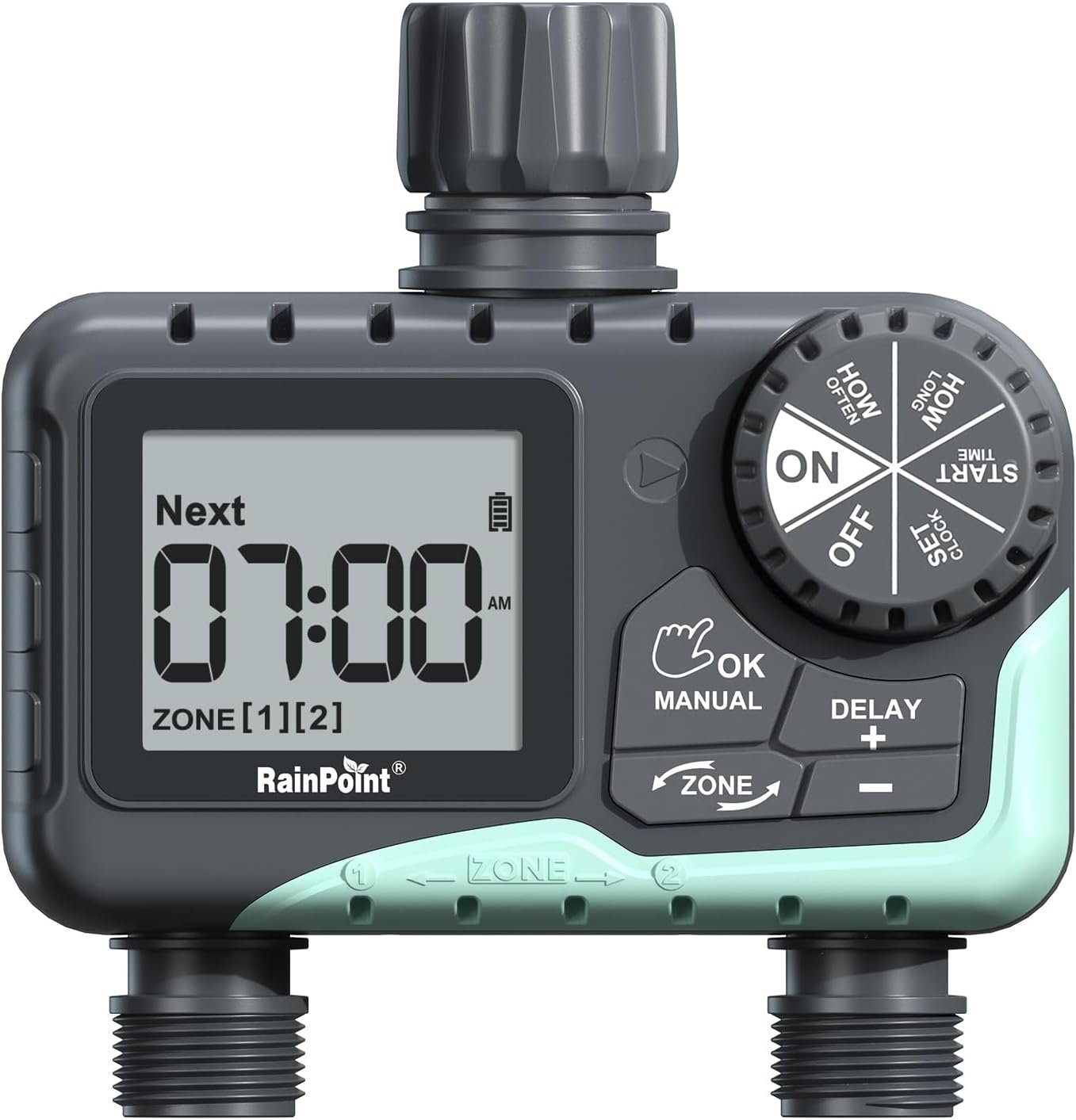 |
RAINPOINT Hose Timer | Single outlet Duration 1 min se 3 ghante 59 min, frequency 1-12 ghante ya 1-7 din Bada LCD, battery level dikhata hai Rain delay aur manual mode (1 min se 8 ghante) |
CHECK PRICE ON AMAZON |
Best Digital Sprinkler Timers Reviewed
1. RAINPOINT Programmable Sprinkler Timer: Best Overall
This is the timer we’d point most homeowners to, because it gives you real scheduling control without a steep learning curve.
Key Features
- Programmable watering schedules for sprinkler and irrigation use
- Digital controls for start time, duration, and frequency
- [VERIFY: outlet/zone count, rain delay, and power source on the listing]
Real-World Performance
Programmable timers from RAINPOINT are typically praised for being easier to set than older dial models. The usual complaint in this category is battery life, so check the battery type in the listing.
Pros
- More scheduling flexibility than a basic single-program timer
- Suited to both lawns and garden beds
- Mid-range price tier
Cons
- Battery-powered hose timers drain faster with frequent cycles, so replace batteries before summer
- Low household water pressure can stop the valve from operating properly
Best For: Homeowners who want more control than a basic timer without paying for a smart system.
Verdict: The best balance of control and simplicity in this group.
2. Insoma Independent Sprinkler Irrigation Controller: Best for Separate Zone Schedules
The Insoma suits lawns where one watering schedule doesn’t fit everything. Grass and flower beds rarely need the same amount of water.
Key Features
- Independent zone scheduling, so each area runs on its own program
- Digital programming
- [VERIFY: zone count, power source, rain delay]
Real-World Performance
Independent zones mean the lawn can run early morning while the beds get shorter, separate cycles. That’s the main reason to choose it over a single-schedule timer.
Pros
- Different schedules for different areas
- Reduces overwatering in beds and containers
Cons
- Newer listing, so less long-term reliability data [VERIFY review count]
- More settings means a longer first setup
Best For: Yards with a lawn plus garden beds that need different schedules.
Verdict: Best choice if you’ve outgrown a single-schedule timer.
3. Orbit 3-Outlet Programmable Faucet Timer: Best for Multiple Hoses
Orbit’s 3-Outlet timer lets one faucet run up to three hoses. That’s useful when the front lawn, back lawn, and beds share one spigot.
Key Features
- Three outlets from a single faucet connection
- Programmable timing [VERIFY: whether each outlet has its own schedule]
- Established product with a long review history
Real-World Performance
The Orbit brand is widely known in hose-end timers, and this model’s long market history means plenty of buyer feedback to read before you buy.
Pros
- Covers multiple areas from one faucet
- Long review history to read through
Cons
- Older design, so the interface feels more basic than newer models
- Only as good as the water pressure at that faucet when three hoses run
Best For: Lawns with two or three hose-fed areas near one spigot.
Verdict: Practical and proven, but not the most modern interface.
4. RAINPOINT Garden Hose Water Timer: Best Budget Pick
For one sprinkler on one hose, this is all you need. Paying for extra outlets you won’t use is the most common timer mistake.
Key Features
- Simple digital hose-end timer
- Basic scheduling [VERIFY: Wi-Fi/Bluetooth and rain delay features]
Real-World Performance
Basic timers like this are best for “set it once and leave it” watering. They don’t suit yards with several zones.
Pros
- Low price tier
- Quick to learn, a good first timer
Cons
- Single outlet, so no separate schedules for different areas
- Limited flexibility as your yard grows
Best For: Beginners with one sprinkler or one watering line.
Verdict: Best low-cost way to stop forgetting the hose.
Comparison Table
| Product Name | Best For | Price Range | Our Rating |
|---|---|---|---|
| RAINPOINT Programmable Sprinkler Timer | Overall control and easy setup | Mid-range | 4.6/5 |
| Insoma Independent Sprinkler Irrigation Controller | Lawn and beds on different schedules | Mid-range | 4.4/5 |
| Orbit 3-Outlet Programmable Faucet Timer | Two or three hose-fed areas | Budget to mid-range | 4.3/5 |
| RAINPOINT Garden Hose Water Timer | One sprinkler, tight budget | Budget | 4.2/5 |
How to Choose a Digital Sprinkler Timer
Choose by your yard layout first, features second. This is the advice we’d want before spending anything.
What Is the Difference Between a Hose-End Timer and an In-Ground Controller?
A hose-end timer is a battery-powered valve that screws onto your outdoor faucet and opens or closes water flow on a schedule. An in-ground controller is wired to underground valves and runs a buried sprinkler system.
All four products in this article are hose-end style. If you have in-ground sprinkler heads and wired valves, you need a controller from brands like Rain Bird or Hunter, which is a different purchase. Our guide to sprinkler system design explains how zones and controllers work together, and our lawn sprinkler installation guide covers the full setup.
How Many Zones or Outlets Do You Need?
Count the separate areas you water, then add one for growth. One area needs one outlet. Lawn plus beds usually needs two. A front lawn, back lawn, and beds suggests three.
If you run a full in-ground system, see how many sprinkler heads fit per zone before you add more.
Battery Life and Power
Most hose-end timers run on batteries, so battery quality matters. Alkaline AA batteries work in warm weather, while lithium cells hold up better in cold. Replace them at the start of the watering season rather than waiting for a failure.
Water Pressure and Compatibility
Hose-end timers need a minimum water pressure to open their valve. The exact minimum is listed in each product manual. If your pressure is weak, a timer may fail to open or close fully. Check the manual before you buy.
Which Timer Fits Your Lawn?
Match the timer to your yard, not to a feature list.
- Small yard, one sprinkler: RAINPOINT Garden Hose Water Timer
- Front and back lawn near one faucet: Orbit 3-Outlet Programmable Faucet Timer
- Lawn plus garden beds on different schedules: Insoma Independent Sprinkler Controller
- Want the best all-round pick: RAINPOINT Programmable Sprinkler Timer
If you’re torn between two, pick the one with more zones. Adding capacity later means buying twice.
Why Does a Sprinkler Timer Matter? (Surprising Fact)
A timer does not save water by itself. It just repeats whatever schedule you give it.
According to the EPA WaterSense program, landscape irrigation uses nearly 9 billion gallons of water per day in the US, and up to 50% of outdoor water can be wasted through evaporation, wind, or runoff from inefficient irrigation.
A badly set timer wastes water on autopilot. That’s why the programming steps below matter as much as the product.
How Do You Set Up and Program a Digital Sprinkler Timer?
Programming takes about ten minutes if you do it in order.
- Insert fresh batteries and set the current time and date.
- Screw the timer onto the faucet by hand until snug (no tools).
- Connect your hose or sprinkler to the timer outlet.
- Set the start time. Early morning, before sunrise or just after, reduces evaporation.
- Set the run duration. Start short and increase only if the soil stays dry. Not sure how long? Our guide on how long sprinklers should run in each zone gives starting run times by sprinkler type.
- Set the frequency. Deep, less frequent watering generally builds stronger roots than daily light watering.
- Run a manual test cycle and check for leaks.
For weekly amounts, check your state’s university extension office, which publishes lawn watering guidance for local grass types. [EXTERNAL LINK: your state’s university extension lawn watering page]
To see how your weekly schedule affects your bill, check how much water a sprinkler system uses by lawn size.
Common Problems and Quick Fixes
Most timer failures come from three causes: weak batteries, low pressure, and freezing weather.
- Timer won’t open or close: Replace batteries first, then check water pressure against the manual.
- Sprinkler runs but pressure is low: Clean the inlet filter screen and check hose kinks.
- Cracked timer after winter: Water left inside freezes and expands. Remove hose-end timers before freezing temperatures and store them indoors.
- Hose reel or hose problems: [INTERNAL LINK: best garden hose and hose reel → “Best Garden Hose” roundup]
Come spring, our guide on how to turn on your sprinkler system after winter walks you through a safe restart.
Frequently Asked Questions
What is the best digital sprinkler timer for a lawn?
For most lawns, the RAINPOINT Programmable Sprinkler Timer is our top pick for its balance of scheduling control and easy setup. If you water multiple areas on different schedules, the Insoma Independent Sprinkler Irrigation Controller is better. For one sprinkler on a budget, choose the RAINPOINT Garden Hose Water Timer.
How do I set a digital sprinkler timer?
Insert fresh batteries, set the time and date, and attach the timer to your faucet. Then program the start time, run duration, and frequency. Early morning watering reduces evaporation. Finish with a manual test cycle to check for leaks. Most models take about ten minutes to set up the first time.
Do digital sprinkler timers work with low water pressure?
Many hose-end timers need a minimum water pressure to open their internal valve, and the requirement is listed in each manual. With weak pressure, a timer may fail to open or close properly. Check your product manual before buying. If your pressure is low, test your faucet pressure first.
How long do batteries last in a sprinkler timer?
Battery life depends on how often the timer cycles, the battery type, and the temperature. Frequent daily cycles drain batteries faster. Lithium batteries typically perform better in cold weather than alkaline. Replace batteries at the start of each watering season instead of waiting for the timer to fail.
Can I run two sprinklers on one timer?
Yes, with a multi-outlet timer like the Orbit 3-Outlet, or by splitting one hose line. Splitting one outlet divides water pressure between both sprinklers, which can weaken coverage. For separate schedules, use a timer with independent outlets or zones, like the Insoma.
Should I leave a hose timer outside in winter?
No. Water trapped inside a hose-end timer can freeze, expand, and crack the housing. Remove the timer before freezing temperatures arrive, drain it, and store it indoors. Reinstall it with fresh batteries in spring. This simple step prevents most cold-weather timer failures.
Final Verdict: Which Digital Sprinkler Timer Should You Buy?
For most homeowners, the best digital sprinkler timer is the RAINPOINT Programmable Sprinkler Timer. It offers flexible scheduling without a complicated setup.
If your yard has a lawn and beds that need different schedules, go with the Insoma. If you water several areas from one faucet, choose the Orbit 3-Outlet. If you just want one sprinkler handled cheaply, the RAINPOINT Garden Hose Water Timer is enough.