
Introduction
When planning how to install a lawn sprinkler system, the first step is to design a proper irrigation layout. A well-planned system helps ensure even water distribution and prevents dry spots. If you are new to irrigation design, you can learn more in our detailed guide on sprinkler system planning and layout at HydroSprinkler Design Guide, which explains how to map zones and choose the right sprinkler heads for your lawn.
Water pressure and flow rate are also very important before installation. Most residential systems work best between 40–60 PSI. According to the official EPA WaterSense program, efficient irrigation can significantly reduce water waste while keeping lawns healthy EPA WaterSense Irrigation Guide. This makes it essential to test your water system before digging trenches and laying pipes.
A properly installed sprinkler system delivers water evenly across your lawn and garden. It also helps prevent dry spots, overwatering, and water waste. Whether you have a small backyard or a large landscape, this guide will help you install a reliable lawn irrigation system using simple DIY methods.
Table of Contents
Why Install a Lawn Sprinkler System?
Installing a lawn sprinkler system offers several long-term benefits for homeowners and gardeners.
Saves Time and Effort
Automatic sprinklers water your lawn without needing manual watering every day.
Improves Lawn Health
Consistent watering helps grass grow greener and healthier.
Reduces Water Waste
Modern irrigation systems distribute water more efficiently than traditional hoses.
Increases Property Value
A well-maintained lawn improves curb appeal and overall home appearance.
Types of Lawn Sprinkler Systems
Choosing the right sprinkler system is important before starting installation.
In-Ground Sprinkler Systems
These systems use underground pipes connected to pop-up sprinkler heads. They are the most common choice for residential lawns.
Above-Ground Sprinkler Systems
These systems stay above the soil and connect directly to garden hoses.
Drip Irrigation Systems
Drip irrigation slowly delivers water directly to plant roots, making it ideal for gardens and farming irrigation systems.
Smart Sprinkler Systems
Smart irrigation systems use Wi-Fi controllers and weather sensors for automatic watering schedules.
Tools and Materials Needed
Before starting installation, prepare all required tools and irrigation supplies.
Essential Tools
- Trenching shovel
- Pipe cutter
- Tape measure
- Screwdrivers
- PVC primer and cement
- Adjustable wrench
- Wire stripper
Required Materials
- PVC pipes
- Sprinkler heads
- Valves
- Irrigation controller
- Valve manifold
- Pipe fittings
- Sprinkler wire
- Backflow preventer
Using high-quality sprinkler components helps improve durability and performance.
Plan the Lawn Sprinkler Layout
Proper planning is one of the most important parts of sprinkler installation.
Measure the Lawn Area
Measure your lawn dimensions carefully and create a rough sketch of the property layout.
Include:
- Grass areas
- Flower beds
- Trees
- Walkways
- Driveways
Check Water Pressure
Most lawn sprinkler systems work best between 40 and 60 PSI.
Low pressure can reduce sprinkler performance and water coverage.
EPA WaterSense Irrigation Association
Create Irrigation Zones
Large lawns usually need multiple watering zones to maintain proper water pressure.
Common zones include:
- Front yard
- Backyard
- Garden areas
- Flower beds
Choose the Right Sprinkler Heads
Different sprinkler heads are designed for different lawn sizes and watering needs.
Spray Heads
Spray heads work well for small lawns and flower beds.
Rotary Sprinkler Heads
Rotary heads rotate slowly and cover larger areas efficiently.
Pop-Up Sprinklers
These sprinklers stay hidden underground until activated.
Drip Emitters
Drip emitters are ideal for garden sprinkler systems and plant watering.
Mark Underground Utility Lines
Before digging trenches, contact local utility services to identify underground pipes and cables.
This helps prevent damage to:
- Water lines
- Gas pipes
- Electrical wires
- Internet cables
Safety should always come first during irrigation installation.
How to Install a Lawn Sprinkler System
Design the Sprinkler Layout
Mark the locations for sprinkler heads using spray paint or small flags.
Proper sprinkler spacing helps ensure even water coverage across the lawn.
Mark the Trench Lines
Use your layout design to mark pipe trench locations throughout the yard.
Try to keep trench lines as straight as possible for easier pipe installation.
Dig Trenches for Pipes
Dig trenches around 6 to 12 inches deep depending on your climate and lawn conditions.
Place removed soil beside the trench to make backfilling easier later.
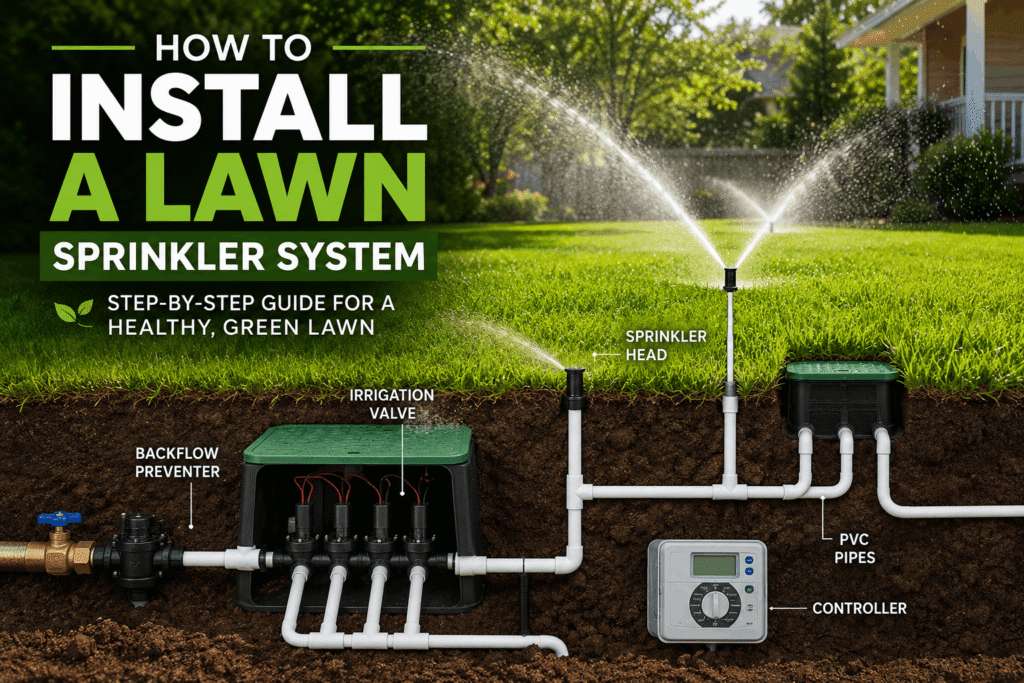
Install the Main Water Line
Connect the sprinkler system to your main water supply line.
Install:
- Shut-off valve
- Backflow preventer
- Valve manifold
The backflow preventer protects your drinking water from contamination.
Install Irrigation Valves
Place irrigation valves inside a valve box for easy maintenance and protection.
Connect the valves to sprinkler wires and the controller system.
Lay the PVC pipes.
Place PVC pipes inside the trenches according to your sprinkler layout plan.
Use PVC primer and cement to secure all pipe connections properly.
Avoid rushing this step because poor connections can cause leaks later.
Install Sprinkler Heads
Attach sprinkler heads to risers or flexible swing joints.
Make sure sprinkler heads remain level with the soil surface.
Improper positioning may lead to uneven watering or sprinkler damage.
Connect the Sprinkler Controller
Install the irrigation controller near a power source and connect all valve wires correctly.
Smart controllers can automate watering schedules and improve water efficiency.
Test the Sprinkler System
Turn on the system and inspect all zones carefully.
Check for:
- Water leaks
- Uneven spray patterns
- Low water pressure
- Broken sprinkler heads
Adjust sprinkler nozzles where necessary.
Cover the Trenches
Once testing is complete, refill the trenches carefully with soil.
Avoid damaging pipes while backfilling.
Water the lawn lightly after installation to help settle the soil.
Common Sprinkler Installation Mistakes
Avoiding common mistakes helps improve irrigation efficiency and system lifespan.
Incorrect Sprinkler Spacing
Poor spacing often creates dry spots or overwatered areas.
Too Many Sprinkler Heads Per Zone
Too many heads can reduce water pressure significantly.
Ignoring Water Pressure
Always test pressure before designing irrigation zones.
Using Cheap Irrigation Parts
Low-quality sprinkler components may fail quickly and increase repair costs.
Lawn Sprinkler Maintenance Tips
Regular maintenance keeps your sprinkler system working properly.
Clean Sprinkler Heads Regularly
Remove dirt and debris from nozzles to maintain proper water flow.
Check for Leaks
Inspect pipes and valves regularly for hidden leaks.
Adjust Seasonal Watering
Lawns require different watering schedules during summer and winter.
Winterize the System
Drain water from pipes before freezing temperatures arrive.
DIY vs. Professional Sprinkler Installation
Both DIY and professional sprinkler installation have advantages.
Benefits of DIY Installation
- Lower installation cost
- Flexible schedule
- Good learning experience
Benefits of Hiring Professionals
- Faster installation
- Expert sprinkler design
- Professional-grade equipment
- Reduced installation mistakes
Conclusion
Learning how to install a lawn sprinkler system is a great way to improve lawn care while saving time and water. A properly installed irrigation system provides consistent watering, healthier grass, and better overall landscape appearance.
Careful planning, choosing the right sprinkler heads, and testing the system thoroughly are the keys to successful installation. Whether you are installing a small garden sprinkler system or a complete lawn irrigation setup, following the correct steps will help you achieve long-lasting results.
With regular maintenance and proper watering schedules, your lawn sprinkler system can keep your landscape healthy and green for many years.
Frequently Asked Questions
Can I install a lawn sprinkler system myself?
Yes, many homeowners successfully install DIY lawn sprinkler systems using basic tools and careful planning.
How deep should sprinkler pipes be buried?
Most residential sprinkler pipes are buried between 6 and 12 inches deep.
What is the best sprinkler head for lawns?
Rotary sprinkler heads are excellent for large lawns, while spray heads work better for smaller areas.
How many sprinkler heads can run on one zone?
The number depends on your water pressure and flow rate, but most zones support 4 to 8 heads.
How long does sprinkler installation take?
Most DIY sprinkler system installations take one to three days depending on lawn size and complexity.