
Introduction
Fire safety is not something you can afford to ignore—especially in high-risk environments like factories, warehouses, and fuel storage areas. This is where a deluge sprinkler system becomes a critical solution.
Unlike traditional sprinkler systems that activate individually, a deluge sprinkler system releases water from all nozzles at once. Regular maintenance is important. You can follow this guide on how to maintain a sprinkler system to keep everything running smoothly.
According to National Fire Protection Association, deluge systems are specifically designed for high-hazard areas where fires can spread rapidly.
Table of Contents
What Is a Deluge Sprinkler System?
A irrigation systems is a type of fire suppression system designed for high-hazard areas where fires can spread quickly.
In this system:
- All sprinkler heads are open (no heat-sensitive bulbs)
- Water is not stored in the pipes.
- A deluge valve controls water flow.
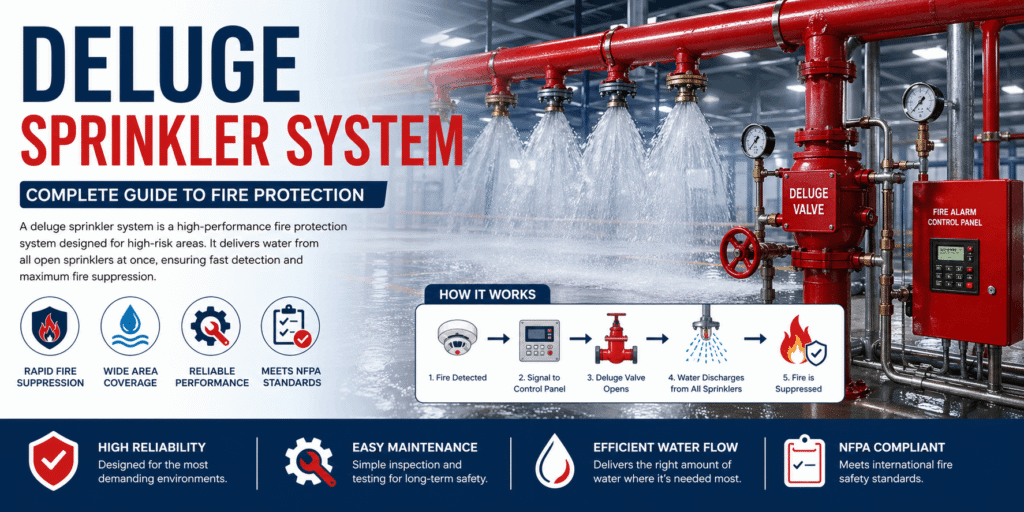
When a fire is detected, the system releases water through all sprinklers at the same time, covering the entire area instantly.
Key Idea:
Instead of reacting slowly, a deluge system responds immediately and aggressively, making it ideal for dangerous environments.
How Does a Deluge Sprinkler System Work?
Understanding how a deluge sprinkler system works is simple if you break it into steps:
Industry experts at IFSEC Global explain that these systems are ideal for environments where rapid fire spread is a serious risk.
Step-by-Step Process:
- Fire Detection
- Smoke, heat, or flame detectors identify a fire.
- Signal to Control Panel
- The detection system sends a signal to the control unit.
- Deluge Valve Opens
- The valve releases water into the piping system.
- Water Discharges Everywhere
- Water flows through all open sprinkler heads simultaneously.
- Fire Is Controlled Quickly
- Large amounts of water suppress the fire instantly.
Example:
Imagine a fuel storage area catching fire. Instead of waiting for heat to trigger individual sprinklers, the entire system activates at once—stopping the fire before it spreads.
Key Components of a Deluge Sprinkler System
A deluge sprinkler system includes several important parts.
1. Deluge Valve
- Controls water release
- Stays closed until triggered
2. Fire Detection System
- Includes:
- Smoke detectors
- Heat sensors
- Flame detectors
3. Open Sprinkler Heads
- No glass bulbs or triggers
- Always open and ready
4. Control Panel
- Receives signals from detectors
- Activates the system
5. Water Supply
- Can be from:
- Tanks
- Pumps
- Municipal supply
Each component plays a vital role in ensuring fast and effective fire suppression.
Types of Deluge Sprinkler Systems
There are different types of deluge sprinkler system setups based on how they are activated:
1. Electric Deluge System
- Uses electrical signals
- Fast and reliable
2. Pneumatic System
- Uses air pressure
- Ideal for specific industrial environments
3. Hydraulic System
- Uses liquid pressure signals
- Less common but effective
4. Foam-Water Deluge System
- Mixes foam with water
- Best for fuel and chemical fires
Deluge Sprinkler Systems vs Other Fire Systems
Let’s compare a deluge sprinkler system with other common systems:
| Feature | Deluge System | Wet Pipe | Dry Pipe | Pre-Action |
|---|---|---|---|---|
| Sprinkler Heads | Open | Closed | Closed | Closed |
| Water in Pipes | No | Yes | No | No |
| Activation | Detection system | Heat | Heat | Dual trigger |
| Speed | Very fast | Moderate | Slower | Controlled |
| Use Case | High-risk areas | Offices | Cold areas | Data centers |
Key Takeaway:
A deluge sprinkler system is the best choice for high-risk environments, while others are better for standard buildings.
Advantages of a Deluge Sprinkler System
Here’s why many industries choose a:
Major Benefits:
- Instant response to fire
- Covers large areas quickly
- Ideal for hazardous environments
- Reduces fire spread dramatically
- Can be combined with foam systems
Practical Advantage:
In places like oil refineries, seconds matter. A deluge system acts immediately, saving lives and property. Explore the benefits of sprinkler irrigation systems and why they are widely used.
Disadvantages of Deluge Sprinkler Systems
While powerful, a deluge sprinkler system has some drawbacks:
Key Limitations:
- High water usage
- Risk of water damage
- Expensive installation
- Complex design and setup
Important Note:
These systems are not suitable for homes or small offices due to their aggressive water discharge.
Where Are Deluge Sprinkler Systems Used?
A deluge sprinkler system is commonly used in the following:
- Power plants
- Oil and gas facilities
- Chemical storage areas
- Aircraft hangars
- Industrial warehouses
- Transformer rooms
Why These Places?
Because fires in these areas can spread very quickly, requiring immediate suppression.
Installation of a Deluge Sprinkler System
Installing a sprinkler system requires careful planning and professional expertise.
To ensure workplace safety, systems must meet regulations provided by the Occupational Safety and Health Administration.
Key Steps:
- Site Assessment
- Identify fire risks
- Analyse building layout
- System Design
- Plan pipe layout
- Calculate water demand
- Equipment Selection
- Choose valves, detectors, and pumps
- Installation
- Install piping and components
- Testing
- Ensure the system works correctly
Important Tip:
Always follow international safety standards like NFPA guidelines.
Maintenance and Inspection Tips
- Learn how to turn on a hydro sprinkler system for beginners and avoid common startup mistakes.
- Discover how to use a sprinkler irrigation system effectively to save water and improve efficiency.
- Follow this step-by-step guide on how to install a sprinkler irrigation system for your garden or farm.
- Keep your system in top condition by learning how to maintain a sprinkler system properly.
Regular maintenance keeps your deluge sprinkler system reliable.
Maintenance Checklist:
- Inspect valves regularly
- Test detection systems monthly
- Check water supply pressure
- Clean sprinkler heads
- Perform annual full-system testing
Why It Matters:
A poorly maintained system may fail during an emergency.
Cost of a Deluge Sprinkler System
The cost of a deluge sprinkler system depends on several factors:
Average Costs:
- Small system: $10,000 – $30,000
- Large industrial system: $50,000+
Cost Factors:
- Area size
- System complexity
- Type of detection system
- Installation labour
Ongoing Costs:
- Maintenance
- Inspection
- Repairs
Deluge Sprinkler System Design Considerations
Designing a deluge sprinkler system requires careful planning.
Key Factors:
- Hazard level of the area
- Water supply capacity
- Pipe layout design
- Response time requirements
- Environmental conditions
Expert Tip:
Proper design ensures maximum efficiency and minimum damage.
Common Problems and Troubleshooting
Even a deluge sprinkler system can face issues.
Common Problems:
- Valve not opening
- Faulty detection system
- Low water pressure
- Blocked nozzles
Troubleshooting Tips:
- Regular inspections
- Replace faulty sensors
- Check pressure levels
- Clean system components
Conclusion
A deluge sprinkler system is one of the most powerful fire-protection solutions available today. It is designed for environments where fire can spread rapidly and cause massive damage within seconds.
While it may be expensive and complex, its ability to release water instantly across a wide area makes it essential for high-risk industries.
If you’re planning to install a fire safety system, carefully assess your needs. For hazardous environments, a deluge sprinkler system is not just an option—it’s a necessity.
Frequently Asked Questions (FAQs)
1. What triggers a deluge sprinkler system?
A detection system (smoke, heat, or flame sensors) triggers the system—not the sprinkler heads themselves.
2. Is a deluge sprinkler system better than traditional sprinklers?
It depends on the environment. A deluge sprinkler system is better for high-risk areas, while traditional systems suit offices and homes.
3. Does every sprinkler release water at once?
Yes, all sprinkler heads discharge water simultaneously in a deluge sprinkler system.
4. Can a deluge system be used in homes?
No, it is not suitable due to high water discharge and cost.
5. How often should a deluge sprinkler system be tested?
It should be inspected regularly and fully tested at least once a year.
6. What is the main advantage of a deluge sprinkler system?
Its ability to suppress fire instantly across a large area.
7. Is maintenance expensive?
Maintenance costs vary but are essential to ensure system reliability.