
Intoduction
Knowing the best time of day to water lawn grass is the single easiest change that separates a thick, green yard from a patchy, disease-prone one. Water at the wrong hour and you can lose nearly a third of it before it ever reaches the roots — no leak, no broken sprinkler head, just bad timing.
Most homeowners set their sprinkler timer once and never touch it again. The schedule usually gets picked based on convenience—before work, after dinner, whenever it’s easy to remember—not based on what the grass actually needs. That one decision quietly determines how healthy your lawn looks by July.
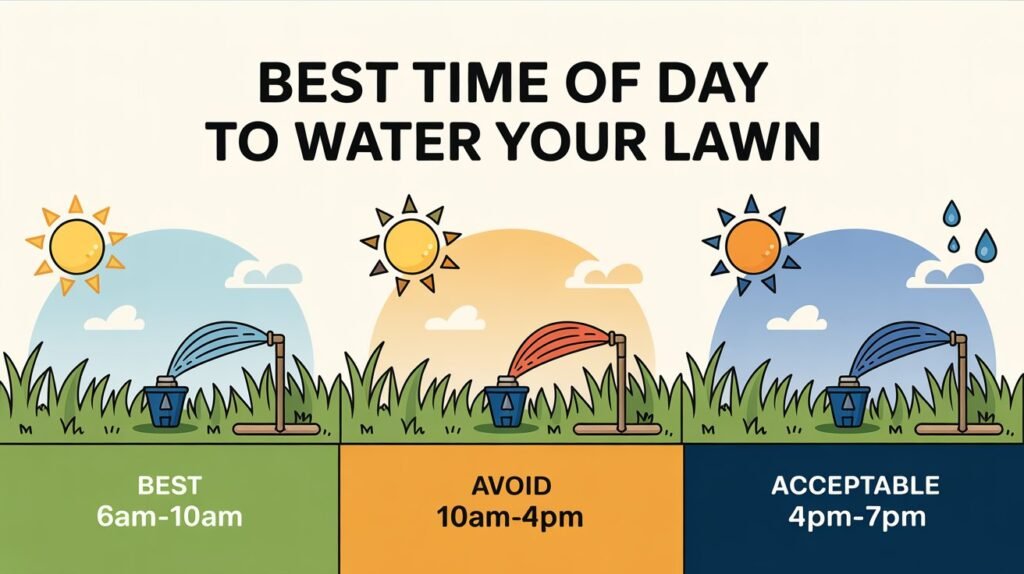
Quick Answer: The best time to water your lawn is early morning, between 5 a.m. and 9 a.m. During this window, temperatures are cooler, wind is calmer, and water has time to soak into the soil before evaporating. Watering at night or midday wastes water and increases the risk of lawn disease.
Table of Contents
Why Morning Is the Best Time to Water Your Lawn
Early morning wins because it’s the only time when low evaporation and dry grass blades happen at the same time.
Two things determine whether your watering session actually works: how much water evaporates before it reaches the soil and how long the grass blades stay wet afterward. Morning is the only time of day where both of these line up in your favor.
Between roughly 5 a.m. and 9 a.m., air temperatures are at their daily low, and wind is typically calmest. That means water sprayed from your sprinkler heads lands where it’s aimed instead of drifting or evaporating mid-air. As the sun rises after watering, it dries the grass blades within a few hours—which matters more than most homeowners realize.
Iowa State University Extension identifies the 5 a.m. to 9 a.m. window specifically, noting that morning application lets water soak deeply into the soil with minimal evaporation loss while allowing turfgrass foliage to dry quickly once watering ends.
Why Midday Watering Wastes Water
Watering between 10 a.m. and 4 p.m. is the least efficient window, with a meaningful share of applied water lost to evaporation before it reaches the roots.
This isn’t a myth about water droplets “burning” grass like a magnifying glass—that idea has been debunked repeatedly. The real problem is simpler: heat and wind.
During peak daytime hours, water evaporates directly off the grass blades and soil surface before it can soak in. On a hot, windy afternoon, a sprinkler zone that should deliver half an inch of water might only get a fraction of that into the ground. The rest disappears into the air.
The EPA’s WaterSense program confirms this pattern, recommending early morning or evening watering specifically because midday heat drives up evaporation loss across lawns and landscapes nationwide.
If you’ve ever noticed your lawn still looking dry even though the sprinklers ran, midday watering is often the reason.
Why Evening and Night Watering Cause Lawn Disease
Watering after sunset leaves grass blades wet for eight to ten hours or more, creating ideal conditions for fungal disease.
This is the mistake that causes the most long-term damage, even though it feels like the “safe” choice—cooler temperatures, no evaporation, convenient after-work.
The problem isn’t the watering itself. It’s what happens afterward. Without sunlight to dry the grass, water sits on the blades all night. That prolonged leaf wetness is exactly the environment fungal diseases like brown patch and pythium blight need to take hold, especially in humid regions of the U.S. South and Midwest.
If your lawn has ever developed circular brown patches or a slimy texture after a stretch of evening watering, this is usually why.
How Long to Water at Each Session
A healthy U.S. lawn typically needs about one to one and a half inches of water per week, including rainfall, delivered in fewer, deeper sessions rather than daily light watering.
Deep, infrequent watering trains grass roots to grow further into the soil, searching for moisture, which builds a more drought-resistant lawn over time. Light daily watering does the opposite—it keeps roots shallow and dependent on frequent watering.
To figure out your own system’s output:
- Place a few empty tuna cans or shallow containers across your lawn.
- Run your sprinklers for exactly 15 minutes.
- Measure the water depth collected in each can.
- Calculate how long you’d need to run the system to reach one inch total—for example, if 15 minutes gives you 0.5 inch, you need 30 minutes per session.
- Split that total across two or three sessions a week rather than one long soak if your soil struggles to absorb water quickly.
This test also reveals whether your coverage is even, since cans in different spots often collect different amounts.
Does the Best Watering Time Change by Season or Region?
The 5–9 a.m. window holds true across most of the U.S., though hot, dry climates benefit from watering even earlier in peak summer.
In hotter regions like Texas, Arizona, and the Southeast, temperatures can climb quickly after sunrise, so starting closer to 5 a.m. rather than 8 or 9 a.m. captures more of the cool window before evaporation rates rise.
In cooler northern states, the exact start time matters less, but the same core rule applies: finish watering with enough daylight left for the grass to dry before evening.
Watering needs also drop significantly in fall and winter for cool-season lawns, and many systems benefit from a smart controller that adjusts automatically. If you’re setting up scheduling for the season, our guide on how much water a sprinkler system uses breaks down how to calculate the right weekly total for your specific lawn size.
A Watering Mistake That Has Nothing to Do With Timing
Even a perfectly timed watering schedule underperforms if your system’s water pressure is too low or too high.
Low pressure prevents sprinkler heads from popping up fully or reaching their intended spray radius, leaving dry patches no matter how early you water. High pressure causes misting, where water turns into fine droplets that drift away or evaporate before reaching the soil—the same waste problem as midday watering, just caused by equipment instead of timing.
If your lawn has dry spots even with a correct morning schedule, it’s worth checking your system’s pressure before assuming the schedule is the problem. Our guide on how to increase sprinkler water pressure walks through the most common causes and fixes.
Frequently Asked Questions
What is the best time of day to water your lawn?
The best time is early morning, generally between 5 a.m. and 9 a.m. Temperatures and wind are both at their lowest during this window, so water soaks into the soil instead of evaporating. The grass also has hours of daylight afterward to dry, which helps prevent fungal disease.
Is it bad to water your lawn at night?
Yes, watering at night is one of the least effective choices you can make. Grass blades stay wet for eight to ten hours or longer without sunlight to dry them, creating ideal conditions for fungal diseases like brown patch. If morning watering isn’t possible, early evening is a safer alternative than late night.
Can you water your lawn in the middle of the day?
You can, but it’s inefficient. Between 10 a.m. and 4 p.m., heat and wind cause a significant share of applied water to evaporate before it reaches the roots. Your lawn will need more total watering time to get the same result compared to a morning schedule.
How often should you water your lawn per week?
Most established lawns need about one to one and a half inches of water per week, including rainfall, split across two to three deep watering sessions rather than daily light watering. Deep, infrequent watering encourages roots to grow deeper, which builds a more drought-tolerant lawn.
Does the best watering time change based on grass type?
The core morning rule applies to both cool-season grasses (like fescue and Kentucky bluegrass) and warm-season grasses (like Bermuda and zoysia). What changes is total weekly water need and seasonal timing, not the time-of-day recommendation itself.
How do I know if my sprinkler system is watering efficiently?
Run a simple can test—place shallow containers across your lawn, run the system for 15 minutes, and measure the water collected. Uneven amounts between cans usually point to a coverage or pressure issue rather than a scheduling problem.
Final Takeaway
If you only change one thing about your lawn care routine, move your watering schedule to early morning, ideally between 5 a.m. and 9 a.m. It’s the single adjustment that reduces water waste, protects against fungal disease, and helps your grass grow a genuinely drought-resistant root system—without spending anything on new equipment.
Once your timing is right, the next thing worth checking is whether your system is actually delivering that water evenly. A quick can test and a pressure check will tell you if there’s more efficiency left on the table.