
Introduction
Watering plants properly is one of the most important parts of maintaining a healthy garden. Many gardeners struggle with problems such as overwatering, underwatering, and wasting water. This is where a garden drip irrigation system becomes extremely useful. If you are new to irrigation systems, you should also learn how to use sprinkler irrigation system for efficient garden watering.
A garden drip irrigation system is a smart and efficient watering method that delivers water directly to the roots of plants. Instead of spraying water everywhere like traditional sprinklers, drip irrigation slowly releases water exactly where plants need it most. This helps plants grow stronger while also saving water and reducing maintenance.
Table of Contents
What is a garden drip irrigation system?
A garden drip irrigation system is a watering method that slowly delivers water directly to the base of plants through a network of tubes, pipes, emitters, and valves.
Unlike traditional watering methods that spray water across the entire garden, drip irrigation releases water drop by drop near the plant roots.
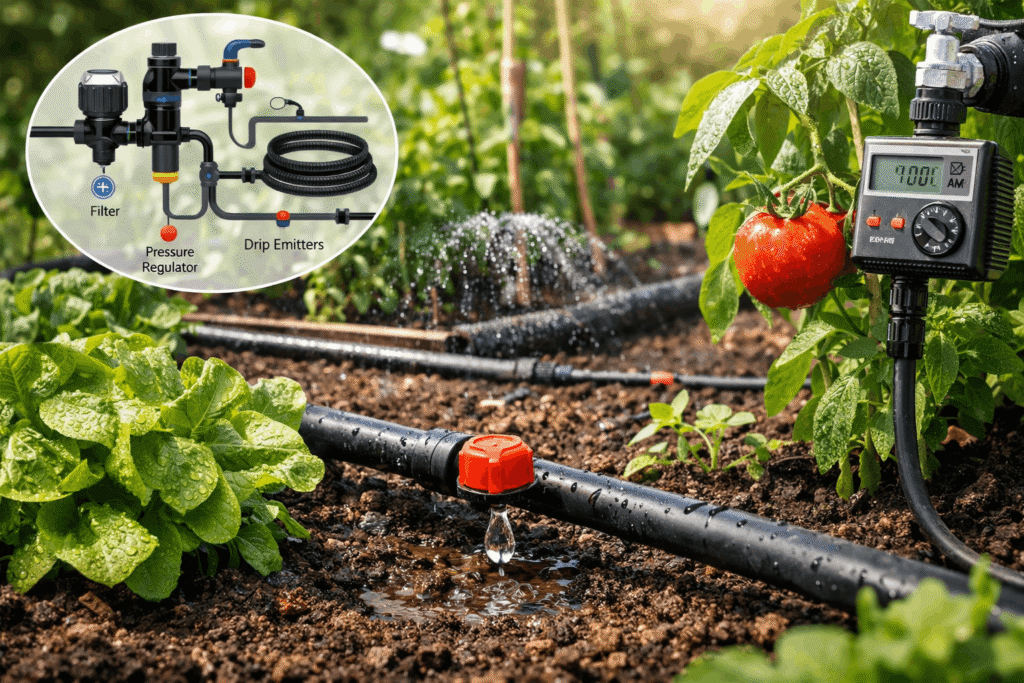
Key Components of a Garden Drip Irrigation System
A typical garden drip irrigation system includes the following parts:
- Main water supply line
- Drip tubing or pipes
- Emitters or drippers
- Filter
- Pressure regulator
- Connectors and valves
Each component works together to ensure water flows slowly and evenly to plants.
This targeted watering system helps plants absorb water efficiently while minimising evaporation and runoff.
How Garden Drip Irrigation System Works
The working process of a garden drip irrigation system is simple yet highly effective.
Water flows from the main supply into a network of tubes. Small emitters placed along the tubing release water slowly near plant roots.
Basic Working Process
- Water enters from the main source.
- The filter removes dirt and debris.
- A pressure regulator controls water pressure.
- Water travels through drip tubing.
- Emitters release water slowly to plant roots.
Because water is delivered directly to the soil, plants receive consistent moisture without flooding the surrounding area.
This controlled watering method is the main reason why many gardeners prefer using a garden drip irrigation system instead of traditional sprinklers.
Benefits of Garden Drip Irrigation System
Installing a garden drip irrigation system provides many advantages for both home gardeners and professional growers.
1. Saves Water
Drip irrigation reduces water waste by delivering water directly to plant roots. This can save up to 50% more water compared to traditional irrigation.
Water-efficient irrigation systems can significantly reduce water waste in gardens and landscapes, as explained by the WaterSense program by the United States Environmental Protection Agency.
2. Healthier Plants
Plants receive consistent moisture, which improves growth and reduces stress.
3. Reduces Weed Growth
Since water is applied only near plants, weeds receive less water and grow less.
4. Prevents Plant Diseases
Leaves stay dry because water goes directly to the soil, reducing fungal diseases.
5. Easy Automation
Most garden drip irrigation systems can be connected to timers for automatic watering.
6. Saves Time and Effort
Once installed, the system waters your garden automatically.
7. Works in Any Garden Size
Whether you have raised beds, vegetable gardens, or flower beds, a garden drip irrigation system can be customised easily.
Types of Garden Drip Irrigation System

There are several types of garden drip irrigation system setups depending on garden size and plant needs.
1. Surface Drip Irrigation
This system places drip tubes on the soil surface.
Best for:
- Vegetable gardens
- Flower beds
- Raised garden beds
2. Subsurface Drip Irrigation
The drip lines are buried under the soil.
Best for:
- Large landscapes
- Permanent garden setups
3. Emitter Drip System
Individual emitters deliver water to specific plants.
Best for:
- Potted plants
- Trees and shrubs
4. Soaker Hose System
A porous hose slowly releases water along its length.
Best for:
- Small gardens
- Beginner gardeners
Choosing the right garden drip irrigation system depends on your garden layout and watering needs.
According to the Food and Agriculture Organization, drip irrigation is one of the most efficient irrigation methods used worldwide.
Step-by-Step Guide to Install or Use Garden Drip Irrigation System

Installing a garden drip irrigation system is easier than most people think. Follow these simple steps.
Step 1: Plan Your Garden Layout
Identify where plants are located and measure the area.
Step 2: Connect the Water Source
Attach the system to your outdoor faucet or main water line.
Step 3: Install a Filter and Pressure Regulator
These components protect the system and maintain proper water flow.
Step 4: Lay the Drip Tubing.
Place tubing along plant rows or garden beds.
Step 5: Install Emitters
Insert emitters near plant roots.
Step 6: Secure the Tubing
Use stakes to keep tubes in place.
Step 7: Test the System
Turn on the water and check for leaks or blockages.
Once installed, the garden drip irrigation system will deliver water efficiently with minimal maintenance.
Common Problems and Solutions
Even the best garden drip irrigation system may experience occasional issues.
1. Clogged Emitters
Cause: Dirt or mineral buildup
Solution: Clean or replace emitters and install a filter.
2. Uneven Water Distribution
Cause: Incorrect pressure or layout
Solution: Adjust pressure regulator or reposition emitters.
3. Leaking Tubing
Cause: Loose connections or damage
Solution: Tighten fittings or replace damaged tubing.
4. Low Water Pressure
Cause: Blocked filter or long tubing lines
Solution: Clean filter and shorten tubing if necessary.
Regular inspection helps keep your garden drip irrigation system working efficiently.
Expert Tips to Improve Performance
Professional gardeners recommend the following tips to get the most from a garden drip irrigation system.
Use a timer.
Automatic timers help maintain consistent watering schedules.
Check the system weekly.
Inspect emitters and tubing for blockages.
Mulch Around Plants
Mulch helps retain soil moisture and improves irrigation efficiency.
Adjust Water Flow
Different plants require different water amounts.
Flush the System Occasionally
Flushing removes dirt and prevents clogs.
Following these tips can significantly improve the performance of your garden drip irrigation system.
Comparison with Alternative Methods
There are several ways to water a garden, but the garden drip irrigation system is often the most efficient.
Drip Irrigation vs Sprinkler Irrigation
| Feature | Drip Irrigation | Sprinkler System |
|---|---|---|
| Water Efficiency | Very High | Moderate |
| Water Waste | Very Low | Higher |
| Weed Growth | Minimal | More weeds |
| Disease Risk | Low | Higher |
| Installation Cost | Moderate | Moderate |
While sprinkler systems are useful for lawns, a garden drip irrigation system is usually better for vegetable gardens and flower beds.
Conclusion
A garden drip irrigation system is one of the smartest investments you can make for your garden. It saves water, improves plant health, reduces weeds, and simplifies garden maintenance.
By delivering water directly to plant roots, this system ensures plants receive the exact moisture they need to grow strong and healthy.
If you want to explore more advantages of irrigation technology, read about the benefits of sprinkler irrigation systems.
If you want a low-maintenance, water-saving solution, the garden drip irrigation system is the perfect choice for modern gardening.
FAQs
1. What is a garden drip irrigation system?
A garden drip irrigation system is a watering system that delivers water slowly and directly to plant roots using tubes and emitters.
2. Is drip irrigation better than sprinklers?
Yes. A garden drip irrigation system is more water-efficient because it delivers water directly to the soil instead of spraying it into the air.
3. How much water does drip irrigation save?
A garden drip irrigation system can reduce water usage by 30–50% compared to traditional irrigation methods.
4. Can beginners install a drip irrigation system?
Yes. Most garden drip irrigation system kits are designed for easy DIY installation and can be set up in a few hours.
5. How often should drip irrigation run?
Most gardens require drip irrigation 2–3 times per week, depending on climate and plant type.
6. Does drip irrigation work for vegetable gardens?
Yes. A garden drip irrigation system is ideal for vegetable gardens because it provides consistent moisture to plant roots.
7. How long does a drip irrigation system last?
With proper maintenance, a garden drip irrigation system can last 10–15 years or longer.