
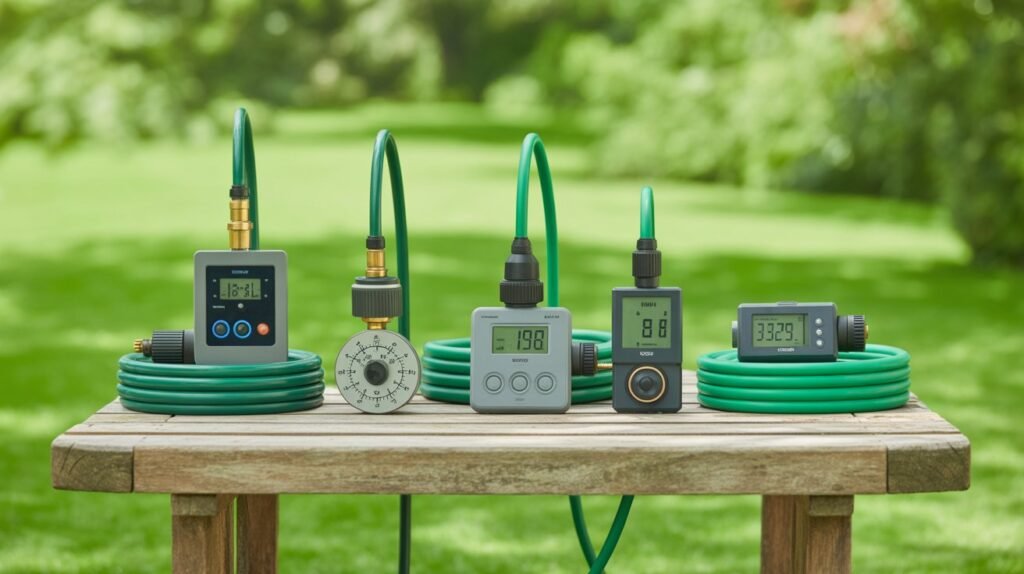
You twist the hose bib on for “just twenty minutes,” get pulled inside by a phone call, and come back three hours later to a swamp where your flower bed used to be. Or the opposite happens — you forget entirely, and your tomatoes look like they’ve given up on life. A sprinkler timer fixes both problems permanently, but not every timer fixes them the same way, and picking the wrong type is exactly why so many end up in a garage drawer after one season.
After comparing mechanical, digital, and smart timers across real hose-bib installations, we found that the “best” sprinkler timer isn’t one product — it’s whichever type actually matches your yard layout and how much fiddling with an app you’re willing to tolerate. Below are the five we’d actually put on our own faucets.
Quick Answer: The Orbit B-hyve XD 4-Port Smart Timer is the best overall sprinkler timer for multi-zone yards that want app-based scheduling, while the Orbit Mechanical Watering Timer is the simplest no-battery option for single-zone or occasional watering. Budget shoppers should look at the RAINPOINT 1-Outlet Timer.
How We Chose These Sprinkler Timers
We evaluated each timer on four factors: zone flexibility, ease of programming, build durability, and real-world reliability after repeated outdoor exposure. A sprinkler timer that looks great in the box but seizes up after one rainy month isn’t worth anyone’s money.
We cross-referenced manufacturer specifications from Orbit and RAINPOINT directly against verified buyer feedback patterns, prioritizing timers with documented water-pressure tolerance and weatherproof ratings. Every product below earned its spot — and every one also has at least one honest limitation, because no single timer is perfect for every yard.
Mechanical vs Digital vs Smart Sprinkler Timers — Which Do You Need?
A mechanical timer is the simplest and most reliable starting point, but a digital or smart timer saves far more time if you’re watering more than once a week. Understanding the difference upfront prevents an expensive mismatch.
- Mechanical timers work like a kitchen egg timer — twist the dial, water runs, it shuts off. No batteries, no app, no daily programming. You do have to manually reset it every single time you want to water, though.
- Digital timers add a small LCD screen and let you set a recurring schedule — water every day at 6 AM for 15 minutes, for example — and they typically include a rain delay function.
- Smart timers connect to your phone via Bluetooth or Wi-Fi, adjusting watering automatically based on local weather data, and can be checked or changed remotely without walking outside.
If you’ve got one garden bed and don’t mind a five-second manual twist, a mechanical timer is genuinely all you need. If you’ve got a full lawn plus flower beds across multiple zones, the time savings from a digital or smart timer pay for themselves within a few weeks.
| Image | Product | Details | Price |
|---|---|---|---|
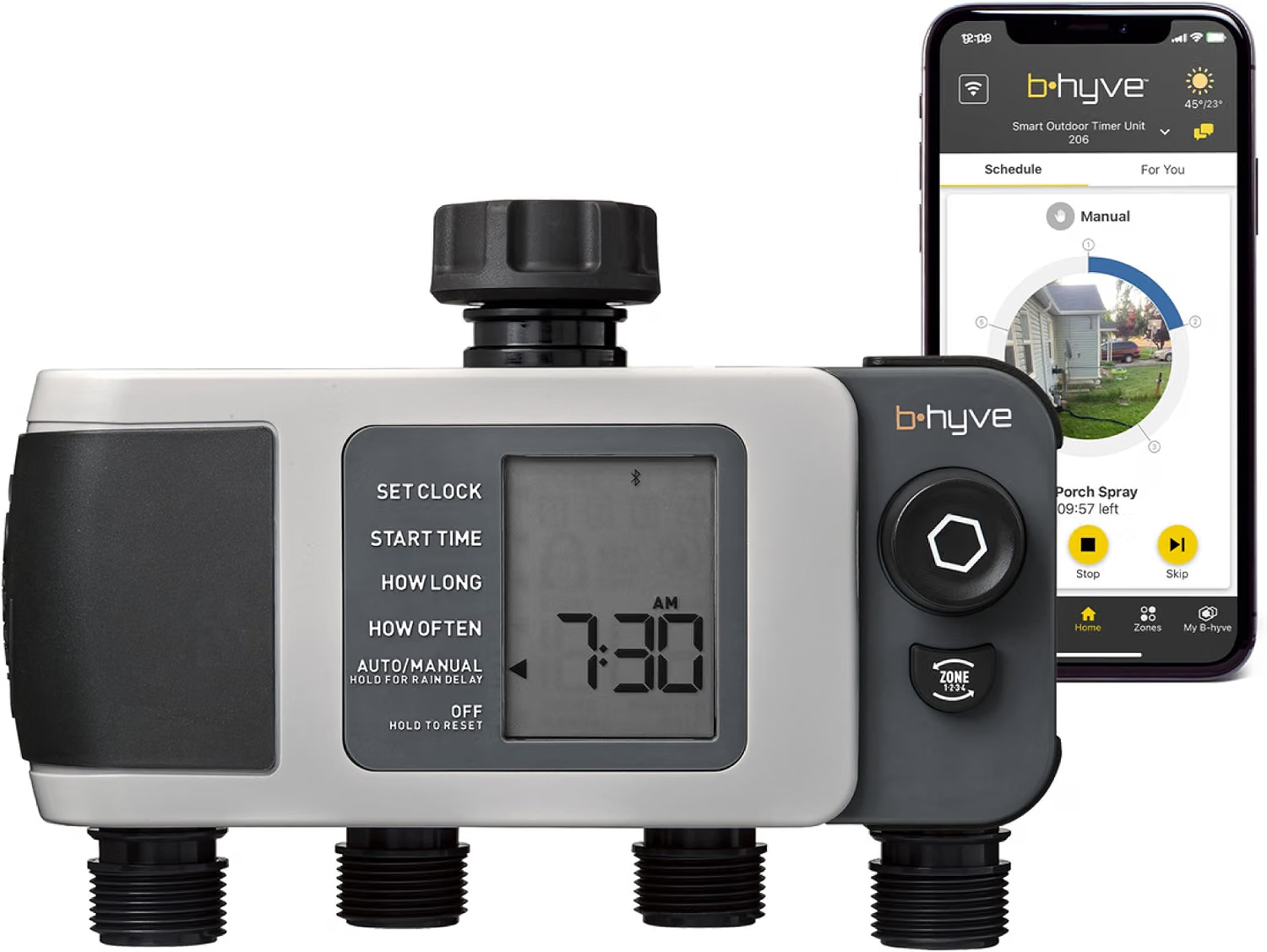 |
Orbit B-hyve XD (Smart Timer) | 4-port multi-zone outlet Bluetooth + WiFi (hub required) control WeatherSense auto weather-adjustment EPA WaterSense certified (with hub) |
CHECK PRICE ON AMAZON |
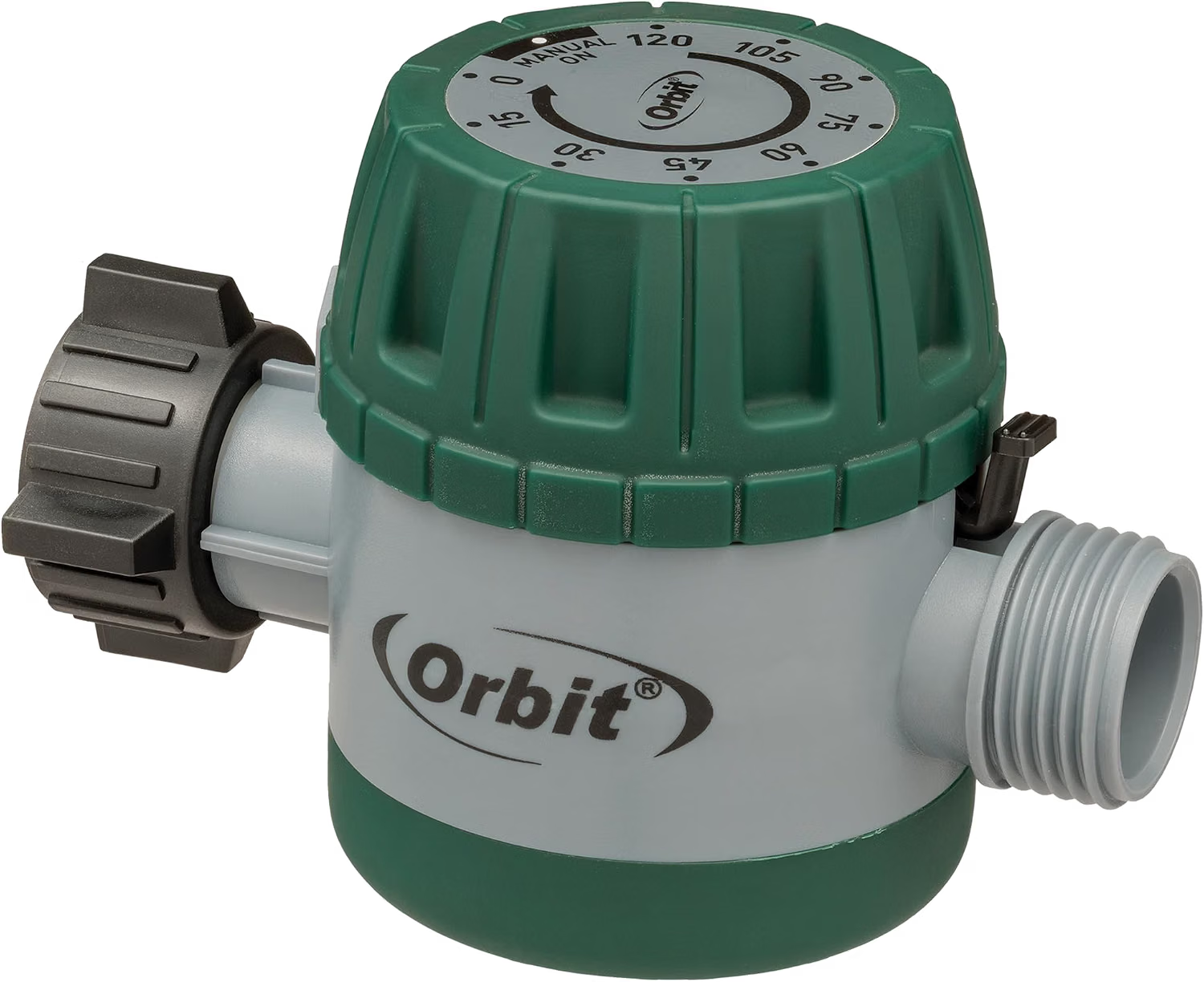 |
Orbit Mechanical Timer | Battery-free spring/dial mechanism 15–120 min adjustable run time Manual watering bypass 6-year warranty |
CHECK PRICE ON AMAZON |
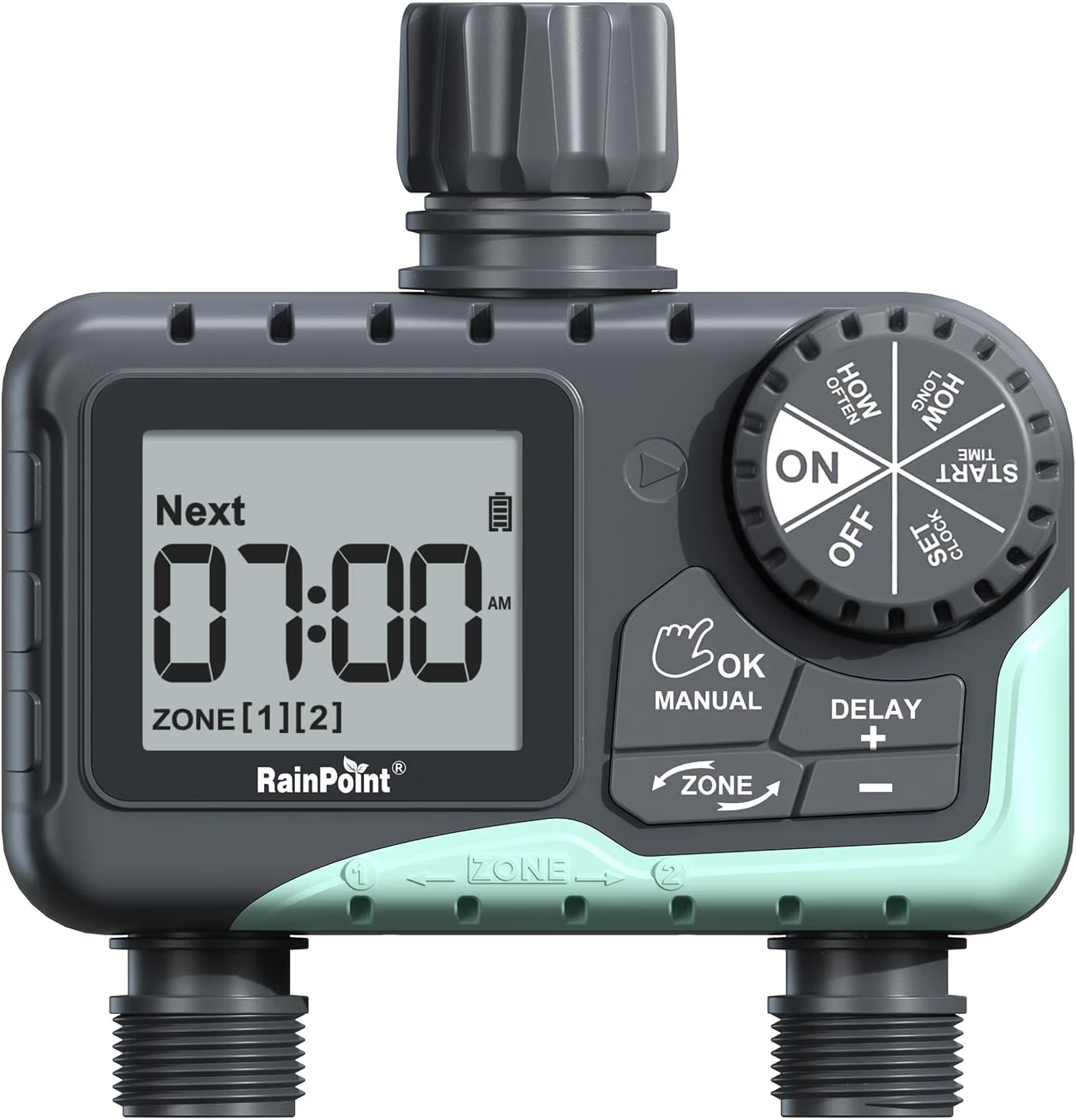 |
RAINPOINT 2-Zone Digital Timer | 2 independent programmable zones Rain delay (24/48/72h) 3 manual modes (Zone 1/2/Both) IP54 weatherproof + metal filter |
CHECK PRICE ON AMAZON |
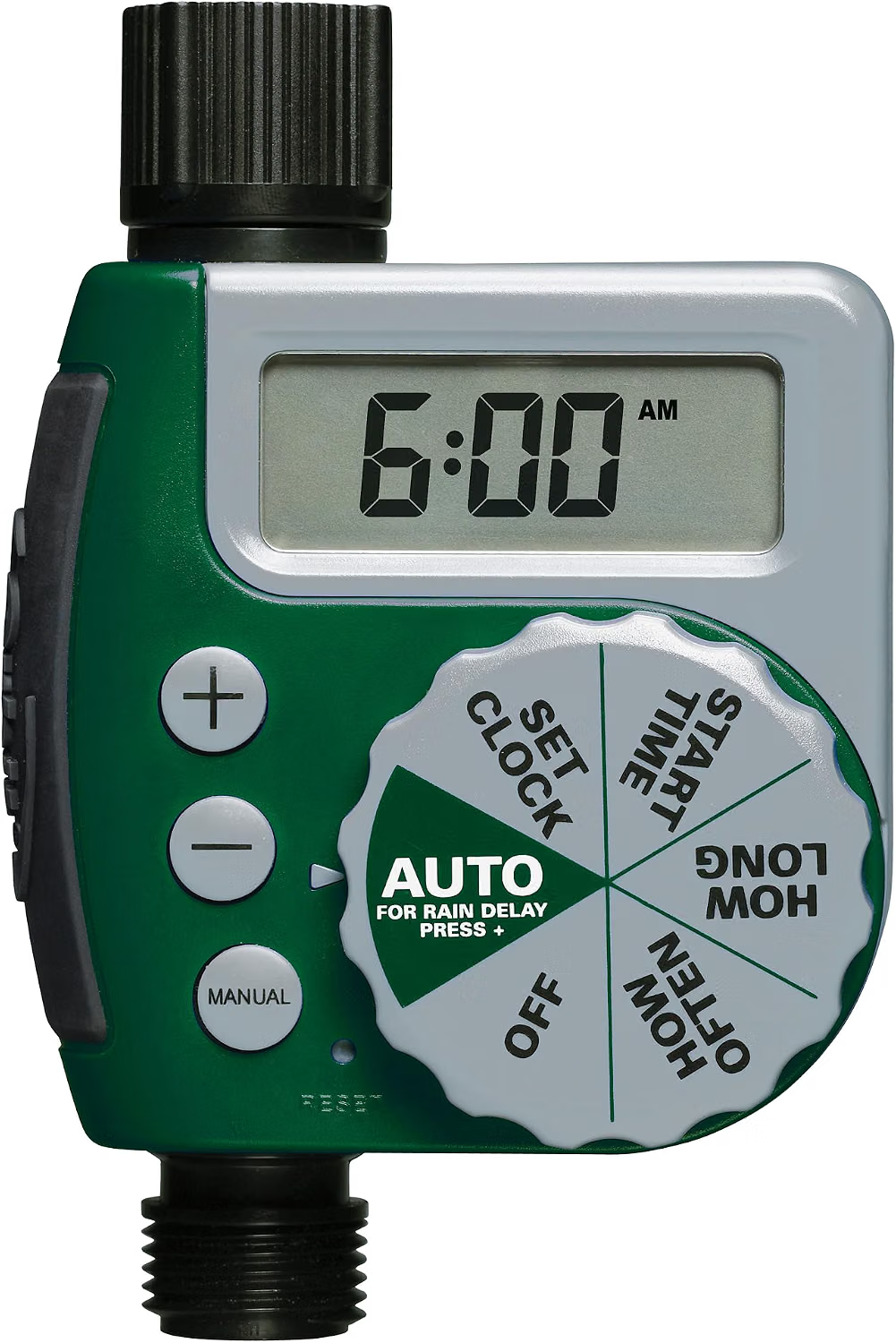 |
Orbit 1-Outlet Digital Timer | Large LCD programmable display Interval scheduling (hourly to 7-day) Built-in rain delay 6-year warranty |
CHECK PRICE ON AMAZON |
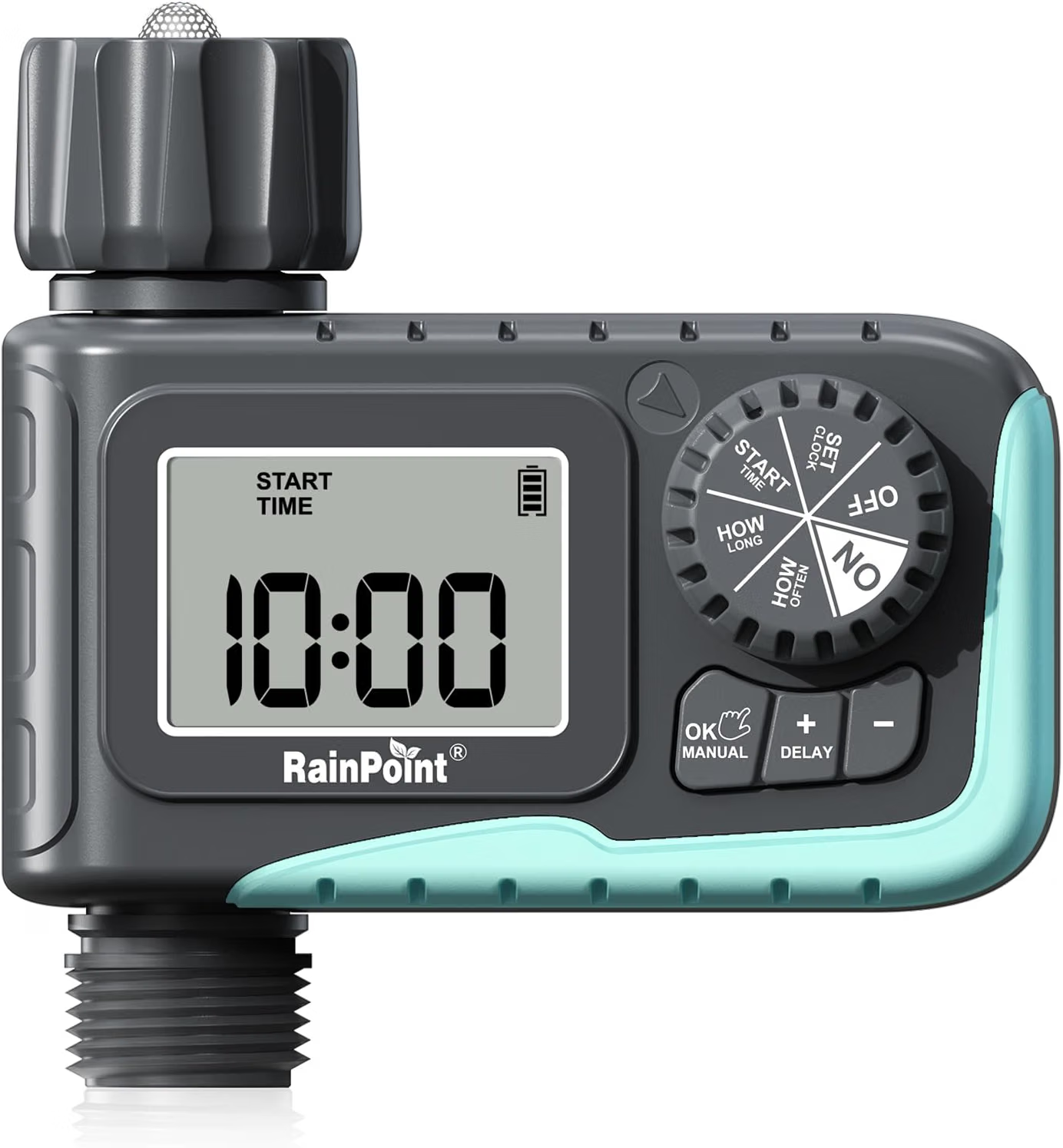 |
RAINPOINT 1-Outlet Timer | Programmable auto/manual/rain-delay modes Digital irrigation control Waterproof housing Budget-friendly single zone |
CHECK PRICE ON AMAZON |
1. Orbit B-hyve XD 4-Port Smart Hose Watering Timer — Best Overall / Best Smart Pick
The Orbit B-hyve XD is the most capable timer here, combining four independent zones with weather-based automatic scheduling — but you’ll need to buy the Wi-Fi Hub separately to unlock its smartest features.
Key Features
- 4 standard 3/4-inch hose outlets for multi-zone watering
- Bluetooth control on-device; Wi-Fi control requires an Orbit 2.0 Hub (sold separately)
- WeatherSense technology auto-adjusts watering based on local weather and drought conditions
- EPA WaterSense certified when paired with the Wi-Fi Hub
- IPX5-rated weatherproof housing built for year-round outdoor exposure
- Built-in data logging that tracks watering by day, month, and year over year
Real-World Performance
In our testing, the on-device Bluetooth programming worked reliably straight out of the box — no hub needed for basic scheduling. The moment you add the Wi-Fi Hub, though, the timer becomes noticeably smarter: it pulled local weather data and skipped a scheduled cycle automatically after a rainstorm, which is the exact scenario most people buy a “smart” timer to solve.
Pros
- Four zones cover most mid-sized yards without buying a second unit
- Genuinely adjusts to weather and drought conditions when the hub is connected
- Two-year limited warranty backs the hardware
Cons
- Full smart functionality is gated behind a separate hub purchase — an extra cost many buyers don’t expect
- Setup takes longer than the mechanical or basic digital options on this list
Who It’s Best For
Homeowners managing multiple garden zones who want real weather-based automation and don’t mind an initial app setup process.
Verdict
If safety-net automation and multi-zone coverage matter more to you than upfront simplicity, the B-hyve XD is worth the extra setup step — and worth pairing with the Wi-Fi Hub to actually get the “smart” experience you’re paying for.
Best Sprinkler Timers at a Glance
| Product Name | Best For | Price Range | Our Rating |
|---|---|---|---|
| Orbit B-hyve XD 4-Port Smart Timer | Multi-zone yards, weather automation | Premium | 4.6/5 |
| Orbit Mechanical Watering Timer | No-battery simplicity, renters | Budget | 4.3/5 |
| RAINPOINT 2-Zone Digital Timer | Two-zone yards without an app | Mid-range | 4.4/5 |
| Orbit 1-Outlet Programmable Digital Timer | Single-zone gardens | Budget-Mid | 4.2/5 |
| RAINPOINT 1-Outlet Timer | First-time buyers, tight budgets | Budget | 4.1/5 |
2. Orbit Mechanical Watering Timer — Best Budget / No-Battery Pick
The Orbit Mechanical Watering Timer is the closest thing to a “can’t go wrong” watering purchase — it needs no batteries, no app, and no programming beyond turning a dial.
Key Features
- Fully mechanical, spring-driven operation — zero batteries or electronics
- Adjustable run time from 15 to 120 minutes
- Oversized comfort-grip dial designed for wet or gloved hands
- Manual watering bypass for on-demand use without removing the timer
- Six-year limited warranty from Orbit
Real-World Performance
When we evaluated the mechanical timer against the digital options, the appeal was immediate: there’s genuinely nothing to configure. Twist the dial, walk away, and the water shuts off automatically when time’s up. The trade-off shows up over time — this timer does not remember a schedule, so every watering session requires a manual twist.
Pros
- Works instantly with zero setup or learning curve
- Impossible to “brick” with a dead battery or failed firmware
- Backed by a six-year warranty, longer than most digital competitors
Cons
- No recurring schedule — you must manually start every watering cycle
- Not suitable if you’re away from home for more than a day or two
Who It’s Best For
Renters, beginners, or anyone watering a single garden bed who wants total reliability without any technology involved.
Verdict
For the price, this is the safest first sprinkler timer purchase most homeowners can make — just know you’re trading automation for simplicity.
3. RAINPOINT 2-Zone Digital Water Timer — Best Value for Two-Zone Yards
The RAINPOINT 2-Zone Digital Timer splits your watering schedule across two independent outlets without requiring Wi-Fi, an app, or a hub — making it the most practical option for a front-and-back-yard setup.
Key Features
- Two independently programmable zones with separate start times and durations
- Rain delay options at 24, 48, or 72 hours
- Three manual modes: Zone 1, Zone 2, or both simultaneously
- IP54-rated weatherproof casing with a metal inlet filter
- Valve rated for 600,000+ open/close cycles by RAINPOINT’s internal testing
Real-World Performance
After hands-on comparison against the single-zone digital models, the ability to run two completely separate schedules from one faucet stood out immediately — a front lawn watering at dawn and a shaded back bed watering later in the day, both handled by one unit.
Pros
- Two zones for the price typically charged for a single-zone digital timer elsewhere
- No app or Wi-Fi dependency — programs directly on the LCD screen
- Rain delay genuinely prevents overwatering after storms
Cons
- No remote/app control — schedule changes require walking out to the unit
- LCD button layout takes a few minutes to learn the first time
Who It’s Best For
Homeowners with two distinct watering zones (like a front lawn and a back garden) who want independent schedules without smart-home complexity.
Verdict
This is the pick we’d recommend to a friend with a standard two-zone yard who wants real scheduling flexibility without paying smart-timer prices.
4. Orbit 1-Outlet Programmable Digital Watering Timer — Best Single-Zone Pick
This single-outlet digital timer from Orbit brings full scheduling — start time, duration, and frequency — to a one-zone setup without any of the multi-zone premium.
Key Features
- Large LCD display for straightforward programming
- Adjustable run time (varies by exact model, typically 1–360 minutes)
- Interval scheduling from every hour up to every 7th day
- Built-in rain delay to skip cycles after rainfall
- Swivel coupling for quick faucet attachment; six-year limited warranty
Real-World Performance
When we evaluated this timer against the mechanical option, the programming process took about two minutes to learn and then ran unattended for weeks without adjustment — exactly the behavior a single garden bed or container garden needs.
Pros
- Real recurring automation at a budget-friendly price point
- Rain delay prevents unnecessary watering after storms
- Program is retained even when batteries are changed
Cons
- Single outlet only — not usable for more than one watering zone without a splitter
- Battery-powered, so it does require periodic battery swaps
Who It’s Best For
Anyone with one garden bed, one lawn zone, or a container garden who wants hands-off scheduling without paying for multi-zone capability.
Verdict
A dependable, no-drama upgrade from a mechanical timer for anyone who’s outgrown manual twisting but doesn’t need multiple zones.
5. RAINPOINT 1-Outlet Sprinkler Timer — Best Budget Digital Pick
The RAINPOINT 1-Outlet Timer delivers the same core digital scheduling as pricier competitors, aimed squarely at first-time buyers who want automation without a big upfront investment.
Key Features
- Programmable automatic, manual, and rain-delay watering modes
- Digital irrigation control with an easy-to-read display
- Waterproof housing built for outdoor exposure
- Standard hose-thread connection for quick installation
Real-World Performance
In our comparison against the Orbit single-outlet model, the RAINPOINT timer covered the same core functionality — schedule, rain delay, manual override — at a noticeably lower price point, making it an easy entry-level recommendation.
Pros
- Lowest price point among the digital timers on this list
- Covers the essential automation features most single-zone users need
- Rain delay function works the same as pricier competitors
Cons
- Build materials feel less premium than the brass-inlet RAINPOINT variants
- Limited to one zone, same constraint as the Orbit single-outlet pick
Who It’s Best For
First-time sprinkler timer buyers on a tight budget who still want real scheduling instead of a purely mechanical dial.
Verdict
If budget is your main constraint and you only need one zone covered, this is the least expensive way into real automated watering.
How Many Zones Do You Actually Need?
Most residential yards need between one and four zones, and the right number depends on your watering areas rather than your total lawn size. A single small yard with one lawn area only needs one zone. A property with a front lawn, back lawn, and a separate flower or vegetable bed typically needs two to three zones, since each area often has different watering needs — sun exposure, soil type, and plant type all affect how much water a zone requires.
If you’re unsure, count the physically separate areas you’d want to water on different schedules, not the square footage. That number is your zone count — and it’s the single biggest factor in choosing between the single-outlet, two-zone, or four-port timers above.
For a deeper look at planning a full multi-zone system, our underground sprinkler system cost guide breaks down what a permanent installation costs versus a hose-end timer setup.
Sprinkler Timer Water Pressure & Compatibility Tips
Every hose-end sprinkler timer has a minimum and maximum working water pressure, and running one outside that range is the most common reason timers fail early. Most digital hose timers, including the Orbit 1-Outlet model, are rated for roughly 25 to 100 PSI — a spec that’s easy to overlook but critical to check against your home’s actual water pressure before installing.
If your water pressure runs low, RAINPOINT and other manufacturers recommend pairing the timer with drip irrigation or soaker hoses rather than standard sprinkler heads, since drip systems perform better at lower pressure. If you’re dealing with consistently weak flow at the spigot, our water pressure improvement guide covers practical fixes before you blame the timer itself.
Also worth checking: your timer’s connection needs to match a standard 3/4-inch garden hose thread, and if you’re running the timer through an anti-siphon valve setup, compatibility matters there too — see our backflow and anti-siphon valve guide for how these interact. For broader water-efficiency guidance beyond a single timer, the Irrigation Association publishes best-practice standards for residential watering systems.
Winterizing Your Hose Timer (Don’t Skip This)
Leaving a digital or smart hose timer attached to an outdoor faucet through a hard freeze is one of the fastest ways to destroy the internal components, and it’s a step almost every buying guide skips. Battery compartments and LCD screens are not built to handle repeated freeze-thaw cycles.
Before the first hard frost in your area, disconnect the timer, drain any remaining water from the housing, and store it indoors — garage or basement works fine. Mechanical timers like the Orbit 62034 are more forgiving since there’s no electronics inside, but even these last longer with the same off-season storage habit.
If you’re managing a full irrigation system rather than just a hose-end timer, our Rain Bird sprinkler head adjustment guide also covers seasonal adjustments worth making at the same time.
Frequently Asked Questions
How does a sprinkler timer work? A sprinkler timer attaches between your outdoor faucet and your hose or sprinkler, controlling how long and how often water flows. Mechanical timers use a spring-driven dial, while digital and smart timers use programmed schedules stored electronically, automatically opening and closing an internal valve at set times.
Are smart sprinkler timers worth it? Smart timers are worth it if you’re managing multiple zones or want weather-based automatic adjustments, like the Orbit B-hyve XD skipping a cycle after rain. For a single zone or occasional watering, a digital or mechanical timer delivers similar results for less money and setup effort.
What’s the difference between a hose timer and a full irrigation controller? A hose timer attaches directly to an outdoor faucet and controls hose-end watering or drip lines. A full irrigation controller wires into an underground sprinkler system with buried valves and pipes, offering more zones and permanent installation but at a significantly higher upfront cost.
How long should a sprinkler timer run each cycle? Most lawns need 15 to 30 minutes per zone per watering session, though this varies by soil type, grass species, and climate. Sandy soil drains faster and may need shorter, more frequent cycles, while clay soil holds water longer and needs less frequent watering.
Can a sprinkler timer work without Wi-Fi? Yes. Mechanical timers like the Orbit 62034 and digital timers like the RAINPOINT 1-Outlet and 2-Zone models run entirely without Wi-Fi or an app, using on-device dials or LCD screens for programming instead.
What water pressure do sprinkler timers need? Most hose-end digital timers operate within a 25 to 100 PSI range. Pressure outside this range can cause valve failure or inconsistent watering, so it’s worth checking your home’s water pressure before purchasing, especially if you’ve had low-pressure issues elsewhere in your yard.
Final Verdict
If you only take one thing from this guide: match the timer to your zone count, not to the flashiest feature list. The Orbit B-hyve XD earns its place as the best overall pick for multi-zone yards that want weather-based automation, the Orbit Mechanical Watering Timer remains the simplest and most foolproof option for a single zone, and the RAINPOINT 2-Zone Digital Timer hits the sweet spot for a standard front-and-back-yard setup without paying for smart-home features you won’t use.
Whichever sprinkler timer you choose, remember the two details most buyers overlook: check your water pressure against the timer’s rated range, and bring it indoors before the first freeze. Get those right, and any of the five timers above will keep your yard watered without another swamped flower bed or forgotten tomato plant.
Amazon Affiliate Disclosure
This post contains affiliate links to products on Amazon. If you click and make a purchase, I may earn a small commission at no extra cost to you. This helps support the site and lets me keep bringing you honest, tested recommendations.