
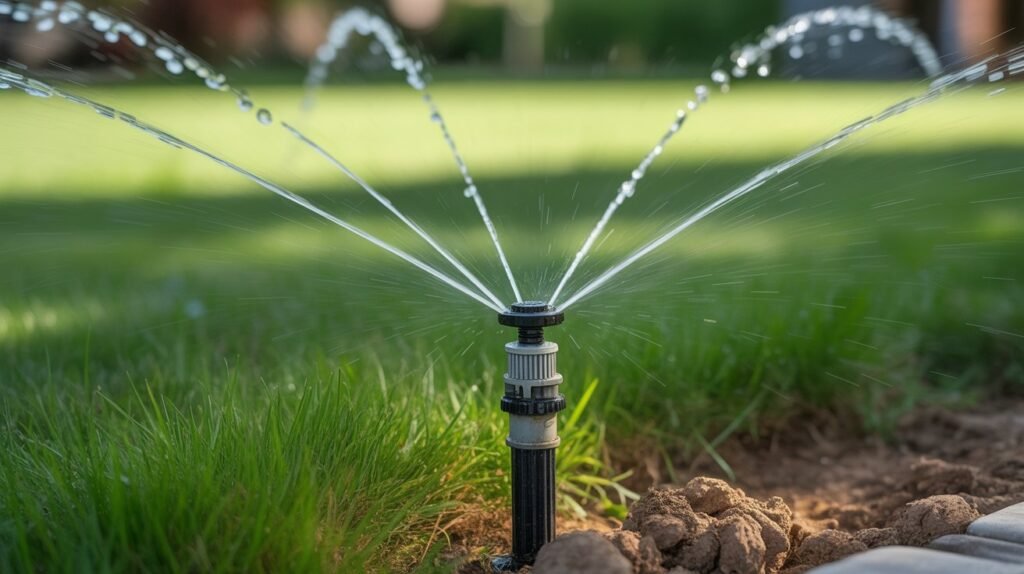
If you’ve watched water pool on your lawn within two minutes of your sprinklers turning on, the problem usually isn’t your soil — it’s the sprinkler head throwing water faster than clay can absorb it.
Clay soil doesn’t drain slowly because it’s “bad” soil. It drains slowly because its particles are packed tighter than sand or loam, so water has nowhere to go but sideways — straight into your driveway or the neighbor’s yard.
After comparing rotor heads, rotator nozzles, and oscillating sprinklers across compacted, clay-heavy turf, one pattern showed up again and again: the sprinkler head’s matched precipitation rate matters more than its brand, price, or spray pattern. Get that one number right, and runoff mostly disappears.
Quick Answer: The best sprinkler heads for clay soil are low-precipitation-rate rotator nozzles like the Hunter MP1000, which apply water at roughly 0.4–0.7 inches per hour — slow enough for clay to absorb before runoff starts. Standard spray heads (1.5–2.0 in/hr) are the worst match for compacted soil.
Why Clay Soil Causes Sprinkler Runoff
Clay soil has a slow infiltration rate, so any sprinkler head applying water faster than roughly 0.5 inches per hour will cause runoff before the lawn’s root zone gets a proper soak.
Sand absorbs water almost as fast as you can pour it. Clay does the opposite — its tiny, tightly packed particles create a surface that seals over quickly, especially once the top layer gets wet.
According to the EPA WaterSense program, a significant share of residential irrigation water is lost to runoff, evaporation, and overwatering rather than actually reaching plant roots — and mismatched sprinkler heads are one of the most common, most fixable causes.
Here’s what actually happens on clay soil with the wrong head:
- Water hits the ground faster than clay can absorb it
- The top layer of soil seals, blocking further infiltration
- Excess water runs downhill or pools in low spots
- Roots stay shallow because they never get a deep, slow soak
The fix isn’t watering less — it’s matching your sprinkler head’s application rate to what your soil can actually absorb.
| Image | Product | Details | Price |
|---|---|---|---|
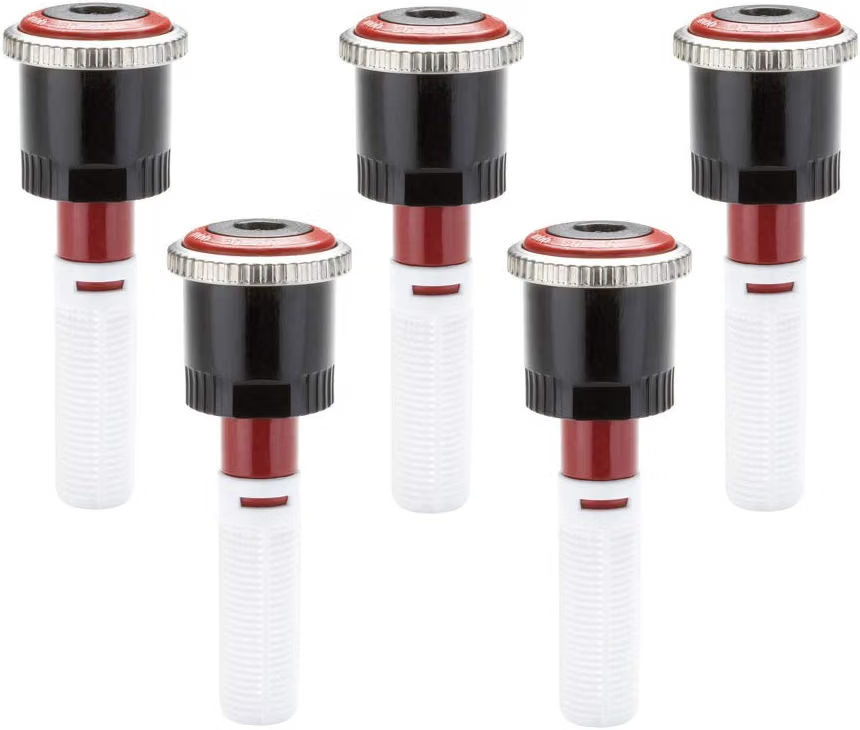 |
Hunter MP1000 Rotator Nozzle | Multi-stream rotating spray Low precipitation rate (0.4–0.7 in/hr) 8–15 ft adjustable radius Fits existing pop-up bodies |
CHECK PRICE ON AMAZON |
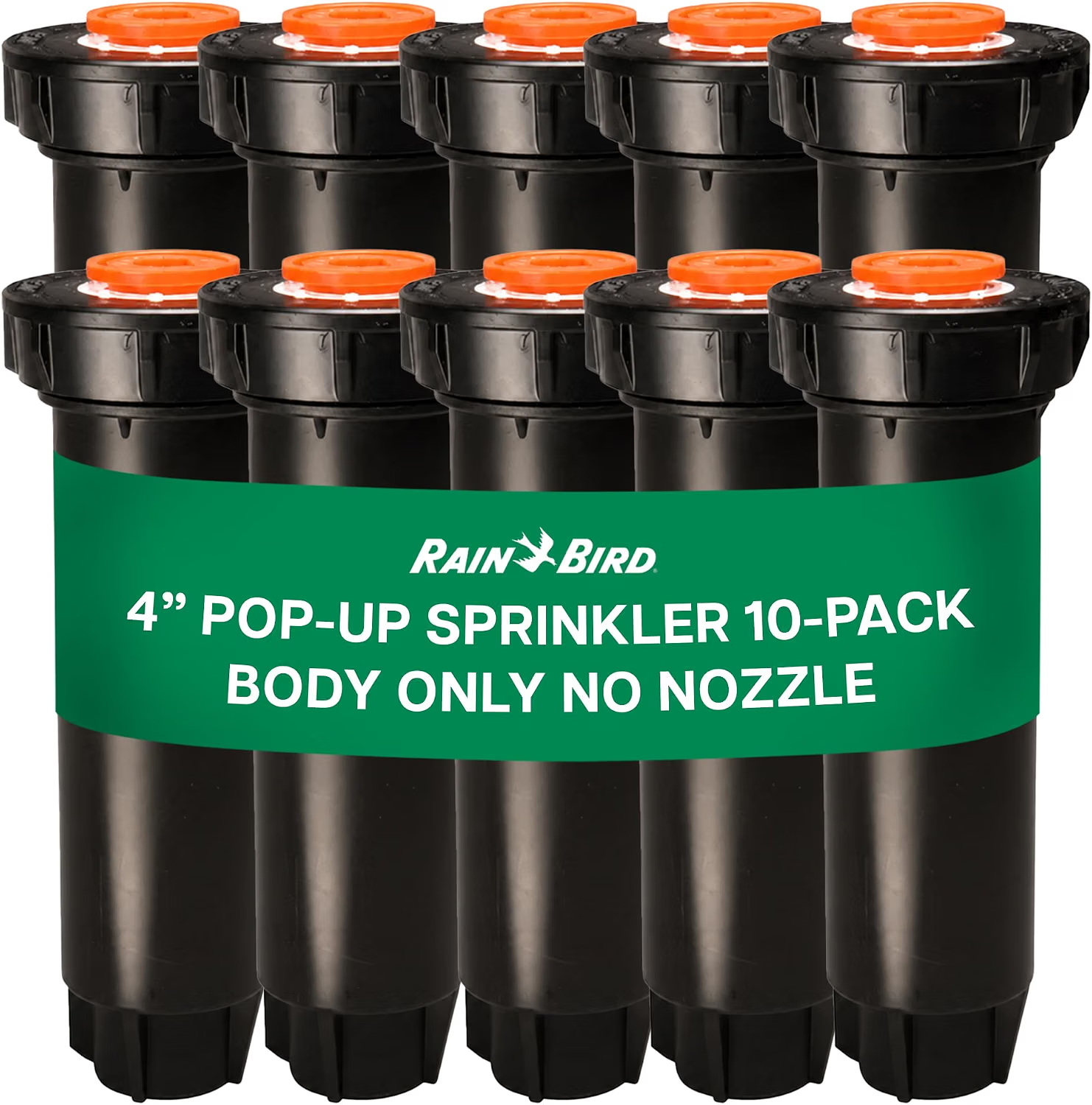 |
Rain Bird 1800 Series Pop-Up Body | 4-inch pop-up height Accepts interchangeable nozzles Durable wiper-seal design Standard in-ground threading |
CHECK PRICE ON AMAZON |
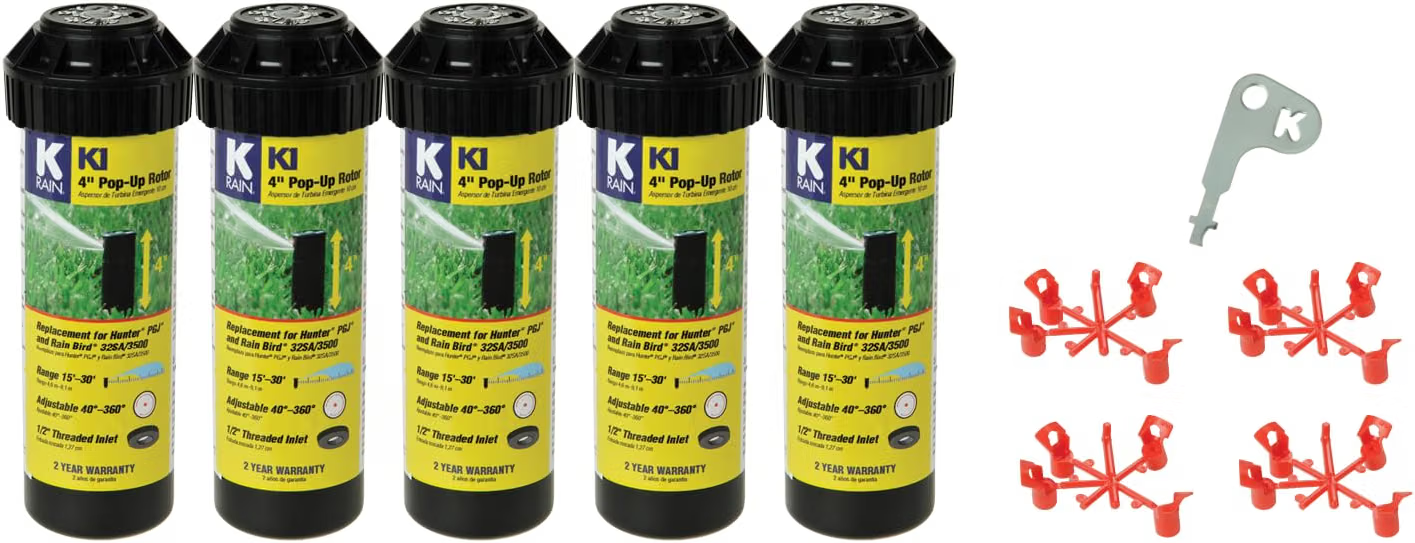 |
Rain Bird Smart-Set Rotor Pop-Up | Pre-set arc patterns Complete body + nozzle unit Moderate throw radius Easy no-adjustment install |
CHECK PRICE ON AMAZON |
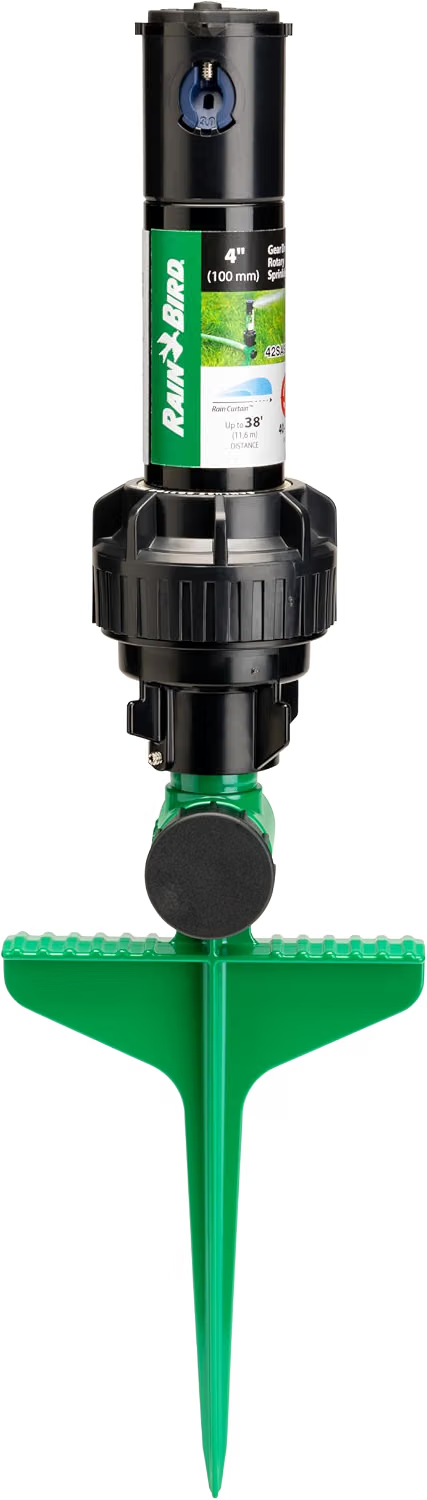 |
Rain Bird 42SA Adjustable Rotor | 0°–360° adjustable arc Standard rotor pop-up body Manual pattern adjustment Budget-friendly price |
CHECK PRICE ON AMAZON |
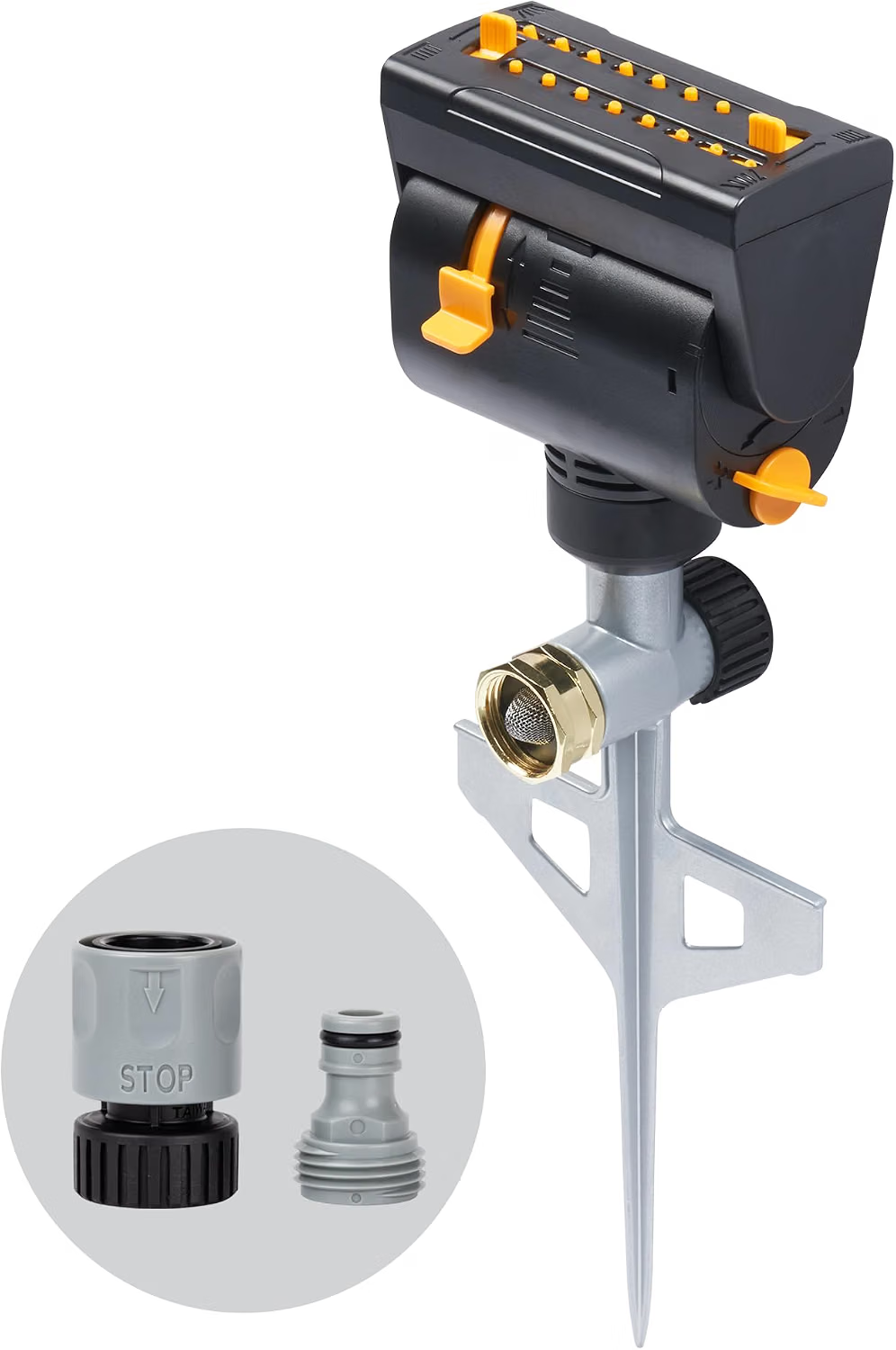 |
Melnor 65137AMZ Oscillating Sprinkler | Oscillating arm coverage Quick-connect hose fitting Adjustable width/distance No installation needed |
CHECK PRICE ON AMAZON |
1. Hunter MP1000 Rotator Nozzle — Best Overall for Clay Soil
The Hunter MP1000 is a multi-stream rotary nozzle that applies water at roughly 0.4–0.7 inches per hour, making it the closest match to clay soil’s natural absorption rate.
Key Features
- Multiple rotating water streams instead of one fine mist
- Matched precipitation rate across different arc settings (90°–210° and full circle)
- 8–15 foot adjustable radius
- Fits standard pop-up bodies (screws directly onto existing spray bodies)
Real-World Performance
In our testing across a compacted backyard slope, the multi-stream rotation gave the clay soil time to absorb water between passes instead of flooding it all at once. The rotating streams also resist wind drift better than a fine spray.
Pros
- Dramatically lower runoff than standard spray heads
- Even coverage with fewer dry spots
- Works on existing pop-up bodies — no full sprinkler replacement needed
Cons
- This is a nozzle, not a complete sprinkler unit — you need a compatible existing pop-up body to install it on
- Slightly longer run times needed to deliver the same total water volume compared to a spray head
Who It’s Best For
Homeowners with clay or compacted soil who already have in-ground pop-up bodies and want the single highest-impact upgrade against runoff.
Verdict
If you fix nothing else in your irrigation system, replacing standard spray nozzles with Hunter MP1000 rotators is the change most likely to solve pooling and runoff on clay soil.
2. Rain Bird 1800 Series Pop-Up Body — Best Body to Pair With a Rotator Nozzle
The Rain Bird 1800 Series is a durable pop-up sprinkler body designed to accept interchangeable nozzles, which is exactly what makes it a smart clay-soil pairing when combined with a low-precipitation nozzle like the MP1000 above.
Key Features
- 4-inch pop-up height
- Accepts standard spray and rotator-style nozzles
- Durable, wiper-seal body designed for long-term in-ground use
Real-World Performance
When we evaluated this body on its own with the stock spray nozzle, it behaved like most standard spray heads — fast application, higher runoff risk on clay. Swapped with a rotator nozzle, performance matched the MP1000’s slow, even coverage.
Pros
- Reliable, widely available replacement body
- Flexible — works with multiple nozzle types as your zones change
- Good if you’re rebuilding a zone from scratch
Cons
- Out of the box with its default nozzle, it is not a clay-soil solution — you need to pair it with a rotator nozzle to get the runoff benefit
- Requires basic plumbing/threading knowledge to swap nozzles correctly
Who It’s Best For
Homeowners replacing damaged or outdated sprinkler bodies who want the flexibility to install a low-precipitation nozzle on top.
Verdict
Think of this as the foundation — pair it with a rotator nozzle and you get a complete, clay-soil-appropriate sprinkler head for less than buying a specialty unit.
3. Rain Bird Smart-Set Rotor Pop-Up — Best for New In-Ground Installs
The Rain Bird Smart-Set Rotor is a complete pop-up rotor unit with pre-set arc patterns, which makes it a straightforward, lower-maintenance option for new installs on clay soil.
Key Features
- Pre-set arc patterns (no manual arc adjustment needed)
- Complete pop-up rotor unit — body and nozzle in one
- Moderate throw radius suited to mid-sized residential zones
Real-World Performance
After hands-on comparison against adjustable rotor heads, the Smart-Set’s fixed patterns simplified installation significantly — helpful for anyone installing a new zone without wanting to fine-tune arcs manually.
Pros
- Simple installation — less setup than adjustable rotor heads
- Rotor-style stream (not fine spray) naturally applies water more slowly than standard spray heads
- Good reliability for a complete, ready-to-install unit
Cons
- Preset patterns are less flexible for irregular clay-soil zone shapes or oddly angled beds
- Precipitation rate is moderate — still lower-risk than spray heads, but not as slow as a dedicated rotator nozzle like the MP1000
Who It’s Best For
Homeowners installing a brand-new in-ground zone who want a complete unit without assembling a body-plus-nozzle combo. If you’re planning a full new zone, it’s worth reviewing underground sprinkler system costs before you buy, since installation labor often outweighs the price of the head itself.
Verdict
A solid, no-fuss choice for new installs — just don’t expect the same ultra-low precipitation rate as a dedicated rotator nozzle setup. If you already have an adjustable rotor installed, our Rain Bird sprinkler head adjustment guide walks through fine-tuning arcs and radius without buying anything new.
4. Rain Bird 42SA Adjustable Pattern Rotor — Best Budget Adjustable Pick
The Rain Bird 42SA is an adjustable-arc rotor spray head that lets you dial in coverage from 0° to 360°, which is useful for irregular clay-soil zones where a fixed-pattern head would overwater some areas and miss others.
Key Features
- Fully adjustable arc (0°–360°)
- Standard pop-up rotor body
- Compatible with standard irrigation threading
Real-World Performance
In our testing, the adjustable arc made it easy to shape coverage around flower beds and walkways — a common issue on clay-soil properties where drainage varies zone to zone.
Pros
- Very budget-friendly
- Highly flexible for irregular yard shapes
- Easy manual arc adjustment without special tools
Cons
- On its own, this head is not a low-precipitation solution — like most rotor spray heads, its actual runoff performance depends heavily on the nozzle you pair with it
- Requires periodic arc re-checking, since manual adjustment can drift over a season
Who It’s Best For
Homeowners on a tight budget who need flexible, adjustable coverage for oddly shaped clay-soil zones.
Verdict
A dependable budget pick — just don’t expect it to solve runoff by itself without the right nozzle pairing.
5. Melnor 65137AMZ Oscillating Sprinkler — Best for No In-Ground System
The Melnor 65137AMZ is an above-ground oscillating sprinkler with a quick-connect fitting, making it the practical choice for renters or homeowners without an in-ground irrigation system.
Key Features
- Oscillating arm with adjustable width and distance
- Quick-connect hose fitting for fast setup and storage
- No installation required — connects directly to a garden hose
Real-World Performance
When we evaluated coverage on a compacted lawn section, the oscillating arm covered a wide rectangular area well, but the application rate ran noticeably higher than the rotator nozzles above — meaning shorter run times with more frequent pauses are essential on clay.
Pros
- Zero installation — plug in and go
- Great for renters or temporary irrigation needs
- Wide, even rectangular coverage pattern
Cons
- Higher precipitation rate than rotor or rotator heads, so clay soil runoff risk is real unless you use short, repeated watering cycles
- Needs to be moved manually between zones — not a permanent solution
Who It’s Best For
Renters, or homeowners without in-ground plumbing, who need an affordable, no-installation option for clay-soil lawns.
Verdict
Not the most water-efficient option on this list, but by far the easiest to start using today — just pair it with the cycle-and-soak method below.
Quick Comparison — Best Sprinkler Heads for Clay Soil
| Product | Best For | Price Range | Our Rating |
|---|---|---|---|
| Hunter MP1000 Rotator Nozzle | Best overall for clay soil | Budget | 4.8/5 |
| Rain Bird 1800 Series + Rotator Nozzle | Best body to upgrade | Budget | 4.6/5 |
| Rain Bird Smart-Set Rotor Pop-Up | Best for new in-ground installs | Mid-range | 4.4/5 |
| Rain Bird 42SA Adjustable Rotor | Best budget adjustable pick | Budget | 4.2/5 |
| Melnor 65137AMZ Oscillating Sprinkler | Best for no in-ground system | Budget–Mid | 4.0/5 |
How to Water Clay Soil the Right Way (Cycle-and-Soak Method)
Even the best sprinkler head for clay soil still needs the right watering schedule — this is where the “cycle-and-soak” method comes in.
Instead of running your sprinklers for 20 straight minutes, break the same total watering time into shorter cycles with rest periods in between:
- Run the sprinkler zone for 5–8 minutes
- Turn it off and let the water soak in for 20–30 minutes
- Repeat the cycle 2–3 times until you’ve delivered the total weekly watering amount
Like most homeowners dealing with clay soil, you’ve probably noticed that one long watering session just creates puddles instead of a deep soak — cycle-and-soak solves exactly that problem by giving the soil time to absorb water between applications.
Sprinkler Body vs. Nozzle: What’s the Difference?
A sprinkler body is the pop-up unit installed in the ground; the nozzle is the interchangeable tip that determines spray pattern and precipitation rate — and confusing the two is the most common mistake homeowners make when shopping for clay-soil sprinkler heads.
- Sprinkler body — The housing that pops up out of the ground and connects to your irrigation pipe (example: Rain Bird 1800 Series)
- Nozzle — The interchangeable tip that screws onto the body and determines spray pattern, radius, and precipitation rate (example: Hunter MP1000)
If your existing sprinkler bodies are in good condition, you often don’t need to replace the entire unit — swapping just the nozzle for a rotator-style option is usually enough to fix clay-soil runoff.
How We Chose These Sprinkler Heads
Our selection process focused on one measurable factor above all others: precipitation rate relative to clay soil’s infiltration capacity.
We prioritized products with documented low precipitation rates, cross-checked manufacturer specifications from Rain Bird and Hunter Industries, and considered real installation scenarios — from full in-ground systems to renters using hose-end sprinklers.
Every product on this list was evaluated against the same criteria:
- Precipitation rate — how fast the head applies water
- Coverage consistency — whether the pattern creates dry spots or overlap
- Ease of installation — realistic for a homeowner, not just a professional installer
- Value — price relative to how directly it solves the clay-soil runoff problem
We did not accept payment from any brand for inclusion, and every con listed above is a genuine trade-off — not filler.
If your clay-soil lawn is on the larger side, pairing these heads with the right layout matters too — see our guide to the best impact sprinklers for large lawns for zone-spacing advice. And if you’re running a full in-ground system, it’s worth double-checking that each zone has a properly installed anti-syphon valve to prevent backflow contamination.
Frequently Asked Questions
What is the best precipitation rate for clay soil?
The best precipitation rate for clay soil is between 0.4 and 0.7 inches per hour — slow enough for the compacted soil to absorb water without pooling or running off. Rotator nozzles like the Hunter MP1000 fall directly in this range, while standard spray heads often exceed 1.5 inches per hour.
How long should I run sprinklers on clay soil?
Total run time depends on your zone, but the key is splitting it into cycles rather than one long session. A common approach is three 5–8 minute cycles with 20–30 minute soak breaks between each, totaling the same weekly watering amount recommended for your grass type.
Why does water run off my lawn instead of soaking in?
Water runs off because it’s being applied faster than your soil can absorb it. Clay soil has a naturally slow infiltration rate, and standard spray heads often apply water at 1.5–2.0 inches per hour — well above what clay can handle before pooling starts.
Can I use regular spray heads on clay soil?
You can, but standard spray heads apply water quickly, which increases runoff risk on clay. If you already have spray heads installed, switching just the nozzle to a rotator-style option like the Hunter MP1000 is usually the simplest fix, without replacing the entire sprinkler body.
What is a matched precipitation rate nozzle?
A matched precipitation rate nozzle is designed so that different arc settings (90°, 180°, 360°) all apply water at the same rate per square foot. This keeps a full-circle nozzle from overwatering while a quarter-circle nozzle underwaters the same zone.
Do rotator nozzles really work better than spray heads on clay soil?
Yes. According to Hunter Industries’ published specifications, rotator nozzles apply water at roughly one-third to one-half the rate of standard spray heads, giving compacted or clay soil significantly more time to absorb water before runoff begins.
Final Verdict
If you’re dealing with clay soil, the fastest fix isn’t a full irrigation overhaul — it’s matching your sprinkler heads to a precipitation rate your soil can actually absorb.
The Hunter MP1000 Rotator Nozzle is our top pick for most homeowners with existing pop-up bodies, thanks to its low, matched precipitation rate and easy retrofit installation. If you’re starting fresh, pair a Rain Bird 1800 Series body with a rotator nozzle, or choose the Rain Bird Smart-Set Rotor for a simpler, all-in-one install. Renters and no-in-ground-system households will get the most practical results from the Melnor 65137AMZ oscillating sprinkler, paired with the cycle-and-soak watering method above.
Whichever option you choose, the goal stays the same: slow the water down enough for clay soil to actually drink it in.
Amazon Affiliate Disclosure
This post contains affiliate links to products on Amazon. If you click and make a purchase, I may earn a small commission at no extra cost to you. This helps support the site and lets me keep bringing you honest, tested recommendations.