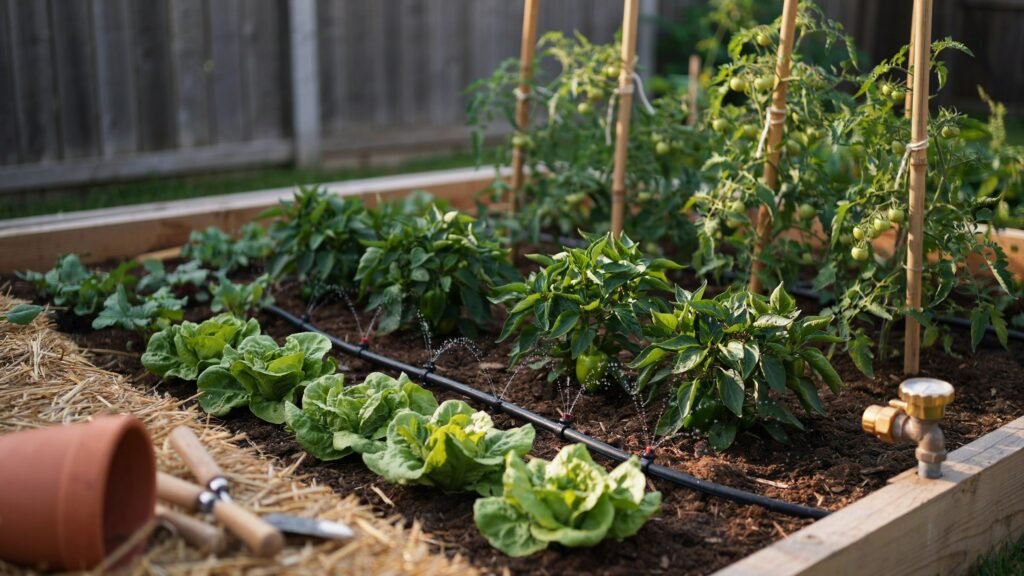
You water the tomatoes on Monday, forget on Tuesday, and by Thursday the leaves are curling while the soil under the mulch is still soggy.
A drip irrigation kit ends that cycle by delivering water slowly to the roots, on a schedule, without wetting the leaves. The hard part is picking a kit that actually fits a vegetable garden.
This article contains affiliate links. If you purchase through our links, we may earn a commission at no extra cost to you. Read our full affiliate disclosure.
Ready to buy right now? Jump to the CARPATHEN kit, our top pick for most gardens:
Quick Answer: The best drip irrigation kit for vegetable gardens is the CARPATHEN Drip Irrigation Kit for most beginners with raised beds or small plots. Choose the MIXC Automatic Drip Irrigation Kit if you want hands-off watering, and add a pressure regulator and filter if your kit does not include them.
Quick Picks: The Best Drip Irrigation Kits at a Glance
Four kits made our list, and each suits a different kind of garden. Match the kit to your garden layout first, then compare features.
| Product Name | Best For | Price Range | Our Rating | Link |
|---|---|---|---|---|
| CARPATHEN Drip Irrigation Kit | Beginners with raised beds or small plots | Budget | 4.4/5 | CHECK PRICE ON AMAZON → |
| MIXC Automatic Drip Irrigation Kit | Busy gardeners who want hands-off watering | Mid-range | 4.2/5 | CHECK PRICE ON AMAZON → |
| Rain Bird LNDDRIPKIT | Mixed vegetable and landscape beds, trusted brand | Mid-range | 4.0/5 | CHECK PRICE ON AMAZON → |
| Rain Bird CNV182EMS Conversion Kit | Converting an existing in-ground sprinkler zone to drip | Budget | 3.8/5 | CHECK PRICE ON AMAZON → |
Prices on Amazon change often, so check the current price before you decide.
How We Evaluated These Drip Irrigation Kits
We compared each kit on five practical criteria: garden fit, parts included, ease of setup, reliability, and what we would still need to buy. We judge a kit by what happens after the box is opened, not by its listing photos.
This is a research-based comparison. We reviewed each product’s listing details, manufacturer information, and recurring themes in buyer feedback. We cross-checked design requirements against guidance from university extension services.
Here is the checklist every kit had to pass:
- Garden fit: Does it suit raised beds, rows, or containers?
- Parts included: Tubing, emitters, connectors, and whether a timer, filter, or regulator comes in the box.
- Setup difficulty: Can a beginner install it in one weekend without cutting pipe?
- Reliability: How well do the emitters resist clogging, and how likely are leaks at the fittings?
- Honest limits: Every kit gets at least one real con.
We never claim a perfect score, because no kit has one. For more about who we are, see the HydroSprinkler home page and our About Us page.
The Best Drip Irrigation Kits for Vegetable Gardens, Reviewed
Each kit below targets a different gardener. Read the “Best For” line first, because the best kit on paper is the wrong kit if it does not match your garden.
1. CARPATHEN Drip Irrigation Kit: Best Starter Kit for Raised Beds
The CARPATHEN Drip Irrigation Kit is a hose-connected, do-it-yourself kit in the budget tier. It is built for gardeners who want an all-in-one starting point rather than buying parts piece by piece.
Key Features
- Garden-hose connection with no plumbing work
- Flexible tubing you can route around beds
- A mix of drip and sprinkler-style fittings so you can adapt the layout
- Adjustable components for different plant spacing
Real-World Performance
Kits like this work best on small to medium gardens where the tubing runs are short and water pressure is steady. When we evaluated the layout options, the flexible tubing stood out for raised beds, because you can snake a line down each bed and cap the end.
Pros
- Low cost for a complete starter setup
- Simple hose connection, no tools beyond scissors
- Easy to expand by adding tubing and emitters
Cons
- Kits in this category typically ship without a pressure regulator or timer. Check the listing, and if they are missing, plan to buy both.
- Sprinkler-style fittings are less efficient than true drip emitters for vegetables, so use the drip fittings.
Who It’s Best For
Beginners with raised beds or a compact backyard plot.
Verdict: The easiest kit to start with, as long as you add a regulator and a hose timer.
2. MIXC Automatic Drip Irrigation Kit: Best Hands-Off Option
The MIXC Automatic Drip Irrigation Kit is a mid-range kit built around automatic watering with adjustable output. The listing also points to greenhouse use, so it should handle the tighter spacing of a dense vegetable garden.
Key Features
- Automatic watering function, so you are not turning a valve by hand
- Adjustable emitters for plants with different water needs
- Suitable for beds, greenhouses, and container groupings
Real-World Performance
Automation is what makes this kit worth the step up. If you travel or forget to water during a busy week, a scheduled system protects your plants. For help choosing a controller, see our guide to the best hose faucet timer for garden watering.
Pros
- Hands-off watering reduces missed days
- Adjustable emitters suit mixed plantings
- Good fit for greenhouses and tight spaces
Cons
- Anything with a controller or battery adds another part that can fail, so check the power source before you buy.
- It is a newer listing, so there may be less long-term feedback than on established brands.
Who It’s Best For
Busy or frequently traveling gardeners who want a “set it and forget it” system.
Verdict: Our pick for hands-off gardeners, with the caveat that you should confirm the power source and watch the first few weeks.
3. Rain Bird LNDDRIPKIT: Best Trusted Brand for Mixed Beds
The Rain Bird LNDDRIPKIT is a drip kit from one of the best-known irrigation brands in the US. It includes micro-bubblers and micro-sprays, which suit shrubs and flower beds more than vegetable rows.
Key Features
- Established brand with widely available replacement parts
- Micro-bubblers and micro-sprays in the kit
- Designed for landscape beds and mixed plantings
Real-World Performance
This kit is a strong choice if your vegetable plot sits next to ornamental beds. For vegetables, though, the Master Gardeners of Sonoma County (University of California Cooperative Extension) note that micro-sprinklers are not water-efficient, and that in-line emitters on drip tubing work better in vegetable beds.
Pros
- Trusted brand name and easy-to-find parts
- Good for mixed landscape and garden areas
- Flexible layout for irregular beds
Cons
- Spray-style heads wet the leaves, which can encourage fungal disease in tomatoes, squash, and cucumbers.
- It is not designed specifically for vegetable rows, so you will want to swap in drip emitters.
Who It’s Best For
Gardeners watering shrubs, flowers, and a small vegetable patch from one system.
Verdict: A good brand and a flexible kit, but use the bubblers or add drip line for the vegetable beds.
4. Rain Bird CNV182EMS: Best for Converting an Existing Sprinkler System
The Rain Bird CNV182EMS is a drip conversion kit, designed to turn a section of an in-ground sprinkler system into a drip zone. It is not a stand-alone garden hose kit, so most readers should skip it.
Key Features
- Converts an in-ground sprinkler zone to drip
- Rain Bird components, matching many residential systems
- Budget-friendly if you already own the sprinkler plumbing
Real-World Performance
If a sprinkler zone already runs to your vegetable bed, this kit lets you reuse that plumbing. If you do not have an in-ground system, it will not work. Pair it with a smart sprinkler controller for scheduling by zone.
Pros
- Reuses your existing sprinkler lines
- Budget-friendly for the right setup
- Turns a wasteful spray zone into targeted watering
Cons
- It only fits readers who already have an in-ground sprinkler system.
- It needs compatible pipe and valve sizes, so check your system before ordering.
Who It’s Best For
Homeowners with an in-ground sprinkler system and a vegetable bed on one of its zones.
Verdict: A smart niche pick if you fit the profile, and the wrong purchase if you do not.
Which Kit Matches Your Garden? Raised Beds vs Rows vs Containers
Your garden layout decides the right kit more than any brand name. Raised beds, long rows, and containers each need a different setup.
If you want a deeper look at how raised beds drain, see How to Water Raised Bed Gardens.
| Your Garden | What You Need | Best Pick |
|---|---|---|
| Raised beds | Short tubing runs, drip emitters, frequent watering | CARPATHEN |
| Long in-ground rows | Longer tubing, zone control, pressure regulation | MIXC (with regulator) |
| Containers and pots | Individual emitters per pot | See our drip irrigation kit for potted plants |
| Vegetables plus flower beds | Mix of drip and bubblers | Rain Bird LNDDRIPKIT |
| Existing in-ground sprinklers | Conversion to drip | Rain Bird CNV182EMS |
If you want to compare more options, our Best Drip Irrigation Kit roundup covers general garden and landscape use. And if rabbits or deer keep raiding your beds, a motion-activated sprinkler for pest control is a useful companion to drip irrigation.
What Should You Look for in a Drip Irrigation Kit for Vegetables?
A good vegetable-garden kit has the right tubing, a low-pressure setup, and a way to automate watering. The five parts that matter most are tubing, emitters, a timer, a pressure regulator, and a filter.
How Much Tubing and Coverage Do You Need?
Measure your bed or row length, then add 20 to 30 percent for turns and the connection to your hose. A kit that is too small leaves you short, and one that is too large loses pressure at the far end.
The University of Georgia Extension warns that if the area is too big for your system, you will lack water pressure. Its fix is to split the garden into zones and water each one separately.
Drip Emitters vs Micro-Sprays
A drip emitter is a small outlet that releases water slowly at the plant’s base, used to keep leaves dry and reduce evaporation. Micro-sprays cover wider areas but wet the foliage.
For vegetables, drip emitters are the safer choice. That is the main reason the Rain Bird LNDDRIPKIT needs the caveat above.
Timers and Automation
A timer opens and closes the water on a schedule, so your garden is watered even when you are not home. Hose-end timers are the simplest option for hose-connected kits.
See our guides to the best irrigation timer and the best garden sprinkler timer for tested-style comparisons.
Pressure Regulator, Filter, and Backflow Preventer
Here is the “I didn’t know that” fact: household water pressure is often two to three times higher than a drip system can handle.
According to the University of Arizona Cooperative Extension, drip systems need low pressure of about 20 PSI, and a regulator reduces the incoming pressure. A typical home faucet delivers well above that, so a kit without a regulator can pop fittings or burst tubing.
The filter is just as important. Small particles plug emitter openings, which is the most common reason drip systems stop working evenly. A backflow preventer stops garden water from siphoning back into your home supply.
If you are unsure what your pressure is, see [INTERNAL LINK: how to test water pressure → How to Test Your Home Water Pressure].
Hose-Connected vs In-Ground Systems
A hose-connected kit attaches to an outdoor spigot and sits on or above the soil. An in-ground system is plumbed into a sprinkler line.
For most vegetable gardeners, hose-connected is simpler and cheaper. In-ground conversion makes sense only if you already have the plumbing.
What’s Usually Missing From the Box
Most budget drip kits leave out at least one essential part. Check the listing for a regulator, filter, timer, and backflow preventer before you assume the kit is complete.
Here is the shopping checklist we recommend:
- Pressure regulator: Protects tubing and fittings from household pressure
- Mesh filter: Keeps emitters from clogging
- Hose timer: Automates watering (see our best hose faucet timer for garden guide)
- Backflow preventer: Protects your home water supply
- Extra connectors and end caps: You will always need a few more than the kit includes
- Mulch: Not part of a kit, but it holds the moisture your drip line delivers
The Master Gardeners of Sonoma County list a backflow preventer, filter, and pressure regulator as essential components at the water source. That is the same trio on our checklist.
Drip Irrigation vs Sprinklers vs Soaker Hoses for Vegetables
Drip irrigation is the most precise option for vegetables, because it puts water at the roots and keeps leaves dry. Overhead sprinklers waste the most water, and soaker hoses sit in the middle.
The EPA’s WaterSense program estimates that as much as 50 percent of residential outdoor water is wasted through evaporation, wind, or runoff. Drip systems cut most of that loss.
| Method | Water Efficiency | Leaf Wetting | Best For |
|---|---|---|---|
| Drip emitters | High | None | Vegetable beds |
| Soaker hoses | Medium | Low | Simple, short rows |
| Overhead sprinklers | Low | High | Lawns |
Soaker hoses are cheap, but the Sonoma County Master Gardeners say soaker hoses and drip tape are notorious for breaking and leak more water than drip emitters. For a deeper look, see [INTERNAL LINK: soaker hose vs drip → Soaker Hose vs Drip Irrigation Comparison].
How Do You Set Up a Drip Irrigation Kit?
Setting up a hose-connected drip kit takes about an hour and needs no special tools. Install the regulator and filter first, before any tubing.
- Plan the layout. Sketch your beds and measure each run, then add a little extra tubing for turns.
- Attach the timer to your outdoor faucet if you are using one.
- Connect the backflow preventer, filter, and pressure regulator in that order, directly after the timer.
- Lay the main tubing along your beds, leaving it in the sun for a few minutes to soften and straighten.
- Add emitters or drip line next to each plant or row, spaced to match your plants.
- Flush the system. Run water with the end of the line open for a minute to clear debris.
- Cap the ends of each line.
- Test and adjust. Run the system for 20 minutes and check every emitter and connection for leaks.
- Add mulch over the tubing to reduce evaporation and protect it from the sun.
How Often Should You Water Vegetables With Drip Irrigation?
Most vegetables need about an inch of water per week, delivered deeply and less often rather than in short daily bursts. Check the soil two to three inches down before you change your schedule.
A reasonable starting point is two to three watering sessions a week, 30 to 60 minutes each, then adjust for heat, soil type, and plant size.
Raised beds need more attention. The University of Georgia Extension notes that raised beds tend to drain rapidly and need more frequent irrigation than in-ground plots.
Adjust for your own climate, and let the plants guide you. Wilting in the afternoon is normal on hot days, but wilting in the morning means your schedule is too light.
What Are the Most Common Drip Irrigation Problems?
Most drip system problems come down to clogs, low pressure, or leaks. Almost all of them can be fixed in under 15 minutes without replacing the kit.
- Clogged emitters: Remove and rinse the filter, then flush the line.
- Low flow at the end of the line: Shorten the run or split it into two zones.
- Leaks at connectors: Re-seat the fitting, and check that the pressure regulator is installed.
- Uneven watering: Look for kinks, missing caps, and mixed emitter types on the same line. If you also run a sprinkler system, our guide on why a sprinkler system waters unevenly covers related causes.
Frequently Asked Questions
Is drip irrigation good for vegetable gardens?
Yes. Drip irrigation delivers water directly to the roots, which reduces evaporation and keeps leaves dry. Dry foliage lowers the risk of common fungal diseases in tomatoes, peppers, and squash. It also saves time, since a timer can handle the watering. Most university extension services recommend drip for home vegetable gardens.
How often should I run drip irrigation for vegetables?
Most vegetables do well with deep watering two to three times a week, rather than a little every day. Start with 30 to 60 minutes per session, then check the soil two to three inches down. Raised beds and sandy soils dry faster, so they may need more frequent watering during hot weather.
How long should drip irrigation run?
Run time depends on your emitter flow rate, soil type, and weather. A common starting point is 30 to 60 minutes per session. Watch how deeply the water soaks in, and adjust. If the soil stays soggy, shorten the run. If plants wilt in the morning, lengthen it.
Is drip irrigation better than sprinklers for a vegetable garden?
For vegetables, yes. Drip irrigation puts water at the roots and wastes far less to evaporation and runoff than overhead sprinklers. It also keeps leaves dry, which helps prevent disease. Sprinklers are better suited to lawns, where broad coverage matters more than precision.
Do I need a pressure regulator for a drip kit?
Usually, yes. Drip systems operate at low pressure, about 20 PSI according to the University of Arizona Cooperative Extension, while household faucets often deliver much more. Without a regulator, fittings can pop and tubing can burst. If your kit does not include one, buy a regulator and install it near the faucet.
Can I connect drip irrigation to a garden hose?
Yes. Most DIY drip kits, including the CARPATHEN and MIXC kits, connect to a standard outdoor hose spigot. Add a timer, a backflow preventer, a filter, and a pressure regulator between the faucet and the tubing. The exception is the Rain Bird CNV182EMS, which connects to an in-ground sprinkler line.
Final Verdict: Best Drip Irrigation Kit for Vegetable Gardens
The best drip irrigation kit for vegetable gardens depends on your layout and how much you want to automate. For most beginners, the CARPATHEN kit is the best balance of price and simplicity.
Here is the short version:
- Raised beds or a small garden: CARPATHEN Drip Irrigation Kit
- Hands-off watering: MIXC Automatic Drip Irrigation Kit
- Vegetables plus landscape beds: Rain Bird LNDDRIPKIT
- Existing in-ground sprinklers: Rain Bird CNV182EMS
If you want to water on a schedule, add a hose timer, a regulator, and a filter, and you are set. Prices on this kind of product change often, so check the current price before you buy.
Next step: measure your longest bed or row, pick the matching kit, and install it this weekend. For more guides, browse the HydroSprinkler blog.