
Intoduction
A green lawn usually looks healthy, but greener is not always better. If you are watering your yard every day because you want thick, lush grass, you may accidentally be giving it more water than it needs.
Learning the signs of overwatering a lawn can help you protect your grass, reduce water waste, prevent lawn diseases, and avoid unnecessarily high water bills.
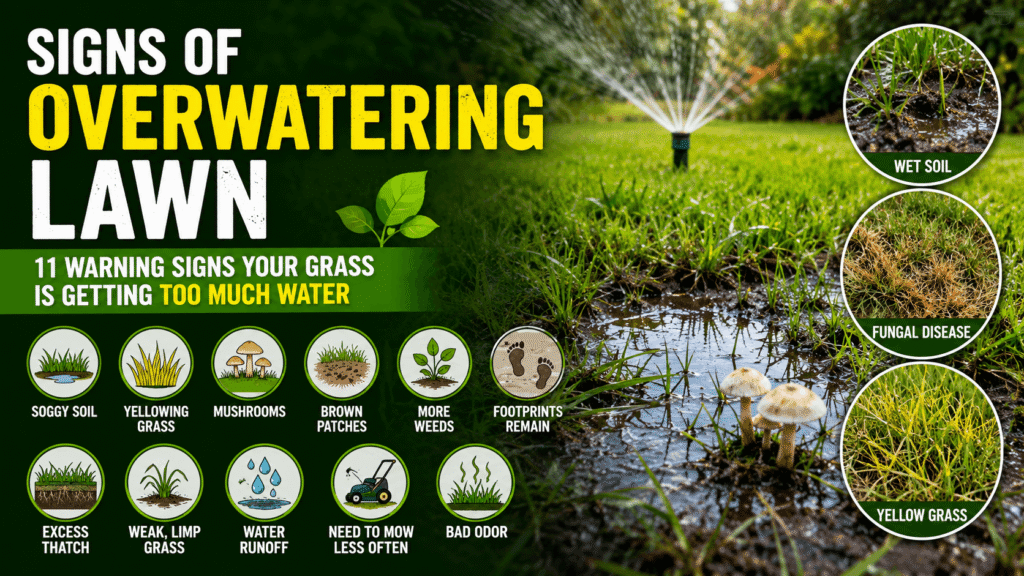
Common warning signs include soggy soil, standing water, yellowing grass, fungal growth, excessive thatch, weak roots, weed problems, and grass that stays wet for long periods. Some lawns can even start turning brown despite receiving plenty of water.
The confusing part is that an overwatered lawn can sometimes look greener at first. The problem becomes more obvious when the soil remains saturated and the grass roots cannot get enough oxygen.
In this guide, you will learn how to identify the signs of an overwatered lawn, what causes excessive watering, how to check whether your sprinkler system is applying too much water, and what you can do to help your lawn recover.
Table of Contents
Quick Answer: What Are the Signs of Overwatering Lawn?
The most common signs of overwatering a lawn include:
- Standing water or puddles after irrigation
- Soil that stays wet for a long time
- Yellow or pale grass
- Soft, mushy, or weak turf
- Fungal diseases and unusual lawn patches
- Mushrooms appearing after watering
- Excessive thatch buildup
- Shallow or weak grass roots
- Increased weed growth
- Water runoff onto sidewalks or driveways
- A lawn that remains constantly damp
Not every symptom automatically means your lawn is being overwatered. Poor drainage, compacted soil, heavy clay, disease, fertilizer problems, and natural rainfall can create similar symptoms.
That is why it is important to look at several signs together.
11 Signs of Overwatering Lawn You Should Not Ignore
1. Standing Water or Puddles on the Lawn
One of the easiest signs of overwatering a lawn is standing water.
If you notice puddles remaining on the grass after your sprinkler system finishes, your lawn may be receiving water faster than the soil can absorb it.
A small amount of temporary water can occur after heavy rain or irrigation, especially on clay soil. However, water that remains for hours or repeatedly appears in the same areas deserves attention.
Standing water can result from:
- Too much irrigation
- Poor soil drainage
- Compacted soil
- Heavy clay
- Low areas in the yard
- Blocked drainage
- Excessive rainfall
If your sprinkler runs frequently and puddles appear afterward, reduce the watering frequency and inspect the affected area.
2. Soil Stays Wet for Too Long
Healthy soil should hold enough moisture for grass roots while still allowing air to move through the soil.
When you overwater your lawn, soil pores can become filled with water. This reduces the amount of oxygen available around the roots.
You can perform a simple test.
Push your finger, screwdriver, or soil probe into the soil. If the ground is extremely wet several inches below the surface even though it has not recently rained, your watering schedule may be excessive.
The University of Illinois Extension recommends watering lawns thoroughly but infrequently rather than applying small amounts of water frequently. Frequent irrigation can encourage shallow root systems.
University of Illinois Extension — Watering Your Lawn
3. Grass Turns Yellow or Pale
Yellow grass is one of the confusing signs of overwatering a lawn because many homeowners assume yellow grass needs more water.
That is not always true.
When soil remains saturated, grass roots can struggle to obtain enough oxygen. Over time, the root system can become weak, and the grass may lose its healthy green appearance.
Yellowing can also be caused by:
- Nutrient deficiencies
- Poor sunlight
- Disease
- Insect damage
- Compacted soil
- Dormancy
- Incorrect mowing
- Natural seasonal changes
So do not automatically turn on your sprinklers when you see yellow grass.
First, check the soil moisture and inspect the rest of the lawn.
4. Grass Feels Soft, Spongy, or Weak
Walk across your lawn and pay attention to how it feels.
Healthy turf should have reasonably firm soil underneath it. If your lawn feels unusually soft, spongy, or saturated, excessive irrigation could be contributing to the problem.
A constantly wet lawn can also become more vulnerable to disease and root problems.
University of Minnesota Extension notes that flooded turf can develop brown-to-black grass, soft or mushy leaves, foul odors, and wet, muddy soil.
If your lawn feels like a wet sponge every time you walk across it, investigate the watering schedule and drainage before adding more water.
5. Mushrooms Start Appearing Across the Lawn
Mushrooms can appear after periods of heavy rain or frequent irrigation.
Their appearance does not automatically prove that you are overwatering. Fungi can grow where organic matter such as roots, stumps, or thatch is decomposing.
However, if mushrooms repeatedly appear after your sprinkler runs and your soil stays wet, excessive moisture may be contributing to the conditions that allow them to develop.
Illinois Extension explains that mushrooms and puffballs commonly appear after heavy rain or watering and can be associated with excess thatch and decaying organic matter.
So mushrooms are better treated as a clue, not a standalone diagnosis.
Mushrooms can appear after periods of heavy rain or frequent irrigation.”
University of Illinois Extension — Mushrooms and Puffballs
6. Fungal Diseases and Brown Patches Increase
This is one of the most important warning signs.
Overwatering does not necessarily create every lawn disease, but excessive moisture can create favorable conditions for certain turf diseases.
You may notice:
- Circular brown patches
- Irregular dead areas
- Slimy or water-soaked grass
- Reddish-brown patches
- White or gray fungal growth
- Grass thinning
- Areas that repeatedly die and recover
For example, Illinois Extension reports that Pythium blight can become severe in very wet conditions, particularly in hot weather and poorly drained soils. Its management recommendations include avoiding overwatering and improving drainage.
If your lawn develops recurring disease symptoms, do not simply reduce water and assume the problem is solved. The underlying cause may require proper turf diagnosis.
7. Your Grass Has Shallow or Weak Roots
Healthy roots are extremely important for a resilient lawn.
Frequent shallow watering can encourage grass to develop roots closer to the surface instead of building a deeper root system.
That can create a cycle:
Frequent watering → shallow roots → weaker grass → greater stress → more watering
The result may be a lawn that appears dependent on constant irrigation.
Illinois Extension recommends infrequent, thorough watering because frequent watering can promote shallow root systems and weeds.
Instead of automatically watering every day, focus on watering deeply enough to moisten the root zone while allowing the soil to dry appropriately between irrigation cycles.
8. Excessive Thatch Starts Building Up
Thatch is a layer of living and dead organic material between the green grass and the soil.
A small amount can be normal. The problem occurs when the layer becomes excessive.
According to Illinois Extension, a thatch layer greater than about ½ inch can create an unfavorable environment for roots and increase problems with pests and diseases. Excessive watering and excessive nitrogen fertilization can contribute to rapid turf growth and thatch accumulation.
Signs of excessive thatch include:
- A thick, spongy lawn
- Water failing to penetrate evenly
- Dry spots despite frequent irrigation
- Increased disease problems
- Weak root development
If your lawn has thick thatch, simply adding more water can make the situation worse.
9. Weeds Begin Taking Over
Overwatering can contribute to weed problems, especially when combined with poor soil conditions and weak turf.
A lawn that is constantly wet may create favorable conditions for some weeds, while weak grass leaves open spaces where weeds can establish.
The goal should not be to keep your lawn wet all the time.
Instead, aim for:
Healthy roots + appropriate moisture + proper mowing + good soil conditions.
Penn State Extension notes that different weeds can indicate underlying lawn conditions that are favorable for weeds but less favorable for turfgrass.
If weeds suddenly increase, check your irrigation schedule before immediately reaching for herbicides.
10. Water Runs Off Onto Sidewalks and Driveways
Watering more does not necessarily mean watering better.
If water flows across your lawn and reaches sidewalks, driveways, streets, or drainage areas, your irrigation may be applying water faster than the soil can absorb it.
This is especially common with:
- Compacted soil
- Clay soil
- Sloped lawns
- Excessive sprinkler output
- Poor sprinkler placement
- Long irrigation cycles
Runoff wastes water and may carry soil and landscape pollutants toward storm drains.
Penn State Extension recommends minimizing stormwater runoff from lawns because runoff from developed landscapes can carry sediment and pollutants into waterways.
If runoff begins during irrigation, stop and reconsider your watering cycle.
For slopes or compacted soil, shorter irrigation cycles with pauses can sometimes allow more water to soak into the soil instead of running away.
11. Your Lawn Looks Worse Even Though You Keep Watering It
This is perhaps the biggest mistake homeowners make.
They see a lawn becoming thin, yellow, brown, or unhealthy and assume:
“It needs more water.”
So they increase irrigation.
But if the real problem is excessive moisture, this can make the lawn even weaker.
If your lawn is receiving plenty of water but continues to decline, inspect:
- Soil moisture
- Drainage
- Sprinkler coverage
- Irrigation frequency
- Grass type
- Sun exposure
- Soil compaction
- Thatch
- Fertilizer use
- Disease symptoms
A healthy lawn needs the right amount of water, not the maximum amount of water.
Overwatering vs. Underwatering: How Can You Tell?
One of the hardest parts of lawn care is telling the difference between too much and too little water.
Here is a simple comparison:
Symptom: Overwatered Lawn, Underwatered Lawn Soil: Constantly wet, dry, standing water, common, rare Grass color: yellow/pale or unhealthy Often dull, gray-green, or brown footprints May remain because the soil is soft. May remain because the grass is wilted. Can become shallow or damaged Often grow deeper when healthy mushrooms More likely in wet conditions Less likely from drought alone: Runoff is more likely possible if soil is severely dry/compacted. Disease moisture can increase disease pressure. Drought stress can weaken turf. Watering response: More water may worsen symptoms. Appropriate watering may improve symptoms.
This comparison is not a substitute for diagnosing a specific lawn problem.
For example, Illinois Extension describes early drought stress as wilting, darker grass color, and footprints that remain after walking across the lawn.
The easiest way to distinguish the two is to check the actual soil moisture instead of judging only by grass color.
Why Are You Overwatering Your Lawn?
Understanding the cause makes the solution much easier.
1. Watering Every Day
Daily watering is one of the most common mistakes homeowners make.
Established lawns generally do not need the same amount of water every day.
The correct schedule depends on:
- Grass species
- Soil type
- Temperature
- Rainfall
- Sun exposure
- Shade
- Wind
- Lawn slope
- Root depth
- Irrigation efficiency
Newly seeded lawns are different because the surface may need to stay consistently moist during germination and early establishment.
2. Sprinkler Timer Is Set Too Long
Your irrigation controller may simply be running longer than necessary.
A timer does not know whether:
- It rained yesterday.
- The soil is already saturated.
- Your lawn is shaded
- Your sprinkler is producing excessive runoff.
- The weather suddenly became cooler.
That is why a fixed schedule can waste water.
A smart irrigation controller or weather/rain sensor can help adjust watering based on actual conditions.
3. Sprinklers Are Not Properly Adjusted
Sometimes the problem is not the total watering time.
It is where the water is going.
A sprinkler may be:
- Spraying the sidewalk
- Watering the driveway
- Overlapping too heavily
- Missing parts of the lawn
- Applying too much water to one area
- Producing uneven coverage
If one section of your lawn is soggy while another section is dry, inspect the sprinkler heads before changing the entire irrigation schedule.
You can also read our guide on how to adjust Rain Bird sprinkler heads for more information.
How to Fix an Overwatered Lawn
If you have identified multiple signs of overwatering the lawn, do not panic.
In many cases, improving irrigation practices can help the lawn recover.
Step 1: Stop Automatic Watering Temporarily
If your soil is already saturated, continuing to run your sprinkler system is unlikely to help.
Pause irrigation and allow the soil to drain.
How long you should wait depends on:
- Soil type
- Weather
- Drainage
- Grass type
- Amount of water already applied
Do not use a fixed number of days for every lawn.
Instead, check the soil before watering again.
Step 2: Check Soil Moisture
Use a screwdriver or soil probe to inspect the soil.
Check several locations rather than testing only one area.
If one section is extremely wet while another is dry, you may have an irrigation distribution problem rather than a whole-yard watering problem.
Step 3: Inspect Your Sprinkler System
Turn on each irrigation zone and watch it carefully.
Look for:
- Broken heads
- Leaking heads
- Clogged nozzles
- Misaligned spray
- Overspray
- Uneven coverage
- Water pooling
- Runoff
If you have an underground sprinkler system, inspect the valves and zones as well.
Our lawn sprinkler system installation guide explains the importance of proper layout, zoning, sprinkler placement, and testing.
Step 4: Improve Soil Drainage
If water consistently collects in one location, irrigation may not be the only problem.
Possible causes include:
- Compacted soil
- Heavy clay
- Low landscape areas
- Poor grading
- Drainage problems
- Downspout discharge
- Excessive thatch
Aeration can sometimes help compacted turf, but severe drainage problems may require a more comprehensive landscape solution.
Step 5: Adjust Your Watering Schedule
Do not simply choose a new timer setting based on someone else’s lawn.
Your irrigation schedule should reflect local weather and your lawn’s actual water needs.
A useful principle from university extension guidance is
Water deeply and less frequently rather than watering lightly and constantly.
However, the exact schedule varies considerably across the United States.
A lawn in Arizona does not have the same irrigation requirements as a lawn in Oregon, Florida, New York, or Minnesota.
How Much Water Does Your Lawn Need?
There is no single watering schedule that works for every American lawn.
Water requirements depend on climate, turf species, soil, season, rainfall, and exposure.
Colorado State University Extension, for example, emphasizes watering enough to moisten the root zone and checking how deeply water actually penetrates the soil.
Instead of asking:
“How many minutes should I run my sprinkler?”
Ask:
“How much water is my sprinkler actually applying?”
That difference is extremely important.
Two sprinkler systems can run for 20 minutes but deliver very different amounts of water.
How to Measure Sprinkler Watering
One simple method is to place several straight-sided containers or rain gauges around the lawn.
Turn on your sprinkler system and measure the amount of water collected.
This can help you identify:
- How much water your system applies
- Whether coverage is uniform
- Which areas receive too much
- Which areas receive too little
Illinois Extension specifically recommends using simple containers such as coffee cans to measure water application and check sprinkler uniformity.
This is much more reliable than guessing based only on timer minutes.
Best Time to Water a Lawn
For many lawns, watering earlier in the day is preferable to watering during the hottest part of the afternoon.
Illinois Extension recommends watering early in the day and notes that nighttime watering can increase the potential for some turf diseases because the lawn remains wet for longer.
However, the exact best time can depend on local climate, restrictions, weather, and irrigation system design.
Avoid creating a schedule that waters automatically regardless of rainfall.
If your lawn received substantial rain, your irrigation system may not need to run at all.
Can Overwatered Grass Recover?
Yes, many lawns can recover after overwatering, especially when the problem is identified early.
Recovery depends on:
- How long the lawn stayed saturated
- Grass species
- Soil drainage
- Temperature
- Disease pressure
- Root damage
- Thatch level
- Amount of sunlight
- Whether the overwatering continues
The first priority is to correct the cause.
If your sprinkler system keeps applying excessive water, reseeding or fertilizing the lawn will not solve the underlying problem.
When Should You Call a Lawn Professional?
You may want professional help if:
- Large areas of grass are dying.
- Water remains for long periods.
- The lawn has serious drainage problems
- You see extensive fungal disease.
- The soil remains saturated despite stopping irrigation.
- You cannot identify the cause.
- The irrigation system has underground leaks.
- The lawn requires major grading or drainage work.
A turf professional can help determine whether the problem is irrigation, drainage, soil, disease, insects, or another issue.
How to Prevent Overwatering Your Lawn
Prevention is easier than repairing damaged turf.
Use these habits throughout the growing season.
1. Check the Soil Before Watering
Do not turn on sprinklers simply because it is another day on the calendar.
Check soil moisture first.
2. Watch the Weather
If rain has recently provided sufficient moisture, skip irrigation when appropriate.
3. Maintain Your Sprinklers
Inspect sprinkler heads, valves, pipes, and nozzles regularly.
4. Avoid Watering Sidewalks
Adjust sprinkler heads so water reaches the lawn rather than hard surfaces.
5. Use Smart Irrigation
Weather-based controllers and rain sensors can help prevent unnecessary watering.
6. Water According to Lawn Conditions
Shade, soil type, grass species, temperature, and rainfall all influence water demand.
7. Improve Soil Conditions
Compaction and excessive thatch can interfere with water movement and root health.
8. Don’t Chase a Perfectly Green Lawn
A healthy lawn does not need to remain unnaturally green every day of the year.
Penn State Extension notes that homeowners often overwater lawns during summer when grass begins to brown naturally and may enter dormancy.
Overwatering Lawn and Sprinkler System Efficiency
Your sprinkler system should make lawn care easier, not create new problems.
A properly planned system should provide relatively even coverage without continuously flooding individual areas.
If you are designing or upgrading an irrigation system, our sprinkler system design guide covers sprinkler placement, zones, water pressure, coverage, and irrigation planning.
You can also read our guide on how to increase sprinkler water pressure if inconsistent sprinkler performance is creating dry and wet areas.
Remember that high pressure is not automatically better. Proper pressure and correct sprinkler selection are more important than simply trying to maximize water flow.
Frequently Asked Questions About Signs of Overwatering Lawn
What are the most obvious signs of overwatering a lawn?
Standing water, constantly wet soil, yellowing grass, mushrooms, fungal problems, runoff, soft turf, and excessive thatch are common warning signs. However, these symptoms can also have other causes, so inspect the soil and irrigation system before making major changes.
Can overwatering make grass turn yellow?
Yes. Excessive moisture can damage roots and create conditions that contribute to unhealthy, yellowing turf. However, yellow grass can also result from nutrient deficiencies, disease, insects, shade, or dormancy.
How often should I water my lawn?
There is no universal schedule for every U.S. lawn. Watering frequency depends on local weather, grass species, soil type, rainfall, shade, and season. Established lawns generally benefit from thorough, less-frequent watering rather than constant shallow irrigation.
Should I water my lawn every day?
Usually, established lawns do not need to be watered every day. Daily irrigation can encourage shallow roots and may increase water waste or disease pressure. Newly seeded grass is an important exception because it may require more frequent light watering during establishment.
Can an overwatered lawn recover?
Yes, many lawns can recover when excessive watering is corrected early. Stop unnecessary irrigation, improve drainage if needed, check the soil, inspect the sprinkler system, and monitor the turf for disease or root damage.
Why is my lawn wet every morning?
Possible causes include nighttime irrigation, excessive watering, poor drainage, heavy dew, rainfall, shade, or compacted soil. If the lawn remains wet throughout the day, inspect drainage and irrigation rather than automatically adding more water.
Are mushrooms a sign of overwatering?
Mushrooms can indicate wet conditions, but they do not prove that your lawn is being overwatered. Mushrooms can appear after heavy rainfall or irrigation and may be associated with decaying organic matter or excess thatch.
Can overwatering cause lawn fungus?
Excess moisture can create conditions that favor some turf diseases. However, fungal problems have multiple causes, so disease symptoms should be evaluated in combination with irrigation, soil, weather, and turf conditions.
Is yellow grass always a sign of too much water?
No. Yellow grass can be caused by overwatering, underwatering, disease, insects, nutrient problems, poor sunlight, or seasonal dormancy. Always check soil moisture before deciding how much water to apply.
How can I tell if my sprinkler is overwatering?
Place several straight-sided containers around the lawn while the sprinkler operates. Measure the collected water and compare coverage between locations. This can reveal whether some areas receive significantly more water than others.
Final Thoughts: Don’t Mistake More Water for Better Lawn Care
Knowing the signs of overwatering a lawn can save you from one of the most common lawn-care mistakes: adding more water when the grass is already receiving too much.
Look for standing water, constantly wet soil, yellowing grass, weak turf, mushrooms, fungal problems, excessive thatch, runoff, and shallow roots. But remember that no single symptom proves overwatering.
The best approach is to check the soil, monitor rainfall, inspect your sprinkler coverage, and adjust irrigation based on your lawn’s actual needs.
For U.S. homeowners, there is no one watering schedule that works everywhere. A lawn in a hot, dry region may need a very different approach from a lawn in a cooler or wetter climate.
The goal is simple:
Give your lawn enough water to develop healthy roots without keeping the soil constantly saturated.
When irrigation is planned properly, your lawn can stay healthier while you reduce unnecessary water use, runoff, disease pressure, and wasted money.