
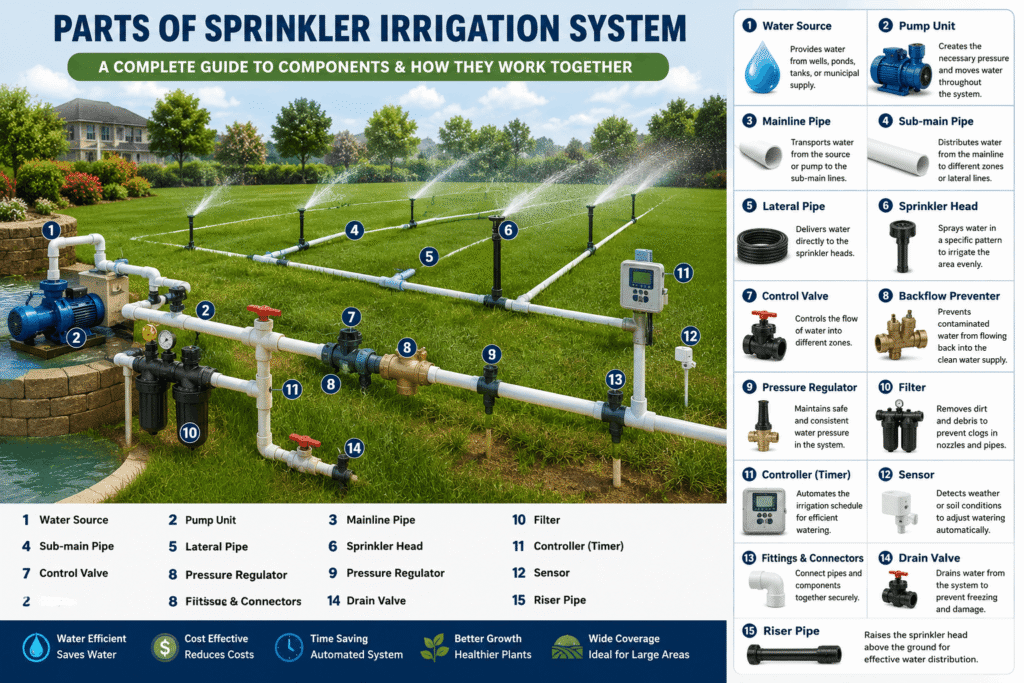
Introduction
Parts of sprinkler irrigation system are the key components that help deliver water efficiently to crops, lawns, and gardens. Understanding these parts is essential if you want to build a reliable and cost-effective irrigation setup.
Many beginners install sprinkler systems without knowing how the parts work together. This often leads to problems like uneven watering, low pressure, or system damage. But when you clearly understand every component—from pipes to sprinkler heads—you can design a system that saves water, reduces costs, and improves plant health. If you’re new, you can first learn how to turn on a hydro sprinkler system and how to use sprinkler irrigation system for better understanding. According to the USDA Irrigation Guide, sprinkler irrigation is one of the most efficient methods for uniform water distribution in agriculture.
Table of Contents
What Is a Sprinkler Irrigation System?
A sprinkler irrigation system is a method of watering plants by spraying water into the air, similar to rainfall. It uses pipes, pumps, and sprinkler heads to distribute water evenly across land. To understand its advantages, check our guide on Benefits of Sprinkler Irrigation Systems or compare it with Irrigation vs Drip Irrigation. According to the USDA Irrigation Guide, sprinkler irrigation is one of the most efficient methods for uniform water distribution in agriculture.
This system is commonly used in:
- Agriculture fields
- Home lawns and gardens
- Parks and sports grounds
Key Benefits:
- Saves water compared to flood irrigation
- Provides uniform water distribution
- Works on uneven land
- Reduces labour effort
Why Knowing the Parts of a Sprinkler Irrigation System Matters
Knowing the parts of a sprinkler irrigation system is not just technical knowledge—it directly affects performance and cost.
Here’s why it matters:
- Better Planning: Helps you design the system correctly
- Easy Troubleshooting: Quickly fix issues like leaks or pressure loss
- Cost Savings: Avoid unnecessary repairs or replacements
- Water Efficiency: Prevent water waste and over-irrigation
If one part fails, the whole system can be affected. That’s why understanding each component is essential.
Main Parts of a Sprinkler Irrigation System
Components like the Backflow Preventer in Sprinkler System and Pressure Regulator for Sprinkler System play a critical role in safety and performance. As explained by EPA WaterSense Irrigation Tips, using proper components like pressure regulators and efficient sprinkler heads can significantly reduce water waste.
Below are the most important parts of a sprinkler irrigation system explained in simple terms:
1. Water Source
This is where water comes from.
Common sources include:
- Wells
- Water tanks
- Rivers or ponds
- Municipal supply
2. Pump Unit
The pump provides pressure to move water through the system.
- Essential for large farms
- Ensures consistent water flow
3. Mainline Pipes
These pipes carry water from the source to different areas.
- Usually made of PVC or HDPE
- Designed for high pressure
4. Sub-main Pipes
These pipes branch off from the mainline.
- Distribute water to smaller sections
- Help manage flow efficiently
5. Lateral Pipes
Lateral pipes deliver water directly to sprinkler heads.
- Smaller in size
- Spread water evenly across the field
6. Sprinkler Heads
This is the most visible part of the system.
Types include:
- Rotary sprinklers (slow rotation)
- Spray heads (fine mist)
- Impact sprinklers (high pressure)
7. Control Valves
Valves control the flow of water.
- Manual valves
- Automatic valves (used with timers)
8. Backflow Preventer
This component protects drinking water from contamination.
- Prevents dirty water from flowing backward
9. Pressure Regulator
Maintains correct water pressure.
- Prevents damage to pipes and sprinklers
10. Filters
Filters remove dirt and debris from water.
- Prevent clogging
- Improve system lifespan
11. Controller (Timer)
This is the brain of the system.
- Automates watering schedule
- Saves time and effort
12. Sensors
Modern systems include smart sensors.
Examples:
- Rain sensors
- Soil moisture sensors
These help avoid unnecessary watering.
13. Fittings and Connectors
These include:
- Elbows
- Tees
- Couplings
They connect all parts together.
14. Drain Valves
Drain valves remove leftover water.
- Prevent freezing damage
- Useful in cold climates
15. Riser Pipes
These connect lateral pipes to sprinkler heads.
- Raise sprinklers above ground level
Diagram of Sprinkler Irrigation System
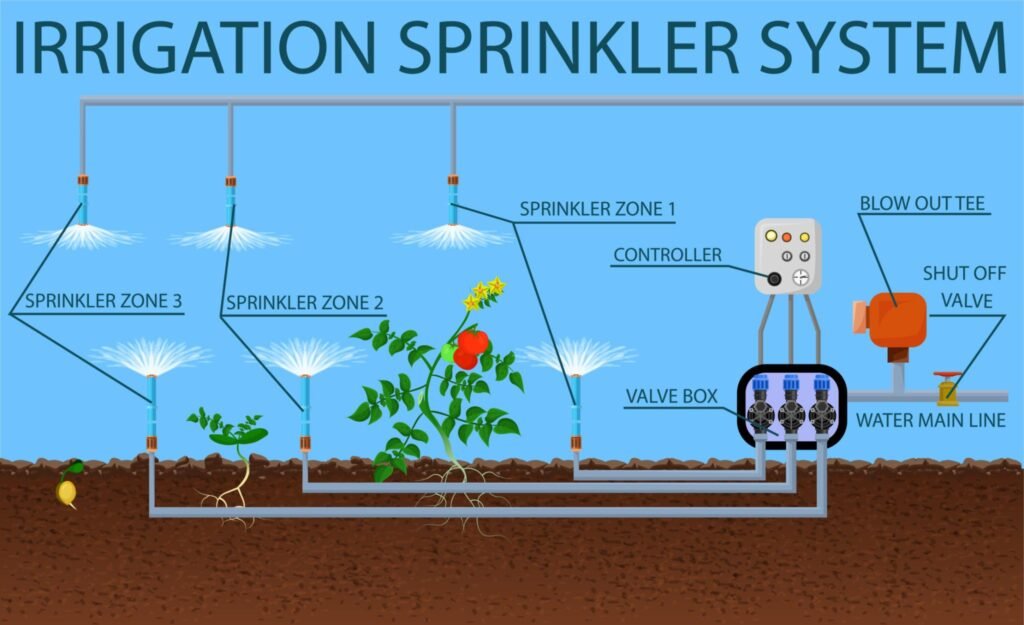
A diagram helps you visualise how all the parts of the sprinkler irrigation system are connected. It’s highly recommended for beginners to study a labelled layout before installation. Before setup, follow this installation of a sprinkler irrigation system guide to understand proper layout design.
Types of Sprinkler Irrigation Systems
Different systems are used depending on land size and purpose.
1. Portable System
- Easy to move
- Best for small farms
2. Permanent System
- Fixed installation
- Ideal for lawns and gardens
3. Semi-Permanent System
- Combines fixed and movable parts
4. Centre Pivot System
- Used in large agricultural fields
- Rotates around a central point
How These Parts Work Together
Understanding how the parts of a sprinkler irrigation system work together makes everything clearer.
Step-by-step process:
- Water is taken from the source.
- Pump increases pressure
- Mainline pipes carry water.
- Sub-main and lateral pipes distribute it
- Sprinkler heads spray water like rainfall.
Each component depends on the other. If one fails, the system efficiency drops.
Common Problems & Troubleshooting Tips
Even the best systems can face issues.
Common Problems:
- Low water pressure
- Uneven watering
- Clogged nozzles
- Pipe leaks
Quick Solutions:
- ✔ Clean filters regularly
- ✔ Check for pipe damage
- ✔ Adjust sprinkler heads
- ✔ Ensure proper pressure
Maintenance Tips for Sprinkler Irrigation System
Regular maintenance keeps your system efficient.
Follow these tips:
- Inspect the system weekly
- Clean filters and nozzles
- Check for leaks
- Adjust watering schedule seasonally
- Winterise system in cold weather
Benefits of a Well-Designed Sprinkler System
A properly designed system offers many advantages:
- Saves water
- Improves plant growth
- Reduces labour
- Covers large areas efficiently
- Increases crop yield
Conclusion: Parts of Sprinkler Irrigation System
Now you understand the essential parts of a sprinkler irrigation system and how they work together. Each component—from the water source to sprinkler heads—plays a vital role in ensuring efficient irrigation.
If you want the best results, focus on proper design, quality components, and regular maintenance. Even small improvements can save water, reduce costs, and improve plant health.
Start by checking your current system and upgrade any weak components for better performance.
(FAQs)
1. What are the main parts of a sprinkler irrigation system?
The main parts include a water source, pump, pipes, sprinkler heads, valves, filters, and controller.
2. How does a sprinkler irrigation system work?
It sprays water through pipes and sprinkler heads, distributing it evenly like rainfall.
3. Which part is most important in a sprinkler system?
The pump and sprinkler heads are crucial because they control pressure and water distribution.
4. How long do sprinkler system parts last?
Most parts last 5–15 years depending on quality and maintenance.
5. Can I install a sprinkler system myself?
Yes, small systems can be DIY, but large systems may require professional installation.
6. What causes low pressure in a sprinkler system?
Common causes include leaks, clogged filters, or weak pumps.
7. How often should I maintain my sprinkler system?
Basic inspection should be done weekly, with deep maintenance every season.