
Introduction
Fire safety is one of the most important aspects of any industrial or high-risk environment. A small fire can quickly turn into a major disaster if not controlled in time. That’s where a deluge fire sprinkler system becomes essential.
Unlike traditional sprinkler systems, this system is designed to release water from all sprinklers at once. This makes it highly effective in areas where fire can spread rapidly, such as chemical plants or fuel storage facilities. If you’re also interested in irrigation setups, you can learn how to turn on a hydro sprinkler system and understand how to use sprinkler irrigation system effectively for daily use.
Fire safety is critical in high-risk environments, and systems like a deluge fire sprinkler system play a major role in preventing disasters. According to the National Fire Protection Association, proper fire protection systems significantly reduce damage and save lives.
Table of Contents
What is a Deluge Fire Sprinkler System?
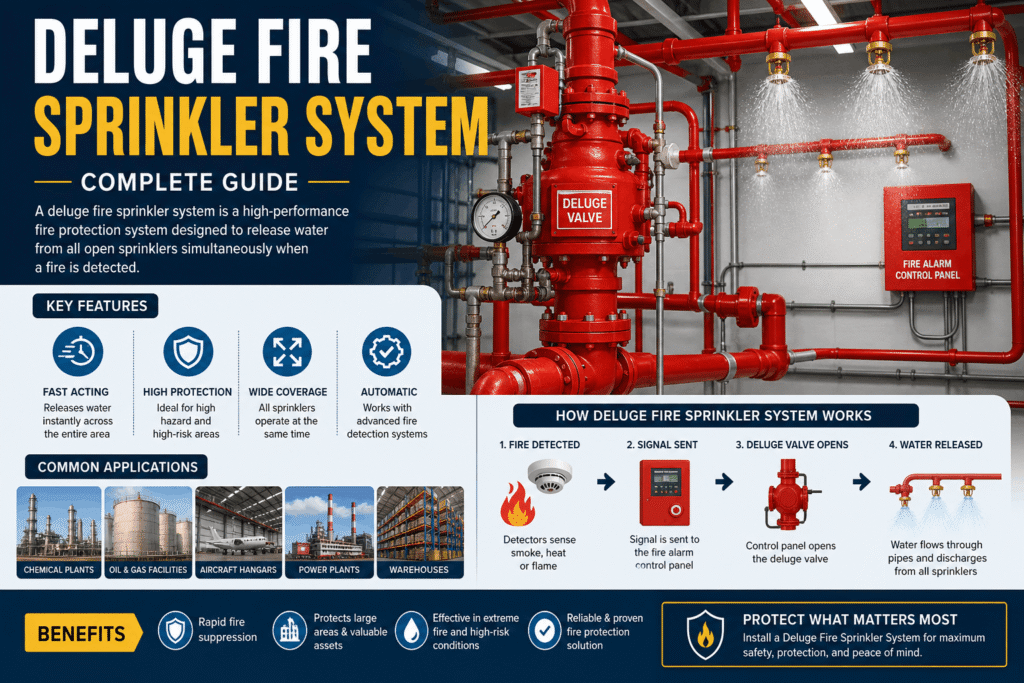
A deluge fire sprinkler system is a type of fire protection system where all sprinkler heads are open and water is released simultaneously when a fire is detected. Understanding how water flows in fire systems is similar to irrigation setups. If you’re new to water systems, check out this guide on how to install a sprinkler irrigation system to understand the basics of piping and pressure. A deluge fire sprinkler system is designed based on international safety standards such as those provided by NFPA 13, which defines how sprinkler systems should be installed and maintained.
Unlike wet pipe systems, the pipes in a deluge system are empty until activation. When the system detects fire through sensors, a special valve (called a deluge valve) opens and allows water to flow through all sprinklers at once.
Key Features:
- All sprinkler heads are open
- Water is released instantly across a wide area.
- Uses external fire detection systems
- Designed for high-hazard environments
This system is mainly used in places where fire spreads quickly and requires immediate action.
How Does a Deluge Fire Sprinkler System Work?
The working of a deluge fire sprinkler system is simple but highly effective.
Step-by-Step Process:
- Fire Detection
- Heat, smoke, or flame detectors sense the fire.
- Signal to Control Panel
- The detection system sends a signal to the control panel.
- Deluge Valve Opens
- The control panel activates the deluge valve.
- Water Flow Begins
- Water flows into the piping system.
- All Sprinklers Activate
- Water is discharged from all open sprinkler heads at once.
Important Note:
This system does not wait for heat to activate individual sprinklers. It floods the entire area immediately, which helps control fast-spreading fires.
Types of Deluge Fire Sprinkler Systems
There are different types of deluge fire sprinkler systems based on how they are activated.
1. Electric Deluge System
- Uses electronic sensors
- Fast and reliable
- Most commonly used
2. Pneumatic Deluge System
- Uses air pressure to detect changes
- Suitable for special environments
3. Hydraulic Deluge System
- Uses water pressure for activation
- Less common but effective
4. Foam-Water Deluge System
- Mixes foam with water
- Ideal for flammable liquid fires
Where Are Deluge Fire Sprinkler Systems Used?
A deluge fire-sprinkler system is used in high-risk areas where fire can spread rapidly.
Although a deluge fire sprinkler system is used in industrial areas, sprinkler systems are also widely used in agriculture and gardens. You can explore the benefits of sprinkler irrigation systems to see how they improve water efficiency.
Common Applications:
- Oil and gas industries
- Chemical plants
- Power generation facilities
- Aircraft hangars
- Storage tanks
- Manufacturing plants
These environments require instant fire suppression, which makes deluge systems the best choice.
Advantages of Deluge Fire Sprinkler Systems
The deluge fire sprinkler system offers several important benefits.
Key Advantages:
- Fast Fire Control
Water is released instantly across the entire area. - Covers Large Spaces
Ideal for wide and open areas. - High Efficiency
Quickly controls dangerous fires. - Works with Detection Systems
Provides automatic activation. - Best for High-Risk Areas
Suitable for hazardous environments.
The effectiveness of fire suppression systems is widely supported by research from Centers for Disease Control and Prevention, which highlights the importance of safety systems in reducing fire-related risks.
Disadvantages of Deluge Fire Sprinkler Systems
Despite its advantages, the deluge fire sprinkler system also has some drawbacks.
Key Disadvantages:
- High Water Usage
Uses a large amount of water. - Water Damage Risk
Can damage equipment and property. - Expensive Installation
Costs more than standard systems. - Complex Maintenance
Requires regular inspection and testing.
Deluge vs Other Fire Sprinkler Systems
Understanding the difference helps you choose the right system.
Deluge vs Wet-Pipe System
- Deluge: All sprinklers activate at once.
- Wet Pipe: Only the affected sprinkler activates
Deluge vs Dry-Pipe System
- Deluge: Instant flooding
- Dry Pipe: Delayed water release
Deluge vs Pre-Action System
- Deluge: Immediate response
- Pre-Action: Requires two triggers
Summary Table:
| System Type | Activation | Best Use |
|---|---|---|
| Deluge | All at once | High-risk areas |
| Wet Pipe | Individual | Offices & homes |
| Dry Pipe | Delayed | Cold environments |
| Pre-Action | Controlled | Data centers |
Installation of Deluge Fire Sprinkler System
Installing a deluge fire sprinkler system requires proper planning and expertise.
Installation Steps:
- Site Assessment
- Evaluate fire risks
- System Design
- Plan layout and coverage
- Component Selection
- Choose valves, detectors, and pipes
- Installation
- Install piping and sprinklers
- Testing
- Check system performance
Important Tip:
Always hire certified professionals to ensure safety and compliance.
Maintenance & Inspection
Regular maintenance ensures the deluge fire sprinkler system works properly during emergencies.
Maintenance is critical for both fire protection and irrigation systems.
To keep your system in top condition, you should know:
These practices help improve system life and performance.
Maintenance Checklist:
- Inspect valves regularly
- Test detection systems
- Check water supply
- Clean sprinkler heads
- Perform system testing
Recommended Frequency:
- Monthly visual checks
- Quarterly testing
- Annual full inspection
Proper maintenance increases system life and reliability.
Standards & Regulations
The deluge fire sprinkler system must follow safety standards to ensure proper functioning.
Key Standards:
- NFPA 13 (Installation of sprinkler systems)
- NFPA 15 (Water spray systems)
- Local fire safety codes
Why Compliance Matters:
- Ensures safety
- Reduces legal risks
- Improves system efficiency
Always follow local and international regulations.
Cost of Deluge Fire Sprinkler System
The cost of a deluge fire-sprinkler system depends on several factors.
Average Cost Factors:
- Size of the area
- Type of system
- Equipment quality
- Installation complexity
- Labour cost
Estimated Range:
- Small systems: Moderate cost
- Large industrial systems: High investment
Although expensive, it is worth the investment for high-risk areas.
Conclusion
A deluge fire sprinkler system is one of the most powerful fire-protection solutions for high-risk environments. It works by releasing water from all sprinklers at once, providing instant and effective fire control.
While it may be expensive and require regular maintenance, its ability to control large and dangerous fires makes it essential for industries like oil, gas, and manufacturing.
If you are planning to install a fire protection system, choose a deluge fire sprinkler system for areas where fire hazards are high. Always consult experts, follow safety standards, and maintain the system regularly for the best results.
(FAQs)
1. What is a deluge fire sprinkler system used for?
It is used in high-risk areas where fire spreads quickly, such as chemical plants and oil facilities.
2. How does a deluge fire sprinkler system work?
It uses fire detectors to trigger a valve that releases water through all sprinklers at once.
3. What makes a deluge system different?
All sprinkler heads discharge water simultaneously, unlike other systems.
4. Is it suitable for homes?
No, it is mainly used in industrial and hazardous environments.
5. How often should it be maintained?
Regular checks should be done monthly, with full inspections annually.
6. What is the main advantage of a deluge system?
It provides immediate and wide-area fire suppression.
7. Is a deluge fire sprinkler system expensive?
Yes, it has a higher installation cost but offers superior protection.