
Introduction
Fire protection is a serious matter. Whether you own a home, a small business, or a large commercial building, having the right fire sprinkler system can literally save lives. And when it comes to fire sprinkler systems in the United States, the wet pipe sprinkler system is by far the most popular choice.
In this guide, we break down exactly what a wet pipe sprinkler system is, how it works, where it’s used, what it costs, and everything else you need to know before making a decision. Whether you’re a homeowner, a property manager, or just curious about fire safety, this article will give you clear and trustworthy answers.
What Is a Wet Pipe Sprinkler System?
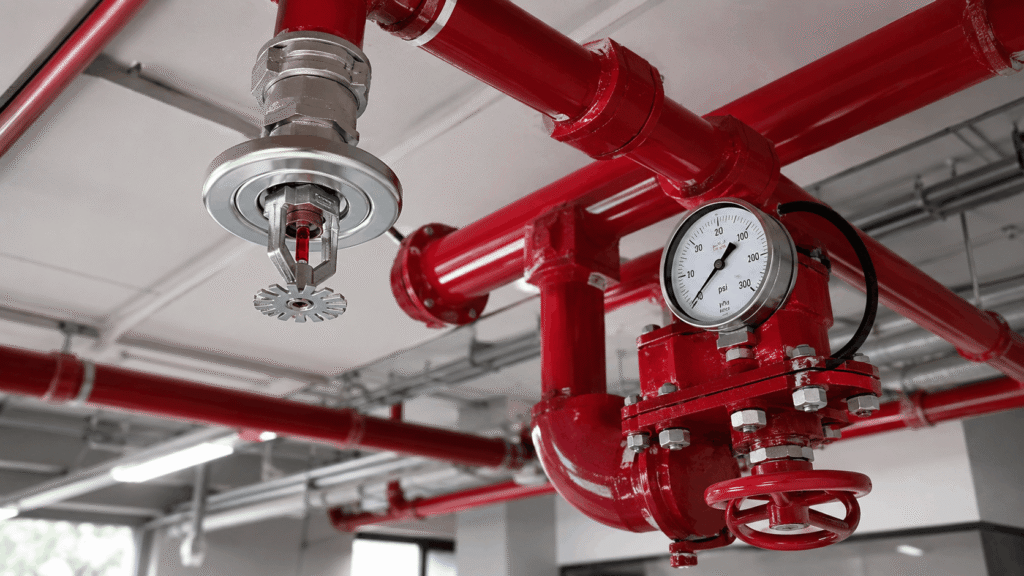
A wet pipe sprinkler system is a type of automatic fire suppression system where the pipes are always filled with pressurized water. The moment a fire breaks out and the temperature near a sprinkler head rises high enough, the sprinkler head activates and water flows out immediately.
Think of it this way: the pipes are loaded and ready to go at all times. There’s no delay. Water is already in the pipe waiting right behind the sprinkler head. That’s the biggest advantage of a wet pipe system over other fire sprinkler types.
This system is called “wet” because the pipes are permanently filled with water—unlike a dry pipe system, where the pipes are filled with air or nitrogen until the system is triggered.
According to the National Fire Protection Association (NFPA), wet pipe systems are governed under NFPA 13 — the gold standard for sprinkler system installation in the country.
Table of Contents
How Does a Wet Pipe Sprinkler System Work?
The mechanics are simple, and that’s part of why this system is so reliable. Here’s what happens step by step when a fire breaks out:
- A fire starts and begins producing heat.
- Heat rises toward the ceiling where sprinkler heads are installed.
- When the temperature at a specific sprinkler head reaches the activation threshold—usually between 135°F and 165°F—a small glass bulb or fusible link inside the sprinkler head breaks.
- This allows water to flow freely from only that sprinkler head.
- Water hits the deflector plate and spreads in a pattern to cover the fire area.
- The system keeps flowing until the main water supply is shut off manually.
One important thing to understand: only the sprinkler heads in the immediate fire zone activate. Hollywood movies show every sprinkler going off at once—that’s not how it works in real life. This protects the rest of your building from unnecessary water damage.
The system connects to a main water supply — either from the municipal water line or a dedicated water storage tank. A check valve prevents backflow, and an alarm valve alerts building occupants and the fire department when water starts flowing.
Main Components of a Wet Pipe Sprinkler System
Understanding the parts of this system helps you maintain it properly. Here are the main components:
1. Sprinkler Heads
These are the most visible parts. Each sprinkler head contains a heat-sensitive element — either a glass bulb filled with glycerin or a fusible link made of a low-melt metal alloy. When heat reaches the activation temperature, the element breaks, and water is released.
Different types of sprinkler heads are designed for different applications — pendant, upright, sidewall, and concealed. If you want to understand how different nozzle designs affect water coverage, check out this guide on the best sprinkler heads for small lawns at Hydro Sprinkler.
2. Pipes and Fittings
Steel, copper, or CPVC plastic pipes carry water throughout the building. The pipe network branches from the main supply line to every covered area. Proper pipe sizing is critical — undersized pipes reduce water pressure and effectiveness.
3. Control Valve
This main shutoff valve controls water flow into the entire sprinkler system. In an emergency, firefighters use this valve to shut down the system after a fire is extinguished.
4. Alarm Check Valve
When water starts flowing through the system, this valve triggers a mechanical water motor alarm and sends a signal to the fire alarm panel. This alerts occupants and automatically notifies emergency services.
5. Water Supply
The system connects to a reliable municipal water supply or a private water storage tank. The supply must maintain adequate pressure—typically between 20 and 175 PSI—to ensure proper coverage.
6. Inspectors Test the Valve
This valve allows technicians to test the system’s alarm functions without actually discharging water through the sprinkler heads. It simulates the flow from one sprinkler head.
7. Drain Valve
Used to remove water from the pipes during maintenance, repairs, or in case of a freeze emergency.
Benefits of Wet Pipe Sprinkler Systems
There’s a reason this system dominates the market. Here are the key advantages:
- Immediate response — water is already in the pipe, so there’s zero delay.
- Simple design — fewer mechanical components means fewer things that can go wrong.
- Lower installation cost — simpler design makes it cheaper to install than dry pipe or pre-action systems.
- Lower maintenance cost—less complex components mean less upkeep.
- Proven reliability — decades of real-world performance data back its effectiveness.
- Works with standard fire alarm systems — easy integration with existing building safety infrastructure.
- Fastest response time of any automatic sprinkler type.
The U.S. Fire Administration reports that sprinkler systems dramatically reduce fire deaths and property losses. Wet pipe systems, in particular, are cited as highly effective in suppressing fires before they spread.
Disadvantages and Limitations
No system is perfect. Here’s where wet pipe systems fall short:
- Not suitable for freezing temperatures — if the water in the pipes freezes, the system is compromised. You can’t install this in an unheated garage, attic, or outdoor space without proper insulation.
- Water damage risk — if a sprinkler head is accidentally damaged (hit by a forklift, for example), water will immediately flood the area.
- Not ideal for sensitive environments — data centers, server rooms, and museums may prefer gaseous or pre-action systems to avoid accidental water discharge.
- Requires antifreeze loops in colder zones — these add cost and require additional maintenance.
Wet Pipe vs. Dry Pipe Sprinkler System
If you’re comparing your options, this table gives you a clear side-by-side breakdown:
| Feature | Wet Pipe System | Dry Pipe System |
|---|---|---|
| Pipe Contents | Always filled with water | Filled with pressurized air/nitrogen |
| Response Time | Immediate | 30–60 second delay |
| Best For | Heated indoor spaces | Unheated/freezing environments |
| Installation Cost | Lower | Higher |
| Maintenance | Simpler, lower cost | More complex, higher cost |
| Freeze Risk | Yes — must stay above 40°F | No — designed for cold areas |
| Water Damage Risk | Slightly higher | Lower (delayed activation) |
| Common Use | Offices, homes, retail | Parking garages, warehouses, attics |
| NFPA Standard | NFPA 13 | NFPA 13 |
For most standard buildings in the US where temperatures stay above freezing, the wet pipe system wins on simplicity, reliability, and cost.
Where Wet Pipe Sprinkler Systems Are Commonly Used in the USA
You’ll find wet pipe sprinkler systems in a wide range of buildings and environments across the country:
- Residential homes — increasingly required by local building codes in new construction.
- Office buildings and commercial spaces — the go-to standard for most businesses.
- Hotels and motels — required by NFPA and local codes.
- Hospitals and healthcare facilities — critical for patient safety.
- Schools and universities — required in most states.
- Retail stores and shopping centers — standard fire protection for public spaces.
- Apartment complexes and condominiums — required for multi-family housing in many jurisdictions.
- Restaurants and food service buildings — where heat sources are common.
For property owners in the Minneapolis area who are also looking at outdoor irrigation alongside fire protection, Hydro Sprinkler offers expert guidance on irrigation system installation and maintenance in Minneapolis.
Installation Requirements
Installing a wet pipe sprinkler system isn’t a DIY project. It requires licensed fire protection contractors and must comply with local building codes. Here’s what’s typically involved:
- A licensed fire protection engineer or contractor must design and install the system.
- Plans must be submitted to the local Authority Having Jurisdiction (AHJ) — usually the fire marshal.
- The system must comply with NFPA 13 (commercial) or NFPA 13R/13D (residential).
- Adequate water supply — pressure and flow must be verified before design.
- Pipes must be properly supported and pitched to allow drainage.
- A final inspection and acceptance test must be conducted before the system is approved.
Maintenance and Inspection Tips
A sprinkler system that isn’t maintained is a system that may fail when you need it most. Follow these best practices:
Monthly Checks
- Visually inspect all control valves — they should be in the open (normal operating) position.
- Check for any visible damage to sprinkler heads.
- Confirm there are no obstructions below or around sprinkler heads (18-inch clearance required).
Quarterly Checks
- Test the alarm valve and water flow alarm.
- Inspect alarm devices for proper operation.
Annual Inspections
- Have a certified fire protection contractor perform a full inspection per NFPA 25.
- Test all sprinkler heads, control valves, and water supply.
- Check for corroded or painted-over sprinkler heads — these may not activate properly.
Every 5 Years
- Conduct an internal inspection of pipes for obstruction, corrosion, or buildup.
- Replace or test sample sprinkler heads from the oldest installed group.
NFPA 25 — Standard for the Inspection, Testing, and Maintenance of Water-Based Fire Protection Systems — is the authoritative guide for all ongoing maintenance requirements.
Common Problems and Solutions
Frozen Pipes
Problem: Water in the pipes freezes in cold areas, potentially causing pipe bursts.
Solution: Add antifreeze loops or a dry pipe system in unheated zones. Never leave wet pipe sections in spaces that drop below 40°F.
Corroded Pipes
Problem: Over time, oxygen in the system promotes internal corrosion, which can clog or weaken pipes.
Solution: Use nitrogen purging to minimize oxygen in the system. Have pipes internally inspected every 5 years.
Accidental Activation
Problem: A sprinkler head is hit by equipment or damaged during renovation, causing an unintended discharge.
Solution: Use protective guards on heads near loading docks or areas with heavy equipment. Always shut off the main control valve before any renovation work.
Low Water Pressure
Problem: Insufficient water pressure reduces the system’s fire suppression effectiveness.
Solution: Verify water supply pressure against system design specs. Install a fire pump if pressure is inadequate.
If you’re also managing an outdoor irrigation setup and noticing pressure problems, this guide on how to increase sprinkler water preshttps://hydrosprinkler.com/pressure-regulator-for-sprinkler-system-2/sure from Hydro Sprinkler may offer useful insights on diagnosing pressure issues.
Wet Pipe Sprinkler System Cost in the USA
Cost is always a major factor. Here’s what you can realistically expect to pay:
| Building Type | Cost Per Square Foot | Typical Total Cost |
|---|---|---|
| Single-family home | $1.00 – $2.00 | $4,000 – $15,000 |
| Small commercial (< 5,000 sq ft) | $1.50 – $2.50 | $7,500 – $12,500 |
| Mid-size office/retail | $1.00 – $2.00 | $10,000 – $50,000 |
| Large warehouse/industrial | $0.75 – $1.50 | $50,000 – $150,000+ |
| Hospital/healthcare | $2.00 – $4.00 | $200,000+ |
Factors that affect cost include building size, ceiling height, pipe material (steel vs. CPVC), local labor rates, and the complexity of the building’s layout. Retrofitting an existing building always costs more than installing during new construction.
Keep in mind that many insurance companies offer significant premium discounts — often 5% to 15% — for buildings equipped with automatic sprinkler systems. Over time, the savings can offset a large portion of the installation cost.
NFPA Standards and Safety Regulations
In the United States, fire sprinkler systems are regulated by a combination of federal guidelines, state codes, and local ordinances. The primary standards are:
- NFPA 13 — Standard for the Installation of Sprinkler Systems (commercial buildings).
- NFPA 13R — Standard for the Installation of Sprinkler Systems in Low-Rise Residential Occupancies.
- NFPA 13D — Standard for the Installation of Sprinkler Systems in One- and Two-Family Dwellings.
- NFPA 25 — Standard for Inspection, Testing, and Maintenance of Water-Based Fire Protection Systems.
The Federal Emergency Management Agency (FEMA) strongly advocates for fire sprinkler installation as a cost-effective life safety measure. Many states now mandate sprinkler systems in all new residential construction.
Always verify your local jurisdiction’s requirements with your fire marshal before starting any project. State and local codes sometimes go beyond national NFPA minimums.
✅ Expert Tips Before Choosing a Wet Pipe Sprinkler System
- Always hire a licensed fire protection contractor — never attempt a DIY installation.
- Get at least three bids and ask each contractor for NICET-certified technicians.
- Ask for a hydraulic calculation report — this confirms proper water flow and pressure.
- Consider CPVC pipe for residential retrofits — it’s faster and less disruptive to install.
- Check your homeowner’s or commercial property insurance to see if you qualify for a sprinkler discount.
- If any part of your building is unheated, discuss adding an antifreeze loop or switching that zone to dry pipe.
- Don’t paint or cover sprinkler heads — it can permanently disable them.
- Test your system at least once per year and keep inspection records on file.
- Maintain an 18-inch clearance below all sprinkler heads — don’t stack boxes or shelves too close.
Frequently Asked Questions (FAQ)
1. What is a wet pipe sprinkler system?
A wet pipe sprinkler system is an automatic fire suppression system where the pipes are continuously filled with pressurized water. When a fire’s heat activates a sprinkler head, water flows immediately to suppress the fire. It is the most common type of fire sprinkler system used in the United States.
2. How is a wet pipe system different from a dry pipe system?
In a wet pipe system, water fills the pipes at all times. In a dry pipe system, pipes are filled with pressurized air or nitrogen, and water only enters after the air is released. Dry pipe systems are used where pipes may be exposed to freezing temperatures, while wet pipe systems are ideal for climate-controlled buildings.
3. Do all sprinkler heads go off at once during a fire?
No. Only the sprinkler head or heads directly above the fire zone will activate. Each sprinkler head has an individual heat-sensitive element. The sprinkler that detects the heat threshold — typically 135°F to 165°F — activates independently. This limits unnecessary water damage to unaffected areas.
4. How long does a wet pipe sprinkler system last?
A properly installed and maintained wet pipe sprinkler system can last 30 to 50 years or more. Individual sprinkler heads may need replacement over time, particularly older fast-response heads that should be tested every 20 years per NFPA 25 guidelines.
5. What temperature is required to keep a wet pipe system functioning properly?
Wet pipe systems require the surrounding environment to stay above 40°F (4°C). If pipes are exposed to freezing temperatures, the water inside can freeze, expand, and crack the pipes. For spaces that drop below 40°F, a dry pipe system, antifreeze loop, or glycol system should be used instead.
6. How much does it cost to install a wet pipe sprinkler system in a home?
For a single-family home in the United States, the average cost is between $1.00 and $2.00 per square foot. For a 2,000-square-foot home, you can expect to pay roughly $2,000 to $4,000 during new construction. Retrofit installations in existing homes typically cost more — often $5,000 to $15,000 — due to the added labor of running pipes through finished walls and ceilings.
7. Is a wet pipe sprinkler system required by law?
It depends on your state, city, and building type. Many states now require automatic sprinkler systems in all new residential construction. Commercial buildings of a certain size are almost universally required to have them. You should check with your local fire marshal and review your state’s adopted edition of the International Building Code (IBC) and NFPA standards to confirm what’s required in your jurisdiction.
8. Can a wet pipe sprinkler system cause water damage even without a fire?
Yes, accidental discharges can happen, but they’re rare. The most common causes are physical damage to a sprinkler head, manufacturing defects, or corrosion over time. Using protective cages on heads in high-traffic areas and conducting regular inspections dramatically reduces this risk.
9. How often does a wet pipe sprinkler system need to be inspected?
Per NFPA 25, the standard inspection schedule includes monthly visual checks, quarterly alarm tests, and a full annual inspection by a certified contractor. Every 5 years, an internal pipe inspection is recommended to check for corrosion or obstructions.
10. What NFPA code applies to wet pipe sprinkler systems?
NFPA 13 governs the installation of wet pipe sprinkler systems in commercial and most industrial buildings. NFPA 13R covers low-rise residential occupancies (up to four stories), and NFPA 13D applies to one- and two-family homes. Ongoing inspection and maintenance must follow NFPA 25.
Conclusion
A wet pipe sprinkler system is the simplest, most reliable, and most cost-effective fire protection solution for the vast majority of buildings in the United States. It responds faster than any other sprinkler type, requires less maintenance, and has a proven track record spanning more than a century of fire safety history.
If your building stays above 40°F and doesn’t house particularly sensitive equipment, a wet pipe system is almost certainly your best option. Just make sure you hire a licensed contractor, comply with NFPA standards, and keep up with regular inspections.
Fire safety isn’t something to cut corners on. The right system, installed correctly and maintained properly, gives you the best chance of protecting lives and property when it matters most.
For more expert guides on sprinkler systems, irrigation, and water management, visit Hydro Sprinkler—your trusted resource for all things sprinkler-related in the USA.