
Intoduction
Every wildfire season, thousands of homes are lost not because flames reach the front door, but because a single wind-blown ember lands on a dry roof and ignites it within seconds. It’s one of the most preventable causes of home loss, and one of the least talked about defenses is surprisingly simple: keeping your roof wet.
That’s exactly what a roof sprinkler system is built for. If you live in a wildfire-prone area, own a property near dry brush or forest, or simply want an extra layer of protection for your home, installing one could be one of the smartest decisions you make as a homeowner. These systems are designed to keep your roof, gutters, and exterior walls saturated during fire emergencies, drastically reducing the chance of ember ignition and radiant heat damage — two of the leading causes of structural loss during wildfires.
In this guide, we’ll walk through exactly what a roof sprinkler system is, how it works, the different types available, real installation costs, maintenance requirements, and answer the most common questions homeowners ask before installing one.
Table of Contents
What Is a Roof Sprinkler System?
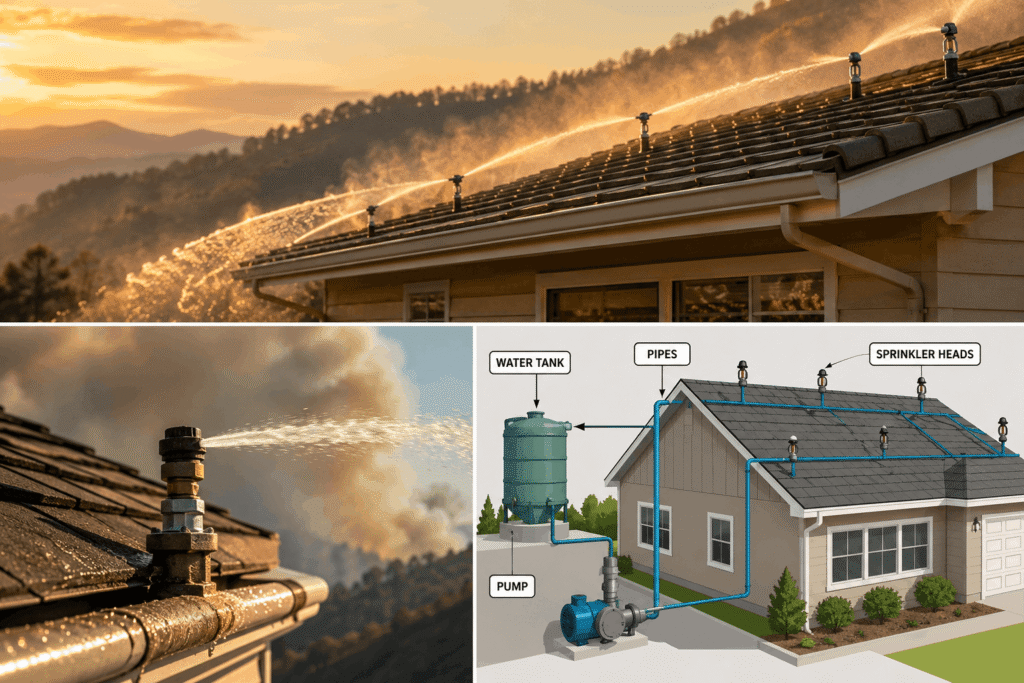
A roof sprinkler system is a network of sprinkler heads, pipes, and a water source installed on or near a roofline to spray water over the roof, gutters, and sometimes the siding of a home. Unlike traditional lawn irrigation systems, roof sprinklers are primarily built for fire defense, though some homeowners also use them for roof cooling in extreme heat or for cleaning debris like leaves and pine needles.
The core idea is simple: when embers or radiant heat from a nearby wildfire land on a dry roof, they can ignite the structure within seconds. A wet roof, on the other hand, is far more resistant to ignition. Roof sprinklers keep every shingle, tile, and gutter saturated so embers extinguish on contact instead of catching fire.
How Does a Roof Sprinkler System Work?
Most roof sprinkler systems follow a similar basic setup:
1. Water Source
ThisThe water source be a home’s main water line, a dedicated water tank, a pool, or even a pond. Many wildfire-zone homeowners install a backup water tank with a gas-powered pump, since municipal water pressure often drops or fails during large-scale fire events.
2. Pump (Optional but Recommended)
If you’re relying on a tank, pond, or low-pressure source, a pump is necessary to push water through the pipes at sufficient volume and pressure.
3. Piping Network
PVC, CPVC, or copper piping runs along the roofline, typically mounted just below the roof edge or along the ridge, depending on the system design.
4. Sprinkler Heads or Nozzles
These are spaced along the piping to ensure even water coverage. Some systems use oscillating nozzles, while others use fixed spray heads angled to cover the entire roof surface.
5. Activation System
Systems can be manually turned on with a valve, or automated with sensors, timers, or remote activation so homeowners can trigger the system even if they’ve evacuated.
Types of Roof Sprinkler Systems
Gravity-Fed Systems
Rely on elevated water tanks and natural gravity pressure. Simple but limited in coverage area and pressure.
Pump-Driven Systems
Use gas or electric pumps to draw water from tanks, pools, or ponds. These offer the most reliable pressure, especially important since electricity and municipal water can fail during wildfires.
Municipal Water-Connected Systems
Tap directly into your home’s existing water supply. Easiest to install but the least reliable during a large-scale emergency when demand spikes and pressure drops.
Hybrid Systems
Combine a primary water source (like municipal supply) with a backup tank and pump for redundancy — considered the gold standard for wildfire-prone properties.
Benefits of Installing a Roof Sprinkler System
- Ember protection: Reduces the risk of roof ignition from wind-blown embers, which is responsible for a large share of home losses in wildfire events.
- Radiant heat defense: A wet roof reflects and absorbs less radiant heat than a dry one.
- Peace of mind for evacuation zones: Remote-activated systems let you protect your home even after you’ve left.
- Insurance benefits: Some insurers offer discounts or requirements tied to fire mitigation systems — it’s worth checking with your provider.
- Dual-purpose use: Many systems double as roof and gutter cleaning tools during non-fire seasons.
Roof Sprinkler System Cost
Costs vary widely depending on system complexity:
| System Type | Estimated Cost |
|---|---|
| Basic municipal-connected system | $500 – $1,500 |
| Pump-driven system with tank | $2,000 – $6,000 |
| Full hybrid system with automation | $6,000 – $15,000+ |
Factors affecting cost include roof size, number of sprinkler heads, pump quality, tank capacity, and whether you hire a professional installer or go the DIY route.
Installation Considerations
- Roof material compatibility — Metal, tile, and shingle roofs all respond differently to water exposure over time; check manufacturer guidance before installation.
- Water pressure and volume — You need enough flow to cover the entire roof simultaneously, not just a section.
- Local codes and HOA rules—Some municipalities and homeowners associations have specific requirements or restrictions on exterior sprinkler installations.
- Freeze protection — In colder climates, pipes need to be drainable or insulated to prevent freeze damage in winter.
- Professional vs. DIY — While kits are available for DIY installation, a licensed irrigation or fire protection contractor ensures correct pressure calculations and code compliance.
Maintenance Tips for Roof Sprinkler Systems
- Test the system at the start of every fire season (typically late spring in most US regions).
- Check for clogged nozzles caused by mineral buildup or debris.
- Inspect piping for UV damage, cracks, or leaks, especially after winter.
- Drain the system before the first freeze if you’re in a colder climate.
- Keep backup fuel or charged batteries on hand if your pump is gas or electric.
Roof Sprinkler Systems vs. Traditional Fire Sprinklers
It’s worth noting that a roof sprinkler system is different from an interior fire sprinkler system, which is designed to suppress fires that start inside the home. Roof sprinklers are an exterior wildfire defense tool, while interior systems fall under building fire codes like those established by the National Fire Protection Association. Homeowners in wildfire zones often benefit from having both types of protection as part of a complete fire safety plan.
For general fire sprinkler system types and codes, you can review the NFPA’s sprinkler system standards for detailed technical guidance.
Wildfire Preparedness Beyond Roof Sprinklers
A roof sprinkler system works best as part of a broader wildfire defense strategy. The Federal Emergency Management Agency recommends creating defensible space around your home, clearing dry vegetation, and using fire-resistant building materials alongside any sprinkler system. You can find detailed guidance on the FEMA wildfire preparedness page.
If you’re also working on improving general water pressure for your irrigation or sprinkler setup, check out our guide on how to improve water pressure for sprinkler systems for practical fixes.
For homeowners exploring different valve setups for their sprinkler network, our article on valves for sprinkler systems covers the main types and how to choose the right one.
And if you’re deciding between wet pipe and other configurations for broader property protection, our wet pipe sprinkler systems guide breaks down how they work and where they’re best used.
Conclusion
A roof sprinkler system is one of the most effective, proactive investments a homeowner in a wildfire-prone region can make. By keeping your roof, gutters, and exterior surfaces saturated during high-risk conditions, you significantly reduce the chance of ember-caused ignition — often the difference between a home that survives a wildfire and one that doesn’t.
Whether you choose a simple municipal-connected setup or a full hybrid system with a dedicated tank and pump, the key is proper installation, regular maintenance, and integrating it into a broader wildfire preparedness plan. Talk to a licensed contractor, check your local codes, and test your system every season to make sure it’s ready when you need it most.
FAQ
Does a roof sprinkler system actually prevent wildfire damage? It significantly reduces risk by keeping the roof and exterior wet, which prevents embers from igniting the structure. It’s not a guarantee against fire damage but is considered one of the most effective home-hardening measures available.
How much water does a roof sprinkler system use? Usage depends on roof size and nozzle type, but most residential systems use several hundred gallons per hour when running. This is why many homeowners pair the system with a dedicated water tank rather than relying solely on municipal supply.
Can I install a roof sprinkler system myself? Basic municipal-connected kits can be DIY-installed by handy homeowners. However, pump-driven or hybrid systems typically require professional installation to ensure correct pressure, coverage, and code compliance.
Do roof sprinkler systems work during a power outage? Only if the pump has a backup power source, such as a battery or gas-powered engine. Systems relying solely on electric pumps and municipal water can fail exactly when they’re needed most, during widespread outages.
Are roof sprinkler systems covered by home insurance discounts? Some insurers offer discounts for wildfire mitigation measures, including roof sprinklers, but this varies by provider and state. It’s best to contact your insurance company directly to confirm eligibility.
How often should I test my roof sprinkler system? At minimum, test it once before fire season begins and once mid-season. Regular testing catches clogged nozzles, leaks, or pump issues before anemergency.