
Introduction
A sprinkler irrigation system is one of the easiest ways to water your lawn, garden, or crops efficiently. However, many homeowners and gardeners face a common problem: Before trying to fix low pressure, it is important to understand how to use sprinkler irrigation system correctly so that water flows evenly through the entire irrigation setup.
If you are wondering how to increase sprinkler water pressure or how to increase water pressure in a sprinkler system, you are not alone. This issue can occur due to clogged sprinkler heads, small pipes, pressure regulator problems, or leaks in the irrigation system.
Table of Contents
What Causes Low Water Pressure in Sprinkler Systems?
Before fixing the problem, it is important to understand why sprinkler pressure becomes low.
Common causes include:
- Clogged sprinkler heads
- Leaking pipes
- Too many sprinklers on one zone
- Small irrigation pipes
- Low municipal water pressure
- Faulty pressure regulator
- Partially closed valves
When any of these problems occur, the water flow becomes restricted, and your lawn sprinklers cannot operate properly.
How to Increase Sprinkler Water Pressure
Below are the most effective ways to fix the issue and improve your irrigation system.
1. Clean or Replace Clogged Sprinkler Heads
One of the most common reasons for low pressure is dirt or debris inside the sprinkler head.
Over time, soil, sand, and small stones can block the nozzle and reduce water flow. Regular cleaning is part of proper irrigation care. Learning how to maintain a sprinkler system can help prevent clogged sprinkler heads and pressure problems.
How to clean sprinkler heads
- Turn off the irrigation system
- Remove the sprinkler head
- Rinse it with clean water
- Use a small pin or needle to remove debris.
- Reinstall the sprinkler head
Cleaning the sprinkler heads can instantly increase water pressure for lawn sprinkler systems.
2. Check for Leaks in Pipes
A hidden pipe leak can significantly reduce water pressure in your irrigation system.
Signs of a leak
- Wet or muddy areas in the lawn
- Water pooling around sprinkler zones
- Decreased sprinkler spray distance
How to fix it
- Locate the leaking pipe
- Cut the damaged section
- Replace it with a new PVC pipe connector.
Fixing leaks will restore proper pressure throughout the sprinkler system.
3. Reduce the Number of Sprinklers Per Zone
Sometimes the system simply has too many sprinklers connected to one zone.
When multiple sprinkler heads operate at the same time, the available water pressure gets divided.
Solution
- Divide the sprinkler system into multiple irrigation zones.
- Run fewer sprinkler heads at the same time
- Install a zone control valve
This method is commonly used in large garden sprinkler systems and farming irrigation systems.
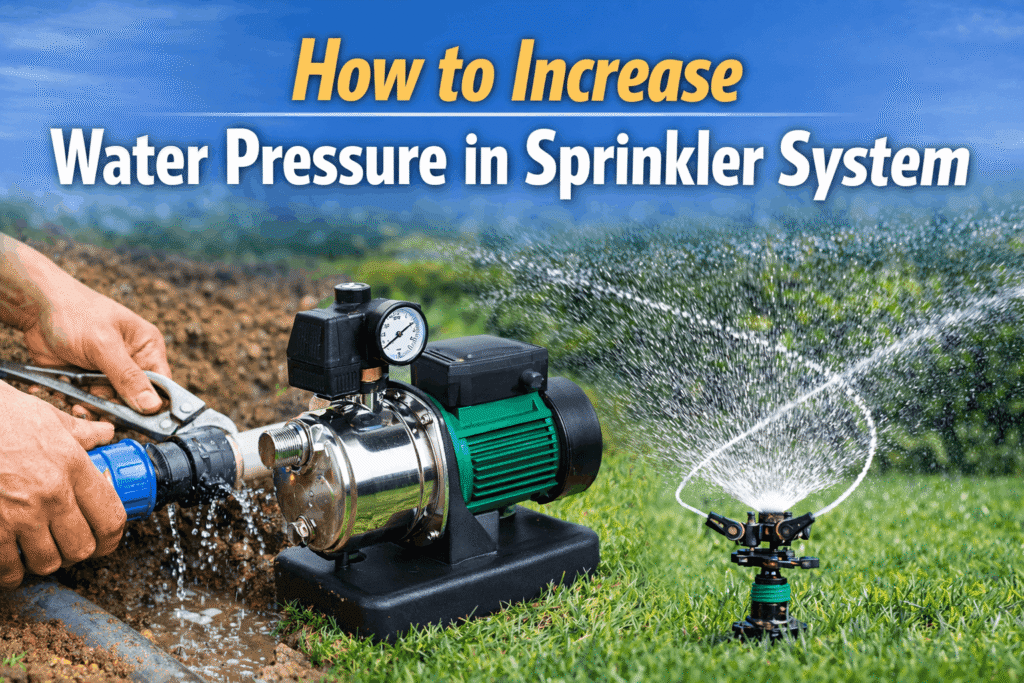
4. Install a Booster Pump
If your home water supply already has low pressure, installing a booster pump is an effective solution.
A booster pump increases water pressure before it enters your sprinkler system.
Benefits
- Stronger sprinkler spray
- Better lawn coverage
- Improved irrigation efficiency
Booster pumps are commonly used in large gardens, farms, and landscaping irrigation systems.
5. Use Larger Irrigation Pipes
Small pipes restrict water flow and reduce pressure.
If your sprinkler system uses small-diameter pipes, upgrading them can significantly improve pressure.
Recommended pipe sizes
- Main irrigation line: 1-inch pipe
- Branch lines: ¾ inch pipe
Larger pipes allow more water to flow, improving sprinkler performance.
6. Check the Water Valve
Sometimes the sprinkler valve is not fully open.
What to do
- Locate the irrigation control valve
- Turn it fully open
- Check the backflow preventer valve
A partially closed valve reduces water pressure in the entire sprinkler system.
7. Install High-Pressure Sprinkler Heads
Not all sprinkler heads are designed for the same pressure level.
If your lawn is large, consider installing high-pressure or rotor sprinkler heads.
These sprinkler heads are designed for:
- Larger spray distances
- Higher water pressure systems
- Efficient garden irrigation
This upgrade helps improve the overall performance of your sprinkler irrigation system.

Tips to Improve Lawn Sprinkler Performance
Some gardeners compare sprinkler watering with drip systems. You can read more about Irrigation vs Drip Irrigation to understand which system works best.
Maintain your irrigation system regularly.
- Inspect pipes every season
- Clean sprinkler nozzles monthly
- Check valves and fittings
Avoid running too many water systems.
Do not run these at the same time:
- Washing machine
- Garden hose
- Car washing
- Lawn sprinkler system
Running multiple water sources at once reduces available pressure.
Use a pressure gauge.
A pressure gauge helps measure water pressure in PSI.
Most sprinkler systems require:
- 40–60 PSI water pressure
If pressure falls below this range, sprinkler performance decreases.
Benefits of Increasing Sprinkler Water Pressure
Improving sprinkler pressure provides many advantages.
1. Better Lawn Coverage
Sprinklers spray water evenly across the entire lawn.
2. Healthier Plants
Proper irrigation ensures plants receive enough water.
3. Water Efficiency
High pressure reduces water waste and improves irrigation efficiency.
4. Saves Time
A well-pressurised sprinkler system waters the garden faster.
5. Improved Irrigation Performance
Sprinklers reach the correct spray distance and distribute water evenly.
Common Mistakes That Reduce Sprinkler Pressure
Avoid these mistakes when using a lawn sprinkler system.
- Installing too many sprinkler heads in one zone
- Using very small irrigation pipes
- Ignoring leaks in irrigation lines
- Not cleaning sprinkler heads
- Running multiple water appliances simultaneously
Correcting these issues can increase water pressure for lawn sprinkler systems quickly.
Conclusion
Low sprinkler pressure can make lawn watering frustrating and inefficient. Fortunately, there are several simple ways to fix the problem.
By learning how to increase sprinkler water pressure, you can improve irrigation performance and maintain a healthy garden. Cleaning sprinkler heads, fixing pipe leaks, installing booster pumps, and optimising sprinkler zones are some of the most effective solutions.
(FAQ)
1. How to increase sprinkler water pressure quickly?
The fastest way is to clean clogged sprinkler heads, fully open valves, and check for pipe leaks. These simple fixes often restore normal pressure.
2. How to increase water pressure in a sprinkler system at home?
You can increase pressure by:
- Installing a booster pump
- Reducing the number of sprinkler heads per zone
- Replacing small pipes with larger ones
- Fixing leaks in the irrigation system
3. What is the best pressure for a lawn sprinkler system?
Most lawn sprinkler systems operate best between 40 and 60 PSI. Lower pressure reduces spray distance and irrigation efficiency.
4. Why is my sprinkler pressure low in one zone?
Low pressure in one zone usually happens because of the following:
- A leaking pipe
- A clogged sprinkler head
- A faulty zone valve
5. Can a booster pump increase sprinkler pressure?
Yes. A booster pump increases water pressure before it reaches the sprinkler system, improving irrigation coverage and spray distance.