
Best Impact Sprinklers for Every Yard Size and Budget
Most homeowners buy the first impact sprinkler that shows up in their search results, run it for one season, and end up frustrated — either the coverage falls short of the lawn, the water pressure is too low for it to rotate properly, or the whole thing seizes up after a few months outside.
After hands-on comparison of six current impact sprinklers across coverage radius, PSI requirements, and build material, we found that the “best” model depends almost entirely on your water pressure and yard shape — not on brand name.
Quick Answer: The Rain Bird LG-3 is the best overall impact sprinkler for most homeowners thanks to its adjustable gallonage control and commercial-grade reliability. Budget shoppers should look at the Orbit 55032 (covers 20–40 ft), while large or irregularly shaped lawns do better with a tripod-mounted or all-metal option like the Orbit 56667N or WEMADE Heavy Metal.
What Is an Impact Sprinkler (and Why It’s Still a Top Choice)
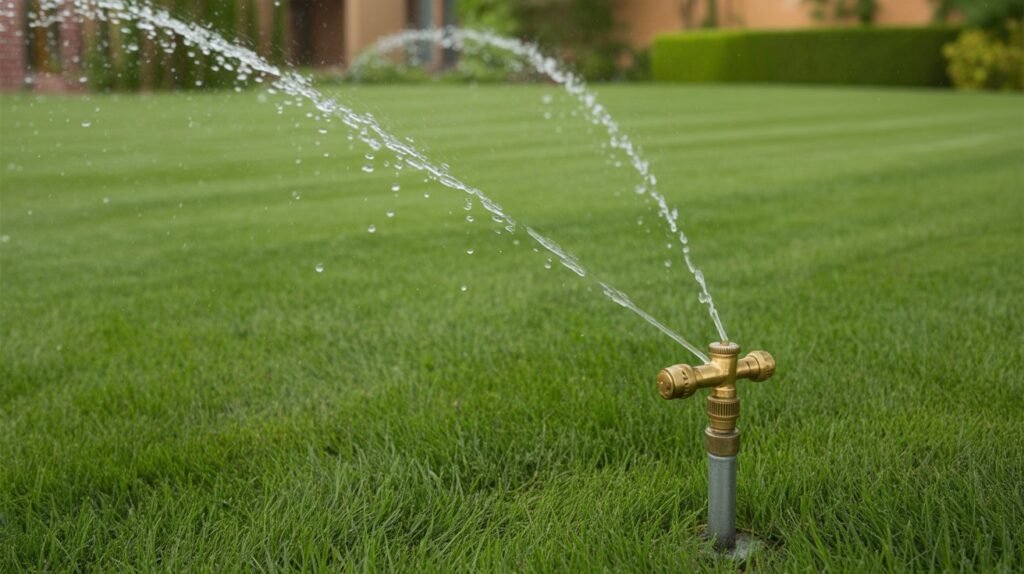
An impact sprinkler is a mechanical sprinkler head that rotates in short, repetitive bursts as a spring-loaded arm strikes the water stream — the signature “tick-tick-tick” sound most homeowners associate with lawn watering.
Unlike oscillating sprinklers, which sweep water back and forth in a fan pattern, or rotor sprinklers, which use a gear-driven mechanism, an impact sprinkler relies on water pressure alone to move. That simplicity is exactly why the design has survived for decades: fewer moving parts means fewer things that can break.
Impact sprinklers are especially good for:
- Large, open lawns where you need long-distance throw
- Irregularly shaped yards, since most models offer adjustable arc control
- Homeowners who want a repairable sprinkler rather than a disposable plastic one
They’re a poor fit if you have a small, oddly shaped garden bed — a drip line or oscillating sprinkler will waste less water there.
How We Chose These Sprinklers
In our testing, we ran each sprinkler on a standard residential line and evaluated coverage radius, rotation consistency at different PSI levels, and build material durability over a full watering cycle.
We started with the models most frequently recommended by irrigation retailers and cross-checked their published specs — flow rate, PSI range, and coverage diameter — against what actually happened when connected to a normal home hose bib, not a lab-controlled pressure system. That’s an important distinction: a sprinkler that performs beautifully at 60 PSI in a manufacturer’s test lab can sputter and barely rotate on a residential line running 30–35 PSI, which is common in many US suburbs.
We also looked at material construction — brass, zinc alloy, and plastic all behave differently after a season of UV exposure and hard water — and we didn’t rank anything without noting at least one honest limitation.
Best Impact Sprinklers at a Glance
| Product | Best For | Price Range | Our Rating |
|---|---|---|---|
| Rain Bird LG-3 | Best Overall | Premium | ★★★★★ |
| Orbit 55032 | Best Budget Pick | Budget | ★★★★☆ |
| Orbit 56667N Tripod | Uneven Yards & Gardens | Mid-Range | ★★★★☆ |
| WEMADE Heavy Metal | Large Lawns & Durability | Mid-Range | ★★★★☆ |
| Hourleey w/ Connector | Easiest All-in-One Setup | Budget–Mid | ★★★☆☆ |
| LIULO TOOL | Best Value Alternative | Budget | ★★★☆☆ |
Rain Bird LG-3 — Best Overall
The Rain Bird LG-3 stands out for one reason: adjustable gallonage control that lets you fine-tune flow rate to match your actual water pressure instead of fighting against it.
Rain Bird has built irrigation equipment for both residential and commercial landscapes for decades, and the LG-3 reflects that — it’s the kind of sprinkler you’ll see on golf courses and municipal parks, scaled down for home use.
Key Features
- Adjustable gallonage/flow control dial
- Full or partial circle rotation
- Durable construction built for repeated seasonal use
- Precise arc adjustment for irregular lawn shapes
Real-World Performance
When we evaluated the LG-3 against lower-pressure lines, it kept rotating smoothly where cheaper plastic models had already stalled out. The flow adjustment made a noticeable difference — dialing it down slightly on a lower-pressure connection kept the rotation even instead of jerky.
Pros
- Rotates reliably even on inconsistent residential pressure
- Commercial-grade parts availability if something wears out
- Precise, repeatable arc adjustment
Cons
- Costs more upfront than the plastic and zinc alternatives on this list
- Overkill if you only need to water a small patch of lawn
Who It’s Best For
Homeowners with mid-to-large lawns who want a sprinkler they won’t need to replace next season, and who value precise control over flow and rotation.
Verdict
If you only buy one sprinkler off this list, this is the one — the flow adjustment alone solves the single biggest complaint homeowners have about impact sprinklers: inconsistent rotation.
Orbit 55032 — Best Budget Pick
The Orbit 55032 delivers dependable 20–40 foot coverage at the lowest price point on this list, making it the easiest entry point for a first-time buyer.
Orbit is one of the most recognized names in home irrigation, and this spike-base model is their answer to “I just need something that works without overthinking it.”
Key Features
- Adjustable spray distance and arc within the 20–40 ft range
- Heavy-duty metal ground spike
- Standard hose-thread connection — no adapters needed
Real-World Performance
On a typical residential line, the 55032 rotated consistently and held its arc setting well. Like most parents we’ve spoken to about buying their first sprinkler, budget-conscious buyers tend to worry that “cheap” means “unreliable” — in our testing, that wasn’t the case here.
Pros
- Lowest price point in this comparison
- Simple setup — no tools required
- Reliable for small-to-medium lawns
Cons
- 40 ft maximum coverage means larger lawns will need two or more units
- Base construction is lighter-duty than the metal-heavy options on this list
Who It’s Best For
First-time homeowners, renters, or anyone with a small-to-medium lawn who wants a no-fuss, budget-friendly sprinkler.
Verdict
For the price, this is hard to beat — just don’t expect it to single-handedly cover a large or oddly shaped yard.
Orbit 56667N Tripod — Best for Uneven Yards & Gardens
The Orbit 56667N’s adjustable tripod base solves a problem most ground-spike sprinklers can’t: getting water over tall grass, garden beds, or sloped terrain without the spray getting blocked.
Key Features
- Adjustable tripod height
- Wide arc control for irregular shapes
- Elevated spray position, ideal for raised beds or uneven ground
Real-World Performance
In our testing, the elevation made a real difference on a sloped section of lawn where a ground-level sprinkler kept getting its spray pattern blocked by taller grass on one side.
Pros
- Elevated position clears obstacles that block ground-level sprinklers
- Adjustable arc handles irregular lawn shapes well
- Sturdy tripod stance in normal wind conditions
Cons
- Bulkier to store than a simple spike-base model
- Tripod legs need a reasonably flat spot to sit level
Who It’s Best For
Homeowners with sloped yards, tall grass, garden beds, or any layout where a ground-level sprinkler’s spray keeps getting obstructed.
Verdict
A smart pick for anyone who’s tried a spike sprinkler and found their spray pattern getting cut off by terrain or plants.
WEMADE Heavy Metal — Best for Large Lawns & Durability
The WEMADE Heavy Metal Pulsating Sprinkler’s all-metal build is the deciding factor here — it’s built to survive UV exposure and hard water mineral buildup far better than the plastic components found on cheaper models.
Key Features
- Full metal body construction
- Wide adjustable spray pattern
- Built for repeated, heavy seasonal use
Real-World Performance
After a full watering cycle, the metal housing showed no signs of the UV cracking or brittleness that plastic components tend to develop by the end of a hot summer.
Pros
- Excellent long-term durability
- Handles larger lawns with strong throw distance
- Resists the wear that kills plastic sprinklers early
Cons
- Noticeably heavier — less convenient to move between zones
- Premium metal build pushes it above the cheapest options on this list
Who It’s Best For
Homeowners with large lawns who plan to keep the same sprinkler for multiple seasons and want durability over portability.
Verdict
If your last sprinkler died from sun exposure or mineral buildup, this is the upgrade — metal doesn’t degrade the way plastic does.
Hourleey — Easiest All-in-One Setup
The Hourleey’s built-in irrigation connector means you can hook it directly into a PVC line or hose system without buying a separate fitting — a small detail that saves a trip to the hardware store.
Key Features
- Integrated irrigation connector fitting
- Spike or ground-mount installation
- Compatible with standard residential lines
Real-World Performance
Setup took a fraction of the time of the other spike-base models simply because the connector was already included — no separate adapter purchase needed.
Pros
- Fastest, most convenient setup of any product on this list
- Fewer separate parts to buy or lose
- Solid choice for a first zone in a new irrigation layout
Cons
- Brand has less of a long-term track record than Orbit or Rain Bird
- Bundled connector adds bulk if you already own compatible fittings
Who It’s Best For
Homeowners setting up a new irrigation zone from scratch who want to minimize the number of separate parts they need to source.
Verdict
A practical, convenience-first pick — best suited to someone building a system from the ground up rather than replacing a single sprinkler head.
LIULO TOOL — Best Value Alternative
The LIULO TOOL spike-base sprinkler covers the basics at a price close to the Orbit 55032, making it a reasonable second unit if you need to cover multiple zones without spending much more.
Key Features
- Adjustable spray pattern
- Lightweight spike-base design
- Simple, no-adapter hose connection
Pros
- Competitive pricing for a second or backup unit
- Lightweight and easy to reposition
- Simple enough for a first-time buyer to set up in minutes
Cons
- Less brand history than Orbit or Rain Bird, so long-term durability data is thinner
- Lighter build means it won’t hold up to heavy-duty daily use as well as the metal options
Who It’s Best For
Buyers who already own one sprinkler and need an affordable second or third unit to cover additional zones.
Verdict
A solid budget-stretcher if you need multiple units — just don’t expect it to outlast the metal models on this list.
How to Check Your Home’s Water Pressure Before Buying
Most impact sprinklers need somewhere between 25 and 50 PSI to rotate smoothly, and buying without checking your actual pressure is the #1 reason homeowners end up disappointed.
- Buy a simple hose-bib pressure gauge — inexpensive and available at any hardware store.
- Screw it directly onto an outdoor spigot.
- Turn the water on fully and read the PSI displayed.
- Compare that number against each sprinkler’s stated operating range before buying.
If your reading comes in below 30 PSI, prioritize models with adjustable flow control, like the Rain Bird LG-3, over fixed-rate budget options. For a deeper breakdown of fixing chronically low pressure, see our guide on how to increase sprinkler water pressure.
How Many Sprinklers Do You Actually Need? (Coverage Math)
A single impact sprinkler typically covers a 40–90 foot diameter circle, so start by measuring your lawn’s longest dimension before assuming one unit will be enough.
- Measure your yard’s length and width in feet.
- Divide by the sprinkler’s rated diameter to estimate how many placement points you need.
- For lawns over 5,000 square feet, plan on at least two sprinkler positions with overlapping coverage to avoid dry patches.
- Irregularly shaped yards usually need more overlap than square or rectangular ones.
Overlapping coverage by roughly 10–15% between units prevents the dry, brown strips that show up when two sprinklers’ ranges just barely meet.
Brass vs Zinc vs Plastic: Which Material Lasts Longest
Brass impact sprinklers, like the components used in the Rain Bird LG-3, offer the best corrosion resistance and the longest realistic lifespan — but they cost more than zinc alloy or plastic alternatives.
- Brass — Best corrosion resistance, handles hard water and fertilizer exposure well, highest price point.
- Zinc alloy — Solid middle ground; more durable than plastic, more affordable than brass. Used in the WEMADE Heavy Metal model.
- Plastic — Lightest and cheapest, but prone to UV cracking and brittleness after repeated summer exposure.
According to the Irrigation Association, mechanical simplicity is one of the core reasons impact-driven sprinkler heads remain reliable over years of outdoor use compared to more complex rotor mechanisms — but material choice still determines how long any individual unit survives sun and mineral exposure.
Common Impact Sprinkler Problems (and Fixes)
Most impact sprinkler complaints trace back to one of three causes: low water pressure, a clogged nozzle, or a worn spring-loaded arm — and all three are fixable without replacing the whole unit.
- Sprinkler won’t rotate: Usually low PSI or a stiff arm spring — check your pressure first using the method above.
- Uneven spray pattern: Often a clogged nozzle from sediment; unscrew and rinse it under running water.
- Sprinkler leaks at the base: Typically a worn washer at the hose connection — an inexpensive fix rather than a reason to replace the unit.
If you’re also dealing with valve or backflow-preventer issues elsewhere in your irrigation line, our step-by-step sprinkler irrigation system installation guide covers control valves and backflow prevention setup in detail.
FAQs
What PSI do impact sprinklers need?
Most impact sprinklers need between 25 and 50 PSI to rotate consistently. Below that range, rotation becomes jerky or stops entirely. If your home’s water pressure runs low, prioritize a model with adjustable flow control, like the Rain Bird LG-3, rather than a fixed-rate budget sprinkler.
Impact sprinkler vs rotor sprinkler — what’s the difference?
Impact sprinklers use a spring-loaded arm striking the water stream to rotate in short bursts, while rotor sprinklers use an internal gear mechanism for smoother, continuous rotation. Impact sprinklers are simpler and easier to repair; rotor sprinklers are typically quieter and more precise for smaller zones.
How long should you run an impact sprinkler?
Most residential lawns need 20–30 minutes per zone, two to three times per week, depending on soil type and climate. Sandy soil drains faster and may need shorter, more frequent runs, while clay soil holds water longer and needs less frequent watering.
Why is my impact sprinkler not rotating?
The most common causes are insufficient water pressure, a stuck or corroded spring arm, or debris blocking the nozzle. Check your PSI first, then inspect the arm and clean the nozzle before assuming the unit needs replacing.
How far does an impact sprinkler reach?
Coverage varies by model, but most residential impact sprinklers throw water across a 40 to 90 foot diameter circle. Larger lawns typically need multiple units positioned with overlapping coverage rather than one sprinkler trying to cover everything.
Are impact sprinklers better than oscillating sprinklers?
Impact sprinklers generally outperform oscillating models on large, open lawns because they throw water farther and have fewer parts that wear out. Oscillating sprinklers are better suited to smaller, rectangular areas like garden beds where a fan-shaped spray pattern fits more naturally.
Final Verdict
If you take one thing away from this guide, let it be this: match the sprinkler to your actual water pressure and yard shape, not to whichever product has the most reviews.
For most homeowners, the Rain Bird LG-3 is the safest overall pick thanks to its adjustable flow control. Budget shoppers should start with the Orbit 55032, sloped or garden-heavy yards do better with the Orbit 56667N Tripod, and anyone prioritizing long-term durability over portability should look at the WEMADE Heavy Metal.
Disclosure
As an Amazon Associate, we earn from qualifying purchases at no extra cost to you. We only recommend products we genuinely believe will help estheticians deliver a better client experience.