
Introduction
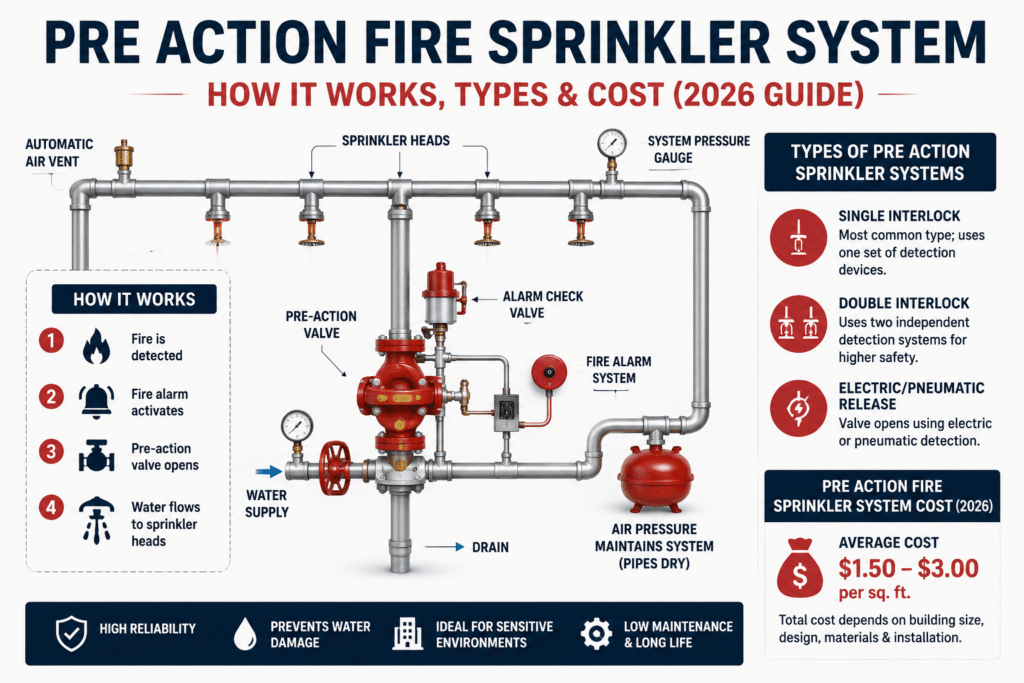
A Pre Action Fire Sprinkler System is one of the most advanced fire protection solutions for buildings where accidental water discharge could cause costly damage. Unlike traditional wet pipe systems, a pre-action system requires two separate events before water is released into the sprinkler piping, providing an extra layer of protection for sensitive environments such as data centers, museums, hospitals, server rooms, and archives.
If you’re wondering how it differs from a dry pipe system, it’s helpful to first understand how a dry fire sprinkler system works. Our detailed guide explains the operating principles, advantages, and applications of dry systems, making it easier to compare them with pre-action systems. Read more here: Pre Action Fire Sprinkler System
In this complete 2026 guide, you’ll learn how a pre action fire sprinkler system works, the different types of pre-action sprinkler systems, where they’re used, installation requirements, maintenance tips, average costs, pros and cons, and how to choose the right system for your building. Whether you’re a homeowner, facility manager, or business owner, this guide will help you understand everything you need to know before investing in a pre action fire sprinkler system
Table of Contents
What Is a Pre-Action Fire Sprinkler System? A Complete Guide
If you’re researching fire protection for a building that houses expensive equipment, a pre-action fire sprinkler system is probably already on your radar.
Unlike a standard wet sprinkler system, this setup adds an extra layer of control before water ever touches a room. That makes it a smart choice for server rooms, museums, libraries, and archives.
In this guide, we’ll break down exactly how a pre-action fire sprinkler system works, the different types available, where they’re required by code, and what installation typically costs in the US.
By the end, you’ll know whether this system is the right fit for your property or whether a simpler wet or dry system would do the job just as well.
How Does a Pre-Action Fire Sprinkler System Work?
A pre-action fire sprinkler system doesn’t fill its pipes with water right away, like a standard wet system does.
Instead, the pipes stay dry until two separate events happen:
- A fire detection device (like a smoke or heat detector) senses a fire.
- A sprinkler head’s heat-sensitive element actually activates.
Only after both triggers occur does water enter the pipes and flow through the open sprinkler head.
This two-step process is called “double interlock” in stricter versions, though single interlock designs also exist. We’ll cover both below.
Why the Extra Step Matters
The whole point of this design is to prevent accidental water discharge.
Think about it this way: a standard wet pipe system releases water the moment a sprinkler head breaks, whether from actual fire heat or from something like a forklift bumping into it.
With a pre-action system, that accidental bump won’t release any water, because the pipes are still empty. Water only shows up when there’s a confirmed fire event.
Types of Pre-Action Fire Sprinkler Systems
There are three main variations of the pre-action fire sprinkler system, and the differences matter a lot for how much protection you get.
1. Non-Interlock System
- Water enters the pipes when either the detection system OR a sprinkler head activates.
- This is the least restrictive type, offering the fastest response.
- It behaves closer to a standard wet system in terms of speed but still delays until one trigger happens.
2. Single Interlock System
- Water enters the pipes only after the fire detection system activates.
- Once water fills the pipes, it still needs a sprinkler head to open before it discharges.
- This is the most common configuration used across commercial buildings in the US.
3. Double Interlock System
- Requires BOTH the detection system to trigger AND a sprinkler head to open before water flows.
- Offers maximum protection against accidental discharge.
- Commonly used in data centers and areas with irreplaceable assets, since even a single false alarm won’t release water.
Here’s a quick comparison to make the differences clearer:
System Type Trigger Needed Best For Non-Interlock One (detector OR head) Areas needing fast response Single interlock detector, then head general commercial spaces. Double interlock detector AND head Data centers, archives, freezers
Where Are Pre-Action Fire Sprinkler Systems Required?
You’ll typically find a pre-action fire sprinkler system installed in spaces where accidental water damage would be extremely costly or where the space itself demands special protection.
Common locations include:
- Data centers and server rooms – Electronics and water don’t mix, and downtime from a false trigger is expensive.
- Museums and art galleries – Irreplaceable artifacts can’t risk water exposure from a false alarm.
- Libraries and archives – Paper records and rare books are highly vulnerable to water damage.
- Freezer warehouses – Prevents pipe freezing issues associated with wet systems.
- Telecommunication facilities – Sensitive switching equipment needs the same protection as server rooms.
If your building falls into one of these categories, local fire codes and your insurance provider may actually require this type of system rather than leaving it optional.
Pre-Action vs. Wet Pipe vs. Dry Pipe Systems
It helps to see how a pre-action fire sprinkler system stacks up against the other two common designs.
Wet Pipe System
- Pipes are always filled with water.
- Fastest response time of all sprinkler types.
- Higher risk of accidental discharge or freeze damage in cold areas.
Dry Pipe System
- Pipes are filled with pressurized air instead of water.
- Used in unheated spaces like parking garages or loading docks.
- Slower response than wet systems, since air needs to release before water arrives.
- for more details
how-does a dry fire sprinkler system work,sprinkler system valve repairbackflow device irrigation system
Pre-Action System
- Pipes stay dry until a detection event occurs
- Requires a working detection system alongside the sprinkler heads.
- Best balance of protection and reduced accidental water damage.
If you want to read more about the basics of sprinkler valve types before comparing these systems, check out our detailed guide on [sprinkler valve types and how they function].
Cost of Installing a Pre-Action Fire Sprinkler System
Pricing varies a lot depending on building size, occupancy type, and your local fire code requirements, but here’s a general breakdown for the US market:
- Small commercial spaces (under 5,000 sq ft): roughly $3–$5 per square foot.
- Mid-size facilities (data centers, libraries): roughly $5–$8 per square foot.
- Large or complex installations: can exceed $10 per square foot due to added detection equipment and interlock controls.
Keep in mind these numbers also depend on:
- Whether you’re retrofitting an existing building or installing during new construction.
- The complexity of the fire detection system tied into the sprinklers.
- Local labor rates and permitting fees.
Always get a quote from a licensed fire protection contractor, since actual costs can shift quite a bit based on your specific building layout. how does a sprinkler system work
Maintenance Requirements for Pre-Action Systems
A pre-action fire sprinkler system has more components than a standard wet system, so maintenance is a bit more involved.
Here’s what routine upkeep usually looks like:
- Monthly inspections of control valves and air/nitrogen pressure gauges.
- Quarterly testing of the detection devices tied to the interlock.
- Annual full-system trip tests, often required by NFPA 25 standards.
- Ongoing checks for corrosion inside dry pipes, since trapped moisture can still cause issues over time.
Skipping these checks isn’t just risky for safety; it can also void your insurance coverage if a fire occurs and inspection records aren’t up-to-date.
Pros and Cons of a Pre-Action Fire Sprinkler System
Pros:
- Reduces risk of accidental water discharge damaging sensitive equipment.
- Works well in areas prone to freezing, since pipes stay dry.
- Offers flexibility with three interlock configurations depending on your risk tolerance.
Cons:
- More expensive to install than standard wet systems.
- Requires a reliable, well-maintained detection system to function correctly.
- Slightly slower response time compared to wet pipe systems.
Weighing these trade-offs against your building’s specific needs will help you decide if this system is worth the investment.
Frequently Asked Questions
1. What is a pre-action fire sprinkler system used for?
It’s mainly used to protect spaces with sensitive equipment or valuable assets, like data centers, libraries, and museums, where accidental water discharge would cause major damage.
2. How is a pre-action system different from a dry pipe system?
A dry pipe system only needs a sprinkler head to activate for water to flow. A pre-action fire sprinkler system needs a fire detection event first, adding an extra safety step.
3. Is a pre-action fire sprinkler system more expensive than a wet system?
Yes, it typically costs more due to the added detection equipment, control panels, and interlock valves required for proper operation.
4. What triggers a double interlock pre-action system?
A double interlock system needs both the fire detection device to activate and a sprinkler head to open before any water is released into the pipes.
5. Can a pre-action system be used in a residential building?
It’s rare in homes since it’s designed for commercial and specialty spaces. Most residential properties use standard wet pipe systems instead.
6. How often should a pre-action fire sprinkler system be tested?
Monthly checks on valves and pressure, quarterly detection tests, and a full annual trip test are the standard maintenance schedule under NFPA guidelines.
7. Does a pre-action system need a fire alarm system connected to it?
Yes, the detection component (smoke or heat detectors) must be tied into the sprinkler’s control valve for the pre-action mechanism to function properly.
Final Thoughts on Pre-Action Fire Sprinkler Systems
A pre-action fire sprinkler system offers a smart middle ground between fast fire suppression and protection against accidental water damage. visite on this site NFPA 25
If your building houses expensive electronics, irreplaceable records, or anything sensitive to moisture, this system is worth the extra upfront cost. visite on this site FM Global
Always work with a licensed fire protection engineer to determine the right interlock configuration for your specific occupancy type and local fire code requirements. visit on NFPA 13