
Introduction
A sprinkler system anti-syphon valve is one of the most important safety components in any irrigation setup. Its job is simple but critical: stop contaminated water, fertiliser residue, pesticides, and debris from flowing backward into your home’s clean drinking water supply.
Most homeowners never think about this valve until something goes wrong — a leak, a pressure drop, or a backflow issue. But a correctly installed and maintained anti-syphon valve can save you from costly plumbing repairs and, more importantly, protect your household water from contamination for years. If you want even stronger protection, pairing it with a proper backflow preventer in sprinkler system setup adds an extra layer of safety.
This guide covers how the valve works, the different types available, step-by-step installation, common problems and fixes, maintenance routines, top brands, and what you should expect to pay for one in 2026.
How a Sprinkler System Anti-Syphon Valve Works
An anti-syphon valve is built around one core principle: water should only move in one direction. Under normal conditions, water flows from your supply line, through the valve, and out to your sprinkler heads. But if pressure in the main line suddenly drops — because of a water main break, heavy demand elsewhere, or a fire hydrant being used nearby — water in the irrigation lines could theoretically get pulled backwards into your clean water supply.
The anti-syphon valve prevents this by using an air vent that opens automatically the moment pressure drops. This breaks the vacuum that would otherwise pull dirty water backward, stopping contamination before it can happen. Because this mechanism depends on exposure to open air, anti-syphon valves must always be installed above ground, never buried or enclosed.
These valves are popular in residential irrigation because they’re affordable, simple to install, and highly reliable compared to more complex backflow prevention devices.
Why Every Sprinkler System Needs One
There are several practical benefits of sprinkler irrigation systems beyond just watering your lawn, and backflow protection is one of the most important.
Prevents Backflow Contamination
Pressure drops can happen unexpectedly — from broken water mains, heavy simultaneous water use in the neighbourhood, fire hydrant operation, or pipe bursts. Without a functioning anti-syphon valve, any of these events could pull irrigation water back into your household supply.
Protects Your Family’s Health
Standing water in sprinkler lines can carry fertiliser residue, pesticide traces, and bacteria. An anti-syphon valve is the barrier that keeps this out of your drinking water.
Keeps You Code-Compliant
Most local plumbing and irrigation codes require some form of backflow prevention on residential sprinkler systems. Installing an anti-syphon valve is usually the simplest way to meet that requirement.
Improves Overall System Safety
Beyond contamination prevention, the valve helps maintain consistent pressure and proper water direction throughout your irrigation system.
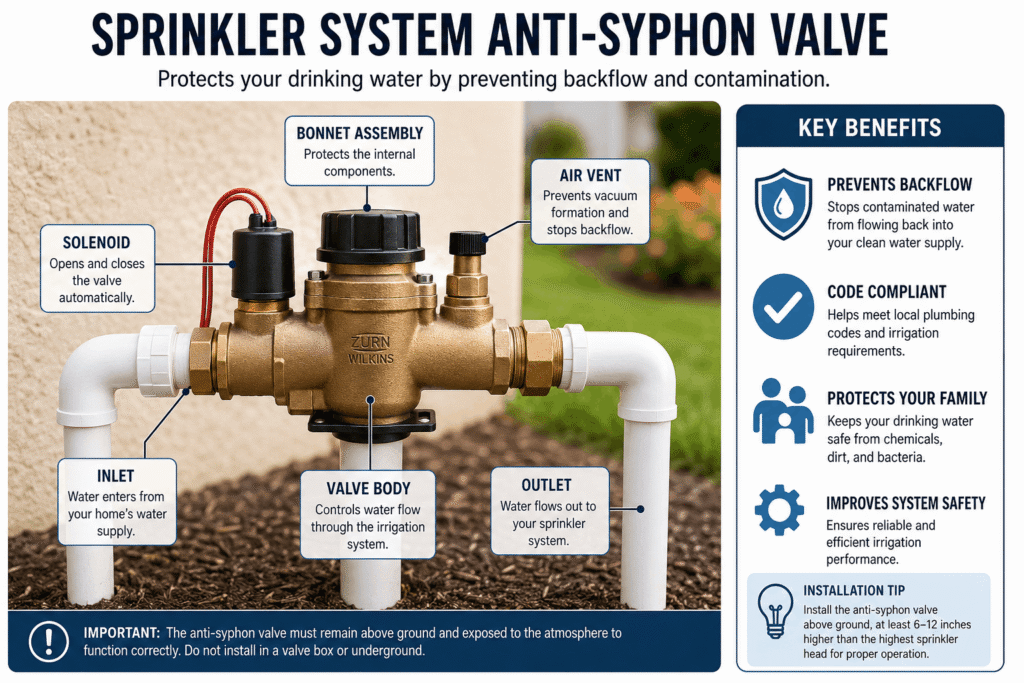
Main Components of the Valve
Knowing the parts helps you understand how to troubleshoot and maintain it later on.
- Valve body – Controls water flow through the system; typically made from brass, PVC, or heavy-duty plastic.
- Air vent – Opens automatically during a pressure drop to break the vacuum and stop backflow.
- Bonnet assembly – Covers and protects the internal components from dirt and damage.
- Solenoid – Found on electric valves; opens and closes the valve automatically based on signals from your irrigation controller.
- Spring and diaphragm – Regulate internal pressure and control how the valve opens and closes.
Types of Anti-Syphon Valves
Manual Valves
Operated by hand with a simple handle or knob. Best suited for small gardens, basic setups, and budget-conscious installations.
Electric Valves
Connect directly to irrigation timers and smart controllers, making them ideal for automated systems, larger lawns, and smart irrigation setups.
Brass Valves
Extremely durable and weather-resistant, with a longer lifespan and better pressure handling than plastic alternatives. Good choice for harsher climates.
Plastic Valves
Lightweight, affordable, and easy to install — a solid option for standard residential use where extreme durability isn’t a priority.
How to Install a Sprinkler System Anti-Syphon Valve
Tools needed: pipe cutter, PVC cement, Teflon tape, adjustable wrench, screwdriver, and measuring tape.
- Shut off the water supply. Always turn off the main line before starting any work.
- Choose the right location. The valve needs to sit above ground and higher than the tallest sprinkler head in the system.
- Cut the pipe. Measure carefully and cut the irrigation line where the valve will be installed.
- Connect the valve. Attach it using threaded fittings or PVC connections, depending on your setup.
- Seal the connections. Wrap threaded joints with Teflon tape to prevent leaks.
- Test the system. Turn the water back on slowly and check for leaks or unusual pressure changes.
Best Placement Practices
- Install above ground only — the air vent needs open exposure to function correctly; never bury the valve.
- Position it higher than the sprinkler heads — most codes require at least 6–12 inches of clearance above the highest head.
- Protect it from weather — in colder regions, use an insulated cover to prevent freeze damage.
- Keep it accessible — place it somewhere you can easily inspect and service later.
Common Problems and How to Fix Them
Leaking from the top is usually caused by a worn diaphragm, a cracked bonnet, or dirt build-up inside the valve.
Low water pressure — often the result of a clogged valve, trapped debris, or incorrect installation.
The valve won’t turn on (electric models) — check for a faulty solenoid, damaged wiring, or a controller malfunction.
Constant water flow — typically caused by a stuck diaphragm or a damaged internal seal.
Whistling or vibrating noises usually signal a pressure imbalance or trapped debris inside the line.
Troubleshooting Steps
- Shut off the water and clean out debris from the air vent, diaphragm, and internal chamber.
- Test the solenoid’s electrical connections with a multimeter if you have an electric valve.
- Inspect the valve body for cracks caused by sun exposure, freezing, or physical impact.
- Check your home’s water pressure — incorrect pressure can prevent the valve from working properly.
Maintaining Your Anti-Syphon Valve
Routine care extends the valve’s lifespan and keeps your whole system running smoothly. Regular inspections should be part of your broader routine for how to maintain a sprinkler system.
- Inspect the valve periodically for leaks, cracks, corrosion, or loose fittings.
- Clean out dirt and mineral buildup every few months.
- Before winter, shut off the water supply, drain the irrigation lines, and protect the valve from freezing.
- Replace diaphragms and seals once they show signs of wear.
Best Anti-Syphon Valve Brands
- Rain Bird – Known for durable residential irrigation products and dependable electric valves.
- Orbit – A budget-friendly option that’s beginner-friendly to install.
- Hunter – Offers professional-grade valves built for long-term durability.
- Toro – Trusted across both residential and commercial irrigation systems.
Useful resources: Rain Bird Official Website, Hunter Industries, Orbit Irrigation
How to Choose the Right Valve
- Match the size to your pipe. Common residential sizes are 3/4 inch and 1 inch.
- Check the pressure rating. Make sure it’s compatible with your home’s water pressure.
- Compare materials. Brass offers better durability for harsh climates; plastic is cheaper and easier for DIY installs.
- Consider smart compatibility. If you’re using a smart irrigation controller, go with an electric valve.
Anti-Syphon Valve vs. Backflow Preventer
These two terms are often confused, but they’re not quite the same thing.
An anti-syphon valve prevents backflow through atmospheric venting, is common in residential systems, and is always installed above ground. A backflow preventer is a broader category that includes devices like pressure vacuum breakers and reduced pressure zone (RPZ) valves and is more commonly required in commercial systems.
For most residential sprinkler systems, an anti-syphon valve provides reliable, affordable protection. Commercial properties, on the other hand, often need more advanced backflow prevention devices to meet code.
Cost of Replacing an Anti-Syphon Valve
| Valve Type | Average Cost |
|---|---|
| Plastic manual valve | $15–$40 |
| Electric valve | $30–$80 |
| Brass valve | $70–$150 |
Professional installation typically adds $100–$300 in labour costs, plus additional charges if pipe repairs are needed. Homeowners comfortable with basic plumbing can save on labour by installing the valve themselves.
Conclusion
A sprinkler system anti-syphon valve might be small, but it plays a critical role in protecting your household’s drinking water and keeping your irrigation system running safely. Whether you’re installing a new system or replacing a worn-out valve, choosing the right one helps you avoid contamination risks and stay compliant with local plumbing codes.
Regular maintenance, correct installation, and seasonal inspections will keep your valve working reliably for years. If you ever notice leaks, pressure loss, or unusual water flow, inspect the valve right away before the problem spreads to the rest of your system.
FAQ
What does a sprinkler system anti-syphon valve do? It prevents contaminated water from flowing backward into your clean household water supply during pressure drops.
Can an anti-syphon valve be installed underground? No. It must remain above ground since the air vent needs exposure to the atmosphere to work correctly.
Why is my anti-syphon valve leaking? Leaks are usually caused by a worn diaphragm, cracked components, debris buildup, or loose fittings.
How lobuild-up,up, anti-syphon valve last? Most quality valves last 5–15 years, depending on water quality, climate, and how well they’re maintained.
Is an anti-syphon valve required by law? Many local plumbing codes require anti-syphon valves or other backflow prevention devices on residential irrigation systems.
Can I repair an anti-syphon valve instead of replacing it? Yes — many common issues can be fixed by replacing the diaphragm, solenoid, or internal seals rather than the whole valve.
What’s the best anti-syphon valve brand? Rain Bird, Hunter, Orbit, and Toro are among the most trusted brands for residential irrigation valves.