
Introduction
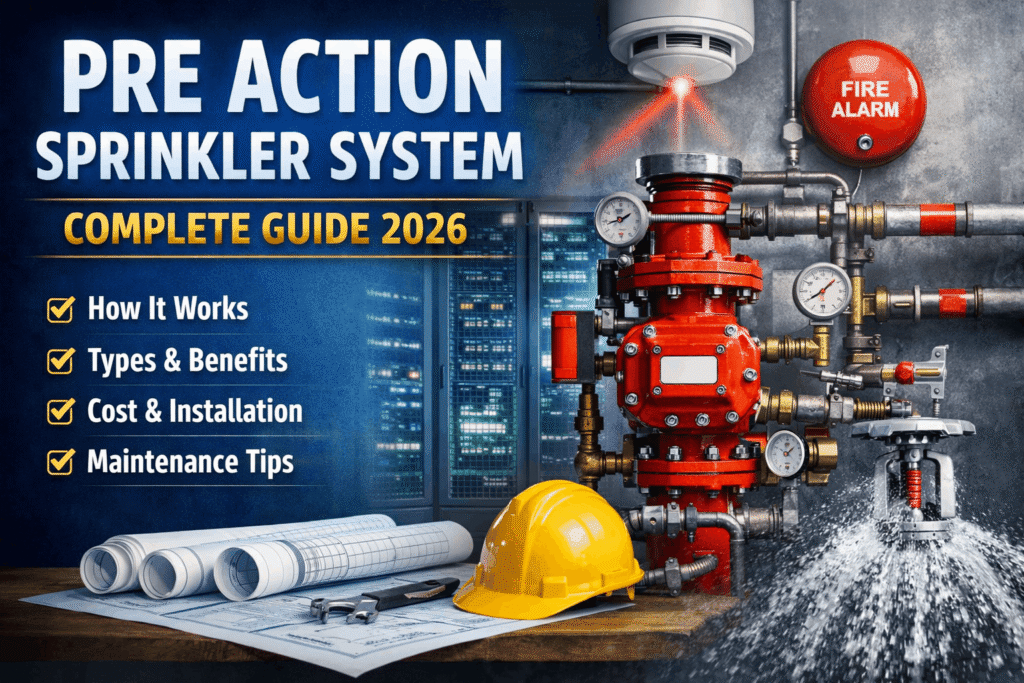
Fire protection is not just about stopping flames—it’s also about preventing unnecessary damage. In environments where sensitive equipment, valuable documents, or critical systems are present, a standard sprinkler system may not be enough. That’s where a pre-action sprinkler system comes in.
A pre-action sprinkler system is designed to provide maximum safety by adding an extra layer of control before water is released. This means fewer false alarms, reduced risk of accidental water discharge, and better protection for high-value spaces.
Whether you’re managing a data centre, a commercial building, or simply exploring advanced fire protection options, understanding how this system works is essential. In this complete guide, we’ll break everything down in simple terms—from working principles to cost, installation, and maintenance.
Table of Contents
What Is a Pre-Action Sprinkler System?
A pre-action sprinkler system is an advanced fire suppression system that requires two-step activation before releasing water. Unlike traditional wet pipe systems, the pipes in this system remain dry until a fire detection device is triggered.
This added layer of protection makes it ideal for environments where accidental water damage could be costly.
Key Characteristics:
- Pipes are filled with air or nitrogen.
- Requires signal from fire detection system
- Water enters pipes only after activation.
- Sprinklers release water only when heat is detected.
Simple Explanation:
Think of a pre-action sprinkler system as a “double-check” system. It won’t release water unless there is strong evidence of a fire, reducing unnecessary damage.
How Does a Pre-Action Sprinkler System Work?
The working process of a pre-action sprinkler system is straightforward when broken into steps.
Step-by-Step Process:
- Fire Detection Activation
Smoke or heat detectors identify a potential fire. - Control Panel Sends Signal
The system sends a signal to open the pre-action valve. - Water Fills the Pipes
Pipes that were previously dry now fill with water. - Sprinkler Head Activation
Individual sprinkler heads open when exposed to heat. - Water Discharge
Water is released only in the affected area.
Important Note:
A pre-action sprinkler system does not release water immediately after detection. This delay helps avoid accidental discharge.
Proper system setup is essential. Learn more in our guide on how to install a sprinkler system for step-by-step insights.
Types of Pre-Action Sprinkler Systems
There are three main types of pre-action sprinkler systems, each designed for specific needs.
Choosing the right type depends on your needs. You can also compare it with how many sprinkler heads per zone to optimize system performance.
Single-Interlock System
- Requires one trigger (fire detection system)
- Pipes fill with water after detection
- Faster response compared to other types
Best for:
- Offices
- Commercial buildings
Double-Interlock System
- Requires two triggers:
- Detection system activation
- Sprinkler head activation
Best for:
- Data centres
- Museums
- Server rooms
Advantage:
- Maximum protection against accidental discharge
Non-Interlock System
- Water flows when either condition is triggered
- Faster but less secure
Best for:
- Areas needing quick-fire response
Pre Action vs Wet Pipe vs Dry Pipe Systems
Choosing the right system depends on your needs. Here’s a comparison:
| Feature | Pre Action | Wet Pipe | Dry Pipe |
|---|---|---|---|
| Water in Pipes | No | Yes | No |
| Risk of Damage | Very Low | High | Medium |
| Activation Speed | Moderate | Fast | Slow |
| Complexity | High | Low | Medium |
| Cost | High | Low | Medium |
Key Insight:
A pre-action sprinkler system is the best choice when protecting sensitive equipment is a priority.
Where Are Pre Action Sprinkler Systems Used?
A pre-action sprinkler system is commonly used in environments where both fire protection and damage prevention are critical.
Common Applications:
- Data centres
- Server rooms
- Museums and galleries
- Libraries
- Hospitals
- Cold storage facilities
- Telecommunication hubs
These places cannot afford accidental water discharge, making this system ideal.
Benefits of Pre Action Sprinkler Systems
There are several reasons why many industries prefer a pre-action sprinkler system.
Key Benefits:
- Prevents accidental water damage
- Provides double-layer fire protection
- Reduces false alarms
- Protects sensitive equipment
- Targets fire at its source
- Improves overall safety control
Expert Tip:
If your business relies on expensive electronics or critical data, this system offers unmatched protection.
Disadvantages of Pre-action Systems
Despite its benefits, a pre-action sprinkler system has some limitations.
Drawbacks:
- Higher installation cost
- Complex system design
- Requires skilled professionals
- Regular maintenance needed
- Slight delay in response time
Practical Advice:
The cost and complexity are justified in high-risk environments.
Cost of Pre-Action Sprinkler System (2026)
The cost of installing a pre-action sprinkler system can vary depending on multiple factors.
Average Cost Range:
- $5 to $12 per square foot
- Small systems: $10,000 – $25,000
- Large buildings: $40,000+
Factors Affecting Cost:
- Building size
- Type of system (single vs double interlock)
- Detection technology
- Labour costs
- Location regulations
Cost Comparison:
- More expensive than wet pipe systems
- Comparable to high-end dry pipe systems
Installation Process (Step-by-Step)
Installing a pre-action sprinkler system requires careful planning and professional expertise.
Step-by-Step Installation:
- Site Assessment
- Analyse building layout and fire risks
- System Design
- Plan piping, valves, and detection systems
- Install Detection Devices
- Place smoke and heat detectors
- Pipe Installation
- Set up dry piping network
- Valve Installation
- Install pre-action control valves
- System Testing
- Ensure proper functionality
- Final Approval
- Check compliance with fire safety codes
Important:
Always hire certified fire protection professionals for installation. All installations should follow official safety standards like those from the National Fire Protection Association (NFPA 13 guidelines for sprinkler systems).
Maintenance and Inspection Tips
Regular maintenance is essential for keeping a pre-action sprinkler system reliable.
Maintenance Tips:
- Inspect system monthly for leaks or damage
- Test detection systems regularly
- Check valves and pressure levels
- Schedule professional inspections annually
- Keep records of all tests and maintenance
Common Issues to Watch:
- Faulty detectors
- Valve malfunctions
- Pipe corrosion
Pro Tip:
Preventive maintenance can save thousands in repair costs.
Regular inspection should follow fire safety recommendations from the Occupational Safety and Health Administration (OSHA).
Conclusion
A pre-action sprinkler system is one of the most advanced and reliable fire protection solutions available today. It offers a perfect balance between safety and control by reducing the risk of accidental water damage while ensuring effective fire suppression.
Although it comes with a higher cost and requires professional installation, the long-term benefits make it a smart investment—especially for environments with sensitive equipment or valuable assets.
If you’re looking for a fire protection system that delivers maximum reliability, safety, and precision, a pre-action sprinkler system is the ideal choice.
Frequently Asked Questions (FAQs)
1. What triggers a pre-action sprinkler system?
A pre-action sprinkler system is triggered by fire detection devices like smoke or heat detectors, followed by sprinkler activation.
2. Can a pre-action sprinkler system activate accidentally?
No, it requires multiple conditions, making accidental activation very unlikely.
3. Is it better than a wet pipe system?
Yes, especially in environments where water damage must be avoided.
4. How often should it be inspected?
It should be inspected monthly and professionally tested at least once a year.
5. Where is it mostly used?
Commonly used in data centres, museums, and server rooms.
6. What is the lifespan of the system?
With proper maintenance, it can last 20–30 years or more.
7. Is it suitable for residential use?
Generally, a pre-action sprinkler system is not suitable for homes due to cost and complexity.