
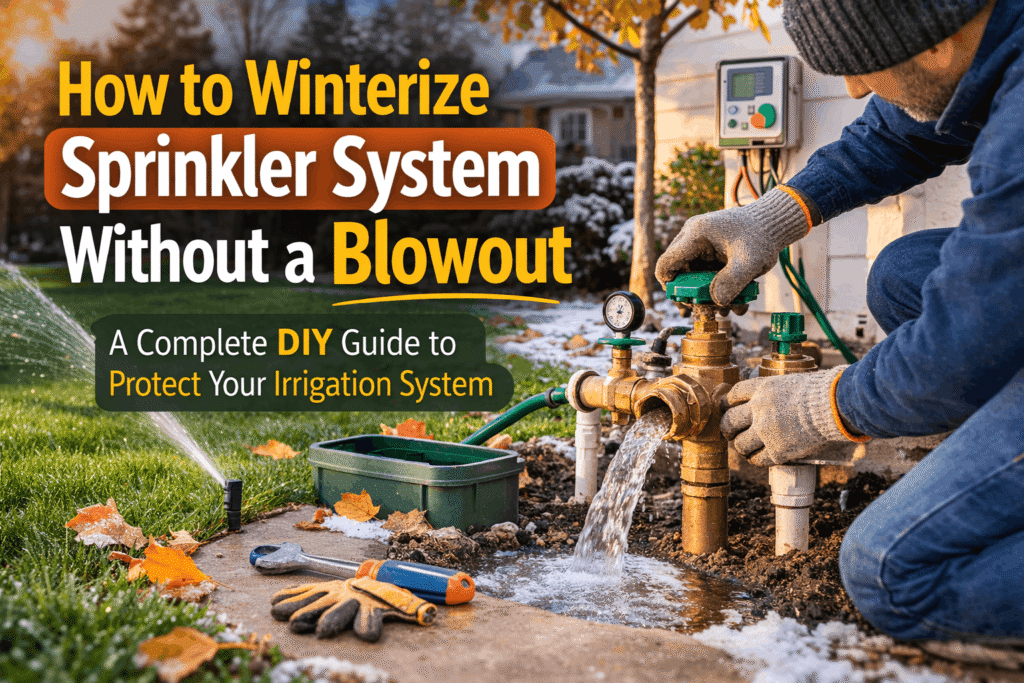
Introduction
How to winterize sprinkler system without blowout is an important process for homeowners who want to protect their irrigation system during winter.
If you are new to irrigation, learning how to use sprinkler irrigation system correctly can help you maintain healthy plants and avoid water waste. live in a cold climate, winter can cause serious damage to your irrigation system. When temperatures drop below freezing, the water inside sprinkler pipes can freeze, expand, and crack the pipes. That is why homeowners often investigate how to protect their irrigation system before winter arrives.
Most professionals recommend using compressed air to blow out the system. However, not everyone owns an air compressor or wants to hire a professional service. The good news is that you can still protect your system if you know how to winterise a sprinkler system without a blowout.
Table of Contents
Complete Guide to How to Winterise Sprinkler System Without Blowout
Preparing your irrigation system for winter does not always require expensive equipment. If your sprinkler system was designed with drainage in mind, you can easily winterise it without compressed air.
Understanding how to winterise a sprinkler system without a blowout helps homeowners prevent pipe damage, save money, and extend the life of their irrigation system.
What is How to Winterise a Sprinkler System Without a Blowout?
How to winterise a sprinkler system without a blowout is a process of preparing your irrigation system for freezing weather without using an air compressor.
Instead of blowing compressed air through the pipes, this method removes water using manual drainage or automatic drain valves.
When water is drained properly, there is nothing left inside the pipes to freeze. This protects the system from winter damage.
This method works best for:
- Home sprinkler systems with manual drain valves
- Systems with automatic drain valves
- Irrigation setups installed on sloped ground
- Areas with mild to moderate winter temperatures
However, systems installed in extremely cold regions may still require compressed air blowout.
How to Winterise a Sprinkler System Without Blowout Works
To understand how to winterise a sprinkler system without a blowout, it helps to know how water behaves in pipes during winter.
When temperatures drop below 32°F (0°C):
- Water freezes inside irrigation pipes
- Frozen water expands
- Pressure builds inside pipes
- Pipes or fittings may crack or burst.
The winterisation process works by removing water from the entire system.
The process typically includes:
- Turning off the water supply
- Opening drain valves
- Allowing water to drain naturally
- Removing remaining water from sprinkler heads
- Protecting the backflow preventer
When done correctly, this method safely prepares the system for winter. The USDA provides research-based advice on irrigation water management practices for protecting irrigation systems.
https://www.usda.gov
Benefits of How to Winterise a Sprinkler System Without Blowout

There are several advantages to learning how to winterise a sprinkler system without a blowout.
1. Saves Money
Hiring a professional blowout service can cost $50–$150 per season. DIY winterisation is free.
2. No Air Compressor Needed
Many homeowners do not own large air compressors required for sprinkler blowouts.
3. Safe for Older Systems
Too much air pressure can damage pipes or sprinkler heads. Draining avoids this risk.
4. Easy DIY Maintenance
Most homeowners can complete the process in 20–30 minutes.
5. Prevents Expensive Repairs
Proper winterisation protects:
- Pipes
- Valves
- Sprinkler heads
- Backflow devices
Replacing these parts can cost hundreds of dollars.
Types of How to Winterise a Sprinkler System Without Blowout
There are three main drainage methods used when learning how to winterise a sprinkler system without a blowout.
1. Manual Drain Method
This method requires manual drain valves installed at the lowest points of the irrigation system.
Steps include:
- Turning off the water supply
- Opening the drain valves
- Letting gravity remove the water
This is the most common method for DIY winterisation.
2. Automatic Drain Method
Some systems include automatic drain valves that open when water pressure drops.
When the system shuts off:
- Water pressure decreases
- Drain valves automatically open
- Water drains from pipes
This method is simple and requires very little maintenance.
3. Gravity Drain Method
Some sprinkler systems are installed on sloped landscapes.
Gravity naturally drains water from pipes when the water supply is turned off.
However, this method may not remove all water.
Step-by-Step Guide to Install or Use How to Winterise Sprinkler System Without Blowout
Follow these simple steps to safely perform how to winterise a sprinkler system without a blowout.
Step 1: Turn Off the Main Water Supply
Locate the irrigation shut-off valve and turn it off completely.
This prevents new water from entering the system.
Step 2: Shut Down the Irrigation Controller
Turn off the sprinkler controller or set it to rain mode.
This stops automatic watering during winter.
Step 3: Open Drain Valves
Find the manual drain valves at the lowest points in your system.
Open them slowly to release trapped water.
Allow water to drain completely.
Step 4: Open Sprinkler Zone Valves
Manually open each zone valve to allow water to escape from the pipes.
Leave them open for several minutes.
Step 5: Drain the Backflow Preventer
The backflow device is sensitive to freezing.
Open the test cocks and drain any remaining water.
Step 6: Remove Excess Water from Sprinkler Heads
Lift sprinkler heads slightly and shake out any remaining water.
This prevents freezing damage.
Step 7: Insulate Above-Ground Components
Protect exposed components with:
- Foam insulation
- Insulated covers
- Weatherproof boxes
Important parts to protect:
- Backflow preventer
- Valves
- Exposed pipes
Common Problems and Solutions
Even when learning how to winterise a sprinkler system without a blowout, homeowners may face a few problems.
Problem: Water Still Inside Pipes
Solution
Open all zone valves and drains again to release trapped water.
Problem: Frozen Backflow Preventer
Solution
Insulate the device with foam insulation and protective covers.
Problem: Sprinkler Heads Crack in Winter
Solution
Ensure water is completely drained from each sprinkler head.
Problem: Drain Valves Not Working
Solution
Clean debris or replace damaged drain valves.
Expert Tips to Improve Performance
Professionals recommend these tips when performing how to winterise a sprinkler system without a blowout.
1. Winterise Before the First Freeze
The best time is early fall, before temperatures drop below freezing.
2. Check Your System Design
Some systems require compressed air blowout depending on pipe layout.
3. Install Drain Valves
If your system lacks drainage points, installing manual drain valves can make winterisation easier.
4. Protect the Backflow Preventer
This is the most vulnerable part of the system.
Proper insulation prevents costly damage.
5. Inspect the System in Spring
Before restarting irrigation:
- Check pipes
- Inspect valves
- Look for leaks
Early detection prevents water waste.
Comparison with Alternative Methods
There are two common ways to winterise sprinkler systems.
| Method | Equipment Needed | Cost | Effectiveness |
|---|---|---|---|
| Drain Method (No Blowout) | Basic tools | Free | Good for mild climates |
| Air Compressor Blowout | Air compressor | Medium | Best for cold climates |
Key Difference
Learning how to winterize sprinkler system without blowout is ideal for homeowners who want a simple DIY solution.
However, regions with extremely cold winters may require compressed air removal.
Conclusion
Learning how to winterise a sprinkler system without a blowout is an easy and cost-effective way to protect your irrigation system during winter.
By shutting off the water supply, draining the pipes, and protecting exposed components, homeowners can prevent freezing damage and expensive repairs.
The key to success is performing the process before the first freeze and ensuring all water is removed from the system.
With the simple steps explained in this guide, you can confidently prepare your irrigation system for winter without needing expensive equipment or professional help.
Taking a few minutes now can save you hundreds of dollars in repairs when spring arrives. If you want a more water-efficient option, you may also consider installing a garden drip irrigation system for your plant
FAQ
1. Can you winterise a sprinkler system without a blowout?
Yes, you can winterise a sprinkler system without a blowout by draining water using manual or automatic drain valves.
2. What happens if I don’t winterise my sprinkler system?
Water left in pipes can freeze, expand, and cause pipes or valves to crack.
3. Is blowout necessary for sprinkler systems?
Blowout is recommended in extremely cold climates, but many systems can be safely drained without it.
4. When should I winterise my sprinkler system?
You should winterise your system before the first hard freeze, usually in early fall.
6. Do automatic drain valves remove all water?
5. How long does it take to winterise a sprinkler system?
Most homeowners can complete the process in 20–30 minutes.
They remove most water, but some small amounts may remain in low spots.
7. Can frozen sprinkler pipes be repaired?
Yes, but repairs may require replacing damaged pipes, valves, or sprinkler heads.