
Introduction
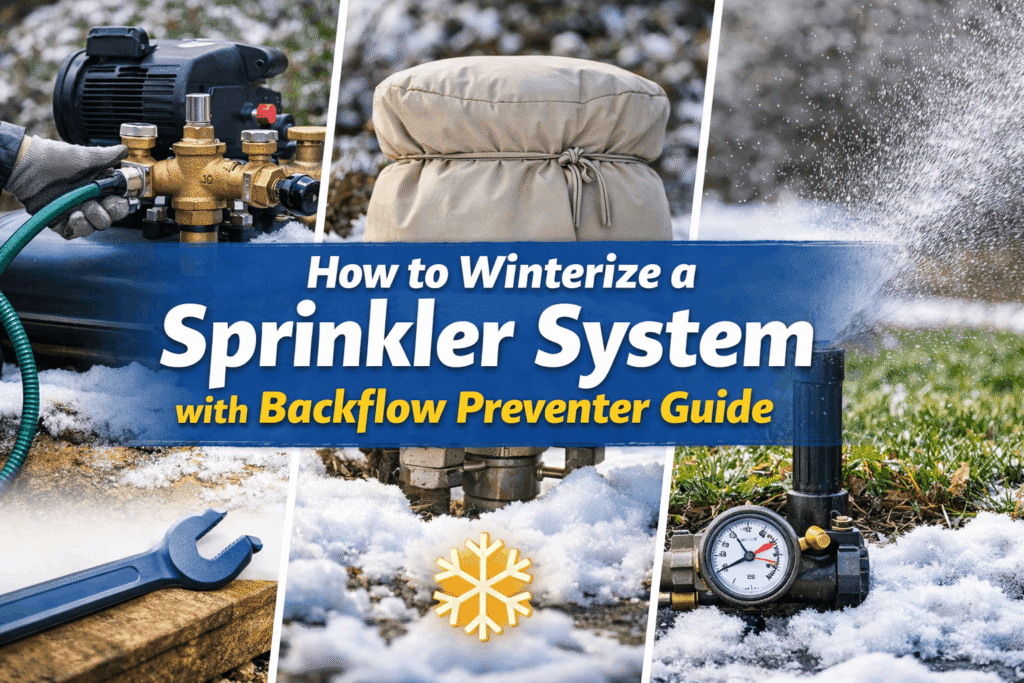
How to winterize a sprinkler system with backflow preventer is an essential maintenance task for homeowners living in cold climates. When winter temperatures drop below freezing, water left inside sprinkler pipes can expand and cause serious damage to your irrigation system. The United States Environmental Protection Agency (EPA) WaterSense program provides reliable information about water-efficient irrigation systems.
Learning how to winterise a sprinkler system with a backflow preventer is one of the most effective ways to protect your irrigation setup. The backflow preventer is a critical component that stops contaminated water from flowing back into your home’s clean water supply. Because it holds water inside, it is especially vulnerable to freezing during winter.
Proper winterisation removes water from the pipes and protects the backflow device from damage. This simple maintenance task can save hundreds of dollars in repairs and extend the life of your sprinkler system.
If you are new to irrigation, it helps to first understand how to use sprinkler irrigation system before preparing it for winter.
Table of Contents
What is How to Winterize a Sprinkler System with Backflow Preventer
Winterising a sprinkler system is a seasonal maintenance process that removes water from irrigation pipes to prevent freezing damage. When a system includes a backflow preventer, the winterisation process requires a few extra steps to protect that component.
Understanding the correct method ensures your irrigation system remains safe and ready for use when spring arrives.
What is How to Winterise a Sprinkler System with a Backflow Preventer?
Before learning how to winterise a sprinkler system with a backflow preventer, it is important to understand what this process means.
Winterising a sprinkler system involves shutting off the water supply and removing water from irrigation lines before temperatures drop below freezing.
A backflow preventer is a device installed in irrigation systems to stop contaminated water from flowing backward into the household water supply.
When winterising a sprinkler system that includes this device, special care must be taken to drain or blow out the water inside it.
Key components involved include:
- Main water supply valve
- Irrigation control valves
- Sprinkler heads
- Backflow preventer
- Irrigation pipes
If water remains inside any of these parts, it can freeze and cause cracks or bursts.
How to Winterise a Sprinkler System with a Backflow Preventer Works
The process of how to winterise a sprinkler system with a backflow preventer works by removing trapped water from the irrigation lines.
When water freezes, it expands. This expansion creates pressure inside pipes and valves. Over time, this pressure can break fittings and damage components.
Winterising prevents this by:
- Turning off the main water supply to the irrigation system.
- Draining water from pipes and valves.
- Removing water from the backflow preventer.
- Using compressed air (in some cases) to blow out remaining water.
There are three main winterisation methods used by professionals:
- Manual drain method
- Automatic drain method
- Blowout method using compressed air
The blowout method is the most effective for systems with backflow preventers because it clears even small amounts of water trapped inside pipes.
If your irrigation setup is new, you may want to learn how to install a sprinkler irrigation system correctly.
Benefits of How to Winterize a Sprinkler System with Backflow Preventer
Understanding how to winterise a sprinkler system with a backflow preventer provides several important benefits for homeowners.
1. Prevents Frozen Pipes
Removing water prevents pipe expansion caused by freezing temperatures.
2. Protects the Backflow Device
Backflow preventers are expensive components. Winterising helps avoid costly replacements.
3. Saves Repair Costs
Fixing cracked irrigation pipes can be expensive. Proper winterisation prevents this damage.
4. Extends System Lifespan
Seasonal maintenance keeps your irrigation system working efficiently for many years.
5. Ensures Safe Water Supply
A properly maintained backflow preventer protects drinking water from contamination.
Types of How to Winterise a Sprinkler System with a Backflow Preventer
There are several methods used when learning how to winterise a sprinkler system with a backflow preventer.
1. Manual Drain Method
This method uses drain valves to release water from pipes.
Steps include:
- Turning off the main water supply
- Opening manual drain valves
- Allowing water to flow out of pipes
This method works well in mild climates.
2. Automatic Drain Method
Some irrigation systems have automatic drain valves installed.
When the water pressure drops, these valves automatically release water from the pipes.
This method requires minimal effort but may not remove all water from the system.
3. Blowout Method
The blowout method uses an air compressor to push water out of irrigation lines.
It is the most reliable method when winterising systems with backflow preventers.
Steps include:
- Connecting an air compressor to the irrigation system
- Blowing compressed air through each zone
- Removing remaining water from pipes and valves
Most professionals recommend this method.
Step-by-Step Guide to Install or Use How to Winterise a Sprinkler System with Backflow Preventer
Follow this detailed guide to understand how to winterise a sprinkler system with a backflow preventer properly.
Step 1: Turn Off the Water Supply
Locate the irrigation shut-off valve and turn it off.
This stops water from entering the sprinkler system.
Step 2: Shut Down the Irrigation Controller
Turn off the irrigation timer or set it to rain mode so the system does not activate during winter.
Step 3: Drain the Backflow Preventer
Open the test valves on the backflow preventer using a screwdriver.
This allows water trapped inside the device to drain out.
Step 4: Open Drain Valves
Open all manual drain valves in the irrigation system.
Let the water drain completely from the pipes.
Step 5: Use an Air Compressor (Blowout Method)
Connect an air compressor to the sprinkler system.
Blow compressed air through each irrigation zone.
Important tips:
- Use low pressure (around 40–50 PSI for residential systems)
- Run one zone at a time
- Stop when only mist comes from the sprinkler heads
Step 6: Leave Valves Partially Open
After draining, leave the backflow valves slightly open.
This prevents trapped water from freezing inside.
Step 7: Insulate the Backflow Preventer
Wrap the backflow preventer with insulation or a protective cover.
This protects it from extreme cold temperatures.
Common Problems When Learning How to Winterize a Sprinkler System with Backflow Preventer
Even when learning how to winterise a sprinkler system with a backflow preventer, some issues can occur.
Problem 1: Water Still Inside Pipes
Solution:
Use the compressed air blowout method to remove trapped water.
Problem 2: Backflow Preventer Freezing
Solution:
- Drain test valves completely
- Add insulation covers
- Install protective boxes if necessary
Problem 3: Sprinkler Heads Crack in Winter
Solution:
Ensure each irrigation zone is properly blown out using compressed air.
Problem 4: Air Pressure Too High
High pressure can damage sprinkler components.
Solution:
Always keep air pressure below recommended levels.
Expert Tips to Improve Performance
Here are professional tips for successfully performing how to winterise a sprinkler system with a backflow preventer. The Irrigation Association offers professional resources and best practices for irrigation systems.
✔ Winterise before the first freeze.
✔ Use a professional air compressor if possible.
✔ Always remove water from the backflow preventer.
✔ Insulate exposed irrigation pipes.
✔ Inspect valves and sprinkler heads before winterising.
✔ Schedule yearly maintenance for your irrigation system.
These simple tips can significantly improve system reliability.
Comparison with Alternative Methods
When considering how to winterise a sprinkler system with a backflow preventer, different winterisation methods can be used.
| Method | Effectiveness | Best For |
|---|---|---|
| Manual Drain | Moderate | Small systems |
| Automatic Drain | Basic | Mild climates |
| Blowout Method | Very High | Cold climates |
The blowout method is generally considered the most reliable option because it removes nearly all water from irrigation pipes.
Conclusion
Learning how to winterise a sprinkler system with a backflow preventer is essential for protecting your irrigation system during winter. When water freezes inside pipes or valves, it can cause expensive damage that requires major repairs.
By shutting off the water supply, draining pipes, clearing the backflow preventer, and using compressed air to remove remaining water, homeowners can safely prepare their sprinkler systems for cold weather.
Proper winterisation not only protects your irrigation equipment but also extends its lifespan and ensures smooth operation when spring arrives.
Make winterisation part of your annual maintenance routine, and your sprinkler system will remain efficient and reliable for many years.
FAQs
1. Why is it important to winterise a sprinkler system with a backflow preventer?
Winterising removes water from pipes and protects the backflow device from freezing damage.
2. When should I winterise my sprinkler system?
You should winterise before the first hard freeze, usually in late fall.
3. Can I winterise my sprinkler system without an air compressor?
Yes, but using an air compressor provides the most reliable way to remove trapped water.
4. What happens if I do not winterise my sprinkler system?
Water inside pipes can freeze and expand, causing pipes and valves to crack.
5. Should I remove the backflow preventer for winter?
In extremely cold climates, some homeowners remove the device and store it indoors.
6. How much air pressure should be used for a blowout?
Most residential systems require 40–50 PSI to safely remove water from irrigation pipes.
7. How long does sprinkler winterisation take?
Most residential sprinkler systems can be winterised in 30–60 minutes.