
1.Introduction
Learning how to use sprinkler irrigation system is essential for anyone looking to efficiently water their crops, garden, or lawn. This modern irrigation method helps distribute water evenly, saves time, conserves water, and promotes healthy plant growth. In this guide, we will walk you through the types, setup, best practices, and maintenance tips to ensure your sprinkler system works effectively and keeps your plants thriving.
Table of Contents
2.What is a sprinkler irrigation system?
A sprinkler irrigation system is a modern method of watering crops, lawns, or gardens by distributing water through a network of pipes and spraying it into the air using sprinkler heads. The water is released in the form of small droplets, just like natural rainfall, which helps in evenly irrigating the soil surface.
This irrigation system works by pumping water from a source such as a well, canal, tank, or reservoir through main pipes and sub-pipes connected to sprinklers. The sprinklers then rotate and spray water over the land at a controlled pressure, ensuring uniform water distribution to plants.
Understanding how to use a sprinkler irrigation system is important for farmers and gardeners who want to improve water efficiency and crop growth. When used correctly, this system prevents water wastage, reduces soil erosion, and provides the right amount of moisture needed for healthy plant development.
3.Types of Sprinkler Irrigation Systems
There are different types of sprinkler irrigation systems designed to meet various farming and gardening needs. Understanding these types is important when learning how to use a sprinkler irrigation system effectively for better water management and crop growth.
1. Fixed Sprinkler Irrigation System
In a fixed sprinkler system, the sprinklers are installed at specific locations and remain stationary during irrigation. Water is sprayed over the surrounding area without moving the sprinkler heads. This type of system is ideal for small farms, lawns, and gardens where regular watering is required.
2. Portable Sprinkler Irrigation System
A portable sprinkler system can be easily moved from one place to another. The pipes and sprinkler heads are lightweight and detachable, allowing farmers to irrigate different fields using the same setup. This system is cost-effective and suitable for areas where irrigation needs change frequently.
3. Rotary Sprinkler Irrigation System
Rotary sprinklers rotate while spraying water, covering a larger area compared to fixed sprinklers. They distribute water more evenly and are commonly used in agricultural fields and large lawns. Knowing how to use a sprinkler irrigation system with rotary heads helps in achieving uniform irrigation and minimising dry spots.
4. Travelling Sprinkler Irrigation System
In this system, the sprinkler moves automatically across the field along a set path. It irrigates large areas without manual intervention, making it suitable for large-scale farming. Travelling sprinklers are useful for saving labour and ensuring consistent water distribution over wide fields.
4.How to Use a Sprinkler Irrigation System
If you want to ensure proper watering of your crops, lawn, or garden, it is essential to understand how to turn on a hydro sprinkler system .correctly. Following the right steps will help you achieve uniform water distribution, save water, and improve plant growth.
Step 1: Select the Right Sprinkler System
Choose a sprinkler irrigation system based on your land size, crop type, and water availability. Fixed systems are suitable for small areas, while rotary or travelling systems are better for large fields.
Step 2: Choose the Correct Location
Place the sprinkler system in a position where it can cover the maximum area without any obstruction. Make sure the sprinklers are installed on level ground for even water distribution.
Step 3: Connect the Water Source
Connect the system to a reliable water source such as a well, tank, or canal. Ensure that the pump provides sufficient pressure to operate the sprinklers efficiently.
Step 4: Install the Main Pipeline
Lay down the main pipes and sub-pipes across the field according to the required spacing. Proper pipe installation is important for maintaining smooth water flow throughout the system.
Step 5: Attach Sprinkler Heads Properly
Fix the sprinkler heads securely to the pipes. Make sure they are upright and positioned at the correct height to distribute water evenly.
Step 6: Adjust Water Pressure
Maintain the recommended water pressure for the sprinkler system. Too much pressure can damage the equipment, while low pressure may result in uneven irrigation.
Step 7: Set the Sprinkler Angle and Rotation
Adjust the spray angle and rotation of the sprinkler heads according to the size and shape of the area to be irrigated.
Step 8: Turn on the System
Start the system and allow the sprinklers to spray water across the field. Observe the water distribution to ensure all areas are being covered properly.
Step 9: Monitor Water Distribution
Check for dry spots or overwatered areas during irrigation. Make necessary adjustments to improve uniform coverage.
Step 10: Turn Off After Required Irrigation Time
Stop the system once the required amount of water has been applied. Over-irrigation can lead to water wastage and affect plant health.
5.Best Practices for Using a Sprinkler Irrigation System
To get the best results from your irrigation setup, it is important to follow some recommended practices on how to use a sprinkler irrigation system efficiently. Proper usage not only saves water but also improves plant health and crop yield.
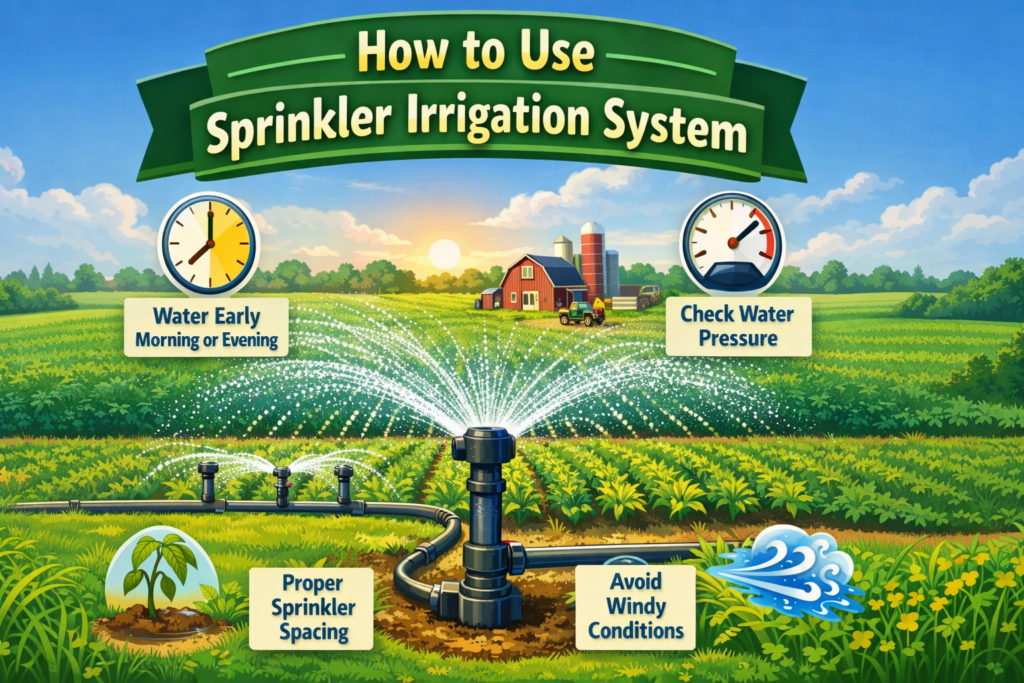
Irrigate at the Right Time
The best time to run a sprinkler irrigation system is early in the morning or late in the evening. This helps reduce water loss due to evaporation and allows the soil to absorb moisture effectively.
Maintain Proper Water Pressure
Always ensure that the system is operating at the correct water pressure. Low pressure can cause uneven watering, while high pressure may lead to water wastage and damage to sprinkler heads.
Ensure Proper Sprinkler Spacing
Sprinklers should be placed at an appropriate distance from each other to achieve uniform water distribution. Incorrect spacing can result in dry patches or overwatered areas.
Avoid Irrigation During Windy Conditions
Using the system during strong winds can cause uneven water distribution, as water droplets may drift away from the target area. This reduces irrigation efficiency.
Monitor Water Distribution Regularly
Check the field or garden during irrigation to make sure all areas are receiving enough water. Adjust the sprinkler angle or position if necessary.
Prevent Overwatering
Running the system for too long can lead to waterlogging and poor plant growth. Knowing how to use a sprinkler irrigation system correctly helps in applying the right amount of water at the right time.
6.Common Mistakes to Avoid
When learning how to use a sprinkler irrigation system, avoiding common mistakes is essential to ensure efficient watering and healthy plant growth. Incorrect use of the system can lead to water wastage, uneven irrigation, and poor crop performance.
Overwatering the Plants
Running the sprinkler system for too long can cause waterlogging, which may damage plant roots and reduce soil aeration. Always apply only the required amount of water.
Using Incorrect Water Pressure
Too much water pressure can damage sprinkler heads and pipes, while low pressure may result in uneven water distribution. Maintaining the right pressure is important for effective irrigation.
Improper Sprinkler Spacing
Placing sprinklers too far apart can create dry areas, while placing them too close may lead to overwatering. Proper spacing ensures uniform water coverage across the field or garden.
Irrigating During Windy Weather
Operating the system in strong winds can cause water to drift away from the target area. This results in uneven irrigation and unnecessary water loss.
Ignoring System Maintenance
Blocked or damaged sprinkler heads can affect water flow and distribution. Regular inspection and cleaning are necessary when understanding how to use a sprinkler irrigation system properly.
7.Maintenance Tips for Sprinkler Irrigation Systems
Regular maintenance is essential to keep your irrigation system working efficiently. Knowing how to use a sprinkler irrigation system also includes taking proper care of its components to ensure long-term performance and uniform water distribution.
Clean Sprinkler Heads Regularly
Dust, dirt, and debris can block sprinkler nozzles and affect water flow. Clean the sprinkler heads frequently to prevent clogging and maintain even water spray.
Check for Pipe Leaks
Inspect the pipes and joints for any leaks or cracks. Leaking pipes can reduce water pressure and lead to water wastage.
Monitor Water Pressure
Always ensure that the system is operating at the recommended pressure level. Incorrect pressure can damage the system and result in poor irrigation performance.
Inspect Sprinkler Alignment
Make sure that all sprinkler heads are properly aligned and positioned. Misaligned sprinklers may cause uneven watering and create dry spots in the field or garden.
Perform Seasonal Maintenance
Before starting irrigation in a new season, check all system components such as pumps, valves, and pipes. Replace any damaged parts to avoid system failure during operation.
8.Advantages of Using a Sprinkler Irrigation System
There are many benefits of using this modern irrigation method in agriculture, lawns, and gardens. Understanding how to use a sprinkler irrigation system properly can help you make the most of these advantages while improving water efficiency and plant growth.
Saves Water
Sprinkler irrigation systems distribute water evenly across the land, which helps reduce water wastage. This ensures that plants receive the required amount of moisture without excessive use of water.
Reduces Labour Work
Once installed, the system can irrigate large areas with minimal manual effort. This saves time and reduces the need for additional labour in watering crops or gardens.
Suitable for Uneven Land
Sprinkler irrigation systems can be used on uneven or sloped land where traditional irrigation methods may not work effectively.
Improves Crop Growth
Uniform water distribution helps maintain proper soil moisture levels, which supports healthy plant development and improves crop yield.
Prevents Soil Erosion
Since water is sprayed gently like rainfall, it reduces the chances of soil erosion that often occurs with surface irrigation methods.
9.Disadvantages of Sprinkler Irrigation System
While sprinkler irrigation systems offer many benefits, it’s important to understand their limitations when learning how to use sprinkler irrigation systems effectively. Being aware of these drawbacks helps in planning and managing irrigation more efficiently.
High Initial Installation Cost
Setting up a sprinkler irrigation system requires investment in pipes, pumps, valves, and sprinkler heads. The initial cost can be higher compared to traditional irrigation methods.
Affected by Wind
Sprinklers spray water into the air, so strong winds can cause water to drift away from the intended area. This reduces irrigation efficiency and may lead to uneven watering.
Requires Proper Pressure
The system depends on adequate water pressure to operate correctly. Insufficient or excessive pressure can affect water distribution and may damage components.
Not Suitable for All Crops
Some crops, especially those sensitive to wet leaves or shallow root systems, may not respond well to sprinkler irrigation. Understanding how to use a sprinkler irrigation system includes knowing which crops benefit most from this method.
10.Conclusion
A sprinkler irrigation system is an efficient and modern way to water crops, gardens, and lawns. Understanding how to use a sprinkler irrigation system correctly ensures uniform water distribution, conserves water, and promotes healthy plant growth.
By selecting the right type of system, installing it properly, following best practices, and performing regular maintenance, you can maximise the benefits while minimising disadvantages. Avoiding common mistakes like overwatering, improper spacing, and incorrect water pressure will further improve irrigation efficiency.
- When wrapping up the article, you can broaden the tip to overall home and garden care:
Using a sprinkler irrigation system helps your garden thrive. For keeping your indoor spaces equally spotless, explore vacuum and mop for reliable cleaning tools.
FAQs
1. How long should I run my sprinkler irrigation system?
The duration depends on soil type, crop needs, and sprinkler capacity. Typically, 20–40 minutes is sufficient for lawns and small gardens, while agricultural fields may require longer. Always monitor soil moisture to avoid overwatering.
2. What is the ideal water pressure for a sprinkler irrigation system?
Most sprinkler systems operate efficiently at a pressure between 25 and 40 PSI (pounds per square inch). Too low pressure results in uneven coverage, while too high pressure can damage sprinkler heads.
3. Can sprinkler irrigation be used for all crops?
Sprinkler irrigation works well for many crops, gardens, and lawns. However, some crops sensitive to wet leaves, like certain vegetables or fruits, may require alternative irrigation methods.
4. How often should I water using a sprinkler system?
Frequency depends on crop type, soil moisture, and climate. Generally, 2–3 times per week is suitable for lawns and gardens, while crops may need irrigation based on growth stage and weather conditions.
5. How can I prevent water wastage when using a sprinkler system?
Ensure proper sprinkler spacing, adjust water pressure, avoid watering during windy hours, and regularly check for leaks or blockages. Following these tips ensures efficient water use while learning how to use the sprinkler irrigation system effectively.