
Introduction
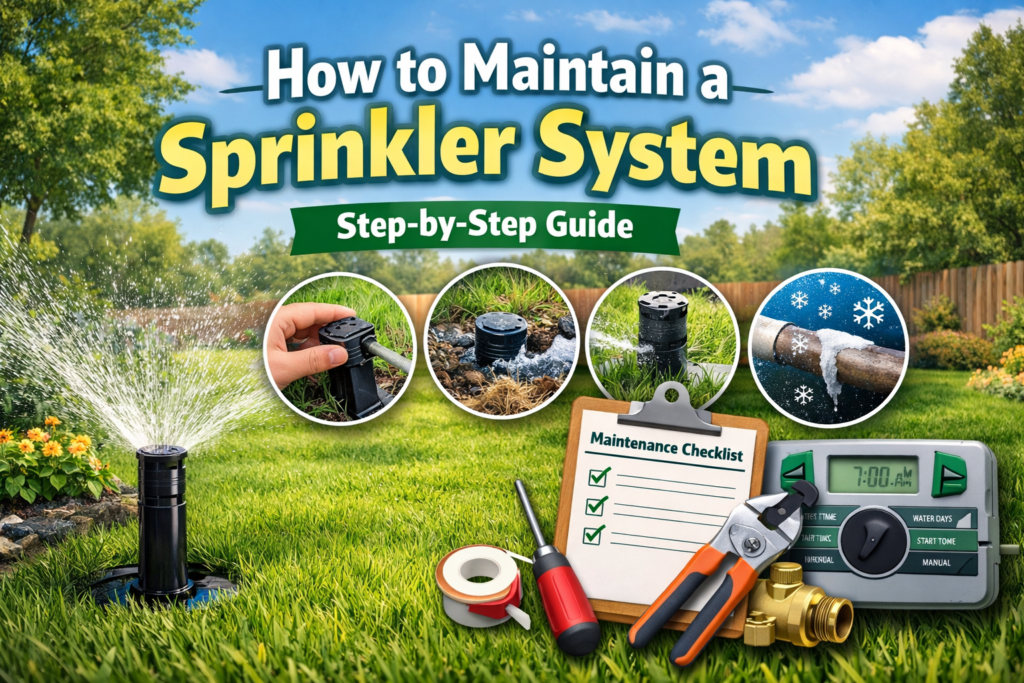
Learning how to maintain a sprinkler system is essential for every homeowner who wants a healthy, green lawn and an efficient irrigation setup. Regular maintenance prevents leaks, ensures even watering, reduces water waste, and extends the life of your sprinkler system. In this guide, we’ll walk you through simple steps, practical tips, and a complete checklist to keep your sprinkler system running smoothly all year round.
In this guide, we’ll walk you through simple steps… Learn more about how to install a sprinkler system before starting maintenance.
Table of Contents
Why Sprinkler System Maintenance Is Important
Understanding how to maintain a sprinkler system is essential if you want a healthy lawn, lower water bills, and a long-lasting irrigation setup. Regular maintenance prevents small issues from turning into expensive repairs and keeps your system working efficiently throughout the year.
1️⃣ Saves Water and Reduces Utility Bills
A poorly maintained sprinkler system can waste a large amount of water due to leaks, clogged nozzles, or incorrect spray patterns. When you know how to maintain a sprinkler system, you can quickly spot and fix these issues. This ensures water goes exactly where it’s needed—not onto sidewalks or driveways, helping you reduce water waste and monthly bills.
2️⃣ Prevents Costly Repairs
Small problems like cracked sprinkler heads or minor pipe leaks may seem harmless at first. However, if ignored, they can lead to major damage underground. Regular inspection and maintenance help you detect issues early and avoid expensive repairs or full system replacements.
3️⃣ Extends the Lifespan of Your System
A sprinkler system is a long-term investment. Without proper care, components such as valves, pipes, and controllers can wear out quickly. Learning how to maintain a sprinkler system ensures that all parts function properly, extending the overall lifespan of the system.
4️⃣ Keeps Your Lawn Healthy and Green
Uneven watering can cause dry patches in some areas and overwatering in others. Regular maintenance ensures balanced water distribution, which promotes deep root growth and a healthier lawn. A well-maintained system provides consistent watering, especially during hot seasons.
5️⃣ Improves System Efficiency
Proper maintenance keeps water pressure at the right level and ensures the timer settings match seasonal needs. When you understand how to maintain a sprinkler system, you improve its efficiency and performance year-round.
How to Maintain a Sprinkler System (Step-by-Step Guide)
If you want a healthy lawn and a long-lasting irrigation setup, learning how to maintain a sprinkler system is essential. Regular maintenance keeps your system efficient, prevents water waste, and reduces repair costs. Follow this simple step-by-step guide to keep everything working properly.
Step 1: Inspect Sprinkler Heads
Start by turning on the system and checking each sprinkler head.
- Look for clogged nozzles
- Check for broken or cracked heads
- Make sure the spray pattern is even.
- Adjust heads that are spraying sidewalks or walls.
Clean dirt and debris using water or a small brush. Replacing damaged heads quickly prevents uneven watering.
Step 2: Check for Leaks
Leaks can waste a large amount of water if not fixed early.
- Look for soggy spots in your lawn.
- Check valves and pipe connections
- Inspect for water pooling around sprinkler heads
If you notice a leak, repair or replace the damaged pipe or fitting immediately. This is a key part of how to maintain a sprinkler system properly.
Step 3: Test Water Pressure
Correct water pressure ensures even coverage.
- High pressure can cause misting and water waste.
- Low pressure may result in weak spray and dry patches.
If needed, install a pressure regulator or adjust the valve settings. Maintaining proper pressure improves efficiency and protects system components.
Step 4: Check the Controller and Timer
Your sprinkler controller manages watering schedules.
- Confirm the correct date and time
- Adjust watering duration based on season
- Replace backup batteries if required
In summer, you may need more frequent watering. In cooler months, reduce watering time. Adjusting the controller regularly is an important part of understanding how to maintain a sprinkler system year-round.
Step 5: Clean Filters and Flush the System
Over time, dirt and debris can block filters and nozzles.
- Remove and clean filters
- Flush the system by running it briefly.
- Ensure water flows freely from all heads
This step helps maintain strong and consistent water flow.
Regular maintenance of your sprinkler system is like caring for other home equipment. For more cleaning tips, visit Vacuum and Mop.
Step 6: Perform Seasonal Maintenance
Sprinkler systems require seasonal care.
Spring:
- Inspect for winter damage
- Test all zones
- Replace broken parts
Summer:
- Monitor performance
- Adjust spray patterns
- Watch for dry spots.
Winter:
- Drain water from pipes
- Shut off water supply
- Protect exposed components
Seasonal maintenance is one of the most important aspects of how to maintain a sprinkler system effectively.
How Often Should You Maintain a Sprinkler System?
Learning how to maintain a sprinkler system is essential for keeping your irrigation setup efficient and your lawn healthy. However, maintenance is not something you do just once. It requires regular attention throughout the year. Following a proper schedule will help you prevent water waste, avoid costly repairs, and extend the life of your system.
Below is a simple and practical maintenance timeline you can follow.
1️⃣ Perform Monthly Inspections
During the active watering season, you should check your sprinkler system at least once every month.
For your monthly inspection:
- Run each watering zone and observe the spray coverage.
- Make sure sprinkler heads rise and retract properly.
- Look for clogged nozzles or damaged heads.
- Check for water leaks, puddles, or unusually wet soil.
- Ensure water is not spraying sidewalks or walls
These routine checks usually take only a few minutes but play a major role in preventing bigger issues. Understanding how to maintain a sprinkler system means identifying small problems before they turn into expensive repairs.
2️⃣ Complete Seasonal Maintenance
In addition to monthly checks, you should perform more detailed maintenance three to four times per year, depending on your climate.
🌱 Spring (System Start-Up)
- Turn the water supply on slowly.
- Inspect pipes and valves for cracks
- Test each zone carefully.
- Update the watering schedule for warmer weather
☀️ Summer (High Usage Period)
- Monitor system performance regularly.
- Adjust sprinkler heads for proper coverage
- Watch for dry or overwatered patches
- Check that water pressure remains stable.
🍂 Fall (Transition Season)
- Reduce watering time as temperatures drop
- Inspect the system before winter
- Repair any damaged components
❄️ Winter (Cold Climates Only)
- Shut off the main water supply.
- Drain water from pipes
- Protect exposed parts from freezing
Seasonal adjustments are a crucial part of how to maintain a sprinkler system effectively throughout the year.
3️⃣ Schedule a Yearly Professional Check
Even if you handle basic upkeep yourself, it is wise to arrange a professional inspection once per year.
A professional can:
- Identify hidden underground leaks
- Evaluate system efficiency
- Inspect wiring and controller settings
- Make precise pressure adjustments
Common Sprinkler System Problems and How to Fix Them
Even if you understand how to maintain a sprinkler system, problems can still occur over time. The good news is that most sprinkler issues are easy to identify and fix if you act quickly. Below are the most common problems and simple solutions.
1️⃣ Uneven Watering
Problem:
Some areas of your lawn are too dry, while others are overly wet.
Causes:
- Misaligned sprinkler heads
- Clogged nozzles
- Incorrect water pressure
How to Fix It:
- Adjust sprinkler heads to spray in the correct direction.
- Clean or replace clogged nozzles
- Check and regulate water pressure
Regular inspection is a key part of how to maintain a sprinkler system and prevents uneven watering.
2️⃣ Low Water Pressure
Problem:
Sprinklers spray weakly or fail to cover the entire area.
Causes:
- Leaks in pipes
- Clogged filters
- Partially closed valves
How to Fix It:
- Inspect the system for leaks and repair damaged pipes
- Clean filters and flush the system
- Make sure all valves are fully open.
Maintaining proper pressure ensures efficient water distribution.
3️⃣ Sprinkler Heads Not Popping Up
Problem:
Sprinkler heads stay stuck in the ground.
Causes:
- Dirt buildup
- Damaged internal spring
- Low water pressure
How to Fix It:
- Clean around the sprinkler head
- Remove debris
- Replace the head if damaged.
This simple fix is an important step in learning how to maintain a sprinkler system effectively.
4️⃣ Continuous Water Leaking
Problem:
Water continues to drip even after the system is off.
Causes:
- Faulty valve
- Worn-out seals
- Broken sprinkler head
How to Fix It:
- Inspect and replace damaged valves
- Change worn seals
- Replace cracked sprinkler heads
Fixing leaks quickly prevents water waste and higher bills.
5️⃣ Controller or Timer Not Working
Problem:
The system doesn’t turn on or off as scheduled.
Causes:
- Dead backup battery
- Incorrect programming
- Electrical issue
How to Fix It:
- Replace batteries
- Reprogram the timer
- Check wiring connections
Controller checks are an essential part of how to maintain a sprinkler system throughout the year.
DIY Maintenance vs Professional Service
When learning how to maintain a sprinkler system, one common question is whether you should handle maintenance yourself or hire a professional. The right choice depends on the type of work needed, your experience level, and the condition of your system.
Below is a clear comparison to help you decide.
DIY Sprinkler System Maintenance
Many basic maintenance tasks can be done without professional help. If you understand the basics of how to maintain a sprinkler system, you can safely manage routine inspections and small fixes.
What You Can Do Yourself:
- Inspect sprinkler heads for damage
- Clean clogged nozzles
- Adjust spray direction
- Check for visible leaks
- Update controller settings
- Replace broken sprinkler heads
Benefits of DIY Maintenance:
- Saves money on service fees
- Quick and convenient
- Helps you spot issues early
- Gives you a better understanding of your system
Limitations of DIY:
- Hard to detect underground leaks
- Electrical or wiring issues may be complicated.
- Incorrect repairs can cause more damage.
DIY maintenance is ideal for regular monthly and seasonal checks.
Professional Sprinkler System Service
Some problems require expert tools and experience. A licensed technician understands advanced techniques related to how to maintain a sprinkler system properly and safely.
When to Call a Professional:
- Major leaks or pipe damage
- Electrical controller problems
- Low water pressure with no clear cause
- System redesign or expansion
- Annual system efficiency testing
Benefits of Professional Service:
- Accurate diagnosis of hidden issues
- Proper pressure and efficiency adjustments
- Reduced risk of costly mistakes
- Longer system lifespan
Sprinkler Maintenance Checklist (Quick Summary)
To keep your lawn healthy and your irrigation system running efficiently, having a sprinkler maintenance checklist is essential. Knowing how to maintain a sprinkler system doesn’t have to be complicated—this quick summary covers all the key tasks you should perform regularly.
✅ Monthly Maintenance Tasks
- Turn on each zone and check spray coverage
- Inspect sprinkler heads for clogs or damage
- Look for uneven watering or dry patches.
- Check for leaks, puddles, or water pooling.
- Adjust heads that spray sidewalks, driveways, or walls
✅ Seasonal Maintenance Tasks
Spring (Start-Up)
- Inspect pipes and valves for winter damage
- Test each zone and update the watering schedule
- Replace broken or worn sprinkler heads
Summer (Peak Season)
- Monitor water pressure
- Ensure even coverage across all zones
- Clear debris from heads and nozzles
Fall (Before Cold Weather)
- Reduce watering frequency
- Inspect system performance
- Repair minor issues before winter
Winter (If Applicable)
- Shut off the water supply.
- Drain pipes to prevent freezing
- Protect exposed components
✅ Annual Professional Tasks
- Detect hidden underground leaks
- Test system efficiency
- Inspect controller and electrical components
- Adjust water pressure and flow settings
Quick Tips
- Keep a small notebook or digital log of inspections
- Mark replaced or repaired parts for future reference.
- Follow the schedule consistently to prevent major problems.
By following this sprinkler maintenance checklist, you’ll have a clear plan for keeping your system in top condition. Regular care helps you save water, reduce repair costs, and ensure your lawn stays green and healthy year-round.
Conclusion
Maintaining a healthy lawn doesn’t have to be complicated once you understand how to maintain a sprinkler system. Regular inspections, seasonal adjustments, and timely repairs ensure your system runs efficiently, saves water, and prevents costly damage.
FAQs)
When it comes to lawn care, many homeowners wonder how to maintain a sprinkler system properly. Below are some of the most common questions and clear answers to help you keep your irrigation system in top condition.
1️⃣ How often should I check my sprinkler system?
You should perform a quick inspection monthly and a detailed seasonal check three to four times per year. An annual professional inspection is also recommended. Regular checks are a key part of how to maintain a sprinkler system efficiently.
2️⃣ Can I maintain a sprinkler system myself?
Yes! Basic tasks such as cleaning sprinkler heads, checking for leaks, adjusting spray patterns, and updating timers can be done by homeowners. DIY maintenance is safe and effective if you follow the proper steps.
3️⃣ When should I call a professional?
Hire a professional if you notice:
- Hidden underground leaks
- Electrical or controller issues
- Low water pressure with no visible cause
- System expansion or major repairs
Professional service ensures your sprinkler system runs efficiently and prevents costly mistakes.
4️⃣ How long does a sprinkler system last?
With proper care, a sprinkler system can last 15–20 years or more. Understanding how to maintain a sprinkler system is essential to achieving this lifespan. Regular inspections and seasonal maintenance significantly extend system durability.
5️⃣ What are common signs my sprinkler system needs maintenance?
- Uneven watering or dry patches
- Sprinkler heads not popping up
- Continuous water leaks
- Weak water spray or low pressure
- Controller or timer malfunctions
Addressing these issues promptly helps maintain efficiency and saves water.
6️⃣ How much does sprinkler system maintenance cost?
DIY maintenance is usually minimal in cost, limited to replacement parts like heads or filters. Professional inspections can range from $75 to $200 annually depending on system size and complexity. Regular maintenance reduces the risk of expensive repairs.