
Introduction
If your lawn is getting uneven water or your sprinkler system isn’t working properly, clogged sprinkler heads are often the main problem. Dirt, debris, and mineral buildup can block water flow and reduce efficiency over time.
Knowing how to clean sprinkler heads is one of the simplest ways to keep your irrigation system running smoothly. The best part? You don’t need expensive tools or professional help to do it.
sprinkler system maintenance guide , you’ll learn exactly how to clean sprinkler heads step by step, including tools, tips, and common mistakes to avoid. Whether you’re a beginner or a homeowner looking to save money, this guide will help you restore proper water flow and keep your lawn healthy.
1. What Causes Sprinkler Heads to Get Clogged?
Sprinkler heads can get clogged for several reasons, especially if they are exposed to outdoor elements daily. hard water mineral buildup
Here are the most common causes:
- Dirt and soil buildup – Wind and rain push debris into the nozzle.
- Hard water deposits – Minerals like calcium block water flow.
- Grass clippings – Lawn mowing can push debris into heads.
- Rust and corrosion – Older systems are more vulnerable.
- Insects and small particles – Bugs sometimes block openings
Over time, these issues reduce performance and make cleaning necessary.
2. Signs Your Sprinkler Heads Need Cleaning
Not sure if your sprinkler heads are dirty? Look for these clear warning signs:
- Uneven water distribution across your lawn
- Weak or low water pressure
- Water spraying in the wrong direction
- Some sprinkler heads are not working at all
- Visible dirt or clogging around the nozzle
If you notice any of these issues, it’s time to learn how to clean sprinkler heads properly.
5. Tools You’ll Need to Clean Sprinkler Heads
Before starting, gather a few simple tools. Most of these are already available at home:
- Small brush or old toothbrush
- Needle or safety pin
- Flathead screwdriver
- Bucket of clean water
- White vinegar (for mineral deposits)
- Soft cloth or rag
Having the right tools makes the cleaning process quick and easy.
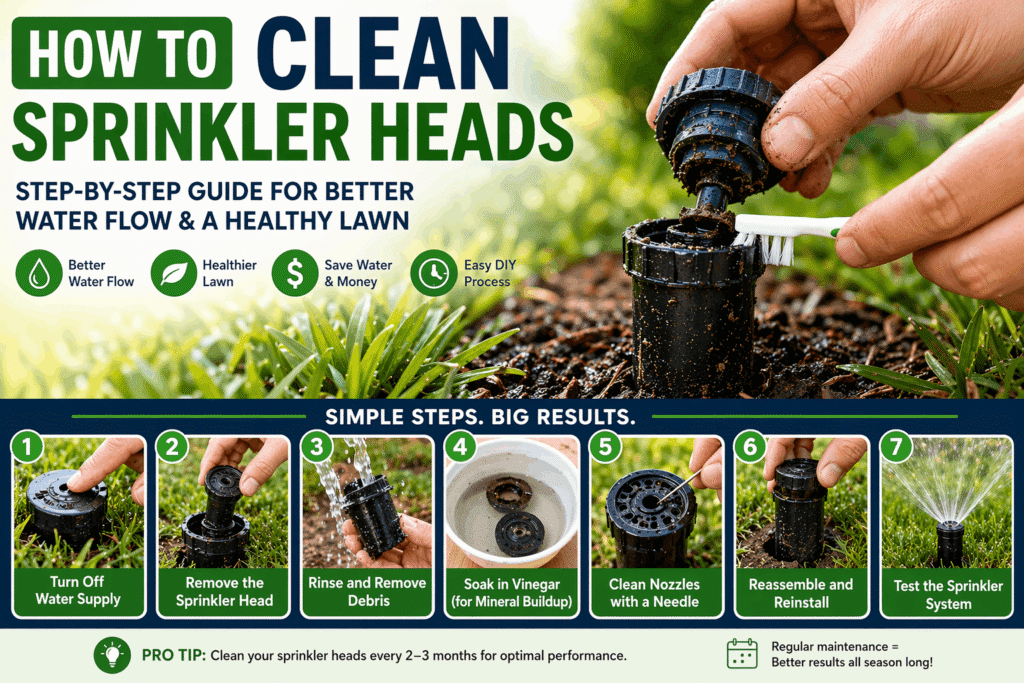
6. How to Clean Sprinkler Heads (Step-by-Step Guide)
This is the most important section. Follow these steps carefully to clean your sprinkler heads effectively.
Step 1: Turn Off the Water Supply
Always start by turning off your irrigation system. This prevents water from spraying while you work.
Step 2: Remove the sprinkler head.
Use a screwdriver or your hands to gently unscrew the sprinkler head. Be careful not to damage any parts.
Step 3: Rinse Off Dirt and Debris
Wash the sprinkler head under running water to remove loose dirt and particles.
Step 4: Soak in Vinegar
If there’s mineral buildup, soak the sprinkler head in white vinegar for 30–60 minutes. This helps dissolve hard deposits.
Step 5: Clean the nozzle.
Use a needle or pin to carefully clear small holes. This step is essential when learning how to clean sprinkler heads properly.
Step 6: Reassemble the Sprinkler Head
Once clean, put all parts back together securely.
Step 7: Test the System
Turn the water back on and check if the sprinkler head is working properly. Adjust the direction if needed. how to winterize a sprinkler system
7. How to Clean Different Types of Sprinkler Heads
Different sprinkler systems require slightly different cleaning methods.
Pop-Up Sprinkler Heads
- Pull the head up gently
- Clean inside and outside
- Remove debris stuck in the seal
Rotor Sprinkler Heads
- Focus on cleaning rotating parts
- Check for sand or dirt blocking movement
Spray Sprinkler Heads
- Clean small nozzles carefully
- Avoid enlarging holes
Drip Irrigation Emitters
- Flush the system
- Replace clogged emitters if needed
Understanding these differences helps you master how to clean sprinkler heads for all systems.
8. Pro Tips to Keep Sprinkler Heads Clean Longer
Prevention is always better than cleaning again and again.
Follow these expert tips:
- Clean sprinkler heads every few months
- Install filters in your irrigation system
- Flush your system regularly.
- Avoid mowing too close to sprinkler heads
- Check your system after storms.
These simple habits will extend the life of your sprinkler system. irrigation system efficiency
9. Common Mistakes to Avoid
Many homeowners make small mistakes that can damage their system.
Avoid these:
- ❌ Cleaning without turning off water
- ❌ Using harsh chemicals instead of vinegar
- ❌ Forcing tools into nozzles
- ❌ Losing small parts during cleaning
- ❌ Reinstalling incorrectly
Learning what not to do is just as important as knowing how to clean sprinkler heads.
10. How Often Should You Clean Sprinkler Heads?
The cleaning frequency depends on your environment and water quality.
General guidelines:
- Every 2–3 months – Regular maintenance
- Once a month – Areas with dirty water
- Seasonally – Before and after summer
If you notice performance issues, clean them immediately.
11. When to Replace Instead of Clean
Sometimes cleaning isn’t enough.
Replace your sprinkler head if:
- It is cracked or broken.
- Severe clogging cannot be removed.
- Water pressure remains low after cleaning
- The head is very old or worn out.
Replacement is often more cost-effective than repeated repairs.
12. Benefits of Cleaning Sprinkler Heads
Cleaning your sprinkler heads offers many benefits:
- ✅ Better water pressure
- ✅ Even lawn coverage
- ✅ Reduced water waste
- ✅ Lower utility bills
- ✅ Healthier plants and grass
Regular maintenance ensures your irrigation system works at its best. water conservation tips
Conclusion
Now you know exactly how to clean sprinkler heads and keep your irrigation system working efficiently. With just a few simple tools and regular maintenance, you can prevent clogs, improve water flow, and save money.
Make it a habit to inspect and clean your sprinkler heads every few months. Small efforts today can prevent costly repairs in the future. complete irrigation system guide
If you want the best results, combine cleaning with regular system checks and smart watering practices.
(FAQs)
1. How do you unclog a sprinkler head?
Turn off the water, remove the head, rinse it, and use a needle to clear the nozzle. Soaking in vinegar helps remove mineral buildup.
2. Can vinegar damage sprinkler heads?
No, white vinegar is safe and commonly used to dissolve mineral deposits without damaging parts.
3. Why is my sprinkler head not spraying properly?
It is usually caused by dirt, debris, or mineral buildup blocking the nozzle.
4. How long should I soak sprinkler heads in vinegar?
Soak them for 30–60 minutes for best results.
5. Can I clean sprinkler heads without removing them?
Yes, but deep cleaning is more effective when you remove the head.
6. What tool is best for cleaning sprinkler nozzles?
A small needle or safety pin works best for clearing tiny holes.
7. How do I prevent sprinkler heads from clogging?
Regular cleaning, installing filters, and flushing the system can prevent clogging.