
Introduction
How does a sprinkler system work? If you’ve ever wondered how your lawn or garden stays green without constant watering, a sprinkler system is the answer. These systems deliver water automatically and evenly, saving time, conserving water, and keeping plants healthy.
n this guide, we’ll explain how sprinkler systems function, their main components, types, common problems, and how to maintain a sprinkler system. Once you understand this, you can also learn how to use a sprinkler irrigation system effectively.
Table of Contents
What Is a Sprinkler System?
A sprinkler system is an automated irrigation setup designed to water lawns, gardens, or crops by distributing water through a network of pipes and sprinkler heads. Instead of watering plants manually with a hose, a sprinkler system delivers water evenly across a specific area, saving time and effort.
If you’re wondering how a sprinkler system works, it all starts with a simple idea: water is transported from a source (like a main water line or pump) through pipes and released through sprinkler heads in a controlled manner. This allows every part of your landscape to get the proper amount of water.
Sprinkler systems are commonly used in:
- Residential lawns and gardens
- Parks and sports fields
- Agricultural fields and farms
Most modern sprinkler systems are automatic, meaning they use a timer or controller to turn on and off at scheduled times. This makes watering more convenient and helps conserve water by preventing overwatering.
How Does a Sprinkler System Work? (Core Section )
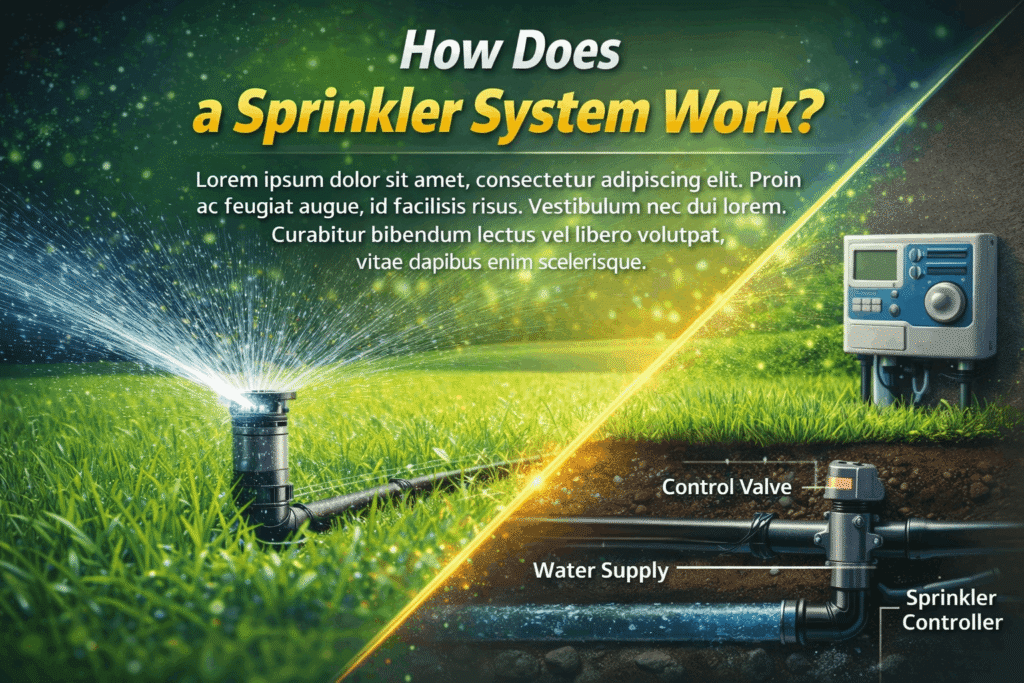
If you’re asking how a sprinkler system works, the process is actually simple and designed for efficiency. A sprinkler system works by moving water from a source through pipes and releasing it through sprinkler heads in a controlled and even pattern.
Step-by-Step: How Does a Sprinkler System Work?
- Water Source Supplies the System
The system starts with a water source, usually your home’s main water line or a pump. This provides the pressure needed to move water through the system. - Controller Sends the Signal
A controller (timer) tells the system when to turn on and how long to run. You can set schedules based on time, weather, or plant needs. - Valves Open Automatically
When activated, electric valves open to allow water to flow into specific zones. Each zone controls a different area of your lawn or garden. - Water Flows Through Pipes
The water travels through underground pipes that connect all parts of the system. These pipes carry water to the designated zones. - Sprinkler Heads Distribute Water
Finally, water is released through sprinkler heads. Depending on the type, they spray, rotate, or drip water evenly across the area. This knowledge is helpful if you later want to install a sprinkler irrigation system or use a garden drip irrigation system.
Main Components of a Sprinkler System
To fully understand how a sprinkler system works, it’s important to know the main parts that make the system function. Each component plays a specific role in delivering water efficiently to your lawn or garden.
1. Controller (Timer)
The controller acts as the main control unit of the system.. It allows you to set watering schedules, including start time and duration. In automatic systems, the controller ensures watering happens without manual effort.
2. Valves
Valves control the flow of water into different zones of your sprinkler system. When the controller sends a signal, the valves open and allow water to pass through the pipes.
3. Pipes
Pipes carry water from the source to the sprinkler heads. These are usually installed underground and connect all parts of the system.
4. Sprinkler Heads
Sprinkler heads are the parts that spray water onto your lawn or plants. They come in different types, such as spray heads, rotor heads, and drip emitters, depending on your watering needs.
5. Backflow Preventer
This important safety device stops dirty water from flowing back into your clean water supply. It helps protect your drinking water from contamination.
6. Sensors (Rain or Moisture Sensors)
Modern systems often include sensors that detect rain or soil moisture. These sensors can automatically stop watering when it’s not needed, helping save water.
Types of Sprinkler Systems Explained
To better understand how a sprinkler system works, it’s important to know that there are different types of sprinkler systems. Each type is designed for specific watering needs, depending on the size of the area, plant type, and water efficiency.
1. Drip Irrigation System
A drip irrigation system delivers water slowly and directly to the roots of plants through small tubes and emitters.
- Best for: gardens, flower beds, and crops
- Advantage: saves water and reduces evaporation
2. Spray Sprinkler System
This is one of the most common types used in residential lawns. Spray heads release water in a fixed pattern, covering a specific area.
- Best for: small to medium lawns
- Advantage: provides quick and even coverage
3. Rotor Sprinkler System
Rotor systems use rotating heads that spray water in a circular motion over a larger area.
- Best for: large lawns and open spaces
- Advantage: covers more area with fewer sprinkler heads
4. Soaker Hose System
A soaker hose slowly releases water along its length, allowing it to soak into the soil.
- Best for: garden beds and rows of plants
- Advantage: simple and cost-effective
5. Smart Sprinkler System
Smart systems use advanced controllers, weather data, and sensors to adjust watering automatically.
- Best for: modern homes and water-saving setups
- Advantage: highly efficient and reduces water waste
Automatic vs Manual Sprinkler Systems

When learning how a sprinkler system works, it’s important to understand the difference between automatic and manual systems. Both are used to water lawns and gardens, but they operate in different ways.
Automatic Sprinkler Systems
Automatic systems use a controller (timer) to manage watering without manual effort. You can set specific times and durations, and the system will run on its own.
How it works:
- The controller sends a signal at the scheduled time.
- Valves open automatically
- Water flows through pipes to sprinkler heads.
Advantages:
- Saves time and effort
- Consistent and even watering
- Can include smart features like rain sensors
Disadvantages:
- Higher installation cost
- Requires setup and occasional maintenance
Manual Sprinkler Systems
Manual systems require you to turn the water on and off yourself, usually using a tap or valve.
How it works:
- You open the water supply manually.
- Water flows through hoses or pipes.
- You stop the system when watering is complete.
Advantages:
- Lower cost
- Simple to use
- No technical setup required
Disadvantages:
- Time-consuming
- Risk of overwatering or underwatering
- Less efficient compared to automatic systems
Understanding this helps when you want to increase sprinkler water pressure or winterize a sprinkler system. For seasonal maintenance tips, see Oklahoma State University: Winterizing an Irrigation System.
How Water Pressure Affects Sprinkler Systems

To fully understand how a sprinkler system works, you need to know the role of water pressure. Water pressure is what pushes water through the pipes and out of the sprinkler heads. Without the right pressure, your system will not work properly.
Why Water Pressure Matters
Water pressure determines how far and how evenly water is distributed.
- Too low pressure: sprinkler heads may not pop up or spray properly
- Too high pressure: water may mist into the air, causing waste and uneven coverage
Proper pressure ensures that every part of your lawn or garden gets enough water.Fix issues by checking for leaks, cleaning heads, or installing a regulator. Learn more about water efficiency at UC Agriculture & Natural Resources.
Common Water Pressure Problems
- Low Water Pressure
- Weak or uneven spray
- Some sprinkler heads may not work.
- Causes: leaks, clogged heads, or insufficient water supply
- High Water Pressure
- Water turns into fine mist
- Increased water waste
- Can damage pipes or sprinkler heads over time
How to Fix Pressure Issues
- Check for leaks in pipes and connections
- Clean clogged sprinkler heads to improve flow
- Install a pressure regulator to control high pressure
- Divide the system into zones for better water distribution.
Benefits of Using a Sprinkler System
Understanding how a sprinkler system works is important, but it’s equally useful to know why using one can benefit your lawn or garden. Sprinkler systems offer several advantages over manual watering methods.
1. Saves Time and Effort
A sprinkler system automates watering, so you don’t have to spend hours with a hose. Automatic systems run on schedules, allowing you to focus on other tasks while your lawn gets proper care.
2. Efficient Water Usage
Sprinkler systems distribute water evenly, reducing waste. Many modern systems include timers and sensors that prevent overwatering, helping conserve water and lower utility bills.
3. Consistent Coverage
With a sprinkler system, every part of your lawn or garden receives the right amount of water. This ensures healthier grass, plants, and flowers compared to irregular hand watering.
4. Improved Plant Health
Even and regular watering promotes stronger roots and healthier growth. Sprinkler systems help maintain optimal soil moisture, which reduces plant stress and disease.
5. Customisable and Flexible
Sprinkler systems can be divided into zones and adjusted for different plant types. Whether you have a small garden or a large lawn, the system can be tailored to meet your specific watering needs.
Common Problems and Troubleshooting
To fully understand how a sprinkler system works, it’s also important to know the common issues that can occur and how to fix them. Even well-maintained systems may face problems over time, but most can be solved easily.
1. Clogged Sprinkler Heads
Problem: Dirt, debris, or mineral buildup can block the sprinkler head, reducing water flow or coverage.
Solution: Remove the head and clean it with water or a small brush. Check for damage and replace if necessary.
2. Leaks in Pipes or Connections
Problem: Cracks or loose connections can cause water to leak, lowering system efficiency.
Solution: Inspect pipes and fittings regularly. Tighten connections or replace damaged pipes to restore proper flow.
3. Uneven Watering
Problem: Some areas of your lawn get too much water while others get too little.
Solution: Adjust sprinkler head placement and spray pattern. Ensure water pressure is balanced across zones.
4. Controller or Timer Issues
Problem: The system doesn’t turn on or off as scheduled.
Solution: Check the controller settings and replace batteries if needed. Ensure wiring and connections are intact.
5. Low Water Pressure
Problem: Sprinkler heads don’t pop up or spray far enough.
Solution: Check for clogged heads, leaks, or issues with the water supply. Installing a pressure regulator can also help.
Tips to Maintain Your Sprinkler System
Knowing how a sprinkler system works is only part of the process. Proper maintenance ensures your system runs efficiently, saves water, and keeps your lawn or garden healthy. Here are some essential tips to maintain your sprinkler system:
1. Regular Inspection
Check your system at least once a month. Look for leaks, broken sprinkler heads, or unusual water patterns. Early detection of problems prevents bigger issues later.
2. Clean Sprinkler Heads
Dirt, debris, and mineral buildup can block sprinkler heads. Remove and clean them regularly to maintain proper water flow and even coverage.
3. Check Water Pressure
Make sure your system has the correct water pressure. Too low or too high pressure can cause uneven watering or damage components. Use a pressure regulator if necessary.
4. Seasonal Maintenance
Before winter, drain your system or use a blowout to prevent freezing damage. In spring, check all components and adjust heads for proper coverage.
5. Test the Controller
Ensure the timer and controller are functioning correctly. Replace batteries if needed and adjust schedules according to seasonal watering needs.
6. Adjust for Plant Growth
As plants grow or landscaping changes, adjust sprinkler heads and zones to maintain even watering. This helps prevent dry spots or overwatering.
Conclusion
Understanding how a sprinkler system works helps you make the most of your irrigation setup. A well-maintained system saves time, conserves water, and keeps your lawn or garden healthy and green.
By knowing the main components, types, and proper maintenance tips, you can ensure your sprinkler system runs efficiently year-round. Whether you choose an automatic or manual system, regular care and attention will keep your plants thriving and your landscape looking its best.
FAQs
1. How does a sprinkler system work step by step?
It takes water from a source, sends it through pipes, and sprays it via heads controlled by a timer or controller.
2. Do sprinkler systems use a lot of water?
No, automatic systems deliver water efficiently and evenly, reducing waste compared to manual watering.
3. Can I install a sprinkler system myself?
Yes, simple systems can be DIY, but complex setups may need professional installation.
4. How long should I run my sprinkler system?
Most lawns need about 1 inch of water per week, divided into short sessions for each zone.
5. How do I prevent problems with my sprinkler system?
Regularly clean heads, check pressure, inspect for leaks, and test the controller to keep it running smoothly.