
Introduction
How does a dry fire sprinkler system work is one of the most common questions when it comes to fire protection in cold environments. These systems are specially designed to prevent pipe freezing while ensuring safety during emergencies.
Unlike traditional sprinkler systems filled with water, dry systems use compressed air or nitrogen. This design prevents freezing and ensures the system operates efficiently when needed.
If you’re new to sprinkler systems, you can first learn the basics in our guide on How Does a Sprinkler System Work
Complete Guide to How a Dry Pipe Sprinkler System Works
Understanding how a dry pipe sprinkler system works is crucial if you want reliable fire protection in cold climates. These systems are commonly used in:
- Warehouses
- Parking garages
- Unheated buildings
- Industrial facilities
They are specifically designed to prevent pipe freezing while still offering quick fire suppression.
You may also want to check our detailed guide on How to Winterize Sprinkler System Without Blowout to understand all available options.
What Is How Does a Dry Pipe Sprinkler System Work?

A dry pipe fire sprinkler system is a type of fire protection system where the pipes are filled with pressurised air or nitrogen instead of water.
Key Components:
- Dry pipe valve
- Air compressor
- Sprinkler heads
- Piping system
- Water supply
Simple Definition:
A dry fire sprinkler system works by holding back water using air pressure until a sprinkler head activates due to heat.
How Does a Dry Pipe Sprinkler System Work?
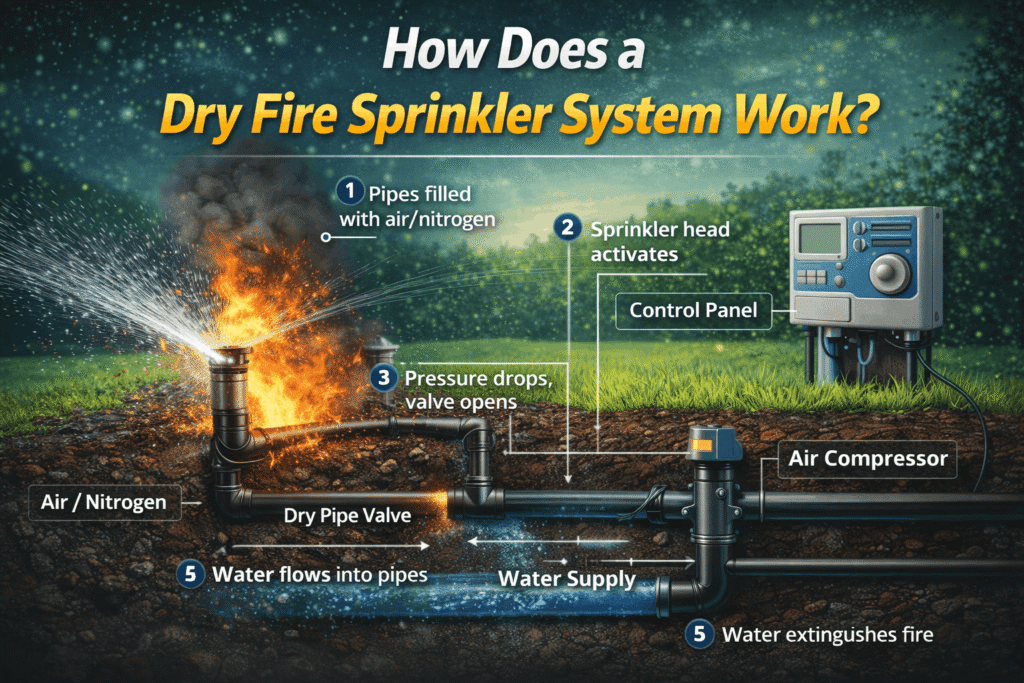
Let’s break down how a dry pipe sprinkler system works step by step:
1. Normal Condition
- Pipes are filled with compressed air or nitrogen.
- Water is held back by a dry pipe valve.
- System remains inactive
2. Fire Occurs
- Heat from a fire activates a sprinkler head
- The head opens at a specific temperature (usually 135–165°F).
3. Air Pressure Drops
- Air escapes from the open sprinkler
- Pressure inside pipes decreases
4. Valve Opens
- Dry pipe valve detects pressure drop
- It opens automatically
5. Water Flows
- Water enters the pipes
- Travels to the open sprinkler head
- Fire is suppressed
According to National Fire Protection Association, dry pipe sprinkler systems are specifically designed for environments where freezing temperatures are a concern.
Benefits of How a Dry Fire Sprinkler System Works
Understanding how a dry pipe sprinkler system works also means knowing its advantages:
1. Prevents Freezing
- Ideal for cold environments
- No water inside pipes until needed
2. Reliable Fire Protection
- Automatically activates during fire
- Works without human intervention
3. Reduces Water Damage Risk
- Pipes don’t leak water under normal conditions.
4. Suitable for Special Areas
- Parking garages
- Attics
- Outdoor storage areas
5. Long-Term Cost Efficiency
- Prevents pipe damage
- Reduces maintenance costs over time
Types of How a Dry Fire Sprinkler System Works
There are different types of dry sprinkler systems:
1. Standard Dry Pipe System
- Most common type
- Uses compressed air
2. Pre-Action Dry System
- Requires two triggers (heat + detection system)
- Used in sensitive areas like data centres
3. Double Interlock System
- Needs both air pressure drop and fire detection
- Maximum protection against accidental discharge
Step-by-Step Guide to Install or Use How Does a Dry Pipe Sprinkler System Work?
Installing a dry fire sprinkler system requires professional expertise, but here’s a simplified overview:
Step 1: Planning
- Assess building layout
- Identify high-risk areas
Step 2: System Design
- Choose correct pipe size
- Determine sprinkler head placement
Step 3: Install Piping
- Set up pipes across the building
- Ensure proper slope for drainage
Step 4: Install Dry Pipe Valve
- Connect to water supply
- Ensure proper sealing
Step 5: Add Air Compressor
- Maintain required air pressure
Step 6: Install Sprinkler Heads
- Place strategically for maximum coverage
Step 7: Testing
- Check pressure levels
- Simulate fire conditions
Common Problems and Solutions
Even though dry systems are reliable, some issues may occur:
1. Slow Water Delivery
Problem: Delay in water reaching fire
Solution: Maintain proper air pressure and system design.
2. Air Leaks
Problem: Loss of pressure
Solution: Regular inspection and sealing
3. Corrosion
Problem: Moisture inside pipes
Solution: Use nitrogen instead of air.
4. Valve Failure
Problem: The valve doesn’t open.
Solution: Routine maintenance and testing
Expert Tips to Improve Performance
Here are expert tips to maximise system efficiency:
- Use nitrogen instead of compressed air
- Schedule regular inspections
- Test system quarterly
- Keep sprinkler heads clean
- Monitor pressure levels
| Feature | Dry System | Wet System |
|---|---|---|
| Pipe Content | Air/Nitrogen | Water |
| Freezing Risk | No | Yes |
| Response Time | Slight Delay | Immediate |
| Maintenance | Moderate | Low |
| Best Use | Cold Areas | Heated Buildings |
Key Takeaway:
If freezing is a concern, a dry system is the best choice.
Conclusion
Now you clearly understand how a dry pipe sprinkler system works and why it’s essential for cold environments. These systems use air pressure to hold back water and release it only when a fire is detected.
They are reliable, efficient, and specifically designed to prevent pipe freezing while ensuring safety.
Actionable Advice:
- Choose a dry system for unheated areas
- Hire certified professionals for installation
- Perform regular maintenance checks
Investing in the right fire protection system can save lives and property.
FAQs
1. How does a dry fire sprinkler system work in simple terms?
A dry fire sprinkler system works by using air pressure to hold back water. When a sprinkler head activates due to heat, air escapes and water flows to control the fire.
2. Where are dry sprinkler systems used?
They are commonly used in cold areas like warehouses, garages, and unheated buildings.
3. Is there a delay in water release?
Yes, there is a slight delay compared to wet systems because air must escape before water enters the pipes.
4. What is the main advantage of a dry system?
The biggest advantage is that it prevents pipes from freezing in cold temperatures.
5. How often should a dry sprinkler system be tested?
It should be inspected regularly and tested at least quarterly for best performance.
6. Can dry sprinkler systems fail?
Yes, like any system, they can fail if not maintained properly. Regular inspections help prevent issues.
7. What is better: a dry or wet sprinkler system?
It depends on the environment. Dry systems are better for cold areas, while wet systems are ideal for heated buildings.