
Introduction
A garden drip irrigation system is a modern and efficient way to water your plants, ensuring they receive the right amount of moisture directly at the roots. Unlike traditional sprinklers, knowing how to turn on a hydro sprinkler system or how to use a sprinkler irrigation system can help you manage your garden areas not covered by drip irrigation.
Table of Contents
What Is a Garden Drip Irrigation System?
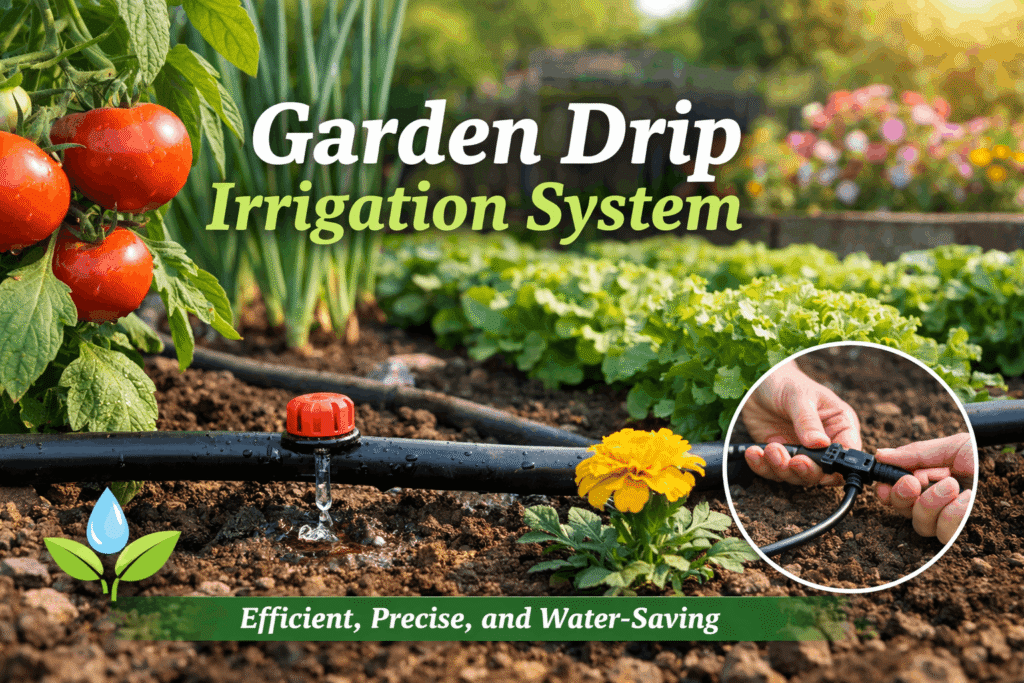
A garden drip irrigation system is a watering method that delivers water slowly and directly to the roots of plants through a network of tubes, pipes, and small emitters. Instead of spraying water over the entire garden like traditional sprinklers, this system releases water drop by drop exactly where plants need it most.
The main purpose of a garden drip irrigation system is to provide consistent moisture to the soil while minimising water waste. Because the water flows directly to the plant roots, very little is lost through evaporation or runoff. This makes drip irrigation one of the most efficient watering methods for gardens, vegetable beds, and flower landscapes.
A typical container garden drip irrigation system includes several important components such as a water source, main tubing, smaller drip lines, emitters (also called drippers), filters, and pressure regulators. The water travels from the main supply through the tubing and is released slowly through emitters placed near each plant. This controlled watering process helps ensure that every plant receives the right amount of water.
Many gardeners prefer a garden drip irrigation system because it saves time and effort. Once installed, the system can water plants automatically with minimal supervision. It also helps maintain healthier plants because the soil stays evenly moist without becoming waterlogged.
Another advantage of using a garden drip irrigation system is its flexibility. The system can be designed to work in small home gardens, raised beds, greenhouses, or even large landscapes. By adjusting the emitters and tubing layout, gardeners can customise the watering system to match the needs of different plants.
Benefits of Using a Garden Drip Irrigation System
A garden drip irrigation system offers many advantages for gardeners who want to water their plants efficiently and maintain healthy growth. Unlike traditional watering methods, this system delivers water slowly and directly to the roots of plants, ensuring better water management and improved plant health. Below are some of the key benefits of using a garden drip irrigation system.
Saves Water
One of the biggest advantages of a garden drip irrigation system is its ability to conserve water. The system releases water drop by drop near the plant roots, which reduces water loss caused by evaporation, runoff, or overspray. Because water goes exactly where it is needed, gardens can stay healthy while using much less water compared to traditional sprinklers or manual watering.
Improves Plant Health
A garden drip irrigation system helps maintain consistent soil moisture, which is important for healthy plant growth. When plants receive a steady supply of water directly at their roots, they grow stronger and develop better root systems. This targeted watering method also prevents the leaves from getting wet, which reduces the risk of plant diseases caused by excess moisture.
Reduces Weed Growth
Another benefit of a garden drip irrigation system is that it helps reduce weed growth. Since water is delivered directly to the base of desired plants, the surrounding soil remains relatively dry. Weeds usually grow where water is available, so limiting water to specific areas helps control unwanted plant growth in the garden.
Saves Time and Effort
Using a best drip irrigation system for raised garden beds
can save gardeners a lot of time and effort. Once the system is installed, it can automatically water the garden with very little manual work. Many systems can also be connected to timers, allowing plants to be watered on a regular schedule without the need for daily supervision.
Works Well for Different Garden Types
A garden drip irrigation system is highly flexible and can be used in many types of gardens. It works well in vegetable gardens, flower beds, raised beds, greenhouses, and even container gardens. The tubing and emitters can be adjusted to fit different layouts, making it a versatile solution for both small and large gardens.
Components of a Garden Drip Irrigation System
A garden drip irrigation system is made up of several important components that work together to deliver water directly to the roots of plants. Each part of the system plays a specific role in controlling water flow and ensuring that plants receive the right amount of moisture. Understanding these components can help gardeners install and maintain a more effectively.
Main Water Supply Line
The main water supply line is the starting point of a . drip irrigation system for garden beds It connects the system to the main water source, such as a garden faucet or water tank. This line carries water from the source to the rest of the irrigation system and distributes it throughout the garden.
Drip Tubing
Drip tubing is a flexible pipe that carries water from the main supply line to different areas of the garden. In a garden drip irrigation system, this tubing runs along plant rows or garden beds. Smaller tubes can also branch off from the main tubing to reach individual plants.
Emitters (Drippers)
Emitters, also known as drippers, are small devices that release water slowly near the base of plants. In a , emitters control how much water flows to each plant. They ensure that water is delivered in small drops directly to the roots, which helps prevent water waste and keeps the soil evenly moist.
Filters
Filters are an important part of a garden drip irrigation system because they remove dirt, sand, and debris from the water before it enters the tubing. Clean water helps prevent clogging in the emitters and keeps the irrigation system working properly for a long time.
Pressure Regulators
A pressure regulator controls the water pressure inside a . Drip irrigation works best at low pressure, so the regulator reduces the pressure coming from the main water supply. This helps protect the tubing and ensures that emitters release water at a steady rate.
Connectors and Valves
Connectors and valves are small fittings that join different parts of a together. Connectors link pipes and tubing, while valves allow gardeners to control or stop the water flow in certain areas. These components make it easier to customise the irrigation system for different garden layouts.
Types of Garden Drip Irrigation Systems
A garden drip irrigation system can be designed in different ways depending on the type of plants, garden size, and watering needs. Each system uses the same basic principle of delivering water slowly to the roots, but the method of distribution can vary. Understanding the different types of a garden drip irrigation system can help gardeners choose the best option for their garden.
Soaker Hose System
A soaker hose is one of the simplest types of a It is a special porous hose that slowly releases water along its entire length. The hose is placed directly on the soil surface or slightly buried in the ground near plants.
This type of garden drip irrigation system is ideal for vegetable gardens, flower beds, and rows of plants. It is easy to install and requires very little maintenance, making it a popular choice for beginners.
Emitter Drip System
An emitter drip system is a more precise type of . garden drip irrigation system In this system, small emitters or drippers are attached to tubing and placed near individual plants. Each emitter releases water at a controlled rate directly to the plant’s roots.
This type of garden drip irrigation system works well for gardens with different types of plants that require specific amounts of water. Gardeners can adjust the emitters to match the watering needs of each plant.
Micro Sprayer System
A micro sprayer system is another variation of a garden drip irrigation system. Instead of releasing water drop by drop, micro sprayers spray a fine mist or small stream of water over a limited area. These sprayers are attached to drip tubing and can cover a slightly larger space around plants.
This type of garden drip irrigation system is often used for flower beds, shrubs, and small garden areas where plants are grouped closely together.
Subsurface Drip Irrigation
Subsurface drip irrigation is a more advanced type of garden drip irrigation system where the drip tubing is buried under the soil surface. Water flows through the underground tubing and reaches the plant roots directly.
This system helps reduce evaporation and keeps the soil surface dry, which can prevent weed growth. A subsurface garden drip irrigation system is commonly used in larger gardens or landscaping areas where efficient water use is important.
How to Install a Garden Drip Irrigation System (Step-by-Step)
Planning your layout is key when installing a garden drip irrigation system, but for larger areas you might also want to check how to install a sprinkler irrigation system or the installation of a sprinkler irrigation system for lawns and open spaces.
Plan Your Garden Layout
The first step in installing a garden drip irrigation system is to plan your garden layout carefully. Look at the size of your garden and identify where your plants, flower beds, or vegetable rows are located. This will help you decide where the main tubing and drip lines should run.
When planning the layout of your garden drip irrigation system, consider the water needs of different plants. Some plants require more water, while others need less. By grouping plants with similar watering needs, you can design a more efficient irrigation system.
You should also measure the distance between plants and garden beds. This helps determine how much tubing, how many emitters, and what type of connectors you will need. Proper planning ensures that the garden drip irrigation system delivers water evenly to all plants.
How to Use a Garden Drip Irrigation System Efficiently
Using a garden drip irrigation system efficiently can help gardeners save water, improve plant growth, and reduce maintenance work. Although the system works automatically, following a few simple practices will ensure that your garden drip irrigation system provides the best results for your plants.
Set the Right Watering Schedule
One of the most important ways to use a garden drip irrigation system efficiently is to set a proper watering schedule. Most gardens benefit from watering early in the morning when temperatures are cooler. This reduces water loss caused by evaporation and allows the soil to absorb moisture more effectively.
Depending on the type of plants and soil, a garden drip irrigation system may need to run once or twice a day for a short period. Using a timer can help automate the schedule and maintain consistent watering.
Adjust Water Flow for Different Plants
Different plants require different amounts of water. To use a garden drip irrigation system efficiently, adjust the emitters or drippers so that each plant receives the right amount of moisture. Plants with higher water needs may require emitters with a higher flow rate, while drought-tolerant plants may need less water.
By customising the water flow, the garden drip irrigation system ensures that plants grow healthy without wasting water.
Monitor Soil Moisture
Checking soil moisture regularly is another important step in using a garden drip irrigation system effectively. The soil should remain moist but not overly wet. If the soil feels too dry, the watering time can be increased slightly. If the soil is too wet, the watering duration should be reduced.
Monitoring soil conditions helps ensure that the garden drip irrigation system provides the correct level of moisture for plant growth.
Inspect the System Regularly
To keep a garden drip irrigation system working efficiently, it is important to inspect the system regularly. Check the tubing, emitters, and connectors for leaks, clogs, or damage. Cleaning clogged emitters and replacing damaged parts will help maintain proper water flow.
Regular maintenance ensures that the garden drip irrigation system continues to operate smoothly and delivers water evenly across the garden.
Use Mulch to Improve Efficiency
Adding mulch around plants can make a garden drip irrigation system even more efficient. Mulch helps retain soil moisture, reduces evaporation, and prevents weed growth. When mulch is used together with a drip irrigation system, plants can stay hydrated for longer periods with less water.
Garden Drip Irrigation System vs Sprinkler Irrigation
When it comes to watering a garden, choosing the right method can make a big difference in water efficiency, plant health, and maintenance. Two popular watering methods are the garden drip irrigation system and traditional sprinkler irrigation. Understanding the differences between these systems can help gardeners decide which is best for their needs.
Water Efficiency
A garden drip irrigation system is more water-efficient than sprinkler irrigation. Drip irrigation delivers water directly to the roots of plants, minimising evaporation and runoff. In contrast, sprinkler systems spray water over a wide area, often wetting areas between plants or pathways where water is not needed. This can result in higher water usage and waste.
Targeted Plant Watering
With a garden drip irrigation system, each plant receives the exact amount of water it needs. Emitters can be adjusted for different plant types and soil conditions, ensuring consistent moisture at the roots. Sprinkler irrigation, however, waters all plants in its coverage area equally, which may overwater some plants while underwatering others.
Soil and Plant Health
A garden drip irrigation system keeps soil consistently moist without wetting the leaves. This reduces the risk of fungal diseases and prevents soil erosion. Sprinkler irrigation can leave plant leaves wet, especially in dense gardens, which may increase the risk of disease. Sprinklers can also cause soil compaction and runoff on sloped areas.
Maintenance and Setup
Sprinkler systems are generally easier to set up for large lawns or open areas, while a garden drip irrigation system requires careful planning and placement of tubing and emitters. However, once installed, drip systems require less ongoing maintenance and can save time by reducing the need for frequent manual watering.
Cost Considerations
The initial cost of a garden drip irrigation system may be slightly higher than a basic sprinkler system due to tubing, emitters, and filters. Over time, however, the water savings and reduced plant loss often make drip irrigation more cost-effective. Sprinklers may have a lower upfront cost but can result in higher water bills and less efficient plant growth.
Best Use Cases
Garden Drip Irrigation System: Ideal for vegetable gardens, flower beds, raised beds, container gardens, and areas where water efficiency is important.
Sprinkler Irrigation: Best for lawns, large open spaces, and areas where uniform coverage is more important than precise watering.
Common Problems in Garden Drip Irrigation Systems
While a garden drip irrigation system is highly efficient, it can face some common problems if not properly maintained. Identifying and fixing these issues promptly ensures that plants receive the right amount of water and the system continues to work efficiently.
Clogged Emitters
One of the most common problems in a garden drip irrigation system is clogged emitters. Dirt, debris, or mineral deposits can block the tiny openings in the emitters, preventing water from reaching the plants. Regularly checking and cleaning emitters, or using a filter in the system, can help prevent this issue.
Low Water Pressure
Low water pressure can reduce the effectiveness of a garden drip irrigation system. If the water flow is too weak, emitters may not release enough water, causing uneven watering. Installing a pressure regulator and ensuring the main water supply has adequate pressure can solve this problem.
Uneven Water Distribution
Uneven water distribution occurs when some plants receive too much water while others get too little. This can be caused by clogged emitters, leaks, or poorly planned tubing layout. Regular inspection of tubing and emitters, along with proper system design, ensures that a garden drip irrigation system delivers water evenly to all plants.
Leaking Tubing
Leaks in tubing or connectors are another common issue in a garden drip irrigation system. Holes or cracks in the tubing, loose connections, or damaged fittings can cause water to escape before reaching plants. Inspecting the system periodically and replacing damaged parts helps maintain proper water flow.
System Freezing
In colder climates, a garden drip irrigation system can be damaged if water inside the tubing freezes. Frozen water expands, which can crack pipes and emitters. To prevent this, drain the system or use insulated tubing during winter months.
Root Intrusion
Occasionally, plant roots can grow into emitters or tubing, blocking water flow. Using root guards or checking the system regularly can help prevent root intrusion in a garden drip irrigation system.
Maintenance Tips for a Garden Drip Irrigation System
Regular maintenance is essential to keep your garden drip irrigation system running efficiently and to ensure that your plants receive the right amount of water. With simple, consistent care, you can prevent common problems and extend the life of your system.Regular maintenance of your garden drip irrigation system is essential. For reliable filters, tubing, and drip system accessories, check out Veccume and Mop
Clean Filters Regularly
Filters prevent dirt and debris from entering the tubing and clogging emitters. In a garden drip irrigation system, it’s important to clean or replace filters periodically. This helps maintain a steady flow of water and ensures that all plants receive sufficient moisture.
Check and Clean Emitters
Emitters can become clogged with dirt, minerals, or algae over time. Inspect your garden drip irrigation system emitters regularly and clean them as needed. You can remove them and soak in vinegar or use a small brush to clear blockages.
Inspect Tubing and Connections
Leaks or damaged tubing can reduce the efficiency of a garden drip irrigation system. Regularly check all tubing, connectors, and fittings for cracks, holes, or loose connections. Repair or replace any damaged parts promptly to prevent water waste.
Flush the System
Flushing the garden drip irrigation system helps remove sediment or debris that may have built up in the tubing. Open the end caps of the tubing and let water flow freely for a few minutes. This simple step keeps water flowing evenly to all emitters.
Adjust Water Pressure
Water pressure can change over time due to seasonal variations or changes in the main water supply. Make sure the pressure regulator is working correctly, and adjust it as needed. Proper pressure ensures that the garden drip irrigation system delivers water evenly across your garden.
Seasonal Maintenance
Before winter, drain the system to prevent freezing and damage. At the start of the growing season, check all parts of your garden drip irrigation system, including tubing, emitters, and filters, to ensure everything is ready for regular use.
Cost of Installing a Garden Drip Irrigation System
The cost of installing a garden drip irrigation system depends on several factors, including the size of your garden, the type of system you choose, and whether you install it yourself or hire a professional. Understanding these costs can help you plan your garden watering setup more effectively.
DIY Installation Costs
Installing a garden drip irrigation system yourself can be cost-effective. For a small to medium-sized garden, the basic materials such as tubing, emitters, connectors, and filters may cost anywhere from $50 to $200. Adding a timer or pressure regulator can increase the cost slightly but improves system efficiency.
DIY installation saves labour costs and allows you to customise the system according to your garden layout. Most homeowners find that the investment in materials pays off quickly due to water savings and healthier plants.
Professional Installation Costs
Hiring a professional to install a garden drip irrigation system can cost more, typically ranging from $200 to $800 or more, depending on garden size and complexity. Professionals ensure proper layout, correct placement of emitters, and optimal water pressure. This can be a good option for larger gardens or complex landscaping projects.
Long-Term Savings
Although the initial cost of a garden drip irrigation system may seem higher than traditional watering methods, the long-term savings are significant. By delivering water directly to plant roots and reducing water waste, the system can lower water bills and reduce plant loss due to under- or overwatering. Over time, these savings often offset the initial investment.
Factors That Affect Cost
- Garden Size: Larger gardens require more tubing, emitters, and connectors, increasing the cost.
- Type of System: Soaker hoses are generally cheaper, while subsurface or emitter-based systems are more expensive.
- Accessories: Timers, filters, and pressure regulators improve efficiency but add to the initial cost.
- Labour: DIY installation saves money, while professional installation adds to the upfront cost.
Best Plants for a Garden Drip Irrigation System
A garden drip irrigation system works best with plants that benefit from consistent, targeted watering at the roots. By delivering water directly where it’s needed, this system helps plants grow healthier, reduces water waste, and minimises the risk of diseases caused by wet foliage. Here are some of the best plants to grow with a garden drip irrigation system.
Vegetables
Vegetable gardens thrive with a garden drip irrigation system because most vegetables need regular moisture at the root level. Tomatoes, peppers, cucumbers, lettuce, and carrots benefit from consistent watering, which helps produce healthier, higher-yield crops. Drip irrigation also prevents water from splashing onto leaves, reducing the risk of fungal diseases.
Flowers
Flower beds and ornamental plants grow well with a garden drip irrigation system. Annuals like marigolds, petunias, and zinnias, as well as perennials such as roses and lavender, receive steady moisture without overwatering. This targeted approach keeps blooms vibrant and reduces water waste in decorative gardens.
Fruit Plants
Fruit-bearing plants, including strawberries, blueberries, and small fruit trees, respond well to a garden drip irrigation system. Consistent root-level watering encourages better fruit development and prevents issues like cracking or uneven growth caused by irregular watering.
Herbs
Herbs such as basil, thyme, oregano, and parsley benefit from a garden drip irrigation system because they prefer even soil moisture without waterlogging. Drip irrigation allows gardeners to keep herbs hydrated without wetting the foliage, which can prevent disease and maintain flavour.
Container Plants
Potted plants and container gardens are ideal for a garden drip irrigation system. Small emitters or micro tubing can be placed directly in pots to ensure each plant gets enough water. This is especially useful for patios, balconies, or greenhouses where consistent watering is crucial.
Conclusion
A garden drip irrigation system is one of the most efficient and effective ways to water your garden. By delivering water directly to plant roots, it conserves water, reduces weeds, prevents soil erosion, and promotes healthier plant growth. Whether you have a small vegetable patch, a flower garden, or a larger landscape, a garden drip irrigation system can save time, effort, and money in the long run.
FAQ
How long should a garden drip irrigation system run?
The duration depends on the type of plants, soil, and weather conditions. Most gardens benefit from running the garden drip irrigation system for 20–60 minutes per session, usually once or twice a day. Using a timer can help maintain a consistent watering schedule.
Does drip irrigation save water?
Yes. A garden drip irrigation system delivers water directly to plant roots, reducing evaporation and runoff. This targeted watering method can save up to 30–50% more water compared to sprinklers or manual watering.
Can drip irrigation be used for all plants?
While a garden drip irrigation system works for most plants, it is especially beneficial for vegetables, flowers, shrubs, fruit plants, and container gardens. Plants that prefer dry soil on the surface, like succulents, may need a modified system or less frequent watering.
How often should I check the system?
It’s recommended to inspect your garden drip irrigation system at least once a month. Check for clogged emitters, leaks, low water pressure, and tubing damage. Regular inspection ensures even water distribution and prevents plant stress.
Can I use drip irrigation in a raised bed or container garden?
Absolutely. A garden drip irrigation system is very flexible and can be easily installed in raised beds, pots, or container gardens. Micro tubing and small emitters allow precise watering in limited spaces.
Is it difficult to install a garden drip irrigation system?
Not necessarily. A garden drip irrigation system can be installed as a DIY project with basic planning, or you can hire a professional for larger gardens. Planning your layout, measuring your garden, and choosing the right components will make installation easier.
How do I winterise a drip irrigation system?
In colder climates, water left in the tubing can freeze and cause damage. To protect your garden drip irrigation system, drain all water before winter, remove emitters if needed, and store hoses in a dry area.