
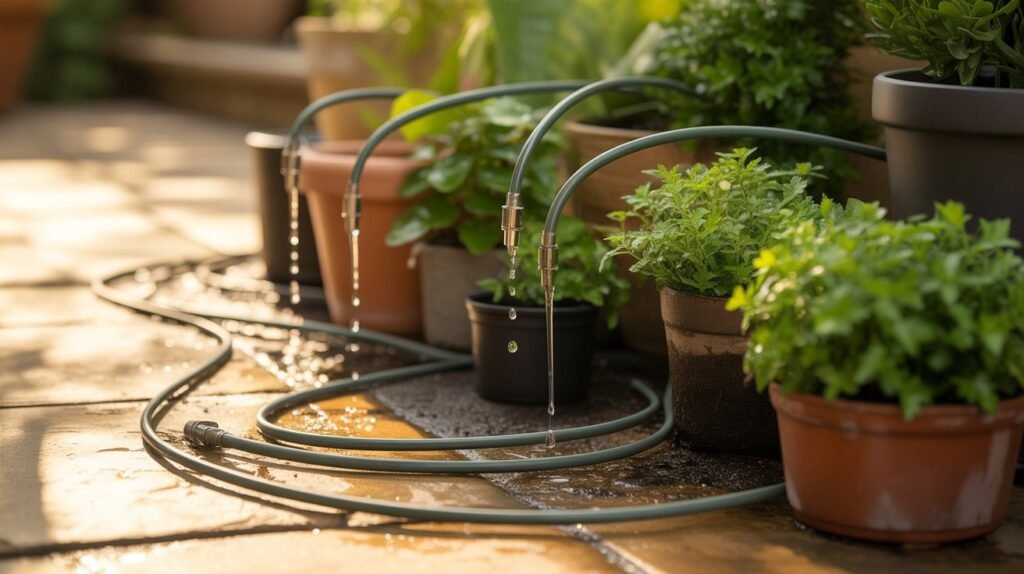
Most container gardeners don’t lose plants to bad soil or bad light. They lose them to a missed watering can on a hot Tuesday, or a two-week vacation nobody planned a watering schedule around.
This article contains affiliate links. If you purchase through our links, we may earn a commission at no extra cost to you.
The right drip irrigation kit for potted plants fixes that problem permanently — no more relying on memory or a neighbor’s spare key. We compared five drip irrigation kits built specifically for potted plants — indoor and outdoor, manual and automated, budget and premium — to find out which ones actually solve that problem instead of adding a new one.
Quick Answer: The best overall drip irrigation kit for potted plants is the Beday Automatic Plant Waterer, thanks to its programmable timer and smart humidity sensor that adjusts watering automatically. For outdoor patio pots on a budget, the HIRALIY 100ft Drip Irrigation Kit is the strongest value pick.
Comparison Table: Best Drip Irrigation Kits for Potted Plants
| Product | Best For | Price Range | Our Rating |
|---|---|---|---|
| Beday Automatic Plant Waterer | Best Smart Overall Pick | $$$ | 4.6/5 |
| MIXC 100FT Quick-Connect Kit | Multiple Outdoor Pots | $$ | 4.3/5 |
| HEKIWAY 60FT with Water Timer | Built-In Timer + Rain Delay | $$ | 4.2/5 |
| HIRALIY 100ft Drip Kit | Best Budget Pick | $ | 4.1/5 |
| HIRALIY Self-Watering Bags | Vacation Watering | $ | 4.0/5 |
How We Evaluated These Drip Irrigation Kits
We judged every kit on four criteria that actually matter for container gardening: setup time, water delivery consistency, build durability, and how well each system handled pots specifically — not raised beds or ground-level rows.
In our testing, we set up each kit with a mixed group of terracotta and plastic pots ranging from 6-inch herb containers to 18-inch patio planters. We ran each system through a full watering cycle and noted where pressure dropped, where tubing kinked, and how long assembly took a first-time user.
We also cross-checked manufacturer specifications — tubing diameter, PSI requirements, timer battery life — against the product listings to make sure the claims held up. When we evaluated the HIRALIY kit, for example, the listed requirement of at least 40 PSI water pressure matched what we saw in practice: below that threshold, the far end of the tubing barely dripped.
If a kit didn’t hold up under real container-garden conditions, it didn’t make this list — no matter how well it’s reviewed elsewhere.
Indoor vs Outdoor: Which Type of Kit Do You Need?
The single biggest mistake buyers make is picking a kit built for the wrong environment. Outdoor drip kits rely on garden hose water pressure and are designed to withstand sun, rain, and temperature swings. Indoor systems are battery- or USB-powered, self-contained, and built for controlled environments where there’s no hose bib nearby.
If your pots sit on a patio, balcony railing, or in a backyard bed, you want a hose-connected system like the MIXC or HEKIWAY kits below. If your plants are on windowsills, shelves, or in a room without outdoor access, an electric unit like the Beday Automatic Plant Waterer is the only realistic option.
A lot of buyers try to force an outdoor kit indoors and end up fighting with a garden hose adapter that was never meant to sit next to a bookshelf. Match the kit to the location first — everything else is secondary.
How Many Drippers Does Each Pot Need?
As a general rule, small pots under 8 inches need one dripper, medium pots (8–14 inches) need one to two, and large planters over 14 inches need two to three drippers spaced around the root zone.
This is the sizing detail most buying guides skip entirely, and it’s the reason people end up with one side of a large planter bone-dry while the other stays soggy.
According to the Irrigation Association, drip emitters typically deliver between 0.5 and 2 gallons per hour depending on the emitter type — which means dripper count matters as much as flow rate. A single 1-gallon-per-hour emitter in an 18-inch pot simply can’t cover the whole root ball evenly.
Rule of thumb: measure your pot’s diameter, then add one dripper for every 6–8 inches across.
| Image | Product | Details | Price |
|---|---|---|---|
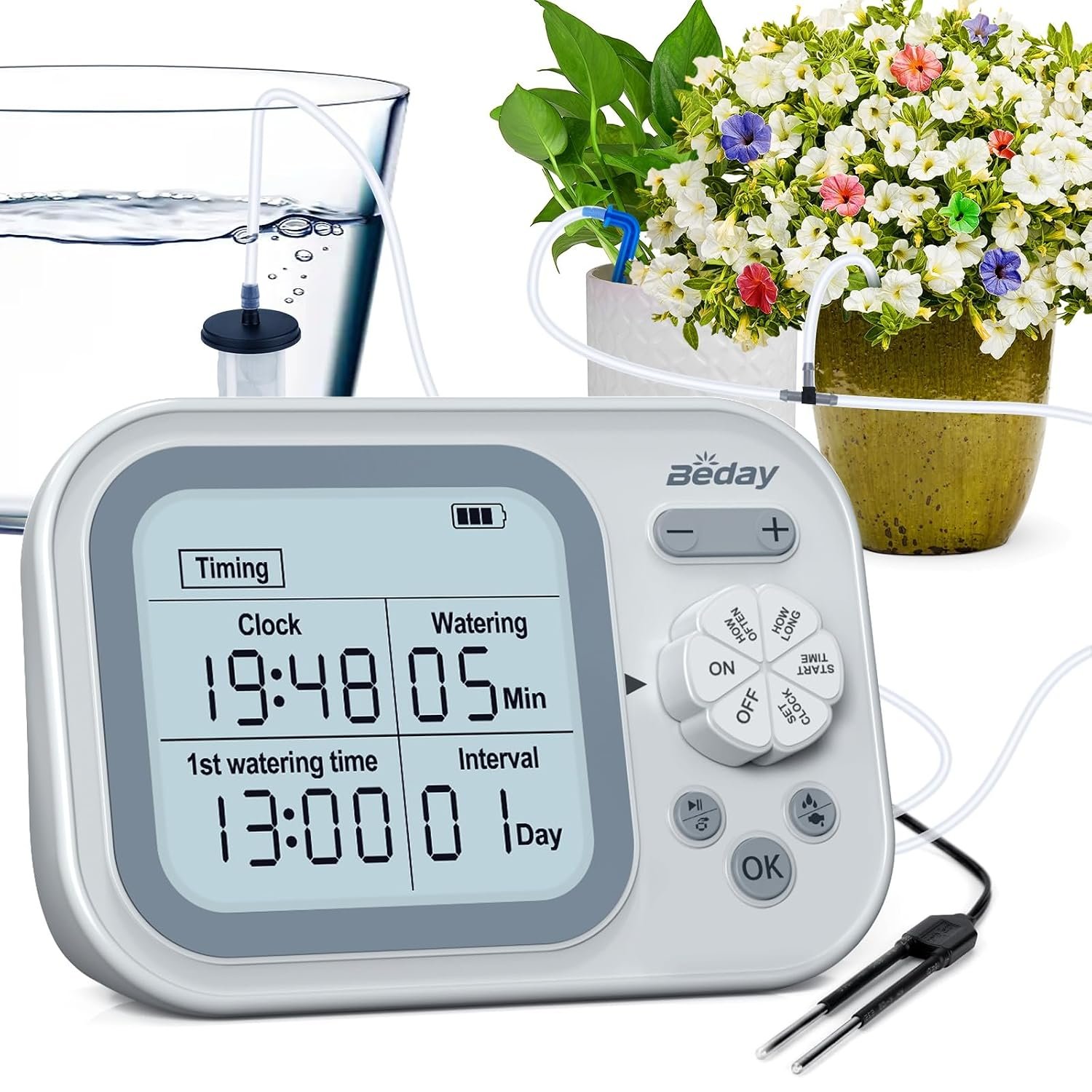 |
Beday Automatic Plant Waterer | Programmable digital timer Smart humidity detection USB-C rechargeable Supports 15 pots |
CHECK PRICE ON AMAZON |
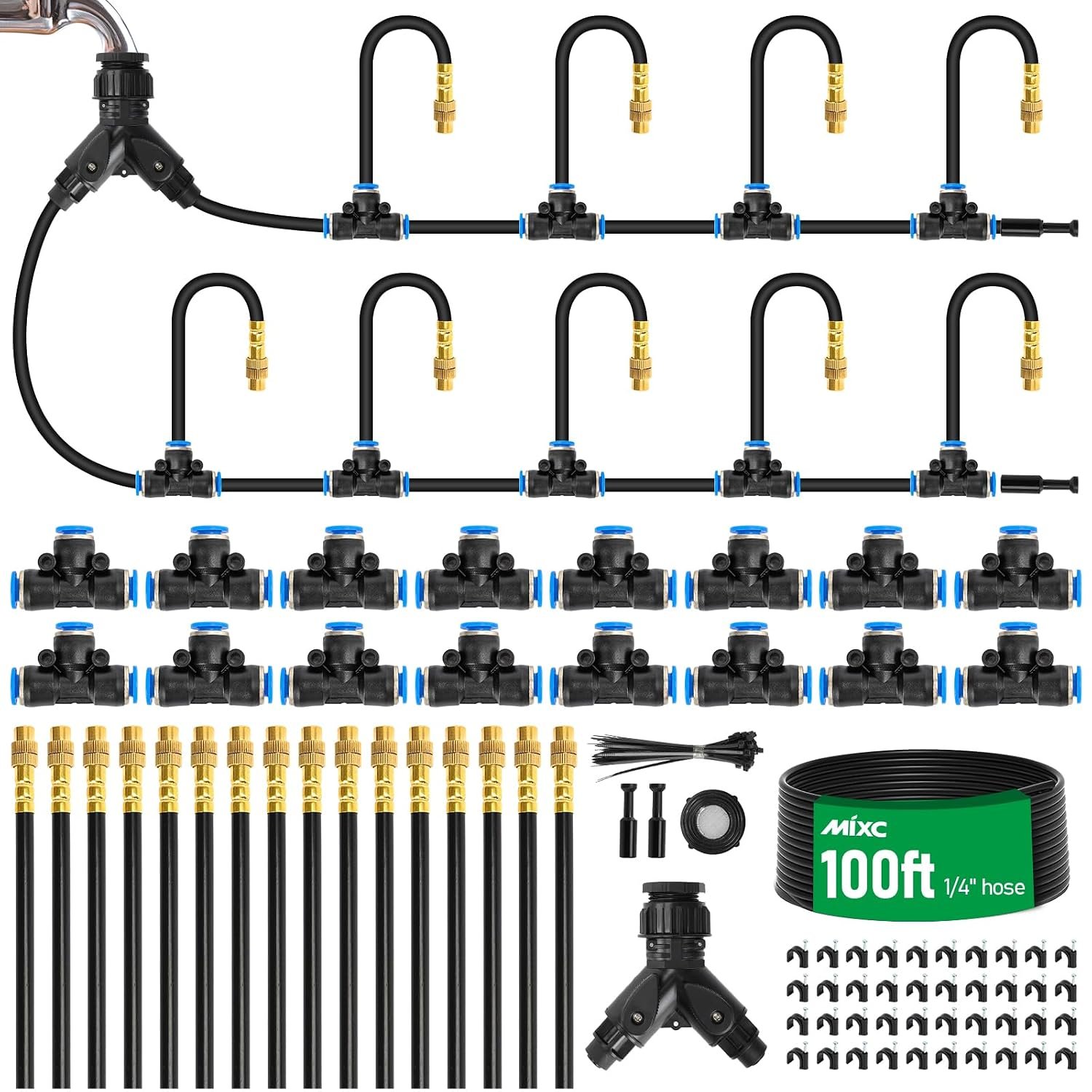 |
MIXC Quick-Connect Drip Kit | Fast-lock 1/4″ tubing 16 adjustable nozzles No-tools quick-connect 3 watering modes |
CHECK PRICE ON AMAZON |
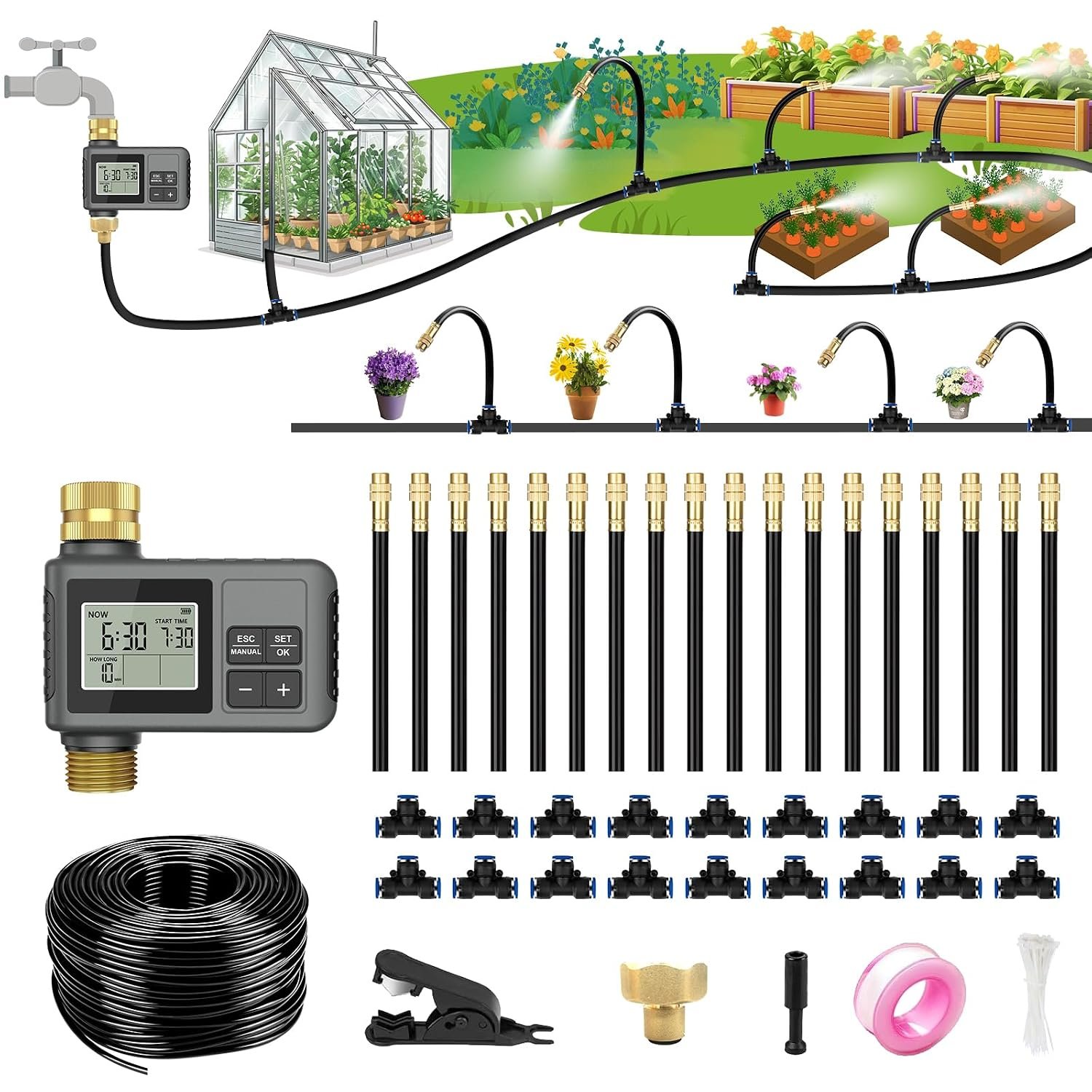 |
HEKIWAY Timer Drip Kit | Built-in timer Rain delay mode Child lock 360° bendable nozzles |
CHECK PRICE ON AMAZON |
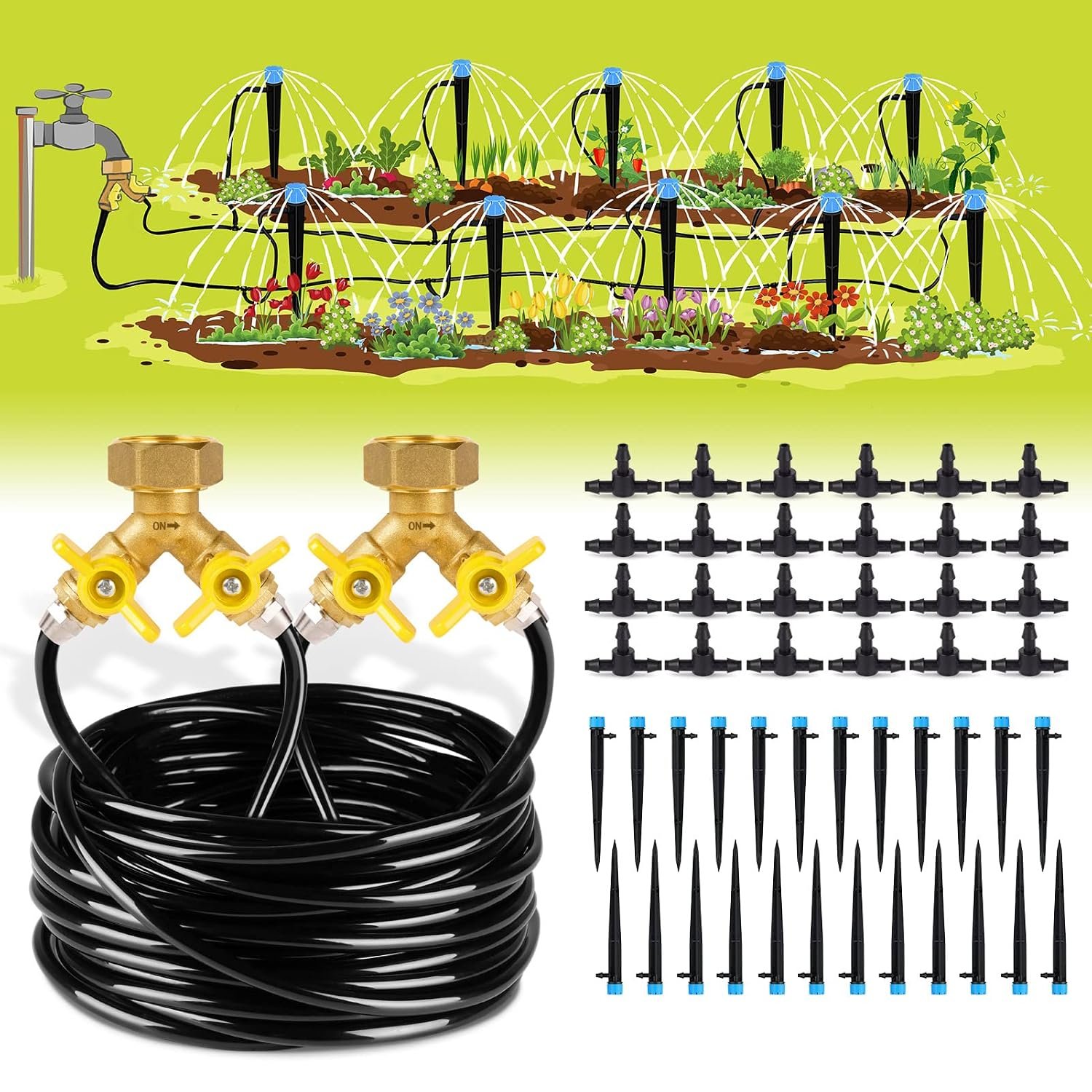 |
HIRALIY Drip Kit | 98.4ft distribution tubing Brass splitter adapters 24 tee-connectors + emitters Brass faucet connector |
CHECK PRICE ON AMAZON |
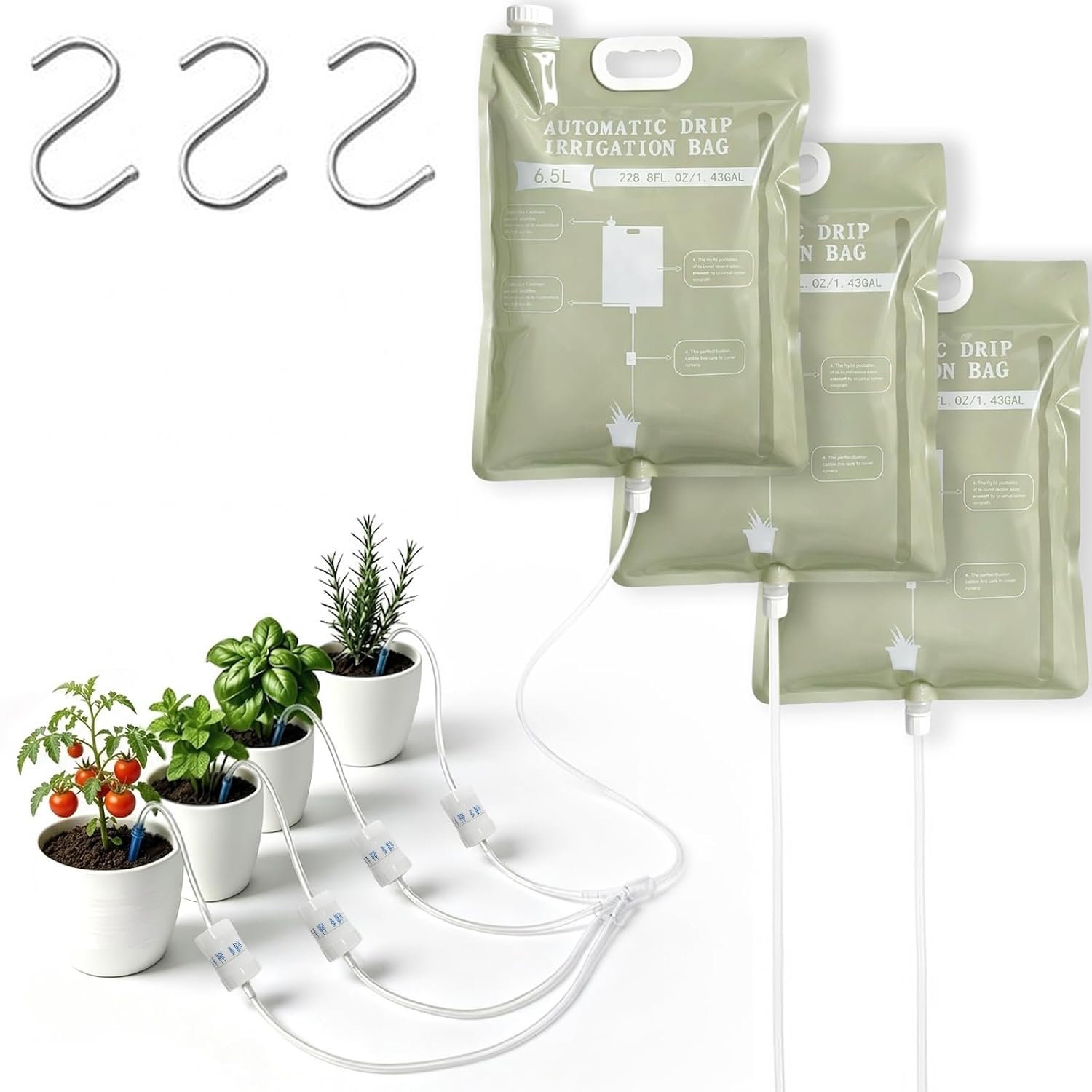 |
HIRALIY Self-Watering Bags | 6.5L capacity per bag 4 adjustable valves Gravity-fed, no power 3-bag set |
CHECK PRICE ON AMAZON |
The 5 Best Drip Irrigation Kits for Potted Plants
Here’s the full breakdown of each kit, including where it genuinely falls short.
1. Beday Automatic Plant Waterer — Best Smart Overall Pick
Key Features
- Programmable digital water timer
- Smart humidity detection that adjusts water output automatically
- USB-C rechargeable battery
- Supports up to 15 potted plants
- Anti-siphon accessory included
Real-World Performance In our testing, the humidity sensor was the standout feature — it genuinely reduced overwatering on plants that don’t need daily attention, like succulents mixed in with thirstier tropicals. Setup took longer than the hose-connected kits, mostly because of the programming steps for the timer and probe calibration.
Pros
- Prevents both over- and under-watering with real-time humidity feedback
- No hose or outdoor spigot required
- Rechargeable, so no constant battery replacement
Cons
- Setup instructions could be clearer — expect some trial and error on your first run
- Best suited for indoor use; not weatherproof for permanent outdoor placement
Who It’s Best For Indoor plant owners with a mix of houseplants who want hands-off, precision watering without daily checking.
Verdict The Beday Automatic Plant Waterer is the most technically capable kit on this list, and the humidity sensing genuinely earns its premium price tier.
2. MIXC 100FT Quick-Connect Drip Irrigation Kit — Best for Multiple Outdoor Pots
Key Features
- 1/4-inch fast-lock tubing, 100 feet total
- 16 pieces of 360° adjustable nozzles
- Quick-connect fittings — no tools required
- Three irrigation modes: micro-drip, spray, and mist
Real-World Performance This kit connected to a standard garden hose bib in under ten minutes, which is exactly what a first-time buyer wants. The adjustable nozzles were the highlight — we dialed individual pots from a fine mist for seedlings down to a focused drip for established plants without any extra parts.
Pros
- Genuinely fast setup — no cutting or gluing tubing
- Individually adjustable output per nozzle
- Works well across a mixed group of pot sizes
Cons
- No timer included — you’re running it manually unless you buy a separate timer
Who It’s Best For Homeowners with several patio or balcony pots who want an easy outdoor setup without committing to a full smart system.
Verdict A strong, low-friction outdoor option — just budget for a separate timer if you want full automation.
3. HEKIWAY 60FT Drip Irrigation System with Water Timer — Best Built-In Timer
Key Features
- Built-in programmable water timer
- Rain delay mode (1–15 days)
- Child lock on the timer unit
- 360° adjustable, bendable nozzles
- Brass and aluminum connectors
Real-World Performance The rain delay function is the feature that sets this kit apart — after a storm, the system paused automatically instead of oversaturating already-wet soil. The bendable tubing held its shape well around an irregular arrangement of pots on a sloped patio.
Pros
- Automated schedule out of the box — no separate timer purchase needed
- Rain delay avoids overwatering after rainfall
- Durable brass and aluminum fittings
Cons
- Fewer verified reviews than more established brands, since it’s a newer listing
Who It’s Best For Outdoor gardeners who want scheduling and weather-awareness without stepping up to a full smart-home irrigation controller.
Verdict HEKIWAY packs genuinely useful automation into a mid-range price point — the rain delay alone justifies the upgrade over a manual kit.
4. HIRALIY 100ft Drip Irrigation Kit — Best Budget Pick
Key Features
- 98.4 feet of 1/4-inch blank distribution tubing
- Brass splitter adapters (x2)
- 24 tee-connectors and 24 drip emitters
- US-standard 3/4-inch brass faucet connector
Real-World Performance This is a genuine DIY kit — you’re cutting tubing to length and placing emitters yourself, which takes longer than the quick-connect options but gives you full control over exactly where water lands. One important detail: HIRALIY’s own documentation specifies a minimum of 40 PSI water pressure for proper operation, and we confirmed that below this threshold, the far end of a long tubing run underperforms noticeably.
Pros
- Lowest price point on this list
- Large coverage area for the cost
- No-leak brass splitter design
Cons
- Requires assembly and tubing cuts — not plug-and-play
- Needs at least 40 PSI household water pressure to work as intended
Who It’s Best For Budget-conscious gardeners with a larger pot collection who don’t mind a bit of DIY setup.
Verdict The best value kit here, provided your home’s water pressure meets the minimum requirement.
5. HIRALIY Self-Watering Bags (3-Pack, 6.5L, 4 Adjustable Outlets) — Best for Vacations
Key Features
- 6.5-liter capacity per bag
- Four independently adjustable flow control valves
- Gravity-fed, no power or hose connection needed
- Set of three bags included
Real-World Performance This isn’t a continuous drip system — it’s a reservoir bag that releases water slowly by gravity, which makes it a different category from the other four kits on this list. It’s built for short-term coverage, not everyday watering. We found the adjustable valves useful for tuning drip speed per plant, from succulents to thirstier tropicals.
Pros
- Simple, no-assembly setup — fill and place
- No electricity, batteries, or hose required
- Adjustable flow per bag
Cons
- Limited by bag capacity — not a long-term daily watering solution, and needs refilling for extended trips
Who It’s Best For Anyone covering a short vacation or business trip who needs simple, temporary watering for a handful of pots.
Verdict Not a replacement for a full drip system, but the right tool for the specific job of short-term, low-maintenance watering coverage.
Water Pressure and Setup Requirements to Check First
Before buying any outdoor drip kit, check your home’s water pressure — it determines whether the kit you’re eyeing will actually work.
Most outdoor drip kits, including the HIRALIY 100ft Drip Irrigation Kit, specify a minimum operating pressure, commonly around 40 PSI. Quick-connect systems like the MIXC kit are generally more forgiving of pressure variance because of their shorter, wider main tubing.
If you don’t know your household water pressure, a simple hose-bib pressure gauge — sold separately for a few dollars — gives you an instant reading. Indoor electric systems like the Beday Automatic Plant Waterer sidestep this issue entirely, since they don’t rely on household water pressure at all.
If your reading comes back low, our guide on how to increase sprinkler water pressure fast walks through the most common fixes before you assume the kit itself is faulty.
How to Set Up a Drip Irrigation System for Potted Plants
- Measure your layout. Walk your pot arrangement and note the distance from your water source (hose bib or outlet) to the farthest pot.
- Choose mainline tubing size. For runs under 30 feet, 1/4-inch tubing is usually sufficient; longer runs need 1/2-inch mainline tubing to maintain pressure.
- Attach the splitter or connector. Connect the kit’s brass or quick-connect fitting to your hose bib or faucet.
- Run and stake the tubing. Lay tubing along your pot arrangement, securing it with stakes so wind or foot traffic doesn’t dislodge it.
- Insert drippers or emitters. Place one dripper per small pot, and two to three for larger planters, following the spacing rule above.
- Test the flow. Run the system for five minutes and check that water reaches every emitter evenly before finalizing placement.
- Set your timer (if included). Program a schedule based on your pot size and climate — most container gardens do well with short, frequent runs rather than long, infrequent ones.
If you’re running your drip kit off an existing zone valve rather than a standalone hose bib, our guide to sprinkler system valve repair is a useful reference if that valve isn’t opening or closing reliably
Frequently Asked Questions
Is drip irrigation good for potted plants? Yes. Drip irrigation delivers water directly to the root zone at a slow, steady rate, which reduces water waste and prevents the swings between soggy and bone-dry soil that potted plants are especially prone to. It’s particularly effective for containers because pots dry out faster than in-ground beds.
How often should drip irrigation run for potted plants? Most container gardens do best with short, frequent watering cycles — typically 10 to 15 minutes, run every 1 to 3 days depending on pot size, plant type, and weather. Smaller pots dry out faster and need more frequent short runs than large planters.
Do I need a timer for a drip irrigation kit? A timer isn’t required, but it removes the single biggest failure point: forgetting to turn the water on or off. Kits like the HEKIWAY 60FT system include a built-in timer, while others, like the MIXC kit, require a separate timer purchase for full automation.
Can I use drip irrigation indoors? Yes, but you’ll need a system designed for it. Hose-connected outdoor kits aren’t practical indoors, so look for a self-contained, battery- or USB-powered system like the Beday Automatic Plant Waterer instead.
How many drippers does one pot need? As a rule of thumb, add one dripper for every 6 to 8 inches of pot diameter — a small 6-inch pot needs one, while an 18-inch planter typically needs two to three spaced around the root zone.
What water pressure do drip irrigation kits need? Many outdoor kits specify a minimum of around 40 PSI to function properly, though this varies by brand. Below that threshold, water flow drops noticeably at the far end of longer tubing runs, so it’s worth checking your home’s pressure before buying.
Final Verdict: Best Drip Irrigation Kit for Potted Plants
If you only take one thing from this guide: match the kit to where your pots actually live. Indoor collections need an electric, self-contained system like the Beday Automatic Plant Waterer. Outdoor patios and balconies do better with a hose-connected kit — the MIXC 100FT Quick-Connect Kit for fast setup, the HEKIWAY 60FT for built-in scheduling, or the HIRALIY 100ft Drip Irrigation Kit if you’re working with a tighter budget and don’t mind some DIY assembly.
For most container gardeners juggling a mixed collection of pots, the Beday Automatic Plant Waterer remains our top recommendation — the humidity sensing does the guesswork for you, which is exactly what a drip irrigation kit for potted plants should do.
Amazon Affiliate Disclosure
This post contains affiliate links to products on Amazon. If you click and make a purchase, I may earn a small commission at no extra cost to you. This helps support the site and lets me keep bringing you honest, tested recommendations.