
Introduction
Sprinkler system design is the foundation of a healthy, green, and water-efficient lawn. A well-planned irrigation system helps you avoid dry patches, reduce water waste, and maintain consistent grass growth throughout the year.
A proper sprinkler system design not only improves lawn health but also helps homeowners understand how to use sprinkler irrigation system efficiently while reducing water waste.In this guide by hydrosprinkler, you will learn everything from basic design principles to installation, spacing, cost, and smart irrigation tips. Whether you are a beginner or planning a DIY project, this article will help you build an efficient system step by step.
What Is a Sprinkler System Design?
A sprinkler system design is a planned layout of an irrigation system that distributes water evenly across a lawn, garden, or landscape.
It includes:
- Sprinkler head placement
- Pipe layout
- Irrigation zones
- Water pressure planning
- Controller settings
The main goal of a sprinkler system design is to deliver the right amount of water to every area of your landscape without wasting water.
A good design considers the following:
- Lawn shape and size
- Water pressure (PSI)
- Water flow rate (GPM)
- Plant types and soil conditions
Benefits of a Proper Sprinkler System Design
A well-planned sprinkler system design offers many long-term benefits for homeowners. Smart irrigation systems are recommended by the EPA WaterSense Irrigation Guide because they help reduce water waste and improve efficiency
Saves Water
Efficient irrigation reduces water waste by delivering water only where needed.
Reduces Water Bills
Less water waste means lower monthly utility costs.
Improves Lawn Health
Even watering prevents dry patches and overwatering issues.
Saves Time
Automatic systems reduce manual watering work.
Increases Property Value.
A green, healthy lawn improves kerb appeal and home value.
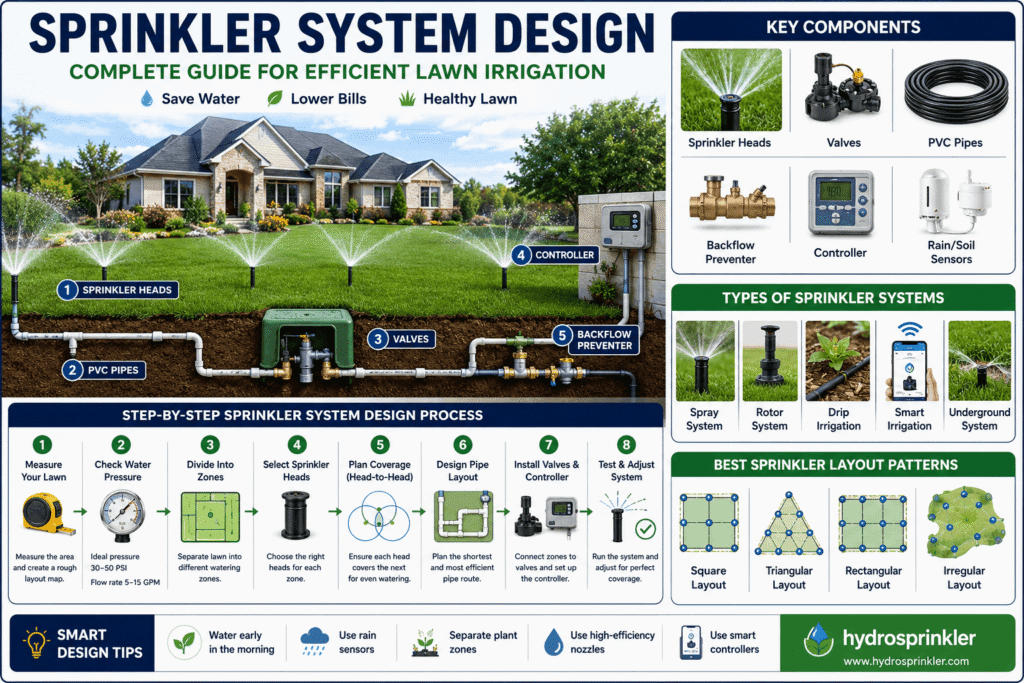
Key Components of a Sprinkler System
A strong sprinkler system design depends on the right components.
Sprinkler Heads
Used to distribute water. Types include:
- Spray heads
- Rotor heads
- Drip emitters
Pipes and Fittings
Carry water through the system, usually PVC or polyethylene.
Valves
Control water flow in different irrigation zones.
Backflow Preventer
Protects drinking water from contamination. (Learn more: Backflow Preventer in Sprinkler System)
Irrigation Controller
The “brain” of the system that schedules watering.
Sensors
Rain and soil sensors prevent unnecessary watering.
Types of Sprinkler Systems
Different systems are used depending on lawn size and design needs.
Spray Sprinkler Systems
Best for small lawns and flower beds.
Rotor Sprinkler Systems
Ideal for large lawns with a long throw distance.
Drip Irrigation Systems
Delivers water directly to roots. (See guide: Garden Drip Irrigation System)
Smart Irrigation Systems
Uses Wi-Fi and weather data for automation.
Underground Sprinkler Systems
Hidden systems for clean landscape appearance.
Step-by-Step Sprinkler System Design Process
Creating a sprinkler system design becomes easy when you follow these steps:
Step 1: Measure Your Lawn
Draw a map of your yard, including grass, trees, and driveways.
Step 2: Check Water Pressure
Ideal range:
- 30–50 PSI pressure
- 5–15 GPM flow rate
Step 3: Divide Into Zones
Separate lawn into watering zones:
- Grass zones
- Flower beds
- Shade areas
Step 4: Select Sprinkler Heads
Choose based on coverage needs.
Step 5: Plan Head-to-Head Coverage
Each sprinkler should reach the next one for even watering.
Step 6: Pipe Layout Design
Keep pipes short to maintain pressure.
Step 7: Install Controller & Valves
Each zone connects to a control valve.
Step 8: Test System
Check for dry spots, leaks, and uneven watering.
How to Calculate Sprinkler Spacing and Coverage
Spacing is critical in sprinkler system design.
Head-to-Head Coverage
Each sprinkler must reach the next sprinkler.
General Spacing Guide
- Spray heads: 8–15 ft
- Rotor heads: 15–35 ft
- Drip systems: plant-based spacing
Water Pressure Impact
Low pressure equals a weak spray.
High pressure = mist waste
Use regulators if needed.
Best Sprinkler Layout Patterns
Square Layout
Best for simple residential lawns.
Triangular Layout
Improves uniform water coverage.
Rectangular Layout
Ideal for long yards.
Irregular Layout
Used for curved landscapes and custom designs.
Sprinkler System Design for Different Landscapes
Small Lawns
Use spray heads and simple zoning.
Large Properties
Need rotor systems and multiple zones.
Sloped yards
Require slow watering cycles to avoid runoff.
Gardens & Flower Beds
Best suited for drip irrigation systems.
Commercial Properties
Require advanced controllers and high-capacity systems.
Professional irrigation standards are widely supported by the Irrigation Association Official Site to ensure efficient system design and water conservation.
Smart Sprinkler System Design Tips
Smart planning improves efficiency.
- Use smart controllers
- Install rain sensors
- Separate plant zones
- Water early in the morning
- Use high-efficiency nozzles
Smart irrigation reduces water waste significantly.
Common Sprinkler System Design Mistakes to Avoid
Many homeowners make costly mistakes:
- Incorrect spacing
- Mixing sprinkler types in one zone
- Ignoring water pressure
- Poor zoning planning
- Watering sidewalks and roads
Avoiding these mistakes improves system performance.
Sprinkler System Design Cost Breakdown
DIY Cost
- Small lawn: $500–$1,500
- Medium lawn: $1,500–$3,000
- Large lawn: $3,000–$5,000
Professional Cost
Usually $2,000–$6,000+
Cost Factors
- Lawn size
- Number of zones
- Material quality
- Smart upgrades
A good sprinkler system design saves money long-term.
DIY vs. Professional Sprinkler System Design
DIY Design
- Lower cost
- More effort required
- Good for small lawns
Professional Design
- Higher accuracy
- Better efficiency
- Ideal for large properties
Best Tools and Software for Sprinkler System Design
- Irrigation design apps
- CAD software tools
- Smart irrigation platforms
These tools help plan accurate layouts and reduce mistakes.
Conclusion
A proper sprinkler system design is the key to a healthy lawn, lower water bills, and long-term irrigation efficiency. Whether you choose DIY or professional installation, good planning ensures better results and fewer problems.
By understanding spacing, zoning, water pressure, and smart irrigation methods, you can build a system that works efficiently for years.At HydroSprinkler, we recommend focusing on smart planning before installation to get the best performance from your irrigation system. The Texas A&M Lawn Irrigation Guide recommends regular system checks to maintain sprinkler efficiency and prevent water loss.
(FAQs)
What is sprinkler system design?
It is the process of planning sprinkler placement, zones, and pipes for efficient irrigation.
How do you design a sprinkler system?
Measure the lawn, check water pressure, divide zones, and select sprinkler heads.
What is the best sprinkler layout?
A triangular layout gives the most even water coverage.
How many sprinkler heads per zone?
Usually 4–8 heads depending on water flow rate.
What type of sprinkler is best?
Use rotor sprinklers for large lawns and spray for small lawns.
How much does it cost?
Between $1,500 and $6,000 in the USA.
Is smart irrigation worth it?
Yes, it saves water and reduces long-term costs significantly.